Percy Fawcett and the Lost City of Z: The Explorer Who Vanished in the Amazon
Percy Fawcett's Lost City of Z quest ended in 1925 when he vanished in the Brazilian Amazon with his son Jack and Raleigh Rimmell, never to be seen again.
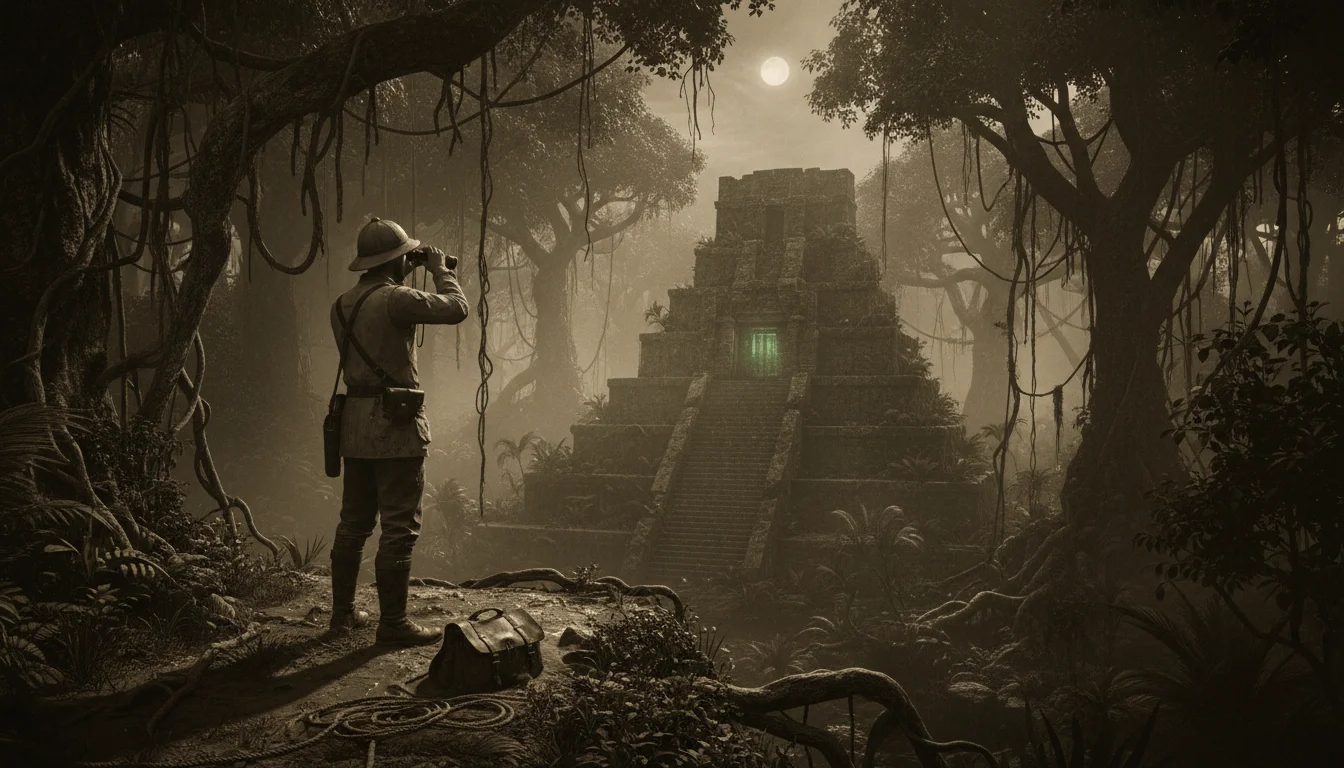
In April 1925, one of the most famous explorers in the world vanished into the Brazilian wilderness and became a legend. Colonel Percy Harrison Fawcett, a decorated British officer, surveyor, and veteran of multiple Amazon expeditions, set out in search of what he called the Lost City of Z, an ancient civilization he believed lay hidden deep in the rainforest. He never returned. Neither did his son Jack nor Jack's friend Raleigh Rimmell, the two young men who marched with him.
A century later, Fawcett's disappearance still sits in the strange borderland between history and myth. It has inspired books, films, conspiracy theories, and rescue missions that cost more lives. The basic facts are known. The ending is not.
Percy Fawcett was not a crackpot with a compass. Born in 1867, he was trained by the Royal Geographical Society and had built a reputation as one of the toughest and most competent explorers of his era. Beginning in 1906, he undertook a series of surveying missions in South America, especially in Bolivia and Brazil, where national borders were still being mapped. These expeditions exposed him to the brutal realities of Amazon travel: disease, starvation, hostile terrain, venomous animals, and the constant risk of violent encounters.
They also convinced him that the Amazon held more than European scholars believed. At the time, many Western experts assumed the rainforest could never have supported large, sophisticated societies. Fawcett disagreed. He collected oral traditions, studied old chronicles, and became fascinated by references to ruined stone cities in the interior. One document in particular, known as Manuscript 512, described the ruins of a lost city supposedly seen in Brazil in the eighteenth century. Fawcett treated such reports not as fantasy, but as clues.
Over time he developed a theory that somewhere in the Mato Grosso region lay the remains of an advanced ancient civilization. He called it simply "Z." To Fawcett, Z was not just treasure-hunter bait. It was proof that accepted history was wrong, that South America had once housed complex urban cultures beyond the known empires of the Andes.
His growing obsession mixed hard field experience with speculation, spiritualism, and the imperial romance of the exploration age. That combination made him both compelling and controversial. Admirers saw him as a visionary. Critics saw a proud man so certain of his own instincts that he could mistake hope for evidence.
By 1925, Fawcett was in his late fifties, but he believed he was finally ready. Previous expeditions had taught him a crucial lesson: large parties attracted attention, moved slowly, and were harder to feed. This time he would travel light. The expedition would consist of only three men: Fawcett himself, his 21-year-old son Jack, and Jack's friend Raleigh Rimmell. Their route would take them from Cuiaba into the interior, toward an area inhabited by Indigenous groups and only thinly known to outsiders.
Fawcett was careful about what he told the world. He feared rivals might follow and claim the discovery for themselves. He also understood the danger. Before departure he wrote letters that read, in retrospect, like farewells. In one, he warned that if the party disappeared, no rescue mission should be sent. It was practical advice, but it also added to the myth. Fawcett seemed to sense that the jungle might simply swallow them.
The expedition's progress can be traced only up to a point. They reached Cuiaba and continued eastward. Along the way, they sent dispatches describing difficult but manageable conditions. Their last confirmed message was written from a place Fawcett called Dead Horse Camp, named after an incident from one of his earlier journeys, where his horse had died years before. In a letter dated May 29, 1925, he reported that the party was in good spirits and pushing into unexplored territory.
That was the last reliable word anyone ever received.
After that, the trail dissolves into rumor. Some stories claimed the men were killed by an Indigenous group after offending local customs. Others suggested starvation, disease, drowning, or accident. There were stranger theories too: that Fawcett chose to remain in the jungle, that he found a hidden community and stayed, that he descended into madness, or that he had uncovered something people wanted concealed. None of these stories came with proof strong enough to close the case.
What made the mystery worse was the chaos that followed. Fawcett was already famous, and his disappearance triggered an international fascination. Over the following decades, numerous search expeditions entered the region hoping to find him. Some searchers died. Others vanished. Several brought back conflicting testimony from local communities. Human bones were occasionally reported, and supposed relics surfaced now and then, but authentication was weak, stories shifted, and hard evidence remained elusive.
One of the most discussed later claims emerged in the 1950s, when Brazilian explorer Orlando Villas-Boas reported that members of the Kalapalo people said Fawcett had ignored warnings and continued into dangerous territory, where he and his companions were later killed. Villas-Boas even obtained bones said to be Fawcett's, but forensic examination indicated they were not a match. The Kalapalo account may still contain some truth, but it did not solve the mystery.
Modern historians tend to favor the most ordinary explanation. Fawcett's party likely died not because of supernatural forces or golden cities, but because the Amazon is unforgiving and they entered it with minimal support. Even a highly skilled explorer could be undone by illness, a river crossing, food shortages, or a single disastrous encounter. The expedition's small size, which Fawcett believed would protect it, also meant there were no spare hands, no margin for injury, and no survivors to tell the story.
Yet reducing the case to misadventure does not strip it of its power. Fawcett disappeared at the exact moment when the old age of heroic exploration was colliding with modern skepticism. He represented the final grand Victorian belief that blank spaces on maps could still contain civilizations that would rewrite history. In that sense, the Lost City of Z was real even if Fawcett never found a literal stone metropolis. Archaeology in recent decades has shown that parts of the Amazon did support large, organized societies, complete with engineered landscapes, earthworks, and dense populations. Fawcett may have been wrong in detail, but not entirely wrong in spirit.
That is what keeps the story alive. Percy Fawcett was not merely a missing person. He was a man chasing an idea, one just plausible enough to be irresistible. He walked into the rainforest convinced the world had overlooked something vast and ancient. Then the jungle closed behind him.
Did he die within days of leaving Dead Horse Camp? Was he killed by people defending their land from intruders? Did he glimpse evidence that encouraged him to push one fatal march too far? We still cannot say. The Amazon kept his answer.
And that, more than a hundred years later, is why Percy Fawcett remains one of history's greatest disappearances: not because he was the first explorer to vanish, but because he vanished while pursuing a mystery that history itself has never fully laid to rest.
For more on the Andean civilizations Fawcett believed he might find, see Visiting Inca Cusco in 1450. For another celebrated explorer who vanished without a trace, see The Disappearance of Amelia Earhart.
Quick Answers
Common questions about this topic
Who was Percy Fawcett?
Colonel Percy Harrison Fawcett was a decorated British officer, surveyor, and veteran of multiple Amazon expeditions during the early 20th century. In April 1925, at age 57, he set out with his 21-year-old son Jack and Jack's friend Raleigh Rimmell to search for what he called the Lost City of Z, an ancient civilization he believed lay hidden deep in the Brazilian rainforest. None of them returned.
Was the Lost City of Z real?
Fawcett believed the Mato Grosso region contained the remains of an advanced pre-Columbian civilization. Historians long considered this a romantic myth, but recent archaeology - particularly LIDAR surveys of the Amazon basin - has revealed that parts of the rainforest did support large, organized societies with engineered landscapes and dense populations. Fawcett was wrong in detail but partly vindicated in spirit.
What was Fawcett's last known message?
His last confirmed communication came from Dead Horse Camp on May 29, 1925, where he reported the party was in good spirits and pushing into unexplored territory. After that, the trail goes silent. Every subsequent rumor, sighting, or 'confession' by indigenous groups has been unverifiable or contradicted by other accounts.
What happened to the search expeditions that looked for Fawcett?
Fawcett was world-famous, and his disappearance triggered international fascination. Numerous rescue expeditions entered the Mato Grosso region over the following decades, but several searchers died and a few vanished themselves. Some returned with conflicting testimony from local communities, and supposed relics surfaced over the years, but none were ever authenticated to Fawcett or his party.

Want to Interrogate the Suspects?
Chat with historical figures and uncover the truth behind history's greatest mysteries.
Start Your InvestigationJoin the HistorIQly Club
Get smarter about the past.
Weekly stories, deep dives, and exclusive content straight to your inbox.