The Disappearance of Ambrose Bierce: The Writer Who Vanished Into the Mexican Revolution
Ambrose Bierce disappeared into the Mexican Revolution in 1913. His last letter promised an unknown destination - one that was never found.
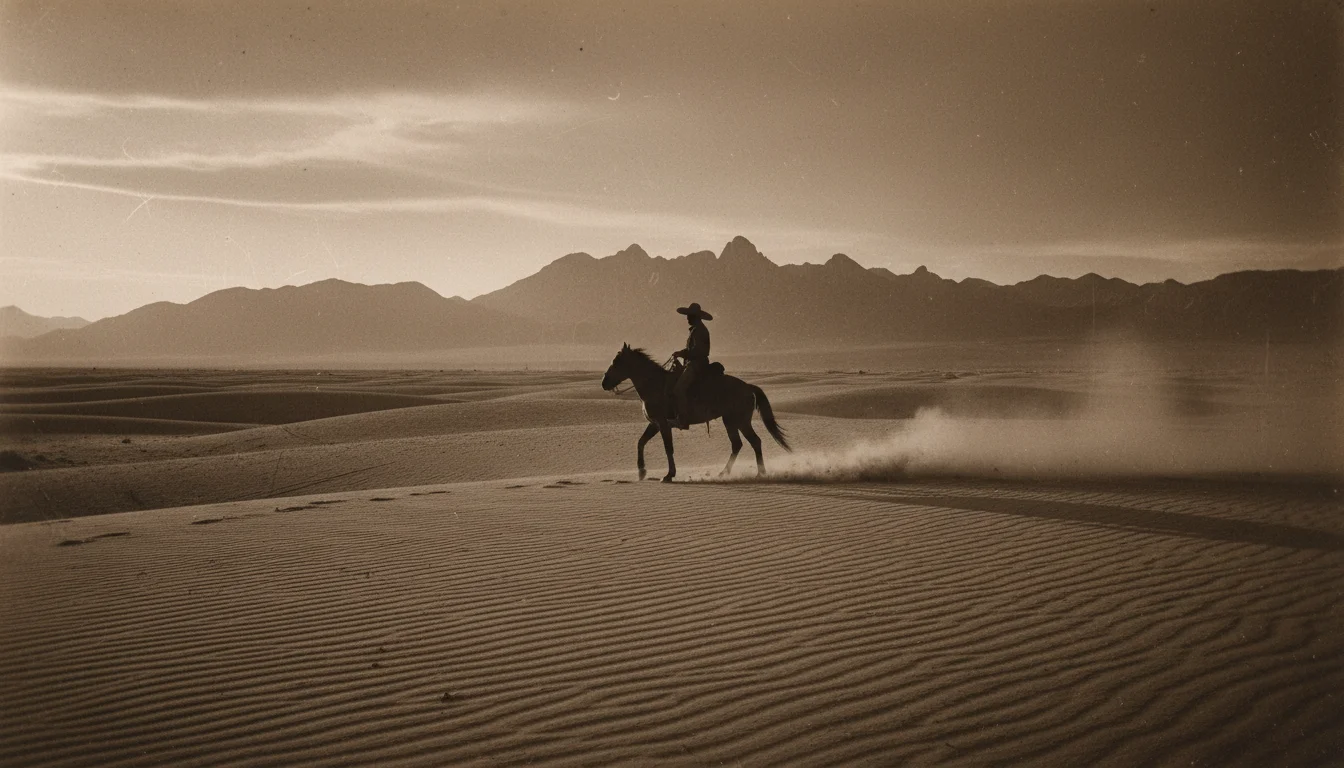
On December 26, 1913, Ambrose Bierce wrote what would become one of the most haunting final letters in literary history. From Chihuahua, Mexico, the 71-year-old author penned a note to his friend Blanche Partington that ended with words both cryptic and prophetic: "As to me, I leave here tomorrow for an unknown destination."
He kept his word. Ambrose Bierce rode out of Chihuahua City and vanished from the face of the earth, becoming the most famous missing person in American literary history.
The Man Who Feared Nothing
To understand why Bierce's disappearance captivated the world, you must first understand the man himself. In an era of polite Victorian literature, Ambrose Bierce was something different - a walking tornado of cynicism, brilliance, and barely contained fury.
Born in Ohio in 1842, Bierce enlisted in the Union Army at nineteen and fought in some of the Civil War's bloodiest battles: Shiloh, Chickamauga, Kennesaw Mountain. He witnessed horrors that would haunt his fiction for decades - fields carpeted with corpses, the sound of surgeons' saws, the screams of the dying. At Kennesaw Mountain, a Confederate bullet tore through his skull, leaving him with headaches and seizures for the rest of his life.
The war made Bierce into a writer who understood death the way fishermen understand the sea. His most famous story, "An Occurrence at Owl Creek Bridge," about a Confederate sympathizer being hanged from a railroad bridge, remains one of American literature's great psychological trick shots. Kurt Vonnegut called it the greatest American short story ever written.
But it was Bierce's journalism that made him infamous. Working for William Randolph Hearst's San Francisco Examiner, he became known as "Bitter Bierce" - a critic so savage that authors reportedly trembled when submitting work for his review. His column "Prattle" was required reading for anyone who wanted to know who was being destroyed that week.
He wrote "The Devil's Dictionary," defining terms like "Cynic: A blackguard whose faulty vision sees things as they are, not as they ought to be" and "Patience: A minor form of despair, disguised as a virtue."
By 1913, Bierce was a legend. He was also utterly alone.
The Farewell Tour
Both of Bierce's sons had died before him - Day from suicide in 1889, Leigh from alcoholism in 1901. His ex-wife Mollie divorced him in 1904 and died the following year. His asthma was worsening. The headaches from his war wound never stopped.
In October 1913, Bierce embarked on what he openly called his "farewell tour." He revisited his old Civil War battlefields - Shiloh, Chickamauga, the ridge at Kennesaw where he'd nearly died. Friends noticed something different about him. The famous wit seemed softer somehow, more reflective.
Then he announced his intentions: he was going to Mexico.
The timing was extraordinary. Mexico was three years into a brutal revolution. Pancho Villa's forces were surging across the north. President Victoriano Huerta's federal troops were committing atrocities. It was no place for a 71-year-old American with a history of head trauma.
But that was precisely the point. In a letter to his niece Lora, Bierce wrote what would become his most quoted passage: "Goodbye. If you hear of my being stood up against a Mexican stone wall and shot to rags please know that I think that a pretty good way to depart this life. It beats old age, disease, or falling down the cellar stairs. To be a gringo in Mexico - ah, that is euthanasia."
He crossed the border at El Paso in November 1913 and attached himself to Villa's army as an observer.
Into the Revolution
For a time, there is a paper trail. Bierce obtained credentials from Villa's forces. He witnessed the Battle of Tierra Blanca in November, where Villa's cavalry smashed a federal force outside Ciudad Juarez. He traveled with the revolutionary army as it swept south toward Chihuahua City.
His letters from this period reveal a man energized rather than terrified by the chaos around him. He described battles and executions with the clinical precision of someone who had seen such things before, fifty years earlier on different battlefields.
Chihuahua City fell to Villa's forces in early December. Bierce was there. He wrote to friends back in the United States, and then came that final letter to Blanche Partington on December 26.
"Unknown destination."
After that - silence.
The Theories Multiply
Bierce's disappearance sparked theories that have never stopped proliferating. Some are plausible. Others are bizarre. None have ever been proven.
The Execution Theory: The most persistent account holds that Bierce was shot by a firing squad - either Villa's men or federal forces. For decades, a retired American priest named James Lienert pursued the theory that Bierce was executed in Sierra Mojada, a small desert town in Coahuila state. Lienert talked to elderly locals who remembered stories of an old American gringo executed as a spy around that time. He even paid for a gravestone to be installed in the Sierra Mojada cemetery, reading: "Very trustworthy witnesses suppose that here lie the remains of Ambrose Gwinnett Bierce."
The Federal Forces Theory: An American soldier of fortune named Tex O'Reilly claimed Bierce never made it to Villa at all. According to O'Reilly, Bierce was shot by federal troops at a cantina in a mining camp. Since the old writer spoke no Spanish, he couldn't explain who he was before they dragged him to a cemetery and shot him. O'Reilly said he later found two envelopes addressed to Ambrose Bierce in the house where the dead American had stayed.
The Pneumonia Theory: A 2002 investigation by journalist Jake Silverstein uncovered a stranger possibility. A letter to a Texas newspaper claimed that a hitchhiker once told a story about picking up a sick old gringo who called himself "Ambrosia" and talked about the many books he'd written - including one with the word "devil" in the title. The old man supposedly died of pneumonia on January 17, 1914, and was buried in an unmarked grave in Marfa, Texas.
The Suicide Theory: Some biographers believe Mexico was never the point. They argue that Bierce, weary of life and wanting to control his own ending, simply wandered off somewhere - perhaps the Grand Canyon, perhaps the desert - to die on his own terms, where no one would find him.
The Literary Afterlife
What makes Bierce's disappearance so enduring isn't just the mystery - it's the way it mirrors his fiction.
His stories are full of vanishings, time loops, and deaths that refuse to resolve neatly. In "The Damned Thing," a hunter is killed by an invisible creature that leaves no trace. In "An Occurrence at Owl Creek Bridge," a man escapes execution only to discover his freedom was a dying fantasy. In dozens of tales, Bierce returned again and again to the moment when reality splinters and nothing can be trusted.
He understood - as only someone who had watched friends die in Civil War charges could understand - that life is provisional, uncertain, and shockingly easy to lose. His own ending became the ultimate Bierce story: a man walking into a revolution, leaving a cryptic final line, and simply ceasing to exist.
Still Missing
More than a century later, Ambrose Bierce remains officially missing. No body was ever recovered. No grave was ever confirmed. The Mexican Revolution claimed perhaps a million lives between 1910 and 1920, and countless records were lost or destroyed. In such chaos, one elderly American would have been easy to overlook.
But the lack of resolution feels somehow appropriate for a man who spent his career reminding readers that endings are rarely clean.
In "The Devil's Dictionary," Bierce defined "alone" as "in bad company." Perhaps that was his final joke - to be alone at the end, companioned only by the mysteries he left behind.
Whatever happened to Ambrose Bierce in the winter of 1913-1914, he got what he said he wanted. He didn't die of old age or disease or by falling down the cellar stairs. He rode into the Mexican Revolution, wrote one last letter, and disappeared into his "unknown destination."
The investigation remains open. The destination remains unknown.
And somewhere in the desert, perhaps, Ambrose Bierce is finally at peace - having written an ending that no one will ever be able to explain.
For other mysterious deaths and disappearances of famous writers, see The Death of Edgar Allan Poe and The Disappearance of Connie Converse.

Want to Interrogate the Suspects?
Chat with historical figures and uncover the truth behind history's greatest mysteries.
Start Your InvestigationJoin the HistorIQly Club
Get smarter about the past.
Weekly stories, deep dives, and exclusive content straight to your inbox.