The Anastasia Romanov Mystery: A Case Closed by DNA, but Never by the Public
Did Anastasia Romanov really escape the 1918 execution? DNA evidence settled the mystery, but the legend endured for 70 years before science finally caught up.
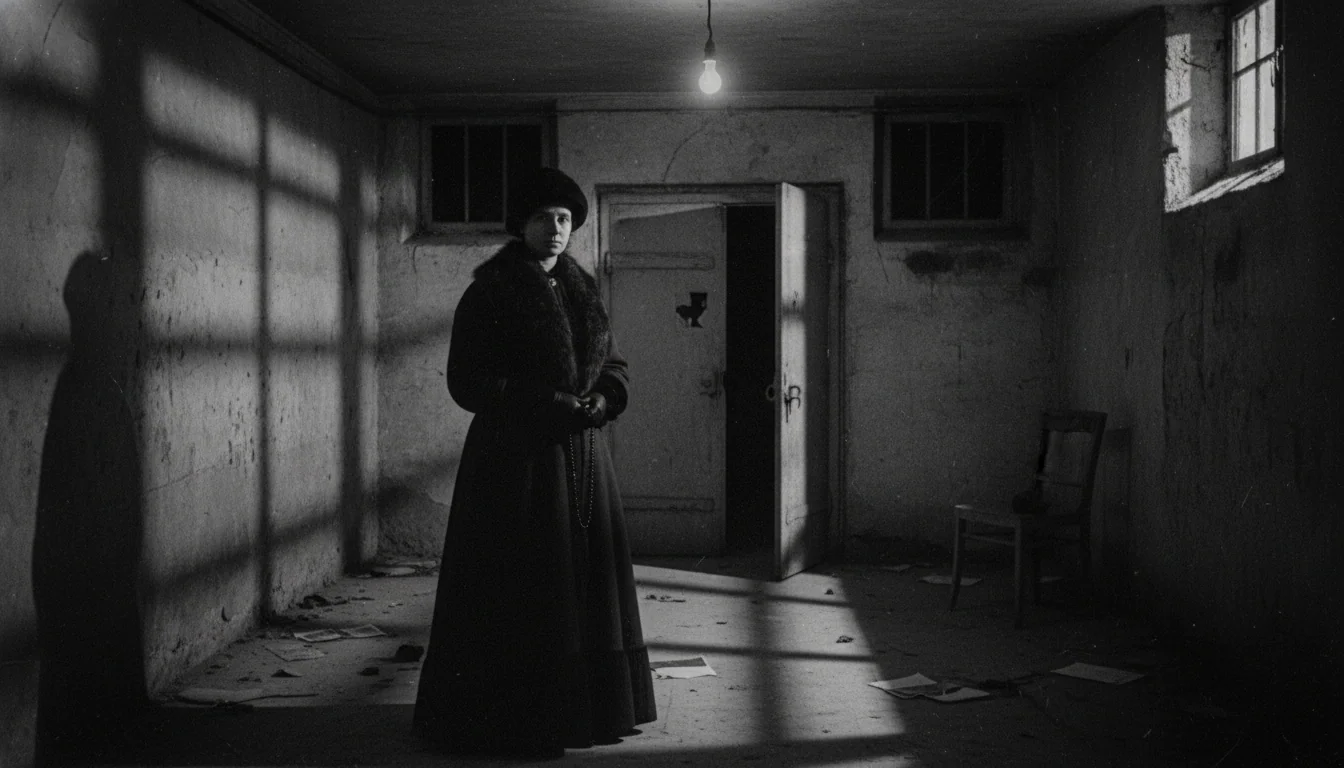
For nearly a century, the story of Anastasia Romanov was the most romantic uncertainty in 20th-century history. The youngest daughter of the last Russian tsar, she was 17 years old when her family was led into a basement in Yekaterinburg in the early hours of July 17, 1918, and shot by Bolshevik guards. For decades, the world wondered whether she had somehow escaped. Books, plays, animated films, and a parade of impostors kept the question alive. By the 1990s, DNA technology gave us the answer.
She did not escape. None of them did. But the legend that persisted before science could close the case is one of the most revealing episodes in modern memory.
The fall of the Romanovs
When World War I broke out in 1914, the Romanov dynasty had ruled Russia for three centuries. By March 1917, that dynasty had collapsed. Nicholas II, deeply unpopular and exhausted by military failure, abdicated under pressure from his generals and the new Provisional Government. He, his German-born wife Alexandra, his daughters Olga, Tatiana, Maria, and Anastasia, and his hemophiliac son Alexei were placed under house arrest at Tsarskoye Selo outside Petrograd.
The October Revolution of 1917 changed their fate. The Bolsheviks under Lenin took power, and the family, by then exiled to Tobolsk in Siberia, was eventually moved in spring 1918 to Yekaterinburg, an industrial city in the Urals firmly under Bolshevik control. They were housed in a confiscated mansion that the new authorities called the House of Special Purpose, which had previously belonged to a businessman named Nikolai Ipatiev.
There, in confinement, the family lived for 78 days. Reports describe them as quiet, religious, and resigned. They wrote letters, played cards, performed light exercise, and attempted to keep up some semblance of routine. They had been promised eventual transport, possibly to Britain, where Tsarina Alexandra's cousin George V was reigning monarch. The rescue never came.
The execution
By July 1918, the Russian Civil War was tightening around Yekaterinburg. The anti-Bolshevik White Army was advancing on the city. The Bolsheviks decided that allowing the family to fall into White hands could become a rallying symbol for monarchist forces. The Ural Regional Soviet, with the apparent approval of Lenin, ordered the execution of the entire family.
The killings took place in the early hours of July 17, 1918, in the basement of the Ipatiev House. The execution was led by Yakov Yurovsky, the local Cheka commandant. Eleven Bolshevik soldiers participated. The family, accompanied by four loyal servants, were told they were being moved for their safety and were taken to a small basement room. They were lined up and informed of the death sentence, and then shot.
The killing was disorganized. Several of the daughters had jewels sewn into their corsets, which deflected initial bullets. They were finished off with bayonets. The four servants were killed alongside the family. Alexei, the boy heir, was killed by Yurovsky himself.
The bodies were stripped, transported by truck out of Yekaterinburg, and disposed of clumsily over the next 24 hours. The original plan had been to throw them down a mineshaft. After it became clear that the disposal had been bungled, two of the bodies, those of Alexei and one of his sisters, were burned and buried separately. The rest were doused in sulfuric acid and buried in a shallow pit.
This haphazard disposal would become the source of decades of ambiguity.
Soviet silence and the rise of impostors
For most of the Soviet era, the details of the execution were tightly suppressed. The official line was that Nicholas had been executed but that the rest of the family had been moved to safety. Even within the Soviet system, the truth was held in a small circle. To outsiders, this opaqueness left an enormous space for speculation.
Within a few years of the execution, multiple women across Europe began claiming to be one of the Romanov daughters. The most famous was Anna Anderson.
In February 1920, a young woman was pulled from a canal in Berlin after a suicide attempt. She was placed in a psychiatric hospital, refused to speak for weeks, and then began telling fellow patients that she was Anastasia Romanov. By 1922 she had attracted the attention of émigré aristocrats, and over the following decade she gathered both passionate supporters and equally passionate critics among surviving Romanov relatives.
Anderson's case became one of the great court dramas of the 20th century. She sued for recognition as Anastasia, and the case dragged on in German courts from 1938 until 1970. The verdict, when it finally came, was that she had not proven her identity, but had also not been proven to be an impostor. It was an ambiguity that satisfied no one. Anderson eventually settled in Charlottesville, Virginia, where she died in 1984.
A 1956 Hollywood film starring Ingrid Bergman, Anastasia, was based loosely on her story and won Bergman an Oscar. The 1997 animated film by Don Bluth carried the legend to a new generation of children.
The bodies are found
In 1979, two Soviet investigators, Geli Ryabov and Alexander Avdonin, working in secret, located the burial site outside Yekaterinburg using documents and oral history. They quietly removed three skulls and reburied them, knowing that any public announcement was politically impossible under the Soviet regime.
In 1991, after the collapse of the USSR, the bodies were officially exhumed. The remains of nine individuals were recovered. Forensic and DNA analysis, including comparison with surviving Romanov relatives such as Prince Philip of the United Kingdom, who shared a maternal line with Tsarina Alexandra, confirmed the identities of Nicholas, Alexandra, three of their daughters, and the four servants.
But two bodies were missing: Alexei, the son, and one of the daughters. For some time, this was thought to be Anastasia, although Russian forensic experts argued the missing daughter was actually Maria. Either way, two of the children were unaccounted for, which kept the legend technically alive for another sixteen years.
In August 2007, an amateur historian named Sergey Plotnikov found a separate, smaller grave about 70 meters from the main one, containing burned and fragmentary remains. DNA analysis confirmed they belonged to Alexei and the missing daughter. All seven members of the immediate Romanov family were now accounted for.
The execution was complete. There had been no escape.
The Anna Anderson resolution
The DNA findings made it possible to retest the Anderson case. In 1994, samples preserved from a 1979 surgery on Anderson, plus a strand of her hair, were tested against living Romanov relatives. They did not match. They did, however, match the family of a missing Polish factory worker named Franziska Schanzkowska, who had vanished from Berlin in 1920.
Anna Anderson had not been Anastasia Romanov. She had been a mentally ill Polish woman whose disappearance overlapped, by coincidence, with the moment when Berlin was alive with rumors about the Russian royal family. Her case stood as a reminder that grief and political instability can produce identities that fit a story too well to be doubted in their own time.
What the legend was really about
The Anastasia mystery is now a closed case scientifically. But its persistence over 70 years says something about why people invest in mysteries of this kind.
The Romanov family had not been universally beloved. Nicholas II's incompetence, his crackdowns on dissent, his disastrous handling of the war, and his complicated relationship with the mystic Rasputin had cost him enormous public goodwill before the revolution. Yet the cruelty of the execution, the killing of children, the murder of servants, the desecration of the bodies, generated a horror that transcended politics.
The legend that Anastasia might have escaped was, in many ways, a wish that not everything had been lost in the execution basement. It allowed people to imagine that something pure and undamaged might have walked away from the Bolshevik violence and survived.
That was always a fantasy. What actually happened in the Ipatiev House basement was that an entire family was killed in less than 20 minutes, and that the people who killed them spent the next 36 hours trying to make the bodies disappear. Science finally caught up with the legend, and the answer it produced was as final as it could be.
The grand duchess did not escape. The story of her escape lasted longer than her life. The Anastasia legend belongs to a broader tradition of historical mysteries sustained by incomplete evidence and powerful wish-fulfillment, a tradition that includes cases like the Kaspar Hauser mystery and the enduring question of the Princes in the Tower.
Quick Answers
Common questions about this topic
Did Anastasia Romanov survive the execution of her family?
No. DNA analysis of remains discovered near Yekaterinburg in 1991 and 2007 confirmed that all five children of Tsar Nicholas II, including Grand Duchess Anastasia, were killed alongside their parents on the night of July 16-17, 1918. The legend that she survived has been definitively disproven.
Who was Anna Anderson?
Anna Anderson was the most famous of the women who claimed to be Anastasia Romanov. She was pulled from a Berlin canal in 1920 after a suicide attempt and spent decades insisting she was the lost grand duchess. After her death in 1984, DNA testing confirmed she was Franziska Schanzkowska, a missing Polish factory worker.
Where were the Romanov family executed?
The Romanov family was executed in the basement of the Ipatiev House in Yekaterinburg, Russia, on the night of July 16-17, 1918. The Bolshevik commander Yakov Yurovsky led the execution. The bodies were transported to a remote site in the forest, partly burned, and buried in two pits.
Why did the Anastasia legend persist for so long?
The Soviet government concealed details of the execution for decades and the bodies were not found until 1991. The two missing children's remains were not located until 2007. During the 70-year information vacuum, multiple impostors emerged, books and films popularized the legend, and the absence of physical evidence allowed hope to flourish.

Want to Interrogate the Suspects?
Chat with historical figures and uncover the truth behind history's greatest mysteries.
Start Your InvestigationJoin the HistorIQly Club
Get smarter about the past.
Weekly stories, deep dives, and exclusive content straight to your inbox.