The Bobby Dunbar Case: A 1912 Kidnapping Solved by DNA in 2004
A boy vanished in the Louisiana swamps in 1912. For 92 years his family raised a recovered child as Bobby Dunbar, until DNA testing proved he was someone else entirely.
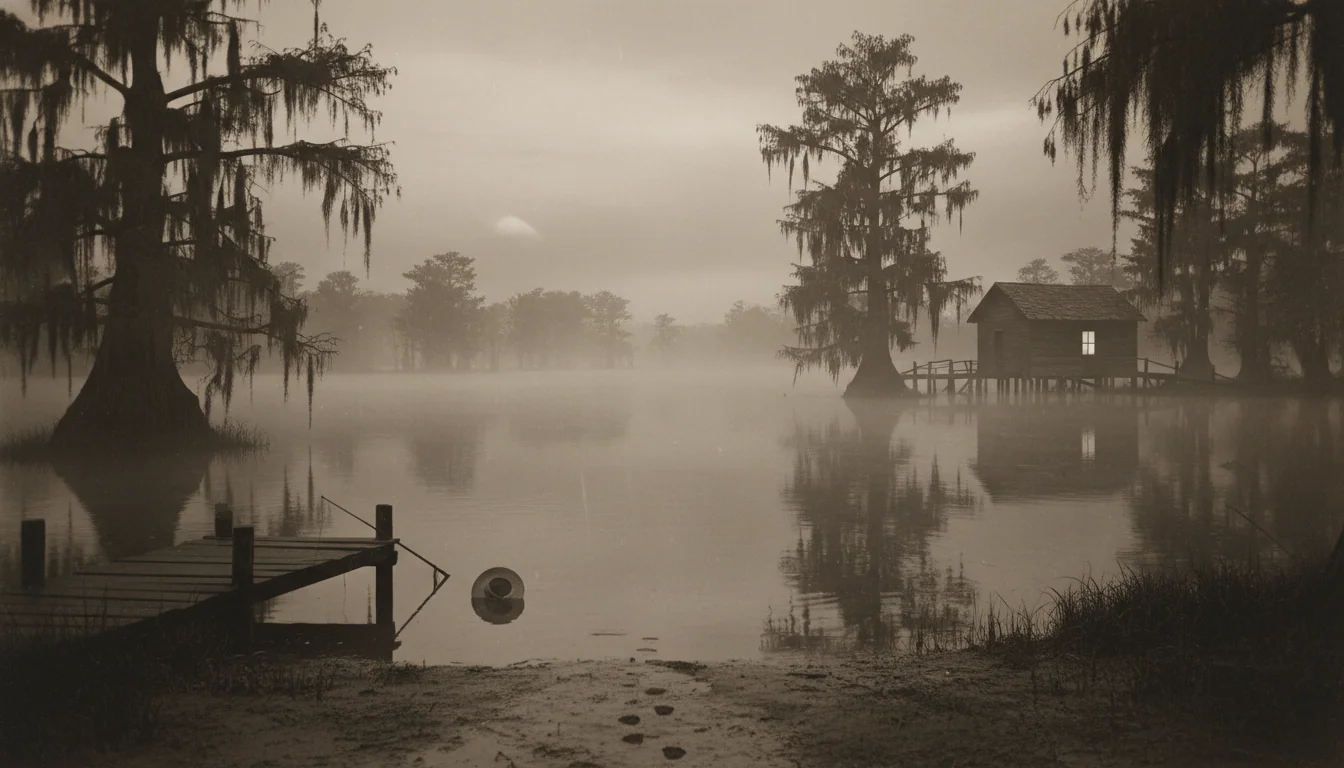
On the morning of August 23, 1912, a Louisiana family on a fishing holiday at Swayze Lake noticed that their four-year-old son had wandered off. By evening, dozens of neighbors were dragging the swamp with hooks and ropes. By the end of the week, the case had become a national news story. Bobby Dunbar, the eldest son of Lessie and Percy Dunbar of Opelousas, had vanished without a trace.
Eight months later, a boy matching his description was found in the company of an itinerant tinker in Mississippi. The Dunbars identified him. The boy was returned to Louisiana. He was raised as Bobby Dunbar. He grew up, married, had four children, and died in 1966 at age 58, having never been told that anything about his identity was disputed.
Then, in 2004, his granddaughter ran a DNA test, and the family discovered that he had not been Bobby Dunbar at all.
The case is one of the strangest American identity mysteries on record. It involved a missing child, a wrongly identified replacement, a 1913 custody trial that pitted a Louisiana family against a North Carolina mother, a courtroom in which a five-year-old boy was passed back and forth between two women claiming to be his mother, and a nearly century-long silence that ended only when modern genetics caught up with what one of those women had been saying all along.
The disappearance
The Dunbar family had traveled to Swayze Lake in St. Landry Parish for a fishing trip with extended family. Bobby was a healthy, active four-year-old. According to his parents' subsequent testimony, he had been playing near the cabin when he wandered off, sometime between mid-morning and midday on August 23.
The lake was dangerous. It was alligator-infested, marshy, and deep in places. The first hours of the search were focused on drowning. Within two days, the search broadened to consider abduction. Local newspapers picked up the story. Within a week it was national.
The Dunbar family was reasonably prosperous. Percy Dunbar offered a substantial reward. Posters were distributed across the Gulf Coast and the South. Sightings began coming in within days, and most were quickly dismissed. The case dragged on for months. By winter 1912, the Dunbars had given up much of their hope, although they continued to follow leads.
The recovery
In April 1913, eight months after the disappearance, a tip came in from Mississippi. A traveling tinker named William Cantwell Walters had been seen with a young boy who fit Bobby Dunbar's description. The boy was traveling with Walters and was being introduced as Walters's nephew, supposedly the son of a North Carolina woman who had given the child into Walters's temporary care.
Local authorities in Mississippi detained Walters and the boy. The Dunbars traveled north. Lessie Dunbar reportedly broke down weeping when she saw the child. She declared he was Bobby. The boy initially did not seem to recognize her, but after some hours she insisted she had identified scars and birthmarks consistent with her son.
The Dunbars took the boy back to Louisiana. The press celebrated the reunion. The story was a national feel-good headline.
Then, almost immediately, complications began.
Julia Anderson
A young North Carolina woman named Julia Anderson appeared in the case. She told reporters that the boy was not Bobby Dunbar. He was Charles Bruce Anderson, her son, whom she had given into the care of William Cantwell Walters several months before, expecting to recover him later. She had been working as a domestic servant and had not been able to keep him.
Anderson was poor, unmarried, and the mother of additional children by other men. The local Louisiana press treated her with intense skepticism, often hostility. She was characterized as immoral, unreliable, possibly a fraud trying to claim a recovered child for the reward money.
She came to Louisiana to identify the boy. The Dunbars allowed her to see him alongside several other children of similar age. She failed, at first, to immediately pick out which boy was hers. The newspapers seized on this hesitation. By the time she did identify the boy, the local consensus had hardened against her.
A custody trial was held in 1913. The Dunbars retained excellent counsel. Julia Anderson did not. The trial was a humiliation. She was treated as a presumptive imposter. The court awarded the boy to the Dunbars.
William Cantwell Walters, the tinker, was tried separately and convicted of kidnapping. The conviction was later overturned on technical grounds. He spent the rest of his life maintaining that the boy he had been traveling with was Charles Bruce Anderson, given to him by Julia Anderson exactly as she had described.
A boy raised as Bobby
The boy grew up in the Dunbar household. He was loved, educated, and raised as Bobby Dunbar Jr. He went on to live a quiet life in Louisiana. He married Marjorie Mosby, had four children including Robert "Bob" Dunbar Jr., and worked at various jobs including for the Bell Telephone Company.
He died in 1966 at age 58. As far as historical record shows, he never publicly questioned his identity. His family did not seriously question it either. The Dunbar story was, for nearly a century, a closed case. Lessie and Percy Dunbar had always insisted they had recovered their son. Most of their descendants believed them.
But not all of them.
Margaret Dunbar Cutright and the DNA test
In the early 2000s, Bobby Dunbar's granddaughter Margaret Dunbar Cutright began researching the case. She had been raised on the family story. As she dug into archival newspaper accounts, court records, and the surviving correspondence of Julia Anderson, she became increasingly convinced that her grandmother's foundational claim might have been wrong.
In 2004, she arranged for a Y-chromosome DNA comparison. Her father, Bob Dunbar Jr., was a paternal-line descendant of the boy raised as Bobby Dunbar. She located living descendants of Alonzo Dunbar, Bobby's confirmed younger brother. A Y-chromosome analysis would compare the paternal lineages of the two branches. If the boy raised as Bobby Dunbar had been the real Bobby Dunbar, the Y-chromosomes should match.
They did not match.
The boy who had been raised as Bobby Dunbar from 1913 until his death in 1966 was not biologically related to the Dunbar family in the male line. He was, almost certainly, exactly who Julia Anderson and William Cantwell Walters had said he was: Charles Bruce Anderson, son of Julia Anderson of North Carolina.
The 1913 custody trial had taken the wrong child from the wrong mother and given him to the wrong family.
What we know now
The DNA finding has now been broadly accepted by historians and by Margaret Dunbar Cutright's published account. Her 2012 book A Case for Solomon, co-written with journalist Tal McThenia, lays out the documentary and genetic evidence in detail.
Several facts now appear settled:
- The boy raised as Bobby Dunbar from 1913 onward was Charles Bruce Anderson.
- Julia Anderson was telling the truth in 1913, and was disbelieved largely because of class and gender prejudice.
- William Cantwell Walters was probably innocent of kidnapping, although he was convicted at the time.
- The real Bobby Dunbar, who disappeared on August 23, 1912, was never found and never returned.
What happened to the real Bobby Dunbar is unknown. The most likely explanations are that he drowned in Swayze Lake (his body never recovered, possibly disposed of by alligators) or that he was taken by a stranger and his fate is unrecorded. There is no surviving lead that has ever been verified. He is, in the most literal sense, a missing child whose case has been open for over 110 years.
What the case has come to represent
The Bobby Dunbar story has become a textbook case in several distinct fields. In legal history, it is cited as an early example of how class and gender bias shaped 20th-century custody decisions. In forensic genetics, it is one of the early high-profile uses of consumer DNA testing to overturn a long-standing identity attribution. In family history, it is a strange, painful illustration of how families can build their entire identity around a foundational claim that turns out to be false.
For the descendants of the boy raised as Bobby Dunbar, the discovery has been complicated. They are, biologically, the descendants of Charles Bruce Anderson, not Bobby Dunbar. Yet they share a century of family history with the Dunbar lineage. Their identity is now divided between the family that raised their ancestor and the family from which he was taken.
For the descendants of Julia Anderson, the DNA finding has been a vindication, but a bittersweet one. Anderson died in 1934, never having been believed. She did not live to see her century-old testimony confirmed.
And for the original Bobby Dunbar, the four-year-old who walked away from a Louisiana fishing camp on a hot August morning in 1912, the case remains exactly what it was on the day he vanished: completely, irrevocably unsolved. The boy he was once thought to be has been given a different name. The boy he actually was has never come home.
For more American cold cases where identity and justice collided, see our investigations into Charley Ross - America's first kidnapping and the Sharon Marshall identity mystery.
Quick Answers
Common questions about this topic
Who was Bobby Dunbar?
Bobby Dunbar was a four-year-old boy who disappeared on August 23, 1912, while on a family fishing trip at Swayze Lake in Louisiana. After an eight-month nationwide search, a boy who matched his description was recovered in Mississippi. He was raised as Bobby Dunbar until his death in 1966. In 2004, DNA testing on his descendants showed he was not biologically related to the Dunbar family.
What did the 2004 DNA test prove?
In 2004, Bobby Dunbar's granddaughter Margaret Dunbar Cutright arranged for a Y-chromosome comparison between her father (the man raised as Bobby Dunbar's son) and the descendants of Bobby Dunbar's confirmed brother Alonzo. The Y-chromosomes did not match, demonstrating that the boy returned to the Dunbar family in 1913 was not biologically Bobby Dunbar.
Who was the boy actually returned to the Dunbar family?
He was almost certainly Charles Bruce Anderson, the son of Julia Anderson, a young North Carolina woman who had given the boy into the temporary care of an itinerant tinker named William Cantwell Walters. Julia Anderson identified the recovered boy as her son in 1913, but the Louisiana courts awarded him to the Dunbars. The DNA evidence in 2004 vindicated her century-old claim.
What happened to the real Bobby Dunbar?
The real Bobby Dunbar, who disappeared on August 23, 1912, has never been found. The most likely explanations are that he drowned in Swayze Lake, was taken by an alligator, or was abducted by a stranger and never recovered. No body, remains, or definitive evidence of his fate has ever surfaced.

Want to Interrogate the Suspects?
Chat with historical figures and uncover the truth behind history's greatest mysteries.
Start Your InvestigationJoin the HistorIQly Club
Get smarter about the past.
Weekly stories, deep dives, and exclusive content straight to your inbox.