The Disappearance of Dorothy Arnold: The Perfume Heiress Who Vanished on Fifth Avenue
Dorothy Arnold walked out of her Fifth Avenue home on December 12, 1910 and was never seen again. America's oldest unsolved missing persons case still has no answer.
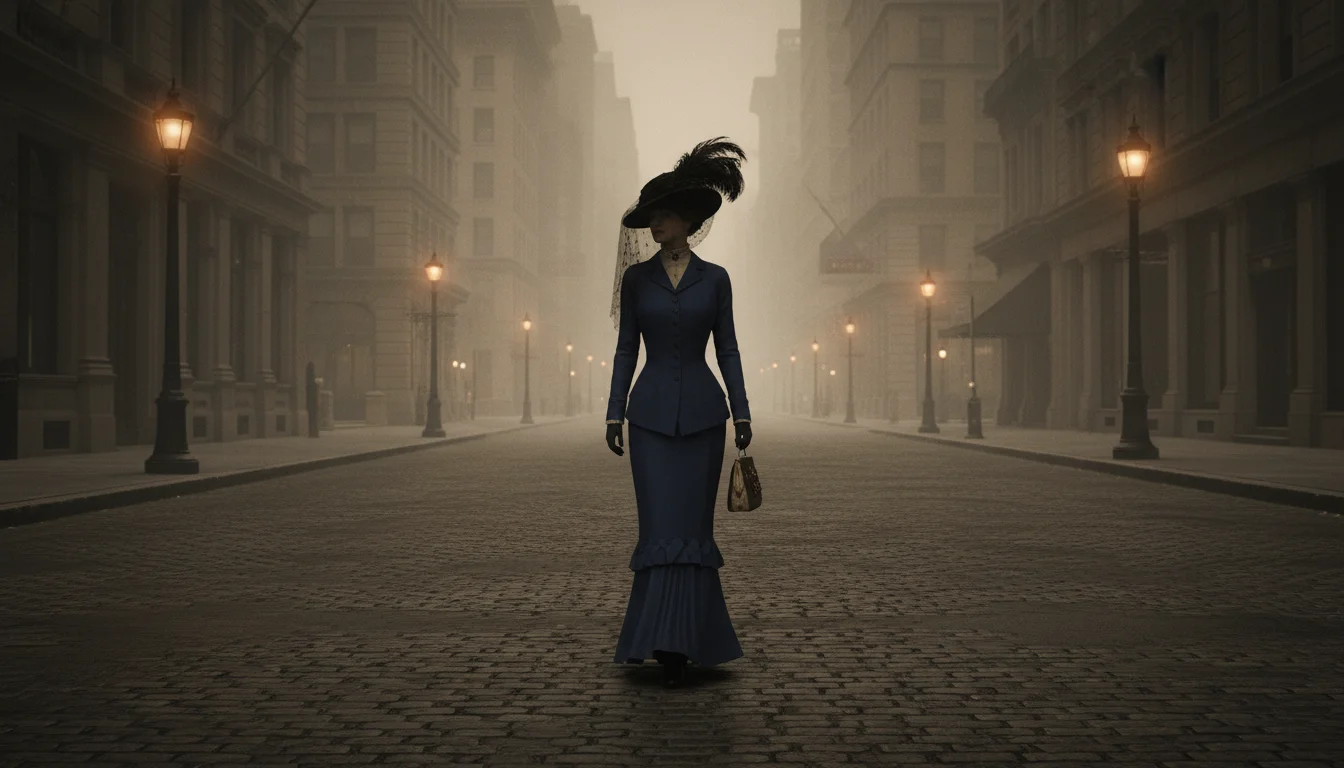
At 11 a.m. on December 12, 1910, Dorothy Arnold kissed her mother goodbye and stepped out of her family's Upper East Side townhouse. She was twenty-five years old, heir to a perfume fortune, and had plans to buy a dress for her younger sister's debutante party.
She walked south on Fifth Avenue, bought chocolates at Park & Tilford, tucked them into her fur muff. Browsed the shelves at Brentano's bookstore, purchased a humor book called Engaged Girl Sketches. Ran into a friend named Gladys King outside the shop, chatted about the upcoming party.
"I think I'll walk home through Central Park," Dorothy said.
Gladys watched her turn and wave goodbye one last time.
That was the last confirmed sighting of Dorothy Arnold - ever.
The Family That Kept Secrets
When Dorothy failed to appear for dinner that evening, the Arnolds grew concerned. But they didn't call the police. They called a lawyer.
For six weeks, the Arnold family conducted a private investigation while lying to friends about their daughter's whereabouts. When one concerned friend phoned to ask if Dorothy had been found, her mother claimed she had returned home safely and gone to bed with a headache.
Why the secrecy? The Arnolds were Gilded Age aristocracy - descendants of Mayflower passengers, listed in the Social Register, connected to Supreme Court Justice Rufus Peckham through marriage. In their world, a missing daughter meant scandal. Public searches meant newspaper headlines. Better to handle things quietly.
They hired Pinkerton detectives. Searched hospitals, morgues, jails in New York, Boston, and Philadelphia. Investigated ocean liners leaving for Europe. Questioned Dorothy's friends and former Bryn Mawr classmates.
Nothing.
The Rejected Writer
When investigators searched Dorothy's bedroom, they found burned papers in her fireplace - presumed to be rejected manuscripts she had submitted to McClure's magazine. Dorothy had desperately wanted to be a writer. Her family found this aspiration amusing.
Just weeks before her disappearance, McClure's had rejected her short story "The Poinsettia Flames." According to friends, she was "dejected and embarrassed." Two months earlier, she had begged her father to let her move to Greenwich Village to focus on her writing. He refused.
"A good writer can write anywhere," Francis Arnold told his daughter.
She never published a single word.
The Secret Lover
The investigators also found letters - letters from George Griscom Jr., a forty-year-old engineer from Pittsburgh with whom Dorothy had been carrying on a secret romance. The Arnolds had discovered the relationship months earlier when Dorothy pawned $500 worth of jewelry to finance a week-long hotel stay with Griscom in Boston. She had told her parents she was visiting a college friend.
They forbade her to see him again. She continued writing him in secret.
When news of Dorothy's disappearance finally broke in January 1911, reporters tracked Griscom down in Florence, Italy, where he was vacationing with his parents. Dorothy's mother and brother crossed the Atlantic by steamship to interrogate him in person. He maintained his innocence, claiming to know nothing about her disappearance.
Curiously, hotel staff reported seeing Griscom having an "earnest talk" with a veiled woman who appeared "greatly agitated." Was it Dorothy? No one could say for certain.
Griscom spent thousands of dollars on newspaper advertisements begging Dorothy to come home. He publicly declared his intention to marry her once she was found. Her mother told reporters she would never approve of such a marriage.
The Theories
With no body and no definitive answers, speculation flourished. The same gap between evidence and conclusion appears in modern cases: the Maura Murray disappearance in 2004 generated a nearly identical range of theories - suicide, accident, foul play, voluntary disappearance - with no more resolution than Arnold's. For more on the Elaine Park disappearance, another young woman whose abandoned car raised more questions than answers, see the full case breakdown.
Suicide: Dorothy was despondent over her failed writing career. Both Griscom and the family lawyer believed she may have taken her own life. But where was the body? Her father believed she was murdered in Central Park and dumped in the reservoir - a theory police dismissed because the reservoir was frozen solid that December.
Botched Abortion: Years later, a doctor who ran an underground women's clinic claimed Dorothy had died during a procedure at his establishment. He said he disposed of the body. No evidence ever confirmed this story.
Murder: In 1916, a prison inmate named Edward Glenmorris claimed he had helped bury a body matching Dorothy Arnold. Some suspected he had been hired by Griscom. Police searched the location he described and found nothing.
Voluntary Disappearance: Perhaps she simply walked away from her gilded cage - the controlling father, the forbidden romance, the literary dreams her family mocked. Perhaps she became someone else.
The Strangest Twist
In April 1921, after the Arnold family had spent over $100,000 searching for their daughter (roughly $1.7 million today), something peculiar happened.
Police Captain John H. Ayers, head of the Missing Persons Bureau, announced to the press: "The case has been solved by the department. Dorothy Arnold is no longer listed as a missing person."
He refused to elaborate. The family's lawyer immediately denied the claim, calling it "a damned lie" and insisting no solution had been found.
What did the police know? Why did they close the case? The Arnold family never explained. Dorothy was eventually declared dead in absentia, but no death certificate with cause of death was ever issued.
The Enduring Mystery
Dorothy Arnold's case holds a grim distinction: it remains the oldest unsolved missing persons case in the United States, still listed in the Charley Project database alongside more than 15,000 other unresolved disappearances.
Her family never found answers. Her mother Mary died in 1928, her father Francis in 1922 - both reportedly still hoping their daughter might walk through the door. Her lover George Griscom eventually married someone else and lived until 1938.
And Dorothy? She remains frozen in time - a twenty-five-year-old woman in a blue suit and black velvet hat, carrying chocolates in a fox fur muff, walking into Central Park on a cold December afternoon.
Over a century later, we still don't know where she went.
The last photograph of Dorothy Arnold was taken around 1910. Her case file remains open with the New York Police Department.

Want to Interrogate the Suspects?
Chat with historical figures and uncover the truth behind history's greatest mysteries.
Start Your InvestigationJoin the HistorIQly Club
Get smarter about the past.
Weekly stories, deep dives, and exclusive content straight to your inbox.