The Dyatlov Pass Incident: Nine Deaths That Still Haunt Us
The Dyatlov Pass Incident: nine Soviet hikers died in the Ural Mountains in 1959 under circumstances that still have no definitive explanation.
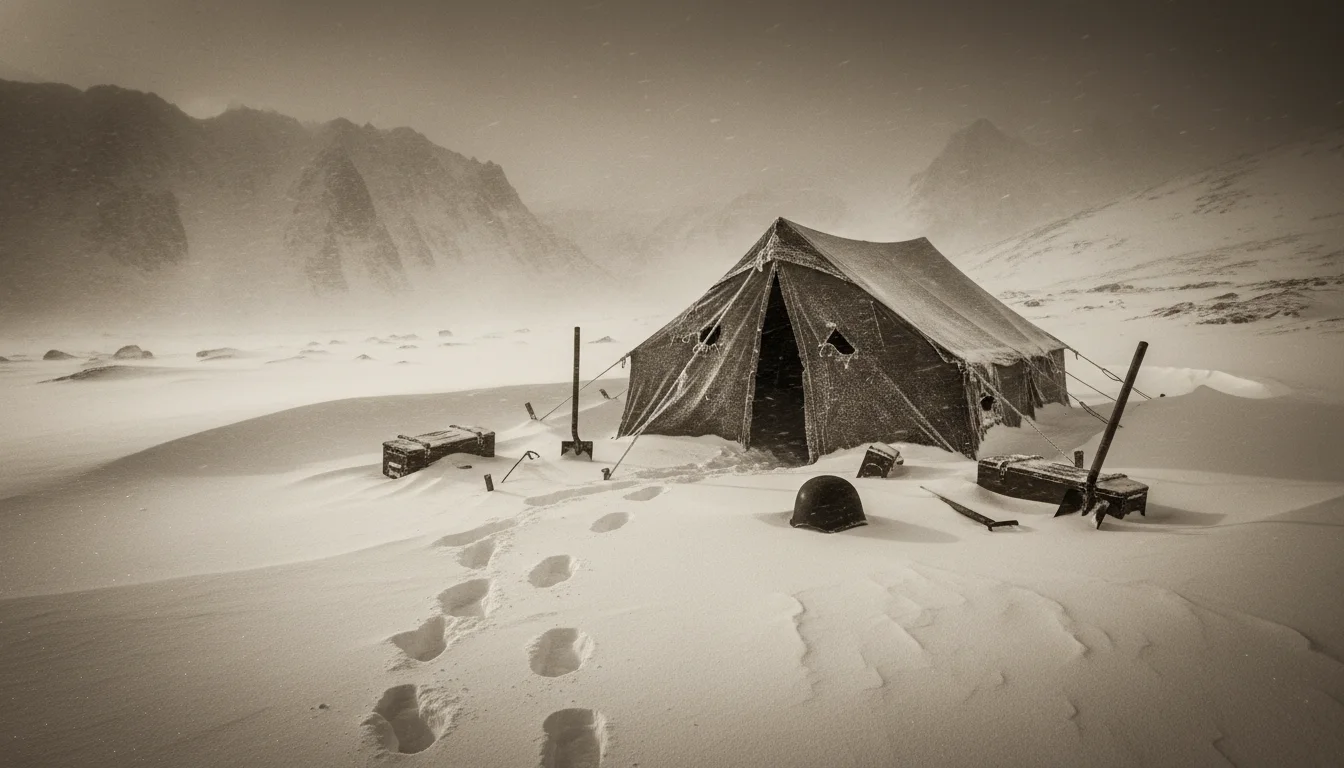
On February 2, 1959, nine experienced hikers set up camp on the slopes of Kholat Syakhl in the northern Ural Mountains. By morning, they were all dead - scattered across the frozen landscape in various states of undress, their tent slashed open from the inside, their bodies bearing injuries that defied explanation.
More than six decades later, the Dyatlov Pass Incident remains one of history's most perplexing unsolved mysteries.
The Expedition
The group was led by 23-year-old Igor Dyatlov, an experienced mountaineer and engineering student at Ural Polytechnic Institute. His team consisted of eight fellow students and recent graduates - seven men and two women - all experienced hikers with winter camping skills.
Their goal was to reach Otorten; the tragedy itself would unfold on the slopes of nearby Kholat Syakhl, whose name in the local Mansi language means "Dead Mountain." The expedition was rated Category III - the most difficult - and would earn the participants their Grade III hiking certification upon completion.
On January 28, 1959, one member, Yuri Yudin, turned back due to illness. It was a decision that would save his life and haunt him until his death in 2013.
The Discovery
When the group failed to return by their expected date, search parties were dispatched. On February 26, searchers discovered the tent on the slope of Kholat Syakhl - not on Otorten as planned. What they found was deeply disturbing.
The tent had been cut open from the inside. Footprints in the snow showed the hikers had fled in various states of undress - some barefoot, others in socks or a single boot - into temperatures of -30°C (-22°F). The footprints led toward a nearby cedar tree and a ravine, then vanished.
The first two bodies were found near the cedar tree, dressed only in underwear. Three more, including Dyatlov himself, were found between the cedar and the tent, in poses suggesting they had been trying to return. The remaining four were not discovered until May, buried under four meters of snow in a ravine 75 meters from the cedar.
The Inexplicable Injuries
The condition of the bodies raised more questions than answers.
The two found at the cedar showed signs of having climbed the tree - broken branches extended up to five meters high. A fire had been lit but barely maintained. One had bitten through his own knuckles.
The four found in the ravine had sustained catastrophic injuries. Lyudmila Dubinina had major chest fractures and was missing her tongue, eyes, and part of her lips. Semyon Zolotaryov had severe chest trauma, and Nikolai Thibeaux-Brignolles had a fatal skull fracture. The force required to cause such injuries was compared to that of a car crash - yet there were no external wounds.
Some of the dead were wearing clothing from others who had died earlier. Some items showed traces of radioactivity. One victim's camera contained undeveloped film that, when processed, showed a strange luminous object.
Official Investigation
The Soviet investigation, led by prosecutor Lev Ivanov, struggled to explain the evidence. The final verdict attributed the deaths to a "compelling natural force" - a vague conclusion that satisfied no one.
The case was quickly closed, and the area was sealed off to hikers for three years. Files were classified. Rumors spread.
Theories Through the Decades
The mystery has spawned countless theories, ranging from the plausible to the paranoid.
Avalanche theory: A small slab avalanche may have struck the tent, causing the hikers to flee in panic and sustaining injuries from the snow's weight. This was the Russian government's official conclusion in 2020 after reopening the investigation. Critics note the lack of typical avalanche debris and the relatively gentle slope.
Katabatic wind hypothesis: A violent wind event could have created conditions so disorienting and dangerous that the hikers abandoned their tent. This might explain the scattered positions but not the severe internal injuries.
Paradoxical undressing: As hypothermia progresses, victims sometimes remove their clothing due to a false sensation of burning heat. This could explain the partial nudity but not the flight from the tent.
Infrasound theory: Some researchers suggest wind passing over the dome of Kholat Syakhl created infrasound frequencies that induced panic and irrational behavior. Experiments have shown infrasound can cause feelings of fear and disorientation in humans.
Military involvement: The presence of radioactive material and reports of strange lights in the sky led some to speculate about secret weapons tests or rocket debris. The Soviet military was active in the region, though no direct evidence links them to the incident.
Indigenous attack: Early investigators considered whether local Mansi people might have attacked the group for trespassing on sacred land. This theory was quickly dismissed - there were no signs of other people at the scene, and the Mansi had no history of violence toward outsiders.
What We Know - And Don't Know
Certain facts seem clear: the hikers left their tent voluntarily in a hurry, inadequately dressed for the conditions. They became separated. Some tried to return. All died of hypothermia or injuries sustained before freezing.
But crucial questions remain unanswered. What made them cut open their own tent and flee into certain death? How did four of them sustain crushing internal injuries with no external trauma? Why the traces of radioactivity?
A Legacy of Mystery
The Dyatlov Pass has become a pilgrimage site for mystery enthusiasts and conspiracy theorists alike. Books, documentaries, and films continue to probe the incident. In 2019, Russian authorities announced they would re-examine the case - ultimately reaffirming the avalanche theory while acknowledging it could not explain everything.
Igor Dyatlov's sister believes to this day that authorities concealed the truth. Yuri Yudin, the man who turned back, spent his remaining years trying to understand what killed his friends. "If I had a chance to ask God just one question," he once said, "it would be: What really happened to my friends that night?"
The mountain the Mansi warned against has kept its secrets. Perhaps it always will.
For other cold cases that have resisted decades of investigation, the Tara Calico Polaroid mystery from New Mexico and the Hinterkaifeck murders from 1920s Bavaria share the same persistent uncertainty.
The Dyatlov Pass Incident reminds us that history is not just about what we know - but about the mysteries that endure despite our best efforts to solve them.

Want to Interrogate the Suspects?
Chat with historical figures and uncover the truth behind history's greatest mysteries.
Start Your InvestigationJoin the HistorIQly Club
Get smarter about the past.
Weekly stories, deep dives, and exclusive content straight to your inbox.