The Lindbergh Baby Kidnapping: The Crime of the Century, Still Disputed
The Lindbergh baby kidnapping of 1932: America's Crime of the Century, and the doubts that have never died about Bruno Hauptmann's guilt.

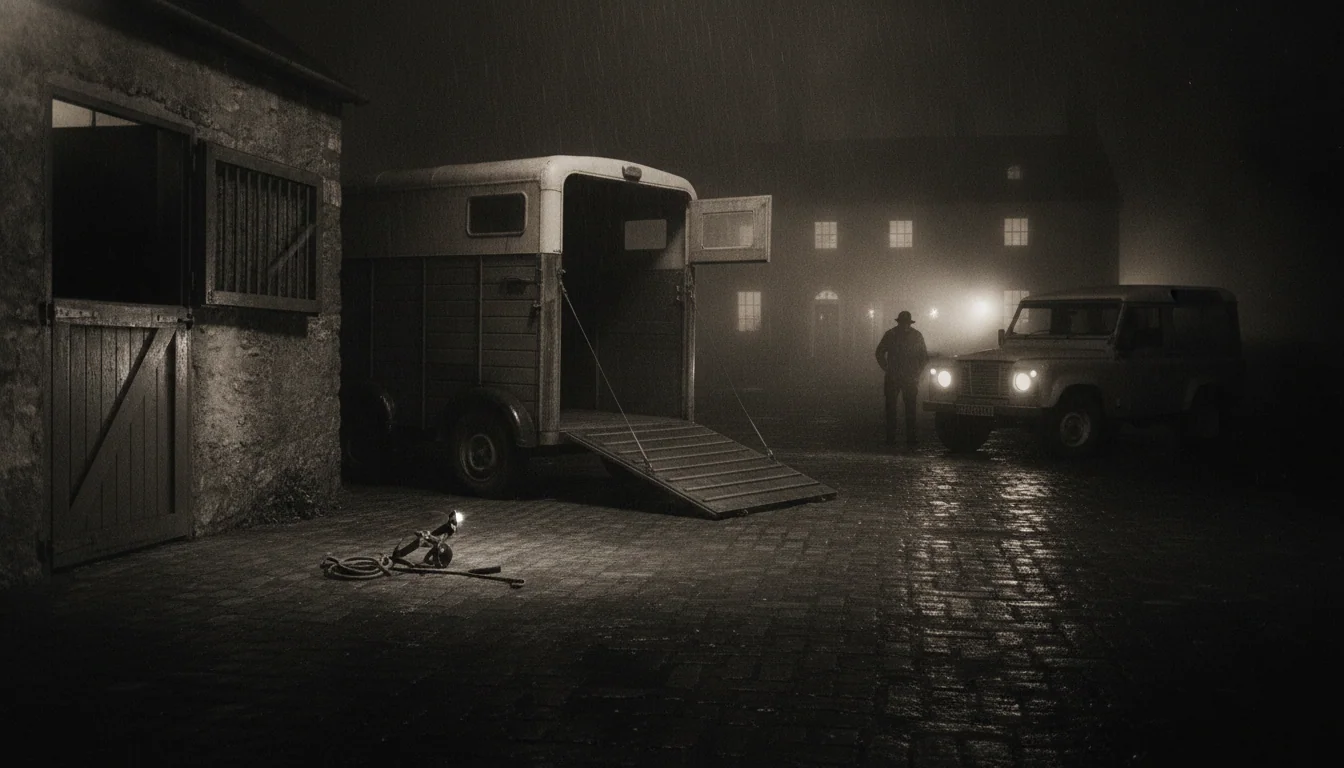
On the night of March 1, 1932, in a quiet country home in Hopewell, New Jersey, the 20-month-old son of the most famous man in the world disappeared from his nursery. Charles Augustus Lindbergh Jr., known to family as Little Eaglet, had been put to bed by his nurse just after 7:30 p.m. By 10:00 p.m., he was gone. A homemade wooden ladder lay beneath the open window, and a ransom note demanding $50,000 sat on the sill.
What followed became known as the Crime of the Century, a case so massive it permanently changed American kidnapping law, federal criminal jurisdiction, and the relationship between the press and high-profile investigations. Almost a hundred years later, despite a conviction and an execution, parts of the case remain disputed, and many serious historians believe key questions were never properly answered.
The kidnapping
The Lindberghs were not supposed to be at the Hopewell estate that Tuesday. They normally returned to the home of Anne Morrow Lindbergh's parents in Englewood on weekends, and stayed in Hopewell during the week. The fact that the kidnappers struck on a Tuesday at the new home, when the family was rarely there, suggested either remarkable luck or inside knowledge.
The crime scene yielded a strange mixture of clues and absences. The ladder was crude but specific, made of three sections so it could be collapsed for transport. A chisel was found near the window. There were footprints in the mud, but they were never properly preserved. There were no fingerprints inside the nursery, even on surfaces a kidnapper would have had to touch. From the start, investigators believed at least two people might have been involved.
The ransom note was barely literate but distinctive. It contained a peculiar signature: two interlocking circles with a red center and three holes punched through the paper. Subsequent ransom notes, eventually fifteen in total, contained the same symbol. They also contained Germanic syntax errors that pointed strongly toward someone born in a German-speaking country.
The negotiation and the discovery
Charles Lindbergh, world hero and a man unaccustomed to taking orders, tried to direct the investigation himself. This had real consequences. Lindbergh insisted that organized crime might be involved and demanded contact with figures from the underworld. He also placed his faith in a strange middle-aged retired teacher from the Bronx named John F. Condon, who had volunteered to act as an intermediary.
Through Condon, Lindbergh paid a $50,000 ransom in marked bills, including gold certificates that would soon be withdrawn from circulation. The exchange took place at a Bronx cemetery in April 1932. The man who took the money called himself "John" and had a heavy German accent. He told Condon that the baby was being held on a boat called the Nelly off the Massachusetts coast.
There was no boat. There was no living baby.
On May 12, 1932, a truck driver named William Allen pulled off a road just 4.5 miles from the Lindbergh estate to relieve himself in the woods. He found the partially decomposed body of a small child, half-buried under leaves and debris. Charles Lindbergh Jr. had probably been dead since the night of the kidnapping. The most likely cause was a skull fracture, possibly from the kidnapper falling on the ladder while carrying him down.
The boat story had been a fiction designed to keep the ransom flowing. The child the Lindberghs had been negotiating to save was already a body in the woods.
The arrest of Bruno Hauptmann
For more than two years the case stalled. Then, in September 1934, a Manhattan gas station attendant noted the license plate of a customer who paid with a $10 gold certificate, by then a deeply suspicious form of currency. The plate traced to a German-born carpenter named Bruno Richard Hauptmann, living in the Bronx with his wife and infant son.
A search of Hauptmann's garage produced more than $14,000 in marked Lindbergh ransom money, hidden inside the walls. It was the most damning physical evidence in the case. Hauptmann claimed the money had been left with him by a friend named Isidor Fisch, who had returned to Germany and died of tuberculosis. Fisch was a real person, and he had indeed died, but his family denied that he could have left such a sum behind.
Hauptmann was arrested, charged, and tried in Flemington, New Jersey, in early 1935. The trial drew over 700 reporters and was, according to many observers, a circus. He was convicted, sentenced to death, and executed in the electric chair on April 3, 1936. He maintained his innocence until the moment of his death.
Why the case is still disputed
If Hauptmann was guilty, the verdict feels just. But several elements of the case have troubled historians for decades.
The wood evidence
Prosecutors made dramatic use of a forensic claim that a single rail of the kidnapping ladder, called Rail 16, had been cut from a board in Hauptmann's attic. Wood expert Arthur Koehler testified that the grain matched. Modern reviews of the evidence have raised serious questions about whether the match was as definitive as presented, and whether police may have generated some of the forensic links during the investigation.
Alibi and witnesses
Hauptmann's alibi witnesses, including his wife and a coworker who claimed he was working at a Bronx construction site on the day of the kidnapping, were either dismissed by the court or contradicted by employment records that some later researchers argue were altered. Some prosecution witnesses, including John Condon, dramatically changed their identifications of Hauptmann between earlier statements and trial testimony.
The likelihood of accomplices
Investigators always suspected the kidnapping involved at least two people. Yet Hauptmann was tried as if he had acted alone. The chisel in the mud, the inside knowledge of the family's schedule, and the complexity of the ransom drops all suggest a network. Hauptmann insisted he was not the kidnapper, and if he was lying, he might still have been part of a larger plot whose other members were never caught.
Family suspicions
A small group of researchers has even pointed at members of the Lindbergh household, including the eccentric Lindbergh himself, who had a documented sense of humor about hoaxes. Charles had once hidden the same baby in a closet as a prank weeks before the actual kidnapping. Most historians find these theories far-fetched, but the lingering uneasiness reflects how much of the official story relied on circumstantial inference.
The legacy
The Lindbergh case reshaped American crime in profound ways. The Federal Kidnapping Act of 1932, the so-called Lindbergh Law, expanded the FBI's role in kidnapping investigations and made it a federal crime to transport victims across state lines. Trial by media reached new heights, prompting a reexamination of how courtroom proceedings should be reported and broadcast. The case also marked the beginning of forensic pseudo-celebrity, with experts like Koehler becoming public figures.
For the Lindberghs themselves, the toll was permanent. Charles and Anne fled the United States to escape the constant press attention, eventually moving to England. Lindbergh's later flirtations with German politics in the 1930s further damaged his reputation, though many biographers see them as distorted by the trauma of the kidnapping.
What we may never know
Was Bruno Hauptmann the kidnapper? Probably he was at least involved. The ransom money was in his garage, his handwriting closely matched the ransom notes, and his Bronx accent fits the man who collected the money in the cemetery.
Did he act alone? Almost certainly not, no matter how the prosecution staged the case.
Did the New Jersey State Police, eager to close one of the most embarrassing investigations in American history, manipulate evidence to ensure conviction? That accusation has been raised repeatedly, and some of the surviving documentation supports the suspicion that at least some forensic links were oversold.
What we do know is that on a March night in 1932, a baby was lifted out of a New Jersey nursery and never came home. Whatever else the case has become, that crime, simple and irreducible, is the only thing that all the theories agree on.
For other American cases where a conviction never fully quieted the doubts, see the Hall-Mills murders, 1922 and the Black Dahlia murder.
Quick Answers
Common questions about this topic
Who kidnapped the Lindbergh baby?
Bruno Richard Hauptmann, a German-born carpenter living in the Bronx, was convicted and executed for the crime in 1936. However, the case against him was largely circumstantial, and many historians, journalists, and investigators have questioned whether he acted alone or whether he was involved at all.
What was the Lindbergh Law?
Passed by the U.S. Congress in 1932 in direct response to the kidnapping, the Federal Kidnapping Act, popularly called the Lindbergh Law, made it a federal crime to transport a kidnapping victim across state lines. It dramatically expanded FBI jurisdiction in kidnapping cases.
Was the Lindbergh baby's body found?
Yes. On May 12, 1932, more than two months after the kidnapping, the partially decomposed body of Charles Lindbergh Jr. was found by a truck driver in woods about 4.5 miles from the Lindbergh estate. The cause of death was a fractured skull, possibly inflicted on the night of the abduction.
Why do people doubt Hauptmann's guilt?
Several factors fuel ongoing doubt: the ransom money found in his garage was the only physical link to the crime, his alibi witnesses were never properly evaluated, the wood-grain forensic evidence has been challenged, and key witnesses changed their stories. Hauptmann maintained his innocence until execution.

Want to Interrogate the Suspects?
Chat with historical figures and uncover the truth behind history's greatest mysteries.
Start Your InvestigationJoin the HistorIQly Club
Get smarter about the past.
Weekly stories, deep dives, and exclusive content straight to your inbox.