Glenn Miller Disappearance: The Band Leader Who Vanished Over the Channel
Glenn Miller vanished over the English Channel on December 15, 1944 - leaving his troops, his music, and the question of what happened without answers eight decades later.
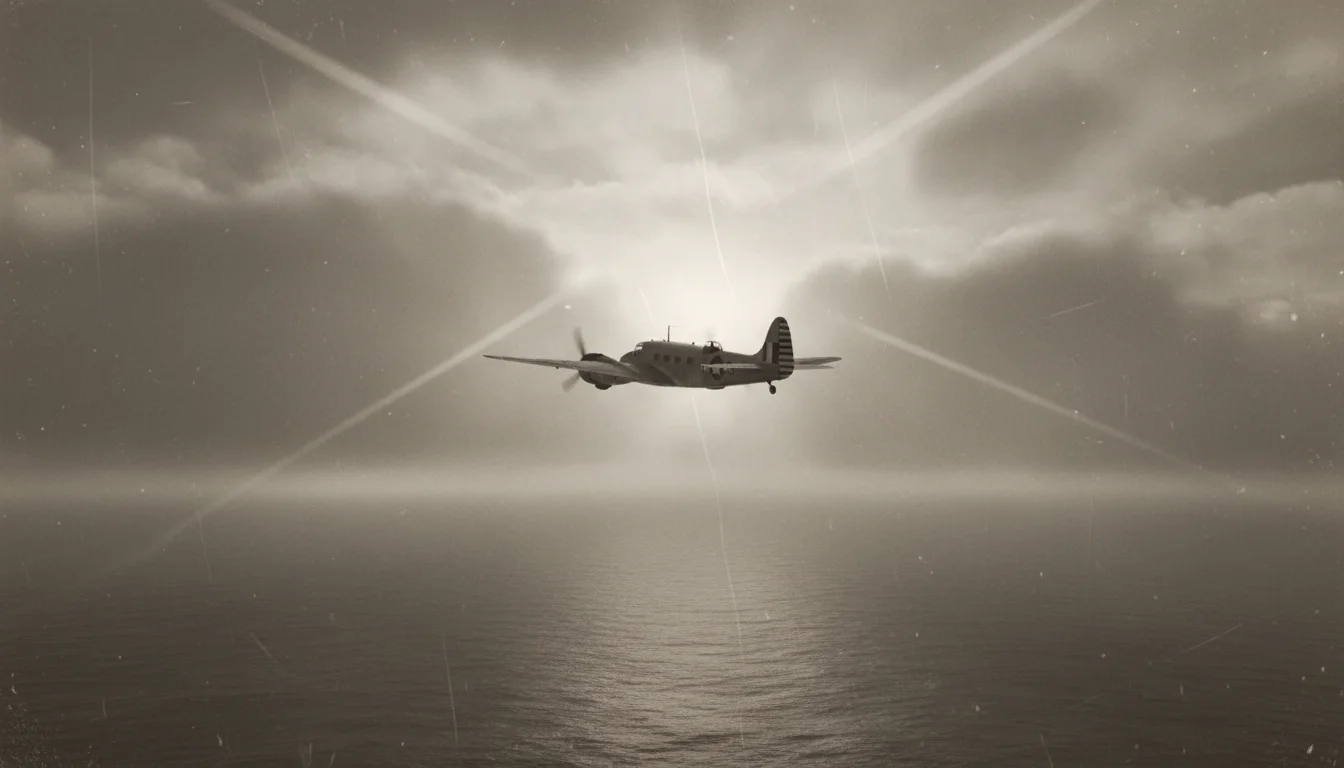
On Christmas Day, 1944, American soldiers stationed across Europe received devastating news. Glenn Miller - the King of Swing, the man whose music represented home - was gone. He had vanished somewhere over the English Channel, his plane swallowed by the cold December sky. No distress call. No wreckage. No body.
To understand why this disappearance shocked the world, you have to understand who Glenn Miller was. He wasn't just a musician. He was the musician. The human embodiment of the big band era.
The King of Swing
By 1939, the Glenn Miller Orchestra had become America's most popular musical act. Hits like "In the Mood," "Moonlight Serenade," and "Chattanooga Choo Choo" dominated the airwaves. "Chattanooga" became the first-ever certified gold record. In just four years, Miller scored 16 number-one records and 69 top-10 hits - more than Elvis Presley or The Beatles would achieve in their entire careers.
His sound was distinctive: a lead clarinet floating over four saxophones, creating that warm, nostalgic tone that defined an era. When Americans thought of music, they thought of Glenn Miller.
But behind the dance halls and radio broadcasts, a world war was raging. And Miller felt the pull.
Trading His Baton for a Uniform
In 1942, at the absolute height of his commercial success, the 38-year-old Miller made a shocking decision. He disbanded his wildly profitable orchestra and enlisted in the U.S. Army Air Forces as a captain.
"There's a lot of swell guys in the outfit I'm going in," he told his audience during his final civilian performance, "and maybe all of us can get together again after this thing's over."
His mission was clear: boost the morale of American soldiers stationed across Europe through music. General Dwight D. Eisenhower himself requested the formation of the American Band of the Allied Expeditionary Forces, with Miller at its helm.
The workload was punishing. Miller and his 50-piece orchestra spent up to 18 hours a day recording and performing at military bases throughout Britain. They weren't just entertainers - they were a lifeline to home for soldiers who might never see their families again.
The Army promoted him to Major. Glenn Miller had become more than a bandleader; he was a symbol of American resilience.
Narrow Escapes
By June 1944, Miller and his band were in London, providing broadcast entertainment to the D-Day forces pushing into Europe. But the German V-1 flying bombs were terrorizing the capital, and the musicians - none of whom had experienced war firsthand - were desperate to leave.
Actor David Niven helped arrange their transfer to Bedford on July 2nd. It proved to be a close call. The very next evening, a V-1 struck the Chelsea building where the band had been staying. Seventy-four American military personnel died in that attack.
For five months, the orchestra was based at Milton Ernest Hall in Bedford, performing for troops, broadcasting for the BBC, and recording with legends like Bing Crosby and Bob Hope. But Miller was restless. He wanted to follow the Allied advance into France, into Germany - wherever the troops were fighting.
The Last Flight
By December 1944, Paris had been liberated, and Miller was eager to get there ahead of his band to finalize arrangements for their performances. He was scheduled to fly on Thursday, December 14th, but bad weather cancelled the flight.
Then came an offer he couldn't refuse. Lt. Colonel Norman Baessell, a fellow American officer, had a seat available on his own flight the next day. Miller accepted.
On December 15, 1944, at 1:55 PM, Major Glenn Miller boarded a single-engine Noorduyn C-64 Norseman at RAF Twinwood in Bedfordshire. Three men were aboard: Miller, Baessell, and the pilot, Flight Officer John Morgan.
Military observers tracked the small aircraft south over Beachy Head between 2:30 and 2:45 PM.
It never appeared over France.
A Disappearance Overshadowed by War
The true horror of the situation is how long it took anyone to notice. The rest of Miller's band arrived in Paris on December 18th, expecting to meet their leader. Instead, they found confusion. Military authorities hadn't been informed of Miller's travel plans.
To make matters worse, Miller was technically in violation of his official travel orders - he had bypassed the scheduled military transport in favor of Baessell's private flight. In the chaos of war, his absence didn't immediately raise alarms.
Then, the very next day after Miller's flight, the Battle of the Bulge erupted in Belgium. Suddenly, one missing officer was the least of anyone's concerns.
It wasn't until Christmas Day that the news broke publicly. Glenn Miller, America's musical hero, was gone.
Theories and Investigations
In the decades since, theories have proliferated:
The Official Explanation: A 1945 U.S. Army inquiry concluded the C-64 disappeared over the English Channel due to "pilot error, mechanical malfunction, and poor weather." Modern analysis suggests the single-engine Norseman's carburetor likely froze in the extreme cold, causing engine failure. The aircraft was known for this vulnerability - several other Norsemans had crashed under similar conditions.
The Friendly Fire Theory: Some researchers claimed Miller's plane was accidentally struck by bombs jettisoned from RAF Lancaster bombers returning from an aborted mission. A British navigator named Fred Shaw came forward in 1984 claiming he witnessed a small plane crash into the Channel that day. However, subsequent investigations found the timing and location didn't match Miller's flight path.
The Conspiracy Theories: Wilder speculation suggested Miller made it to Paris but was killed during a German commando attack, or died from a heart attack in a Parisian brothel and the military covered it up. None of these theories hold up to scrutiny.
The Definitive Assessment: Glenn Miller biographer Dennis Spragg, who has spent decades researching the case with access to military archives, concludes: "There is no mystery about the Glenn Miller disappearance." The small, single-engine aircraft flew into freezing conditions over the English Channel. The carburetor heater failed. The engine died. Three men plunged into the cold December waters and were never seen again.
"The loss of Maj. Glenn Miller on December 15, 1944, was an avoidable tragedy," Spragg writes.
The Music Lives On
No wreckage has ever been recovered. No bodies ever found. Major Alton Glenn Miller, Lt. Colonel Norman Baessell, and Flight Officer John Morgan are memorialized on the Tablets of the Missing at Cambridge American Cemetery in England. Miller has a cenotaph at Arlington National Cemetery, though there are no remains beneath the headstone.
In February 1945, he was posthumously awarded the Bronze Star Medal.
But Miller's legacy transcended his death. "The Glenn Miller Story," starring Jimmy Stewart, became a box office sensation in 1954. The Airmen of Note, the successor to his military band, still performs his music today for audiences around the world.
"And today we have kids in the audience standing up and cheering when they hear 'In the Mood,'" said Joe Jackson, a former member of the Airmen of Note. "I think as long as the music's being played, I don't see it declining."
Glenn Miller was 40 years old when he disappeared. He had traded wealth and fame for a uniform, comfort for danger, applause for service. He gave everything for his country - including his life.
Somewhere beneath the cold waters of the English Channel, the King of Swing still sleeps. Eighty years later, the only remaining question is exactly where.
But in dance halls and radio stations, in films and jazz clubs around the world, his music keeps playing. And perhaps that's the only answer that really matters.
For another famous disappearance that the official verdict never quite closed, see Amelia Earhart's disappearance. For the definitive WWII film that captures the era Miller served, see Saving Private Ryan vs history.

Want to Interrogate the Suspects?
Chat with historical figures and uncover the truth behind history's greatest mysteries.
Start Your InvestigationJoin the HistorIQly Club
Get smarter about the past.
Weekly stories, deep dives, and exclusive content straight to your inbox.