Michael Rockefeller Disappearance: Vanished in Cannibal Territory
Michael Rockefeller disappeared off New Guinea in 1961. Evidence gathered decades later suggests he made it to shore, only to face something far worse than drowning.
Read Wikipedia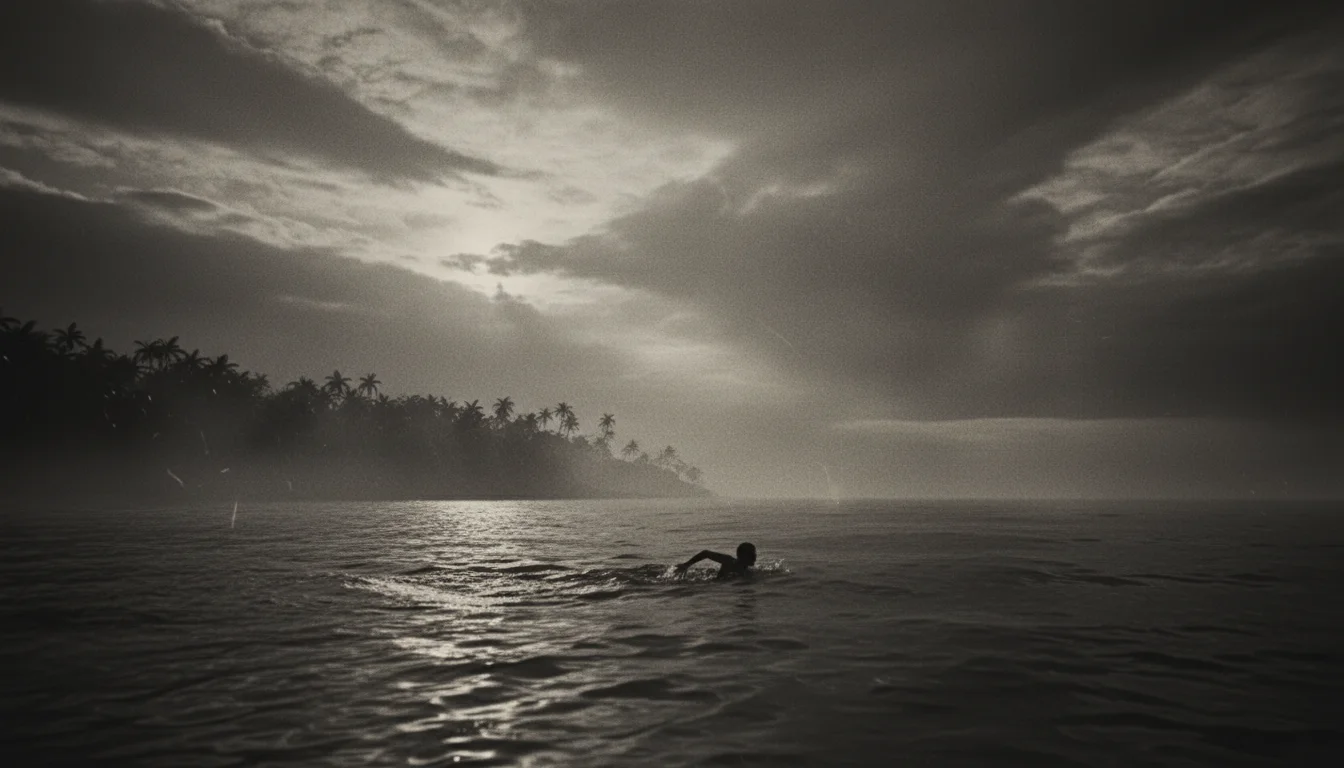
On November 19, 1961, a 23-year-old Harvard graduate clung to an overturned catamaran in the crocodile-infested waters off New Guinea, watching his companion's face grow increasingly desperate. The tide was pulling them out to sea. No rescue was coming.
"I think I can make it," Michael Rockefeller told René Wassing, his Dutch guide.
He stripped off his clothes, strapped two empty gas cans to his body for flotation, and slipped into the murky water. The shore was perhaps ten miles away - a brutal swim, but not impossible for a young man in peak physical condition.
Michael Rockefeller was never seen again.
His father, Nelson Rockefeller - then Governor of New York and future Vice President of the United States - launched the largest private search operation in history. Dutch navy ships, helicopters, and native canoes scoured the coastline for weeks. They found nothing. Not a body. Not a gas can. Not a shred of clothing.
For sixty years, the official verdict has remained the same: Michael Rockefeller drowned or was taken by sharks.
But that's not what happened.
The Art Collector Who Went Too Far
Michael Rockefeller had everything a young man could want - unlimited wealth, an Ivy League education, and a family name that opened every door in America. But he wanted something money couldn't buy: authenticity.
In 1961, he joined the Harvard-Peabody Expedition to Netherlands New Guinea (now the Indonesian province of Papua), collecting artifacts from the Asmat people - headhunters and cannibals who had barely encountered the outside world. While other anthropologists kept their distance, Michael waded into villages, traded steel axes for carved shields and ancestor poles, and documented a culture that had changed little in ten thousand years.
The Asmat fascinated him. Their art was unlike anything in Western museums - massive wooden poles carved with intertwined human figures, skulls decorated with seeds and feathers, shields painted with symbols of warfare and death. To the Asmat, art wasn't decoration. It was power. Every carved figure represented an ancestor whose death demanded revenge.
Michael couldn't get enough. He returned for a second expedition in autumn 1961, pushing deeper into unmapped territory, visiting villages that had never seen a white man.
His colleagues warned him. The Asmat were unpredictable. Some villages welcomed outsiders; others remembered Dutch colonial massacres and harbored murderous grudges. Michael dismissed their concerns. He was a Rockefeller. What could possibly happen to him?
The Day Everything Went Wrong
On November 17, 1961, Michael and René Wassing set out from the village of Otsjanep in a 40-foot catamaran, heading south to collect more artifacts. The boat was overloaded with supplies and two teenage Asmat guides.
Somewhere off the coast, the catamaran's outboard motors failed. Waves swamped the vessel, and it capsized in the river mouth where freshwater met the Arafura Sea. The two Asmat guides immediately swam for shore - they knew these waters and what lurked in them.
Michael and Wassing clung to the hull, drifting with the current. Hours passed. The coast was visible but impossibly distant. No boats came.
By dawn on November 19, they were twelve miles from shore and being pulled out to sea. Michael made his decision.
"I think I can make it," he said.
Wassing watched him swim toward the green line of mangroves on the horizon until he disappeared from view. A few hours later, a rescue plane spotted Wassing still clinging to the wreckage. They never found Michael.
The Official Story Falls Apart
The Dutch colonial authorities declared Michael dead within days. Drowning or sharks - the jungle coast was too dangerous for anyone to survive. Case closed.
But the official story had problems from the start.
Michael was an exceptional swimmer who had trained with the Harvard swim team. The ten-mile distance, while challenging, was well within his physical capabilities - especially with flotation devices. The weather was calm. The sharks that patrol those waters rarely attack humans near river mouths, where the water is murky and full of other prey.
More importantly, the Asmat guides who swam ashore that first night made it without incident. If two teenagers could reach land, why couldn't a fit young Harvard athlete?
The uncomfortable truth that Dutch authorities didn't want to discuss: if Michael Rockefeller made it to shore, he would have landed near Otsjanep - a village with a very specific grudge against white men.
The Massacre at Otsjanep
Three years before Michael's disappearance, Dutch colonial officers had visited Otsjanep to investigate reports of headhunting raids. What happened next remains disputed, but the outcome is documented: Dutch machine guns killed five Asmat warriors, possibly more.
To the Asmat, there is no such thing as an unpunished death. Every killing demands revenge - not just against the individual killer, but against their entire tribe. The white men who murdered Otsjanep's warriors were long gone by 1961. But another white man had just washed up on their beach.
In 2014, journalist Carl Hoffman published Savage Harvest, the result of years of investigation in the Asmat region. He interviewed dozens of villagers, including elderly men who had been young warriors in 1961. Their stories were remarkably consistent:
A white man emerged from the water near Otsjanep. He was naked, exhausted, barely able to walk. Warriors found him at the water's edge. They killed him with spears and bone daggers. Then they did what the Asmat do with enemies - they ate him.
The details varied: some said he was killed immediately; others claimed he was kept alive briefly. But the core narrative never changed. Michael Rockefeller made it to shore. He just didn't make it any farther.
The Silence of Sixty Years
If Michael Rockefeller was killed by the Asmat, why wasn't it investigated at the time?
The answer involves geopolitics, embarrassment, and the peculiar blindness of colonial authorities.
The Dutch were preparing to hand Netherlands New Guinea to Indonesia. An admission that cannibals had killed America's most famous young man would have been catastrophic - proof that the Dutch had failed to "civilize" their colony, justification for Indonesian annexation, and a public relations disaster of epic proportions.
Nelson Rockefeller flew to New Guinea personally to join the search. Dutch officials assured him that Michael had drowned - there was absolutely no evidence of foul play. The Governor of New York returned home to grieve his son's death at sea.
But Dutch patrol officers knew the truth. Their reports - classified for decades - documented rumors of a white man killed near Otsjanep within days of the disappearance. One officer was told directly by village chiefs that "something happened" to Michael. The reports went to colonial headquarters and disappeared into filing cabinets.
The Evidence in the Artifacts
Perhaps the most haunting detail: among the artifacts Michael Rockefeller collected - now housed at the Metropolitan Museum of Art - are objects from Otsjanep itself. Shields and poles carved by the same people who may have killed him. Ancestor figures representing the dead whose spirits demanded revenge.
The Asmat believe that the spirits of the dead inhabit carved objects. If their oral traditions are accurate, Michael Rockefeller spent his final expedition collecting artifacts charged with the spiritual obligation to kill him.
There's a bitter irony in that. Michael wanted to understand the Asmat on their own terms, to see the world as they saw it. In the end, they obliged him.
What We'll Never Know
No body has ever been recovered. No physical evidence has been found. The men who may have killed Michael Rockefeller are now dead themselves, their testimony preserved only in the memories of those they told.
The official verdict remains unchanged: death by drowning. The Rockefeller family has never publicly acknowledged the cannibalism theory. The Metropolitan Museum displays Michael's collection with respectful plaques explaining his contributions to anthropology.
But in Otsjanep, the old men still tell stories. A white man came from the water. He was killed. He was eaten. And his spirit joined their ancestors.
Whether that spirit found peace, no one can say.
For other disappearances where an official verdict has never fully satisfied investigators, see Amelia Earhart's disappearance and Harold Holt's disappearance.
Michael Rockefeller's collection remains one of the most important assemblages of Asmat art in the world, housed at the Metropolitan Museum of Art in New York.

Want to Interrogate the Suspects?
Chat with historical figures and uncover the truth behind history's greatest mysteries.
Create your free account →No card required. Some figures and features require a paid plan.
Join the HistorIQly Club
Get smarter about the past.
Weekly stories, deep dives, and exclusive content straight to your inbox.