The Iron Lady vs. History: How Accurate Is Meryl Streep's Award-Winning Biopic?
How historically accurate is The Iron Lady? Meryl Streep won an Oscar for her Thatcher portrayal, but the film sacrifices political history for personal drama.
Read Wikipedia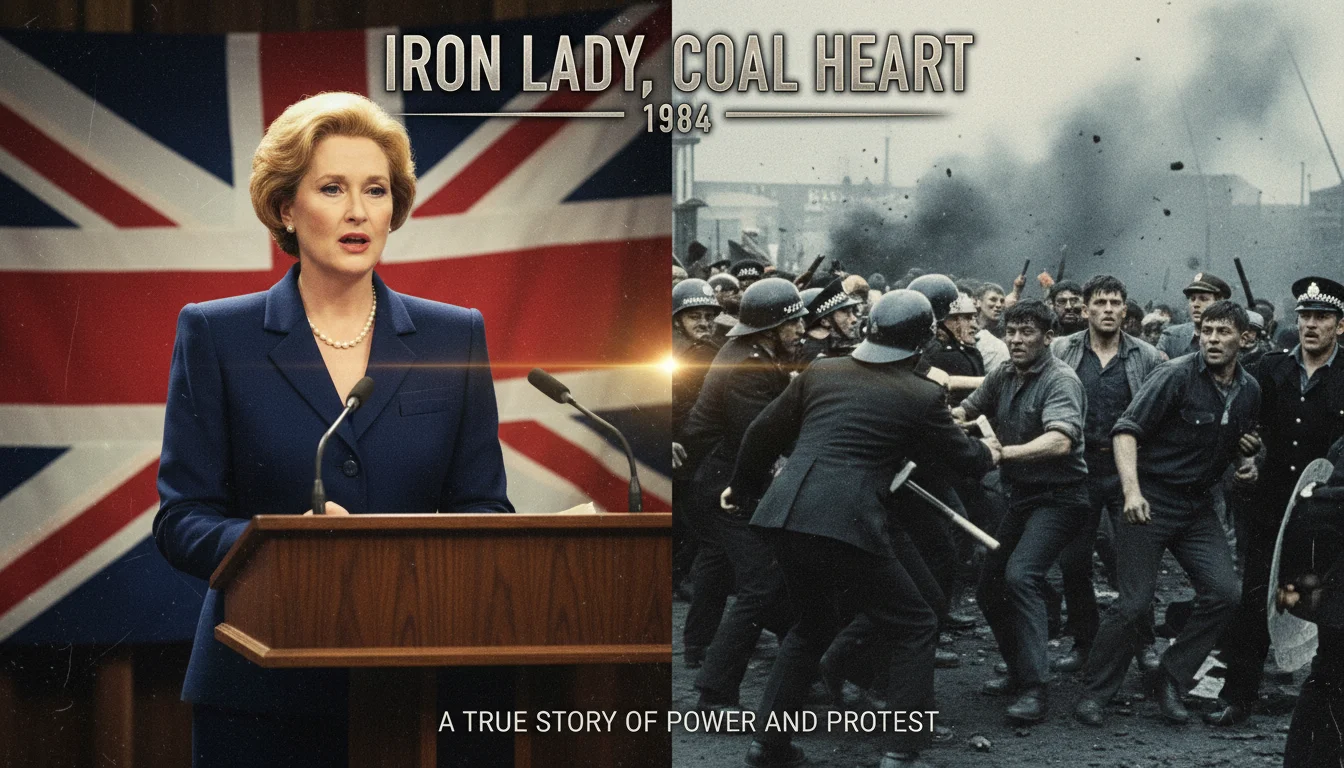
Meryl Streep won her third Academy Award playing Britain's first female Prime Minister in The Iron Lady (2011). The film portrays Margaret Thatcher's rise from grocer's daughter to the most powerful woman in British politics, and her tragic decline into dementia.
But how accurate is this intimate political portrait? Let's fact-check Hollywood's version of the Iron Lady.
What Hollywood Got RIGHT ✅
The Grocer's Daughter Origin Story
Accuracy: 9/10
The film correctly shows young Margaret Roberts (later Thatcher) growing up above her father's grocery shop in Grantham, Lincolnshire. Her father Alfred Roberts was indeed a grocer and local councilor who instilled conservative values in his daughter.
The movie accurately depicts the class barriers she faced: Oxford educated but trade-class background, constantly underestimated by the Tory establishment who preferred Eton aristocrats.
Minor nitpick: The film slightly exaggerates how much direct political mentoring her father provided, but the core influence is historically sound.
The Falklands War
Accuracy: 8/10
The film's portrayal of Thatcher's resolve during the 1982 Falklands War is largely accurate. She did face significant cabinet opposition to military action, particularly from Foreign Secretary Francis Pym. The famous War Cabinet scenes capture the tension well.
Hollywood got right:
- Her determination to retake the islands despite international pressure
- The political risk (polls showed her approval at 23% before the war)
- The aftermath boost (re-election in 1983 landslide)
What they simplified: The military planning complexity and the diplomatic negotiations. The film makes it look more clear-cut than the messy reality.
The Brighton Bombing
Accuracy: 9/10
The October 1984 IRA bomb attack on the Grand Brighton Hotel during the Conservative Party Conference is accurately portrayed. Thatcher's immediate response - insisting the conference continue the next morning - happened exactly as shown.
Her famous line "All attempts to destroy democracy by terrorism will fail" was delivered within hours of the blast. Five people died, including MP Sir Anthony Berry, and the film correctly shows Thatcher's shock but public determination.
The Relationship With Denis
Accuracy: 7/10
Denis Thatcher (Jim Broadbent) is portrayed as a supportive but occasionally exasperated husband - which matches most accounts. The film correctly shows:
- His wealthy business background (the money that let her pursue politics)
- His public loyalty and private candor
- His gin consumption (he was known to enjoy a drink)
Where they fudged it: The film exaggerates his buffoonish qualities for comic relief. Real Denis was sharper and more politically astute than the movie suggests.
What Hollywood Got WRONG ❌
The Dementia Framing Device
Accuracy: 3/10
This is the film's most controversial choice. About 60% of the runtime shows elderly Thatcher suffering from dementia after Denis's death (2003). She talks to his ghost, struggles with basic tasks, and lives in confused fragments.
The problems:
-
Timeline confusion: The film was released in 2011 while Thatcher was still alive and suffering from dementia. Many criticized it as exploitative.
-
Ahistorical structure: By framing everything through her deteriorating mind, the film distorts chronology and conflates events from different decades.
-
Family objections: Her children Carol and Mark publicly criticized this portrayal.
Historical reality: Yes, Thatcher did develop dementia in her final years. But using it as the narrative framework turns a political biography into a medical tragedy.
The Cabinet Resignations
Accuracy: 5/10
The film compresses her 1990 downfall into a montage: Geoffrey Howe resigns, makes a devastating speech, cabinet ministers tell her to quit, she leaves office.
What they oversimplified:
- The role of the poll tax riots (barely mentioned)
- The European policy disputes (reduced to vague "Europe is the enemy" rhetoric)
- The leadership challenge mechanics (Michael Heseltine's role is almost invisible)
- The brutal arithmetic: she won the first ballot but fell short of the required margin
Hollywood version: Emotional betrayal by ungrateful colleagues.
Historical reality: A political execution by a party that feared electoral annihilation.
The "Snatching Milk" Scene
Accuracy: 4/10
The film briefly shows Thatcher as Education Secretary (1970-74) canceling free school milk, earning the nickname "Maggie Thatcher, Milk Snatcher."
What they missed:
- It was a cost-cutting measure forced by cabinet budget decisions, not her personal crusade
- Labour had already ended free milk for secondary schools - she just extended it to primary
- The political damage was real but the film doesn't explain why it became such a symbol
Hollywood version: Mean conservative lady takes milk from children.
Historical reality: Treasury-mandated budget cuts during economic crisis, badly handled politically.
The Miners' Strike
Accuracy: 4/10
One of the defining conflicts of her premiership - the 1984-85 miners' strike - gets maybe 90 seconds of screen time. We see coal miners protesting and Thatcher being resolute.
What they ignored:
- The year-long duration and national trauma
- Arthur Scargill's leadership (not mentioned)
- The militarization of policing (Orgreave, etc.)
- The strategic preparation (stockpiling coal for months)
- The devastation of mining communities
This is like making an FDR biopic and skipping the New Deal.
The Economic Policy
Accuracy: 3/10
The film vaguely gestures at "unemployment" and "strikes" but never explains what Thatcherism actually was:
- Monetarism and inflation targeting
- Privatization of state industries (British Telecom, British Gas, railways)
- Deregulation of financial markets (Big Bang)
- Trade union legislation
- Poll tax disaster
Hollywood's version: She was tough and divisive.
Missing context: Why she was divisive, what she actually did, and the long-term consequences (which Britain is still debating).
The American Relationship
Accuracy: 6/10
Reagan and Thatcher had a genuine ideological alliance, correctly shown. But the film oversimplifies it into mutual admiration society.
What they left out:
- Major disagreements (Falklands timing, Grenada invasion, Northern Ireland)
- The role of Cold War geopolitics (barely mentioned)
- Her relationship with Gorbachev ("We can do business together") - cut entirely
Historical Accuracy Score: 5/10
The Iron Lady is a character study masquerading as a biopic. It's more interested in Meryl Streep's performance than Margaret Thatcher's politics.
What it gets right:
- The personal journey from grocer's daughter to PM
- The gender barriers she faced
- Key dramatic moments (Falklands, Brighton bomb)
- The basic arc of her career
What it fails to explain:
- Why she was so polarizing
- What her policies actually were
- The economic and social transformation of Britain
- The regional divide (prosperous South vs. devastated North)
- Why her own party removed her
The dementia problem:
The decision to frame the entire film through her dementia is ethically questionable and historically misleading. It reduces one of the most consequential political figures of the 20th century to a confused elderly woman talking to ghosts.
Meryl Streep's performance: 10/10 (Oscar deserved)
Historical accuracy: 5/10
As a political biography: 4/10
The Verdict
If you want to understand Margaret Thatcher's impact on Britain - the crushing of trade unions, the sell-off of public housing, the transformation of the City of London, the poll tax riots, the bitter regional divisions that persist today - this ain't it.
If you want to watch Meryl Streep deliver a masterclass in acting while learning a few basic biographical facts, you'll be entertained.
The film tells you Margaret Thatcher existed. It doesn't tell you why she mattered. For comparison, see how other political biopics handle the same challenge: Darkest Hour on Churchill and Marie Antoinette on the French queen who became a symbol rather than a person.
For actual history, watch documentaries or read biographies. For awards-season drama wrapped in a vaguely historical package, The Iron Lady delivers.
The Iron Lady herself would probably hate this movie. She famously said: "I am not a consensus politician. I'm a conviction politician."
This film strips away the convictions and leaves only the consensus version: powerful woman, faced obstacles, got old, got sad.
History deserves better. So did she.

Debate the Accuracy with the Real Figures
Ask the real people what Hollywood got wrong about their lives.
Create your free account →No card required. Some figures and features require a paid plan.
Join the HistorIQly Club
Get smarter about the past.
Weekly stories, deep dives, and exclusive content straight to your inbox.