The Beast of Gévaudan: France's 18th-Century Killer That Was Never Solved
The Beast of Gévaudan stalked southern France from 1764 to 1767, killing at least 100 people. Two and a half centuries later, no one is certain what it was.
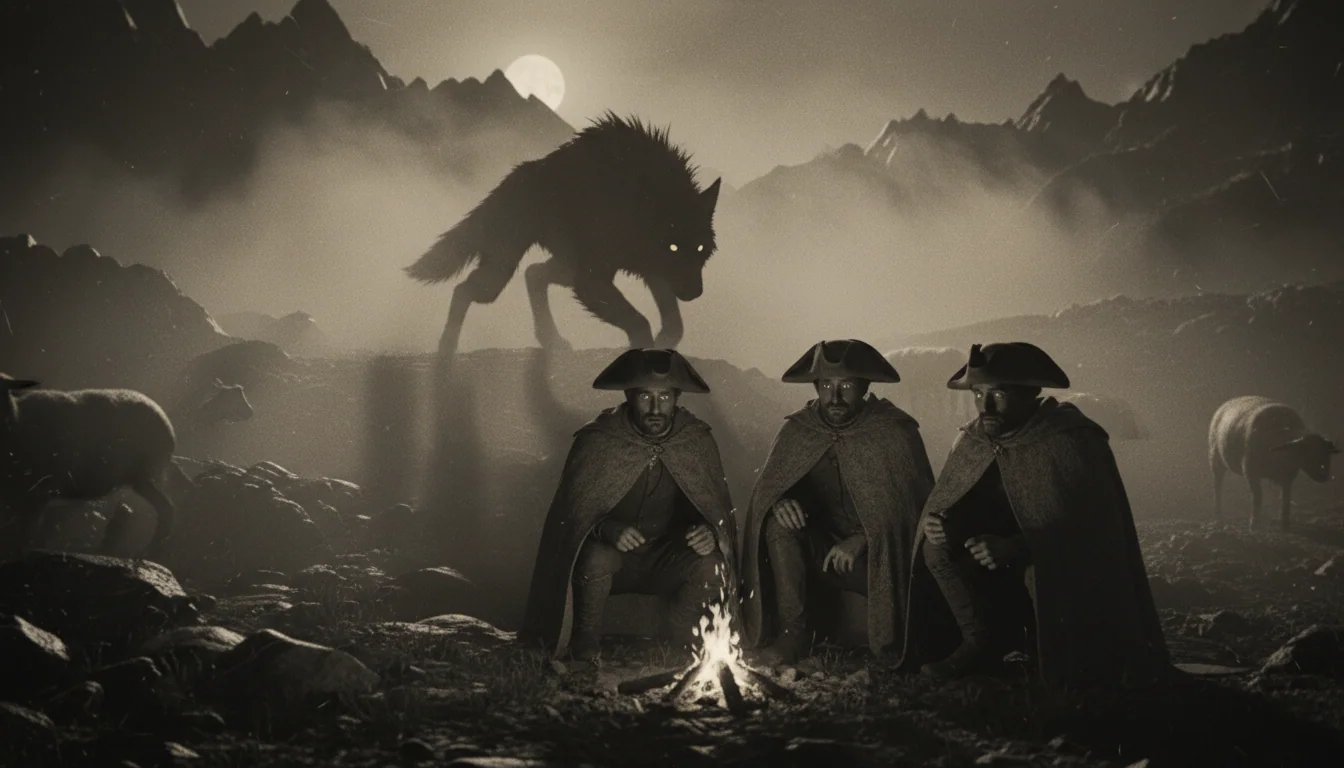
In the summer of 1764, in the rugged hills and forests of the old French province of Gévaudan, something began killing people. By the time the killings stopped in 1767, more than 100 men, women, and children had been attacked. Most of the victims were rural workers, often shepherds or farm laborers, often children, and many of them were partially eaten.
The Kingdom of France, then the most powerful state in continental Europe, sent professional wolf hunters, royal dragoons, and eventually a personal envoy of King Louis XV. None of them stopped it. In the end, a local hunter named Jean Chastel killed a large animal during a hunt in June 1767, and the attacks stopped.
What he killed has never been definitively identified. Two and a half centuries later, the Beast of Gévaudan remains one of the most peculiar predator cases in European history.
The setting
Gévaudan was a thinly populated, mountainous region in what is now the Lozère department in south-central France. It was poor country, made up of plateau pastures, oak and beech woodland, narrow valleys, and isolated hamlets. The economy depended on cattle grazing, sheep herding, and small-scale agriculture. Most residents were Catholic peasants who lived in close quarters with their livestock.
Wolves were common in 18th-century France. Children were occasionally killed by them, though such cases were rare and tended to be local rather than regional events. What happened in Gévaudan was different in scale, in geography, and in pattern.
The first attacks
The first attack widely associated with the Beast occurred on June 1, 1764. A young woman named Jeanne Boulet was tending sheep near the village of Saint-Étienne-de-Lugdarès. She was attacked and killed. The wound pattern, slashes to the throat, did not entirely match a wolf's typical kill style, but the location and circumstance were ambiguous.
What made the case different was the volume of attacks that followed. By the end of summer 1764, multiple attacks had been reported across an area of roughly 90 kilometers by 80 kilometers. Witnesses, often survivors who had escaped, described an unusual animal: larger than a wolf, with a broad chest, reddish or grayish-brown fur, a long tail, sometimes a dark stripe along the back, and unusually large teeth.
The attacks frequently targeted the head or throat directly, an unusual approach for wolves, which more typically aim at limbs and rear flanks. Multiple witnesses described the Beast standing on its hind legs to look over hedges, although these accounts may reflect distortions of memory or rural folklore.
By autumn 1764, dozens of people had been killed. The local response, including organized hunts and bounties, had failed.
Royal intervention
The case became national news. The royal court at Versailles, which was generally accustomed to handling rural crises through local nobility, took unusual interest. King Louis XV announced an enormous bounty of 6,000 livres, an extraordinary sum, for the killing of the Beast.
In early 1765 the king sent professional wolf-hunter Jean-Charles-Marc-Antoine Vaumesle d'Enneval and his son Jean-François to Gévaudan with their pack of bloodhounds. They spent six months in the region. They killed multiple wolves but failed to end the attacks. The d'Ennevals reported that the Beast was clearly something other than an ordinary wolf, and possibly more than one animal.
In June 1765 they were replaced by François Antoine, the king's own personal gun-bearer. After several months of frustration, on September 21, 1765, Antoine shot and killed an unusually large wolf in the forest of Pommiers. The carcass weighed roughly 60 kilograms, well above normal for a French wolf, and Antoine had it stuffed and shipped to Versailles. The king awarded him a substantial reward and the official version of events declared that the Beast was dead.
The attacks stopped for a few weeks. Then they resumed.
The killing of Jean Chastel
By 1766 the official position from Versailles was that the original Beast was dead and any subsequent attacks were the work of ordinary wolves. The local population disagreed. Throughout 1766 and into 1767, killings continued in the same pattern, with the same witness descriptions, in roughly the same area.
On June 19, 1767, the Marquis d'Apcher organized a private hunt, drawing on roughly 300 men. One of them was Jean Chastel, a 60-year-old farmer from the village of La Besseyre-Saint-Mary. Chastel was reportedly a religious man, somewhat eccentric, and possibly devout to the point of superstition.
According to multiple contemporary accounts, Chastel sat reading a prayer book during a lull in the hunt when a large animal emerged from the trees and approached him. He set down his book, raised his rifle, and shot the animal twice. It died on the spot.
The carcass was unusual. According to Antoine de Beauterne's notes and subsequent reports, it was larger than a wolf, with dark fur and unusually long teeth. Its stomach reportedly contained the shoulder bone of a young girl. The body was paraded through nearby villages, then transported toward Paris for examination, but it had begun to decompose by the time it reached Versailles. The royal court refused to accept the carcass and it was destroyed.
The killings stopped after that. The Beast of Gévaudan, whatever it was, was finished.
What was it?
The lack of a preserved specimen has made the case impossible to resolve definitively. Several theories have been proposed.
A large wolf or wolves
The standard explanation, and the one offered by most academic biologists, is that the Beast was an unusually large or pathological wolf, possibly accompanied by a mate or pack. Wolves in 18th-century France were larger and bolder than modern Eurasian wolves. A pack with significant rabies infection, or one that had developed a habit of preying on humans after an environmental shock, could in principle account for the killings.
The weakness of this theory is the wound pattern. Wolves do not typically attack humans by going for the throat in the way many Beast survivors described. Modern wolf attacks on humans, while rare, follow more conventional predation patterns.
A wolf-dog hybrid
A second theory is that the Beast was a wolf-dog hybrid, a possibility supported by the unusual physical descriptions. Hybrid animals can be larger, bolder, and more aggressive than either parent species, and they can lack the natural human-avoidance instincts that wild wolves usually have.
A hyena or other exotic animal
A more speculative theory is that the Beast was an escaped exotic animal, possibly a striped hyena from a private menagerie. Striped hyenas can attack humans, target the head and throat, and produce wound patterns that puzzled hunters of the period. The 18th century saw aristocratic exotic animal collections across Europe, and an escape would not have been impossible.
The challenge here is geographic. There is no documented escape that fits the timing, and a hyena alone in the French highlands would have struggled to survive multiple winters.
A serial killer using an animal
A small minority of researchers has proposed that the Beast attacks involved human criminal activity, possibly a single perpetrator who used a trained dog or wolf-dog as a weapon. This theory has been advanced most prominently by French author Jay M. Smith and others. They point to the unusual targeting of vulnerable rural workers, the geographic concentration, and the absence of normal predation behaviors.
This theory remains highly speculative but has the merit of explaining some of the harder details. It also has the major weakness of requiring a single criminal to have continued operating undetected for three years.
What the case actually shows
The Beast of Gévaudan is, in many ways, an early modern data problem. It produced a flood of reports, many of them transcribed by local clergy, royal envoys, hunters, and survivors. But the data was filtered through the religious imagination of 18th-century rural France, the political incentives of the royal court, and the limitations of the era's natural history.
We know with high confidence that approximately 100 people were killed by some form of large predator activity in Gévaudan between 1764 and 1767. We know with high confidence that organized French state intervention failed to stop it for two years. We know that something was killed in June 1767, after which the killings stopped.
What we do not know, and probably never will, is whether what Jean Chastel shot was a normal wolf, a hybrid, an exotic escapee, or something stranger. The most likely answer is the most boring one, that the Beast was a particularly aggressive, pathological wolf or small group of wolves whose behavior was exaggerated in retelling.
But the case has refused to feel boring for two and a half centuries. The Beast still walks through French folklore, through novels and films, through tourist signs in the Lozère, and through every modern werewolf story that ultimately traces back to those three years on the Gévaudan plateau.
For other unsolved predator mysteries, see Jack the Ripper and the Whitechapel Murders and The Devil's Footprints of Devon, 1855.
Quick Answers
Common questions about this topic
What was the Beast of Gévaudan?
The Beast of Gévaudan was a creature, or possibly multiple creatures, that killed approximately 100 people in the rural Gévaudan region of south-central France between June 1764 and June 1767. Eyewitness descriptions varied, but most reported a large reddish-brown canine animal larger than any normal wolf, often attacking humans in ways atypical of wolves.
Was the Beast a wolf?
Probably not a normal wolf. The standard scientific explanation has been that the Beast was an unusually large or rabid wolf, or possibly a wolf-dog hybrid. Some historians have proposed a hyena, a lion escaped from a private menagerie, or a panther. None of these explanations fits all the evidence, and the case remains officially unresolved.
How did the Beast finally stop?
On June 19, 1767, a local hunter named Jean Chastel killed a large animal during a hunt organized by the Marquis d'Apcher. The killings stopped after that. Chastel reportedly used silver bullets prepared by a local priest, which fueled the werewolf legend. The animal he killed was preserved but the carcass was lost during transport to Paris.
Was the Beast of Gévaudan a werewolf?
Almost certainly not in any literal sense. The werewolf interpretation arose because of the unusual scale and pattern of the attacks, the religious context of 18th-century rural France, and the silver-bullet legend surrounding Jean Chastel's kill. Modern historians treat these elements as folklore layered onto a real, but explainable, predator problem.

Want to Interrogate the Suspects?
Chat with historical figures and uncover the truth behind history's greatest mysteries.
Start Your InvestigationJoin the HistorIQly Club
Get smarter about the past.
Weekly stories, deep dives, and exclusive content straight to your inbox.