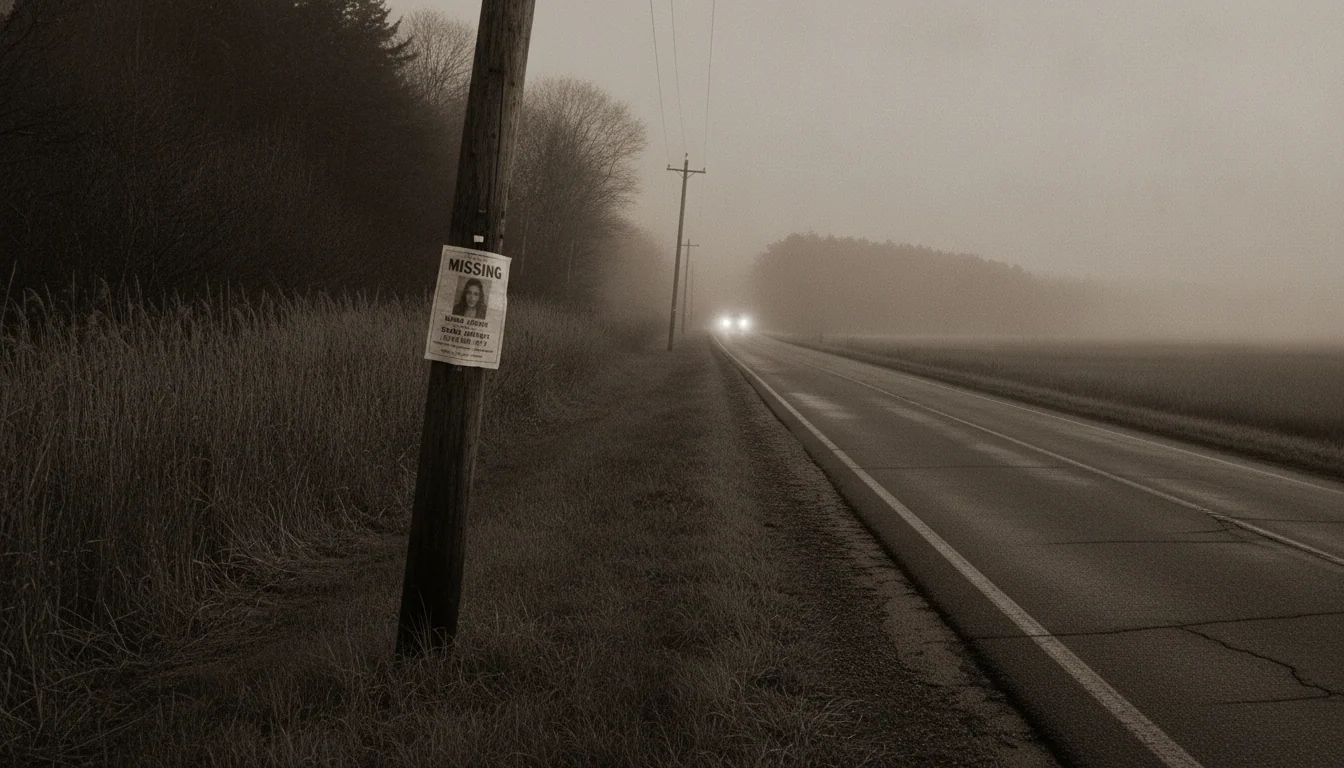
Kris Kremers and Lisanne Froon: The Panama Hike That Never Ended
Two Dutch students vanished on a Panama jungle trail in 2014. Months later, their camera revealed 90 night photographs. The case has never been closed.
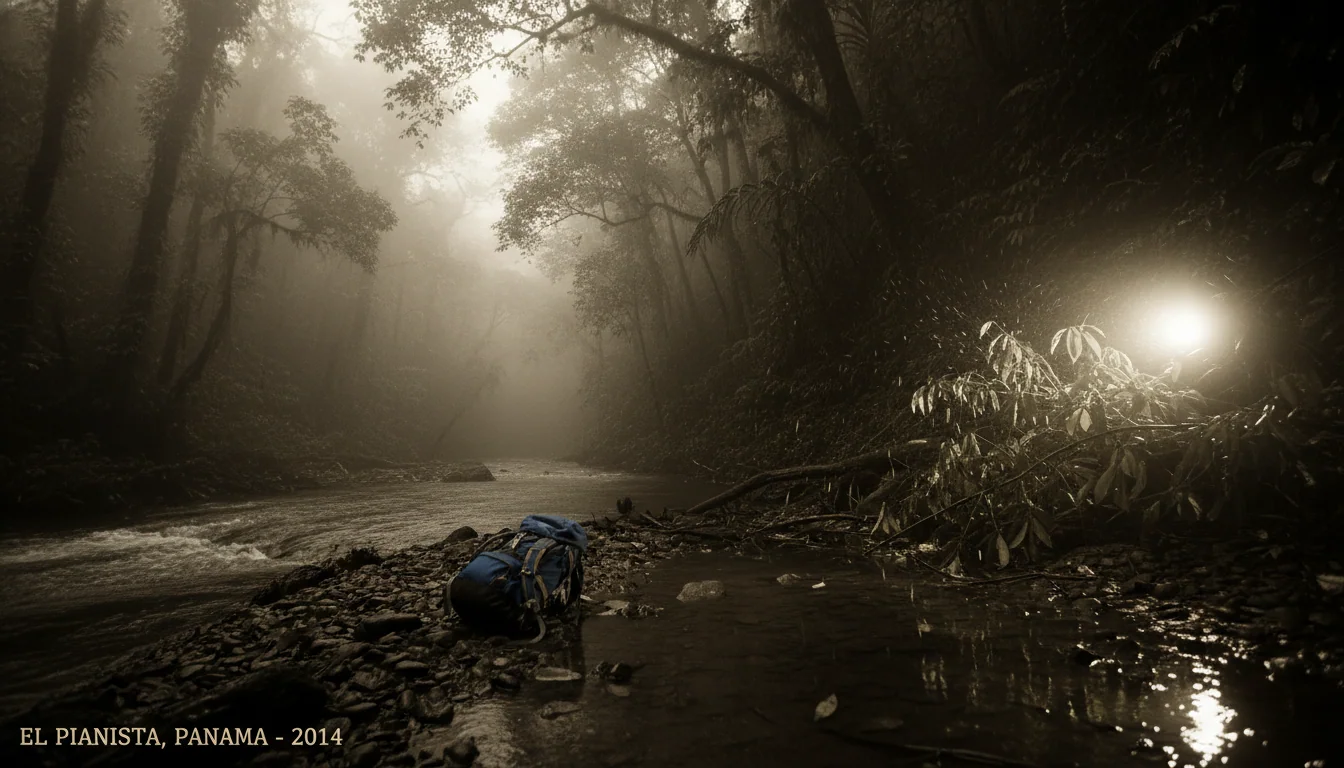
On the morning of April 1, 2014, Kris Kremers and Lisanne Froon set out on a jungle trail in western Panama and did not come back. They were 21 and 22 years old, Dutch, and had been in the country for three weeks on a volunteer and travel program. The El Pianista trail near the mountain town of Boquete was a popular route, a few hours of uphill through cloud forest to a ridge with a view. Experienced hikers completed it in a single afternoon.
Kris and Lisanne were photographed smiling at the base of the trail by a local farmer at around 11:00 a.m. It was the last confirmed sighting anyone could agree on.
What followed became one of the most analyzed and debated disappearance cases in recent years, not because of its simplicity, but because the physical evidence left behind is genuinely strange. It belongs to a small set of wilderness disappearances - alongside the Dyatlov Pass incident - where the surviving traces only deepen the mystery.
The El Pianista trail
Boquete sits at around 1,200 meters in the Chiriqui highlands, a town known for coffee farms, cool air, and a sizeable foreign-resident community. The El Pianista trail climbs into the cloud forest above it, rising to a ridge at roughly 2,000 meters before descending toward the Caribbean coast. It is marked for experienced hikers, and the upper section involves river crossings, steep terrain, and dense vegetation. A wrong turn past the ridge can lead into genuinely remote country with no clear path out.
The girls had a guide for previous excursions but not that morning. They were traveling light: a daypack, phones, a camera, some food and water. They had not arranged transport back, which suggested they planned to return the same way they came.
When they did not appear for dinner, their host family raised the alarm that evening. A Panamanian search-and-rescue operation began within hours.
A month of silence
The initial search covered the trail and surrounding forest for weeks. Nothing was found. Their phones, it emerged, had been used repeatedly in the days after April 1, including multiple attempts to call Panamanian emergency services. The calls connected briefly or not at all, suggesting the phones had intermittent signal in an area far from any tower. There was also an attempt to contact a local guide they had met the week before. The last phone activity was recorded on April 6, five days after they vanished.
The timing and location data from the phone signals gave investigators a rough picture: the girls had continued up the trail past the ridge, past the point where most visitors turn around. Where exactly they ended up, no search team could determine.
The backpack and the camera
On June 11, more than two months after the disappearance, a group of Ngabe indigenous women found a blue backpack on a riverbank in the Culebra valley, well beyond the usual reach of the trail. Inside was Lisanne's camera, her and Kris's phones, their passports, money, and a bra. The items were in remarkably good condition.
Dutch forensic investigators examined the camera. What they found became the most discussed element of the entire case.
The last normal photographs were time-stamped April 1 at 1:00 p.m., shortly after the girls had been seen at the trailhead. They show the girls on the trail, the forest around them, views from the ridge. Nothing unusual.
Then a gap of about a week.
Beginning around 1:00 a.m. on a single night roughly a week after the disappearance, a series of 90 photographs were taken using the camera's flash, all within a span of about three hours. A small number of additional images carry later timestamps but the bulk of the activity was concentrated in that one session. Most showed only darkness, vegetation, or the ground directly in front of the camera. Some appeared to show a trail or stream bank. A few were too blurred to interpret. Several captured what looked like blue tarpaulin material.
Who took them, and why, was not immediately clear.
The Dutch experts' assessment: the flash was probably being used as a distress signal, a visible flash in the dark aimed at drawing attention or marking a location. The Panamanian conclusion was similar. Neither explanation addresses a harder question, which is how either girl survived for ten or more days in cloud forest with minimal supplies before the photos began.
The remains
A hiking boot was found in the Culebra River in August 2014. Inside it, still inside the boot, was the lower portion of a human leg. DNA testing confirmed it was Kris Kremers.
More skeletal remains followed through the autumn. By November, roughly 33 percent of the combined bones of both girls had been recovered, scattered over a wide area of the river and surrounding terrain. No single site suggested a resting place. The bones were found individually, over several months, sometimes far apart.
The Panamanian forensic report attributed the deaths to accidental causes, most likely a fall into the Culebra River and subsequent drowning and dispersal of remains downstream. The injuries consistent with a high fall were noted on some of the bones. No evidence of trauma from human violence was established, though the fragmentary state of the remains made a complete assessment impossible.
What doesn't fit
The accident explanation is plausible. The trail above the ridge is steep, poorly marked, and the river crossings are dangerous after rain. Two lost, panicked tourists making a fatal misstep in the dark is a coherent scenario that explains most of what the evidence shows.
Several things complicate it.
The condition of the recovered items was unusually good for gear that had spent more than two months in one of the wettest environments in the Americas. Phones and cameras that had been submerged in a Panamanian river for weeks typically do not retain readable data. The Panamanian authorities and Dutch experts both examined the items and found no inconsistency in their preservation, but the observation recurs in every serious account of the case.
The 90 night photographs: if both girls were dead within days of April 1, no one took the photographs. If one survived long enough to take them, she survived in the jungle for at least a week with no food and minimal water. If someone else took them, who?
The bra found in the backpack: none of the items suggested the backpack had been in the river. Everything was dry and relatively clean. This sits uneasily with a scenario in which the girls fell into a river and the backpack was swept downstream.
The scattering of remains across a wide area could indicate river dispersal over several months. It could indicate other things. Panamanian investigators did not consider the case to have established any alternative explanation.
The Dutch families and the official record
The families of Kris Kremers and Lisanne Froon have never accepted the Panamanian conclusion as complete. The Dutch National Criminal Investigation Service conducted its own review and found the Panamanian investigation had significant gaps. An independent Dutch forensic specialist concluded that the bone with the boot showed no evidence of the kind of trauma consistent with a severe fall, suggesting Kris might have died from a cause other than impact.
The Panamanian government closed the case without charges. The Dutch government repeatedly requested access to the remaining evidence. Negotiations over physical evidence continued for years.
The families commissioned several private investigations. None returned a definitive alternative conclusion. The case has been examined by Dutch journalists, true-crime researchers, former law enforcement officials, and forensic specialists in multiple countries. None have produced a version of events that satisfies all the physical evidence.
What the evidence suggests
The most defensible reading of the available evidence: Kris and Lisanne made a navigational error past the ridge, descended the wrong side toward the Culebra valley, found themselves in terrain they could not traverse, ran out of supplies, and at some point met with fatal injury, probably in or near the river. One or both may have survived for several days. The night photographs represent an attempt to signal for help that was never answered.
The alternative reading, favored by a subset of investigators and a large portion of online analysis, holds that something happened to them on or near the trail on April 1 that was not an accident, and that the backpack and its contents were left where they were found rather than washed there.
Both readings are consistent with some of the evidence. Neither is consistent with all of it.
The case technically remains open. No perpetrator has ever been named. No charge has ever been laid. The Culebra River valley where most of the remains were found is several hours from the nearest town on a barely passable road, and large sections of it have never been thoroughly searched - the same pattern that kept the Maura Murray case open for decades.
Kris Kremers and Lisanne Froon took a morning hike on April 1, 2014. They photographed themselves at the base of the trail, smiling, at 11:00 a.m. The next confirmed image of them is a bone inside a hiking boot, found four months later in a jungle river. The 90 photographs taken in darkness between those two moments are the only record anyone has of what happened in between.
Quick Answers
Common questions about this topic
What happened to Kris Kremers and Lisanne Froon?
The two Dutch students disappeared on April 1, 2014, while hiking the El Pianista trail near Boquete, Panama. Their belongings were found by indigenous Ngabe women in late June 2014. Skeletal remains were recovered between August and November 2014, but only about a third of their bones were ever found. The official conclusion was accidental death, likely from a fall into a river, but key questions remain unresolved.
What is the significance of the 90 night photos on Lisanne Froon's camera?
About a week after the girls disappeared, someone used Lisanne's camera to take 90 photographs in darkness, with the bulk taken on a single night in a span of roughly three hours. Most show only dense vegetation, darkness, and occasionally a glimpse of a trail or body. The photos were taken using the camera flash. Investigators believe the girls were trying to use the flash as a signal. Others have pointed to the images as evidence of something more disturbing.
Was foul play suspected in the Panama disappearance?
Panama's prosecutors investigated foul play possibilities but closed the case without charges. The lack of complete remains, the unexplained phone activity, and the circumstances of the discovered items have kept suspicion alive. The Dutch families have repeatedly questioned the official conclusion and pushed for a more thorough investigation.
Where were Kris and Lisanne's remains found?
Partial skeletal remains were found in the Culebra River canyon and surrounding jungle, primarily between August and November 2014. One of the most disturbing finds was a hiking boot containing a lower leg bone, discovered far downstream. The fragmentary and widely scattered nature of the remains contributed to ongoing uncertainty about what actually happened.

Want to Interrogate the Suspects?
Chat with historical figures and uncover the truth behind history's greatest mysteries.
Start Your InvestigationJoin the HistorIQly Club
Get smarter about the past.
Weekly stories, deep dives, and exclusive content straight to your inbox.