The Beaumont Children: Australia's Most Haunting Disappearance
The Beaumont children disappeared from an Adelaide beach on Australia Day 1966. Three siblings vanished in broad daylight - sixty years later, nobody knows what happened.
Read Wikipedia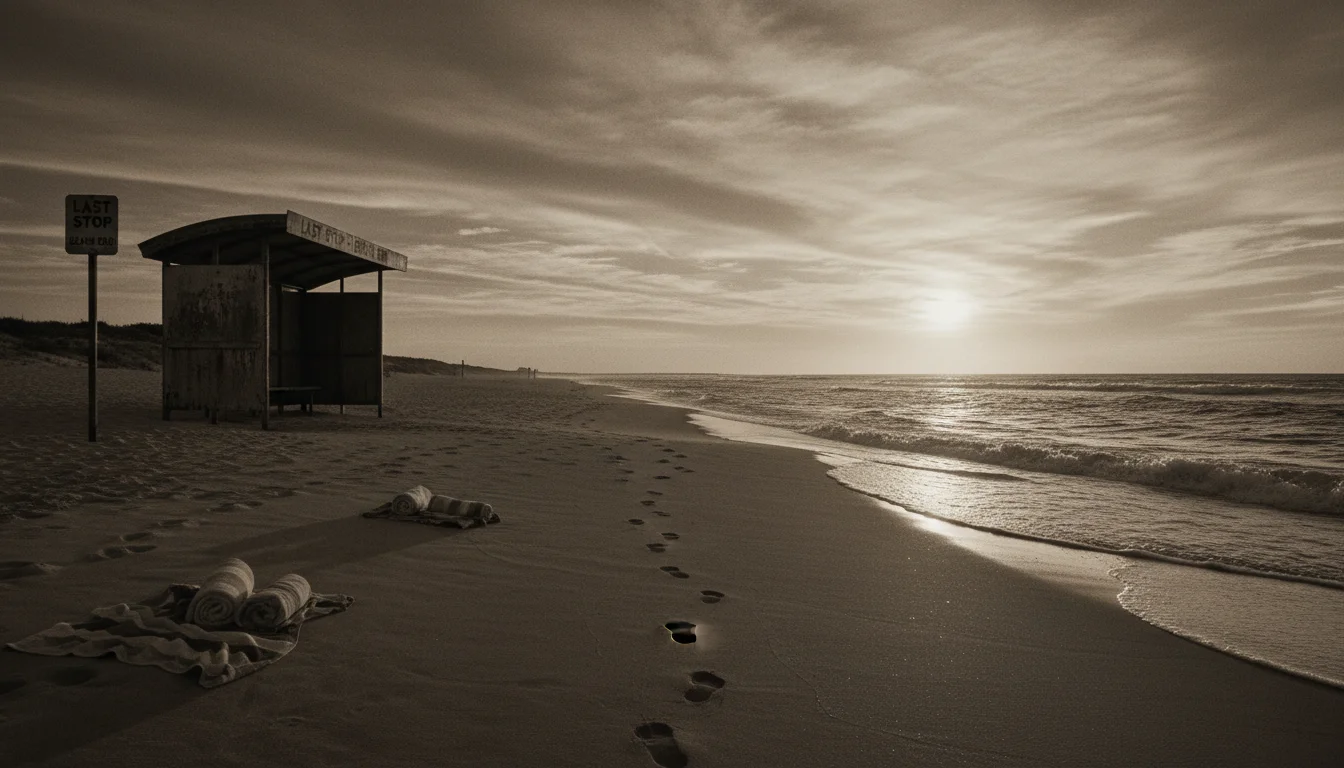
It was a scorching summer morning on January 26, 1966, Australia Day, when Nancy Beaumont waved goodbye to her three children as they caught the bus to Glenelg Beach. Jane was nine, Arnna was seven, and Grant was four. The beach was a short five-minute ride from their home in Somerton Park, a quiet suburb of Adelaide. The children had been there just the day before, and the trip was routine. They were expected home on the noon bus.
They never came home.
What happened to the Beaumont children that morning remains Australia's most enduring mystery, a case that shattered the nation's innocence and forever changed the way parents thought about their children's safety.
A Day at the Beach
The children arrived at Glenelg Beach around 9:00 AM on what was shaping up to be one of the hottest days of the year. The beach was packed with families enjoying the public holiday. It should have been one of the safest places in Adelaide.
But something was different that day. Multiple witnesses would later tell police they saw the three Beaumont children playing with a tall, thin-faced man in his mid-thirties, with fair to light-brown hair and a sun-tanned complexion. He was wearing swim trunks and appeared athletic. The children seemed relaxed, even happy in his company, laughing and playing as though they knew him well.
This detail troubled investigators deeply. Jane, the eldest, was described by her parents as shy. For all three children to be playing so comfortably with a stranger seemed completely out of character, unless he was not a stranger at all.
A chilling detail emerged. Before the disappearance, Arnna had casually mentioned to her mother that "Jane had got a boyfriend down the beach." Nancy had assumed she meant a playmate and thought nothing of it. After January 26, those words took on a terrifying new meaning. Investigators began to suspect that the children had encountered this man on previous beach visits and had been gradually groomed to trust him.
The Clues That Led Nowhere
Around noon, the children were seen leaving the beach area with the man. At 12:15 PM, witnesses spotted them walking away from Colley Reserve together. Later, around 2:45 PM, another witness saw the man carrying an airline bag similar to one belonging to Jane.
One of the most telling details came from a bakery on Moseley Street. The shopkeeper at Wenzel's Bakery knew the Beaumont children as regular customers. That day, Jane came in and bought pasties and a meat pie, paying with a one-pound note. This was significant for two reasons: the children had never bought a meat pie before, and their mother had given them only six shillings and sixpence, enough for bus fare and a small lunch. Someone had given them extra money.
When the children failed to arrive on the noon bus, Nancy grew worried. When they missed the 2:00 PM bus as well, her worry turned to alarm. Jim Beaumont returned early from a sales trip around 3:00 PM and immediately drove to the beach. He could not find them. By 5:30 PM, the parents were at the Glenelg police station filing a missing persons report.
Within 24 hours, the entire nation knew the Beaumont children were gone.
Police launched one of the largest search operations in Australian history. They drained the Patawalonga Boat Haven after a woman reported seeing three children matching the Beaumonts' description near the waterway at 7:00 PM on the day they vanished. Nothing was found. They searched sandhills, buildings, railway lines, and the ocean itself. They monitored airports and interstate roads. Every lead evaporated.
Suspects and Dead Ends
Over the decades, the case has generated an astonishing number of theories, suspects, and false leads.
In November 1966, Dutch psychic Gerard Croiset was flown to Australia at great expense. He claimed the children's bodies were buried beneath a warehouse near the family home, inside the remains of an old brick kiln. Public pressure and $40,000 in donations led to the building being demolished and excavated. Nothing was found. When the same site was searched again in 1996 during partial demolition, the result was the same.
About two years after the disappearance, the Beaumont parents received two letters. One appeared to be written by Jane, the other by a man who claimed to be keeping the children. Postmarked from Dandenong, Victoria, the letters described a "relatively pleasant existence" and referred to "The Man" who was looking after them. While police initially considered the letters could be authentic, they were never verified, and many investigators now believe they were a cruel hoax.
One of the most compelling suspects emerged decades later: a local businessman named Harry Phipps. In 2013, two brothers came forward claiming that Phipps had paid them as boys to dig two deep holes on his factory property in Plympton on Australia Day 1966, the very day the children vanished. When Phipps died in 2004, a co-author of "The Satin Man," a book investigating the case, spoke with his widow. The factory site was excavated, but once again, no remains were discovered.
The case has also been tentatively linked to the 1973 Adelaide Oval abductions, in which two girls, Joanne Ratcliffe (11) and Kirste Gordon (4), disappeared from a crowded football match. Some investigators believe the same perpetrator may have been responsible for both crimes.
A Nation Changed Forever
The disappearance of the Beaumont children did something no single crime had done before in Australia: it ended an era. Before January 26, 1966, it was perfectly normal for children to roam freely, to catch buses alone, to spend entire days at the beach unsupervised. Australian culture was built on the idea that communities were safe, that neighbors looked out for one another, and that children could play without fear.
After the Beaumont case, that trust was broken. Parents across the country began keeping closer watch on their children. The case is widely credited with fundamentally shifting Australian attitudes toward child safety, a cultural transformation born from tragedy.
Jim Beaumont spent the rest of his life searching for answers. He followed every lead, cooperated with every investigation, and never stopped hoping. Nancy struggled with the unbearable weight of having sent her children to the beach that morning. The couple eventually separated, but both maintained their desperate hope that one day the truth would emerge.
Sixty Years of Silence
As of 2026, sixty years have passed since the Beaumont children vanished. A one-million-dollar reward remains on offer from the South Australian government for information leading to a resolution. The case file remains open.
No bodies have ever been found. No suspect has ever been charged. The tall, thin-faced man seen playing with the children at Glenelg Beach has never been identified.
Somewhere in that gap between what witnesses saw and what happened next lies the answer to one of the most heartbreaking cold cases in history. Three children walked away from a crowded beach on a sunny afternoon, and the world they left behind was never the same.
The Beaumont children would be in their sixties now. Jane would be sixty-nine. Arnna would be sixty-seven. Grant would be sixty-four. Their story endures not only as a mystery but as a reminder of how quickly the ordinary can become the unthinkable, and how some silences never break.
For other disappearances where the evidence led nowhere, the Kris Kremers and Lisanne Froon case is a more recent vanishing from a tourist trail that shares the same forensic frustration. Amelia Earhart's disappearance is the most famous case of a person simply ceasing to exist in plain sight of an era that could not find her.

Want to Interrogate the Suspects?
Chat with historical figures and uncover the truth behind history's greatest mysteries.
Create your free account →No card required. Some figures and features require a paid plan.
Join the HistorIQly Club
Get smarter about the past.
Weekly stories, deep dives, and exclusive content straight to your inbox.