The Lake Bodom Murders: Finland's Most Haunting Unsolved Crime
The Lake Bodom murders: four Finnish teenagers, one summer night in 1960, three dead by morning - and the sole survivor who would stand trial 44 years later.
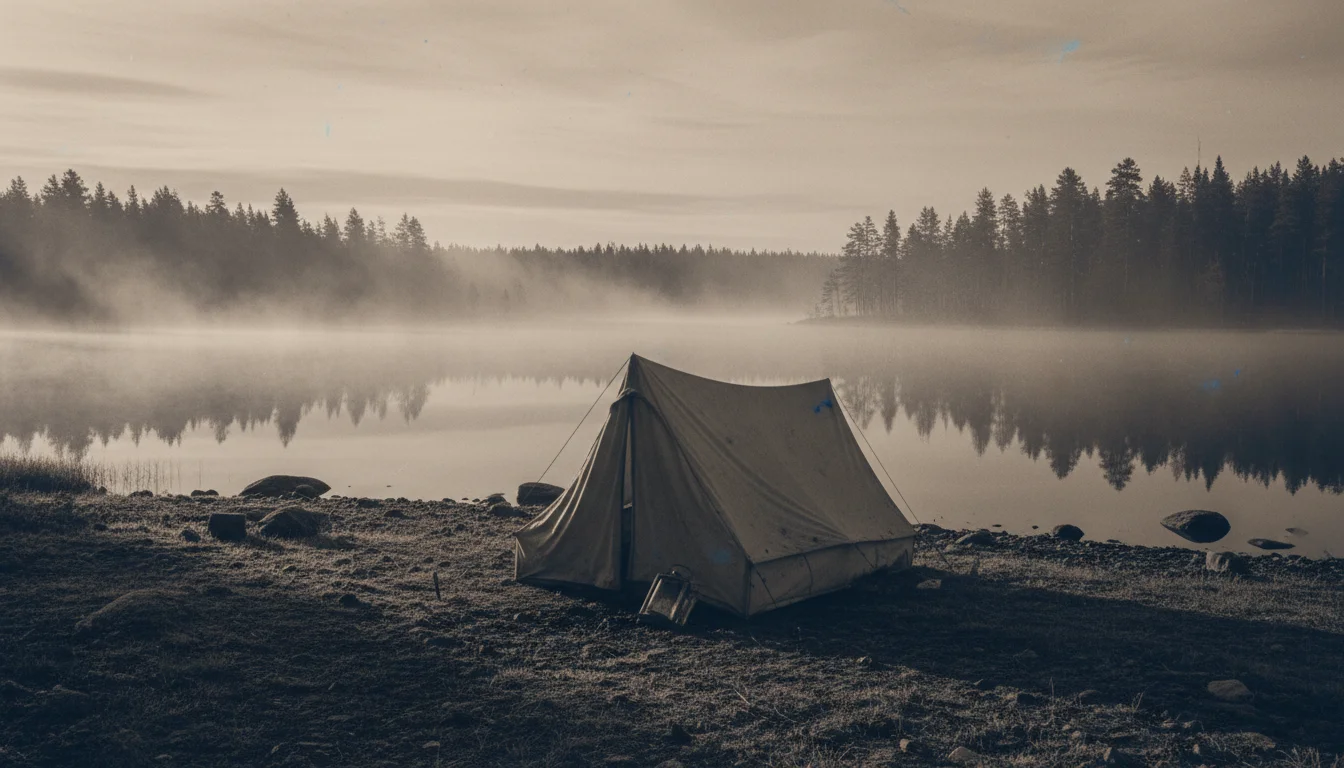
It was supposed to be a perfect summer night. On June 4, 1960, four Finnish teenagers pitched a tent on the shores of Lake Bodom, a serene body of water near Espoo. They were young, in love, and looking forward to a romantic camping adventure. By dawn, three would be dead, brutally stabbed and bludgeoned in their sleep. The fourth would survive with devastating injuries - and decades later, face trial for murdering his friends.
The Lake Bodom murders remain Finland's most infamous unsolved crime, a case that has haunted the Nordic nation for over six decades.
The Night Everything Changed
The group consisted of two young couples: 15-year-olds Maila Irmeli Bjorklund and Anja Tuulikki Maki, accompanied by their 18-year-old boyfriends Seppo Antero Boisman and Nils Wilhelm Gustafsson. They had chosen a popular campsite on Lake Bodom's wooded shore, a place known for its tranquil beauty.
The afternoon went smoothly. The teenagers set up their tent, swam in the lake, and enjoyed each other's company as the long Nordic summer evening stretched into night. They had no way of knowing that something - or someone - was watching.
Sometime between 4:00 AM and 6:00 AM on June 5, horror descended on the tent.
The attacker did not enter the canvas shelter. Instead, they stabbed and bludgeoned the sleeping teenagers through the sides of the tent itself - a blindingly violent assault that left three dead and one barely alive. A knife and some kind of blunt instrument, possibly a rock, were used with savage force.
A Scene of Chaos
Around 6:00 AM, a group of young birdwatchers spotted the collapsed tent from a distance. They also reported seeing a blonde man walking away from the site, but thought nothing of it at the time.
It wasn't until 11:00 AM that carpenter Esko Johansson stumbled upon the carnage and alerted authorities. What police found when they arrived at noon would become seared into Finnish consciousness.
Maki and Boisman lay dead inside the ruined tent. But Bjorklund, Gustafsson's girlfriend, was found in the most disturbing state - lying on top of the collapsed tent, naked from the waist down, having suffered far more wounds than the others. She had been stabbed repeatedly even after death, suggesting a particular fury directed at her.
Gustafsson was found nearby, unconscious with a fractured jaw, broken facial bones, and multiple stab wounds. He would later describe glimpsing his attacker: a figure dressed in black with "bright red eyes." Whether this was memory or trauma-induced hallucination, no one could say.
A Catastrophically Bungled Investigation
From the very beginning, the investigation was plagued by incompetence that would frustrate truth-seekers for generations.
Police failed to properly secure the crime scene. They didn't cordon off the area or take detailed photographs before curious locals and careless campers trampled through, destroying potential evidence. In a baffling decision, authorities then brought in soldiers to help search for missing items - further contaminating the site.
Several puzzling items had vanished: the keys to the teenagers' motorcycles (though the motorcycles themselves were left behind), Gustafsson's shoes, and various pieces of clothing. Some items were later found hidden about half a kilometer from the tent - but the murder weapons were never recovered.
The shoes would prove crucial decades later.
The Kiosk Keeper: Karl Valdemar Gyllstrom
The first major suspect to emerge was a local figure known as "Kioskman" - Karl Valdemar Gyllstrom, who operated a stall frequented by campers near Lake Bodom.
Gyllstrom was notorious for his hostility toward visitors. Locals described him cutting down tents and throwing rocks at hikers. Several witnesses later claimed they had seen Gyllstrom leaving the murder scene that morning but were too frightened of him to report it to police.
Most damningly, Gyllstrom allegedly confessed to the murders multiple times over the years - both while drunk and sober. He reportedly displayed knowledge of the crime that had never been made public. Yet police dismissed these confessions, considering him mentally disturbed and therefore unreliable.
In 1969, nine years after the murders, Gyllstrom drowned in Lake Bodom - likely by suicide. With his death went any chance of DNA testing or further interrogation. The lake had claimed another victim.
The Mysterious Foreigner: Hans Assmann
The second compelling suspect was Hans Assmann, a German-born Finnish citizen rumored to have KGB connections. He lived several kilometers from the lake and had cultivated a reputation as an eccentric recluse.
The day after the murders, Assmann appeared at a Helsinki hospital with his fingernails black with dirt and his clothes stained with what staff insisted was blood. He was described as nervous and aggressive. Assmann also matched the description of the blonde man seen leaving the scene - and conspicuously cut his hair short after newspapers published the detail.
Despite these alarming coincidences, police claimed Assmann had an alibi and never seriously investigated him. His stained clothing was never tested. Assmann moved to Sweden, where he died in the late 1990s - another potential answer lost to time.
The Sole Survivor Becomes a Suspect
For 44 years, Nils Gustafsson lived with the trauma of that night and the whispers that inevitably followed the only survivor of a massacre. Then, in March 2004, police arrested him for the murders of his friends.
The case against Gustafsson centered on his shoes - the ones found hidden away from the tent. Modern DNA analysis revealed they were covered in the victims' blood, but not Gustafsson's own. Prosecutors argued this proved Gustafsson was wearing the shoes during the attack but had not yet injured himself.
Their theory: Gustafsson had gotten drunk and was exiled from the tent. When Boisman confronted him, a fight erupted that left Gustafsson with his facial injuries. Enraged, Gustafsson then slaughtered all three of his companions, stabbed himself superficially, hid his shoes, and staged the entire scene to look like an outside attack.
The trial gripped Finland. Here was the traumatized survivor, the sympathetic victim who had lived with nightmares for decades, now accused of being the monster all along.
Acquittal and Aftermath
On October 7, 2005, Nils Gustafsson was acquitted of all charges.
The court found the prosecution's evidence inconclusive. Crucially, they could not establish a motive sufficient for such extreme violence - Gustafsson had no history of anger or violence, and nothing suggested he was capable of butchering three people, including the girlfriend he apparently loved.
Too much time had passed. Too much evidence had been lost in those first careless hours. The truth, the court concluded, could no longer be determined with certainty.
The Finnish government paid Gustafsson 44,900 euros for the mental suffering caused by his long imprisonment and trial. He never sued the newspapers that had effectively convicted him in the court of public opinion.
A Mystery That Refuses to Die
The Lake Bodom murders have inspired books, documentaries, a 2016 horror film, and even the name of a famous Finnish metal band - Children of Bodom. The case remains officially unsolved.
Was it Gyllstrom, the hostile kiosk keeper who may have confessed on his way to drowning in the same lake? Was it Assmann, the mysterious foreigner who appeared at a hospital covered in blood? Was it, impossibly, Gustafsson himself - a teenager who somehow murdered three people and then nearly killed himself to cover his tracks?
Or was there someone else entirely, a figure in black with red eyes who stalked through the Nordic night and vanished back into the darkness?
The shores of Lake Bodom are quiet now. Families picnic there. Children swim in the same waters where four teenagers once laughed and planned their futures. The lake keeps its secrets.
But somewhere, perhaps, someone knows what happened in those terrible hours before dawn. Someone remembers.
The Lake Bodom murders remain Finland's greatest unsolved mystery - a reminder that even in the most peaceful places, darkness can strike without warning, and some questions may never have answers.
For another haunting unsolved case from the same era, the Hinterkaifeck farmhouse murders in Bavaria remain equally cold. The Atlas Vampire case from 1930s Stockholm offers another chilling murder that was never solved.

Want to Interrogate the Suspects?
Chat with historical figures and uncover the truth behind history's greatest mysteries.
Start Your InvestigationJoin the HistorIQly Club
Get smarter about the past.
Weekly stories, deep dives, and exclusive content straight to your inbox.