The Cleveland Torso Murders: The Serial Killer Who Humiliated Eliot Ness
The Cleveland Torso Murderer killed at least 12 people in Kingsbury Run between 1935 and 1938. Eliot Ness led the investigation. The Mad Butcher was never caught.
Eliot Ness was supposed to be untouchable. The man who brought down Al Capone had arrived in Cleveland in 1935 as the city's new Safety Director, tasked with cleaning up a corrupt police force and making the streets safe. He had no idea that a serial killer was about to make him look powerless.
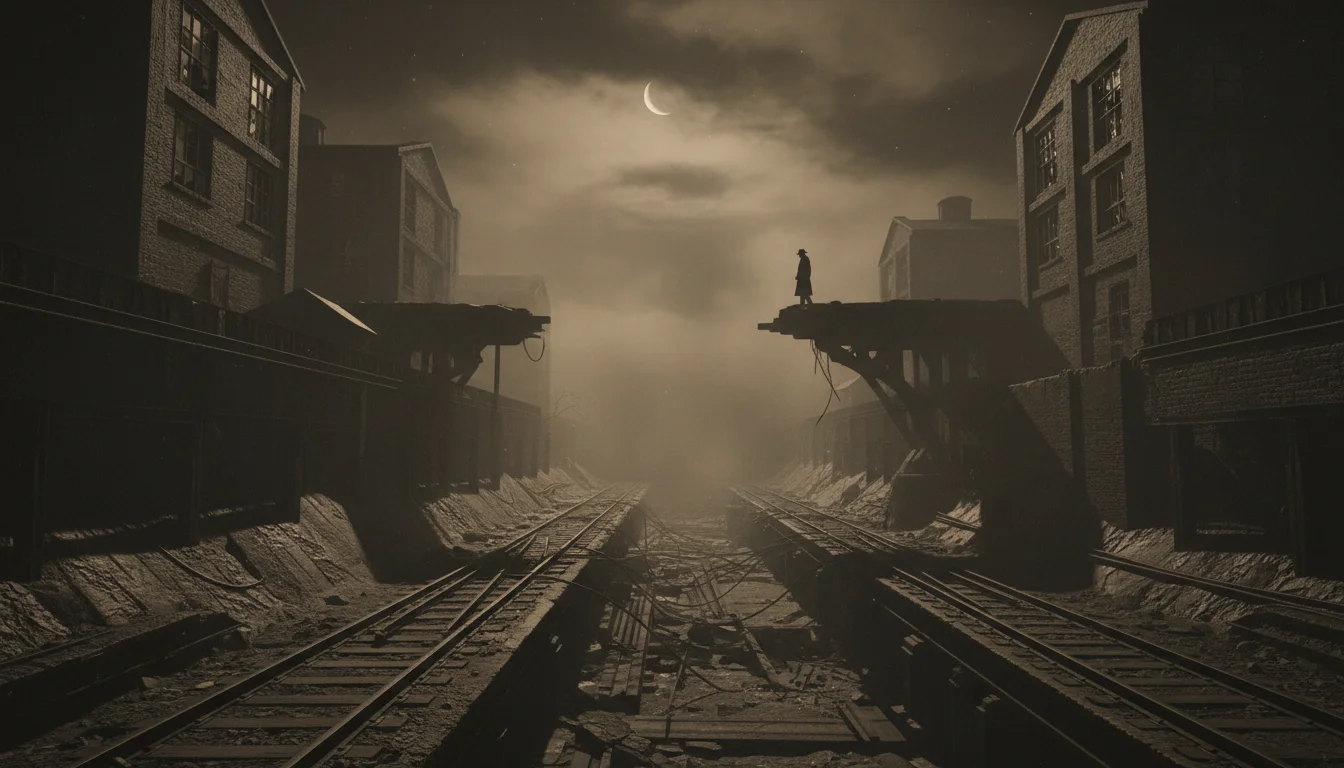
Between 1935 and 1938, someone was butchering people in Kingsbury Run, a desolate ravine cutting through Cleveland's industrial flats. The victims were dismembered with surgical precision. Many were decapitated. Some were never identified. The press called the killer the "Mad Butcher of Kingsbury Run." The case would become Eliot Ness's greatest failure.
The First Discovery
On September 23, 1935, two boys exploring Kingsbury Run stumbled across something that would haunt them forever. At the bottom of a sixty-foot embankment known as Jackass Hill, they found two headless, emasculated male bodies. The heads were found nearby, buried in shallow dirt.
The coroner determined that one victim, Edward Andrassy, had been alive when the decapitation began. Chemical burns on his skin suggested the killer had used some kind of preservative on the remains. The second victim was never identified - he became simply "John Doe."
But the horror was just beginning. Investigators soon realized these weren't the first victims. A woman's torso had washed ashore on Lake Erie's Euclid Beach the previous September. And parts of another woman, known only as the "Lady of the Lake," had been found in 1934. The killer had been active for over a year before anyone connected the crimes.
A Pattern of Brutality
Over the next three years, bodies kept appearing. The killer's method was consistent and terrifying. Victims were killed by decapitation, often while still alive. Bodies were drained of blood and sometimes treated with chemical preservatives. Many were dismembered at the joints with a precision that suggested anatomical knowledge.
Victim number four was found in January 1936 - a woman's remains packed in half-bushel baskets and wrapped in newspaper, discovered behind a vacant building. Only her right arm, lower legs, and left thigh were recovered. She was never identified.
In June 1936, two young boys found a severed head wrapped in trousers near Kingsbury Run. The body, decapitated and drained of blood, turned up a quarter mile away. Tattoos identified him as five unnamed carnival worker. He became victim number five.
The sixth victim was found on July 22, 1936 - a headless, decomposed male body in the woods west of Kingsbury Run. His head was never found. He was never identified.
The killer seemed to accelerate. Victim seven appeared in September 1936, the bisected torso of a man floating in a pool in Kingsbury Run. Victim eight followed in February 1937 - the upper half of a woman's torso washed up on the shores of Lake Erie at East 156th Street. Victim nine came in June 1937, found beneath the Lorain-Carnegie Bridge.
Then came the most brazen act of all.
The Killer Taunts Eliot Ness
On July 6, 1937, the lower half of a man's torso was pulled from the Cuyahoga River in the industrial Flats, practically in the shadow of Eliot Ness's office. The upper torso and head were never found. It was victim number ten, and it felt personal.
By this point, Ness had taken direct control of the investigation. He assigned his best detectives. He consulted experts. He authorized undercover operations in the hobo camps and shanty towns along Kingsbury Run, where many of the victims seemed to originate.
But the killer wasn't finished. In April 1938, the lower half of a woman's leg was pulled from the Cuyahoga River. More remains followed over the next weeks - two burlap bags containing the dismembered parts of a woman and a man. Victims eleven and twelve. The woman's head was found wrapped in brown paper, her face frozen in an expression that the coroner described as one of surprise.
Ness's Desperate Gamble
Frustrated and humiliated, Ness made a decision that would define his legacy in Cleveland. On August 18, 1938, he ordered a massive raid on the shanty towns along Kingsbury Run. Police and fire crews descended before dawn, rousting the inhabitants and setting fire to their shelters. Dozens of homeless men were arrested and fingerprinted.
The raid was widely condemned. Ness had essentially burned down the homes of the city's most vulnerable people on the theory that the killer might be among them. He wasn't. The press, which had once celebrated Ness as a crime-fighting hero, turned against him. One editorial called the raid "Ness's shame."
The official murders stopped after 1938, though some investigators believe the killer continued elsewhere. Similar dismemberment murders occurred in Pittsburgh and in the New Castle, Pennsylvania area in the early 1940s, leading some to speculate the Mad Butcher had simply moved on.
The Suspects
Over the decades, several suspects have emerged, though none has been definitively proven.
Frank Dolezal, a bricklayer who lived near Kingsbury Run, was arrested in 1939 and allegedly confessed to one murder. He died in custody under suspicious circumstances - officially ruled a suicide by hanging, though his ribs were broken and the circumstances were questionable. Many historians believe his confession was coerced.
Francis Sweeney, a physician and first cousin of a powerful Ohio congressman, became Ness's prime suspect. Ness reportedly subjected Sweeney to a secret polygraph examination administered by inventor Leonarde Keeler himself. Sweeney allegedly failed multiple times. But with no physical evidence and a politically connected suspect, Ness could never bring charges. Sweeney spent much of his remaining life in and out of veterans' hospitals, and reportedly sent taunting postcards to Ness for years afterward.
Some modern investigators have also pointed to other suspects, but the case remains officially unsolved.
Why It Still Matters
The Cleveland Torso Murders represent one of America's earliest documented serial killer cases and one of its most frustrating. The killer displayed a level of anatomical knowledge, organization, and boldness that was ahead of the forensic tools available to catch him.
For Eliot Ness, the case was devastating. The man who had stared down Capone's empire couldn't catch a killer operating in his own backyard. His reputation in Cleveland never recovered. He lost a bid for mayor in 1947 and spent his final years in obscurity and financial difficulty, dying in 1957 at age fifty-four.
Most of the twelve officially recognized victims were never identified. They came from the margins of Depression-era Cleveland - drifters, sex workers, the unemployed, people whose disappearances weren't reported and whose names were never recovered. In death, as in life, they were invisible.
The Mad Butcher killed at least twelve people, possibly more. He taunted law enforcement, operated in plain sight, and vanished without consequences. Nearly ninety years later, his identity remains one of America's most chilling unsolved questions. Somewhere in the historical record, a name exists that matches these crimes. No one has found it yet.
For other unsolved serial killer cases, see Jack the Ripper and the Whitechapel Murders and The Hinterkaifeck Murders.

Want to Interrogate the Suspects?
Chat with historical figures and uncover the truth behind history's greatest mysteries.
Start Your InvestigationJoin the HistorIQly Club
Get smarter about the past.
Weekly stories, deep dives, and exclusive content straight to your inbox.