The Connecticut River Valley Killer: Seven Women, Two States, No Conviction
The Connecticut River Valley Killer stabbed at least seven women across two states between 1978 and 1988. The prime suspect died in 2005. The case has never been closed.
Read Wikipedia
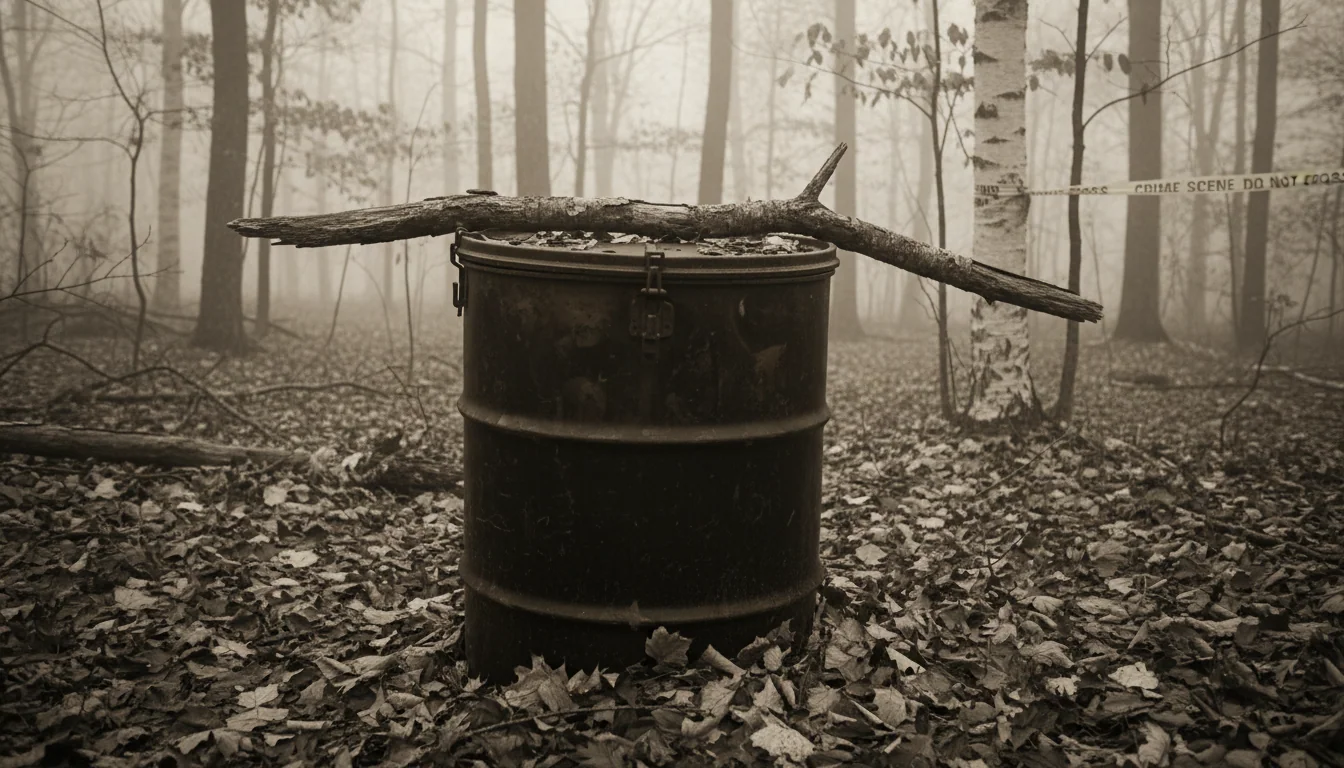
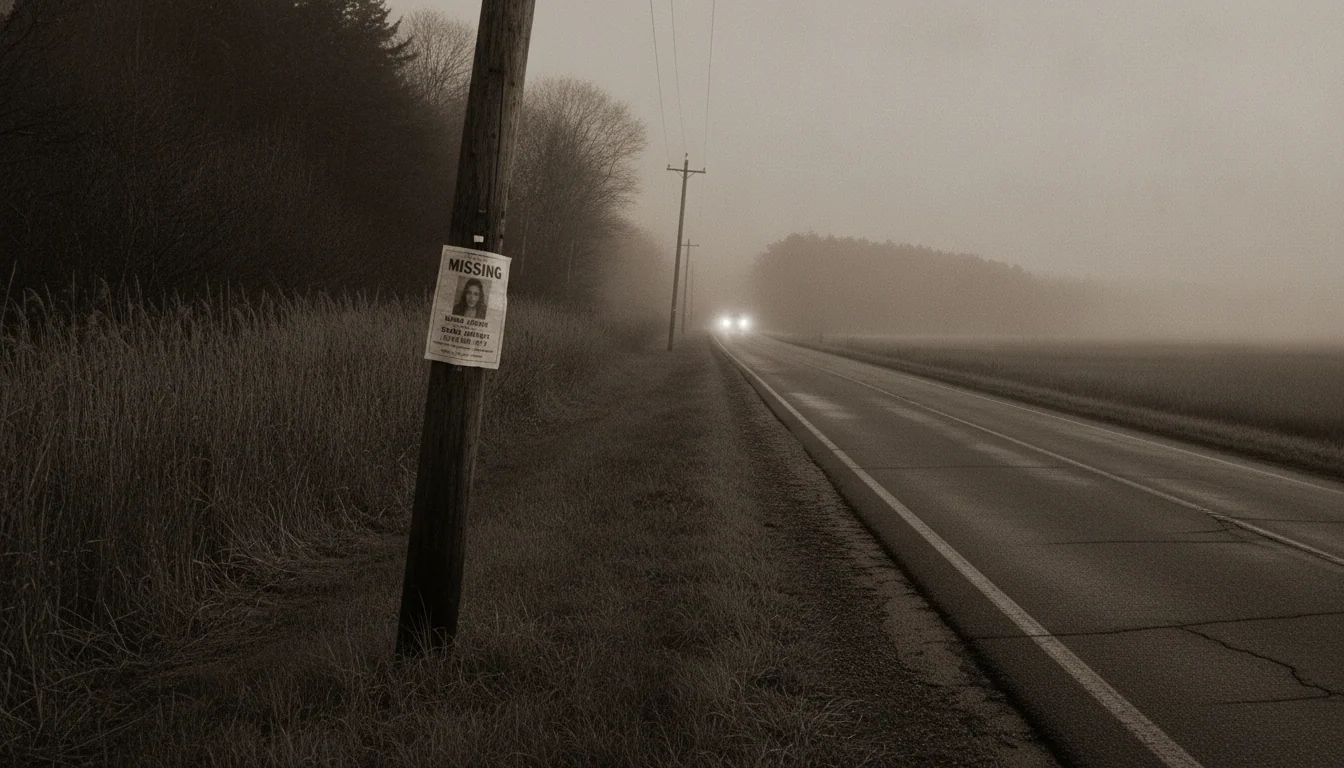
Between the spring of 1978 and the winter of 1988, at least seven women were murdered along a sixty-mile stretch of the Connecticut River, the slow brown waterway that separates Vermont from New Hampshire. They were college students, nurses, hitchhikers, and a young mother on her way home from a county fair. All but one were stabbed. Most were found in the woods, off back roads, with their cars left somewhere they had not driven them. The killer, whoever he was, knew the valley. He was never caught.
The cluster has come to be called the Connecticut River Valley Killer case, and it sits in the small subset of American serial homicides where investigators have a clear pattern, a credible suspect, and almost no physical evidence good enough to file a charge. Four decades later, in cold-case units in two states, the file is still open.
The first murders
The earliest victim usually included in the Valley cluster is Cathy Millican, a 26-year-old recreation therapist who disappeared on October 24, 1978, while bird-watching at a marsh in New London, New Hampshire. Her body was found the next morning, stabbed dozens of times. There was no robbery, no sexual assault recovered in the autopsy, and no obvious motive. Local police initially treated it as a one-off, and the murder went into the county's open files.
The second confirmed victim came almost three years later. Mary Elizabeth Critchley, a 37-year-old hitchhiker from Massachusetts, disappeared in July 1981 while traveling north on Interstate 91. Her remains were found in August along a roadside in Unity, New Hampshire. The body was too decomposed to confirm a stabbing, but the location and the missing car indicators matched the Millican file closely enough that some investigators in retrospect drew a line between them.
The murders that finally forced the two state police agencies to talk to each other came in the mid-1980s. Bernice Courtemanche, a 17-year-old nursing assistant, vanished from Newport, New Hampshire, in May 1984. Her skeletal remains were found in Kelleyville the following spring, dumped in a wooded area off Route 11. Ellen Fried, a 26-year-old nurse, disappeared from Claremont in July 1984 after a late-night phone call from a pay phone; her body was found in Hartland, Vermont, in September 1985, stabbed in the throat. Eva Morse, a 27-year-old single mother, disappeared while hitchhiking in July 1985 and was found dismembered in Unity, New Hampshire, in April 1986.
By the time Lynda Moore was stabbed to death in her own home in Saxtons River, Vermont, in May 1986, the cluster had a name, a state-line task force, and a press that had begun to use the word "serial."
The Boroski attack
The strongest single piece of evidence in the case did not come from a body. It came from a survivor.
On August 6, 1988, Jane Boroski, 22 years old and seven months pregnant, stopped at a convenience store in West Swanzey, New Hampshire, on her way home from a Cheshire County fair. As she sat in her parked car, a man in a Jeep Wagoneer pulled up alongside, walked to her window, and asked whether her car had a working phone. When she said no, he yanked her door open, dragged her out, and stabbed her at least 27 times in the abdomen and chest.
Boroski survived. Her baby, born by emergency caesarean section, survived. She gave investigators an unusually detailed description: a white man in his thirties or forties, perhaps six feet tall, with a stocky build, brown hair, a long face and a slight gap in his front teeth. She described the Jeep carefully enough that the New Hampshire State Police developed a sketch of both the man and the vehicle.
The Boroski attack is the spine on which the rest of the cluster hangs. The physical similarities to the earlier and later murders, the geography, the knife, and the lack of any clear motive line up. The investigation has been built ever since around the assumption that whoever attacked Jane Boroski was responsible for the others.
The suspects
Several names have been publicly attached to the case, none with enough evidence to file charges.
The most enduring is Michael Nicholaou, a Vietnam veteran who lived in the Claremont area during the killing years and ran a video-rental business there. Nicholaou had a documented history of domestic violence and a fascination with knives. In 2005, after Boroski participated in a televised cold-case program, he traveled to Tampa, Florida, and shot his estranged second wife and her teenage daughter from a previous relationship, then himself. Vermont investigators traveling to Tampa concluded that he matched the Boroski description and that his absences from work tracked, roughly, with the murders. They did not, however, develop forensic evidence linking him to any of the bodies.
A second name that surfaces in older reporting is Gary Schaefer, a Springfield, Vermont resident who pleaded guilty in 1985 to the kidnapping of one teenager and the murder of another. Schaefer fit some of the geography, but Vermont investigators ultimately ruled him out because he was in custody for portions of the killing window when other victims were taken.
A third, less developed line was Delbert Tallman, a transient with a Claremont arrest record. A fourth was Gary Westover, named publicly by a Vermont investigator on his deathbed. None of these has been corroborated.
The lack of a single physical link between any named suspect and any of the bodies is the case's central problem. The killer, whoever he was, was careful, or lucky, or both.
Why the case stalled
Three structural problems made the Valley cluster particularly hard to solve.
The first was jurisdiction. The bodies were dropped on both sides of the Connecticut River, which meant the Vermont State Police, the New Hampshire State Police, and at least four county sheriffs all had a slice of the file. A joint task force was finally established in 1986 after the Lynda Moore murder, but for the earliest crimes, the agencies were not routinely sharing notes. Information that would have been suggestive in aggregate sat unread in separate filing cabinets.
The second was the technology. The murders happened just before the DNA-typing revolution. Investigators have biological samples from several of the scenes, but the early collection methods, the long storage, and the early-1990s testing protocols destroyed material that a modern lab could have used. Some of the original evidence has been re-tested under the Vermont cold-case unit reorganization since 2017, with limited public results.
The third was that the killer stopped. The pattern that investigators tracked through 1988 simply ended. Either he died, was incarcerated for an unrelated crime, moved out of the region, or aged out of the offending window. Without further victims, the pressure to staff a full task force evaporated, and the case slipped into the slow rhythm of cold-case review.
What investigators still want
The Vermont State Police major crime unit and the New Hampshire State Police cold-case unit both maintain that the file is active. Their public requests have not changed much in twenty years. They want anyone who lived in the upper Connecticut River Valley between 1978 and 1988 to think back about strangers who behaved oddly, men who were absent on the days of the disappearances, vehicles that match the Jeep Wagoneer description Boroski gave. They want anyone who knew Michael Nicholaou to volunteer what they remember about his movements. They want anyone who knew any of the victims to come forward with the small social details that often did not make it into the original reports.
Jane Boroski, the only adult survivor, has spent decades speaking publicly about the attack. She has given interviews, written about the case, and sat for several true-crime documentaries. She has consistently said that she would recognize the man's voice if she heard it again.
The shape of the file today
The Connecticut River Valley case is one of the cleanest unsolved serial clusters in American cold-case work. The pattern is well documented. The geography is small. The window is short. There is a survivor with a detailed description. There is a credible primary suspect who is now dead. And yet the file remains open because the one thing investigators have never produced is a forensic link strong enough to support a public conclusion.
If Michael Nicholaou did it, the case is solved in fact but not in evidence, and his 2005 suicide closed the only door through which a confession might have arrived. If he did not do it, then the actual killer either died in obscurity or is, in his seventies or eighties, still alive somewhere in New England, still uncharged, still safe.
What is certain is that for ten years a man with a knife and a vehicle moved through a small region of two New England states, killed at least seven women, attacked at least one more, and then stopped. The valley remembers. The state police files have not been closed. And every August, the date of the Boroski attack passes, and the Connecticut River keeps running, brown and slow, past back roads where the bodies were left.
For other unsolved serial cases with similar jurisdictional failures, see the Burger Chef murders and the Long Island Serial Killer.
Quick Answers
Common questions about this topic
How many victims has the Connecticut River Valley Killer been linked to?
Investigators have publicly tied seven murders to the same offender, with another four to six possibles depending on which detective is counting. The confirmed victims were stabbed, most of them in upper Vermont or western New Hampshire between 1978 and 1988. A 1987 attack survivor, Jane Boroski, has given the most detailed account of the suspect.
Who was the prime suspect?
The longest-standing publicly named suspect is Michael Nicholaou, a Vietnam veteran who killed his wife and stepdaughter in a 2005 murder-suicide in Tampa, Florida. Nicholaou lived in the Claremont, New Hampshire area during the killings and matched physical and behavioral details from the Boroski attack. A second cluster of investigators has favored Gary Westover or unidentified persons. No one has been charged.
Why was the case never solved?
Three reasons. The victims were killed in remote, wooded sites across two states, which fragmented jurisdiction between the Vermont State Police, the New Hampshire State Police, and the FBI. Forensic technology in the early 1980s could not preserve the DNA-grade evidence that would have helped a later cold-case team. And the killer either stopped or moved away after 1988, removing the pressure for a coordinated task force.
Is the case officially still open?
Yes. As of 2025, the Vermont State Police cold-case unit and the New Hampshire State Police major crime unit both list the cluster as open. A 2017 reorganization of the Vermont cold-case file added new biological evidence to the National DNA Index System. No public match has been announced, but periodic statements from investigators say the case remains active.

Want to Interrogate the Suspects?
Chat with historical figures and uncover the truth behind history's greatest mysteries.
Create your free account →No card required. Some figures and features require a paid plan.
Join the HistorIQly Club
Get smarter about the past.
Weekly stories, deep dives, and exclusive content straight to your inbox.