The Murder of Notorious B.I.G.: Twenty-Seven Years and No Arrest
Notorious B.I.G. was shot four times in Los Angeles on March 9, 1997. The murder of Christopher Wallace remains one of the most contested unsolved cases in LAPD history.
Read Wikipedia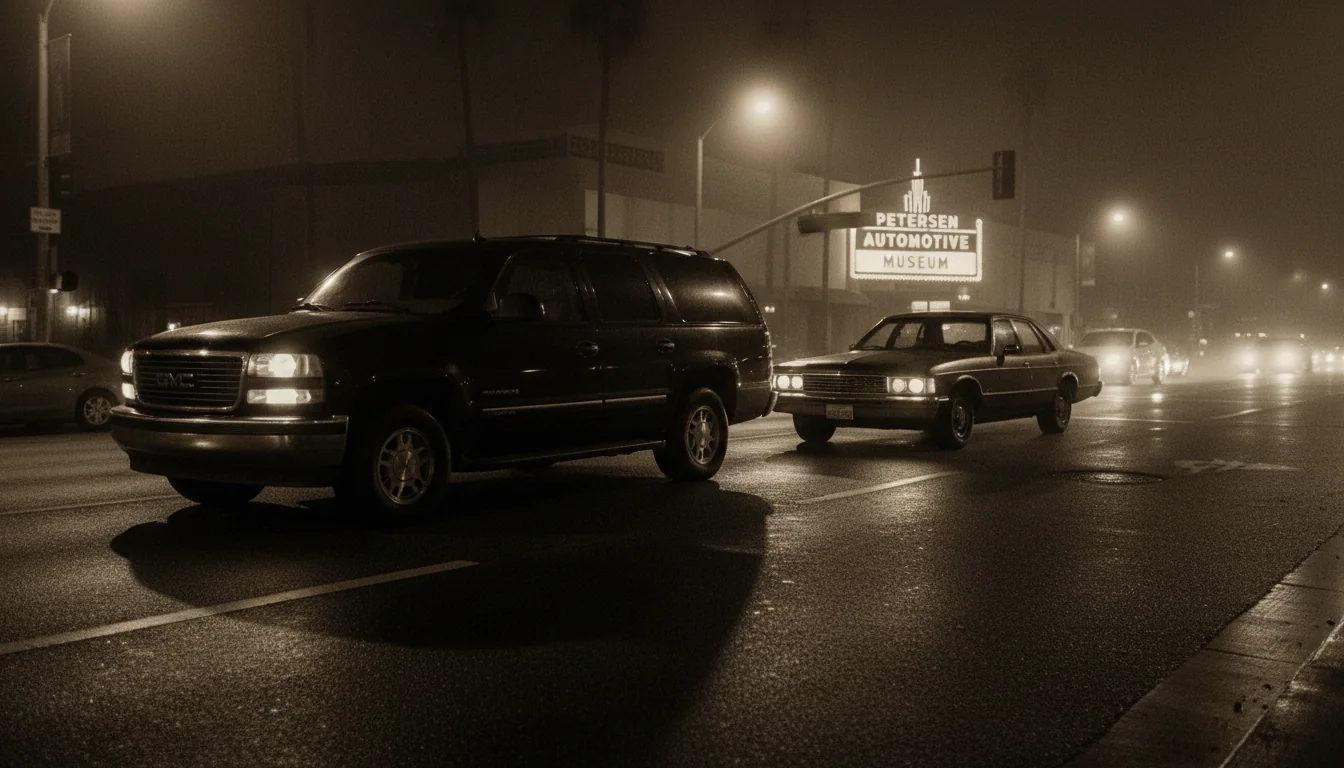
On the night of March 8, 1997, Christopher Wallace attended a Vibe Magazine after-party at the Petersen Automotive Museum on Wilshire Boulevard following the Soul Train Music Awards. He was 24 years old, weighed more than 350 pounds, and was leaving on crutches after breaking his leg in a car accident months earlier. When venue staff shut the party down after a fight, Wallace walked out with his entourage just after midnight and climbed into the front passenger seat of a black GMC Suburban.
The convoy moved about a block east on Wilshire. At the intersection near Fairfax Avenue, a dark Chevrolet Impala SS pulled up to the right of Wallace's vehicle. The driver lowered his window and fired four shots from a .40-caliber handgun. His bodyguards rushed him to Cedars-Sinai Medical Center a few blocks away. He was pronounced dead at approximately 1:15 a.m. on March 9, 1997.
He was 24 years old. His second album, Life After Death, was three weeks from release.
The man
Christopher George Latore Wallace was born on May 21, 1972, in the Clinton Hill neighborhood of Brooklyn. Raised by his mother Voletta after his father left, he ran with crews involved in crack distribution in his teens while developing a side career making mixtape recordings. He was discovered by talent manager Wayne Barrow and subsequently by Sean Combs, who signed him to Bad Boy Records.
His debut album, Ready to Die, released in 1994, was immediately recognized as a landmark of East Coast hip-hop. Wallace's gift was for vivid street narrative delivered with technical precision - his flows were dense, his rhymes internally complex, and his storytelling unflinching. His verses accumulated into one of the most studied bodies of work in the genre.
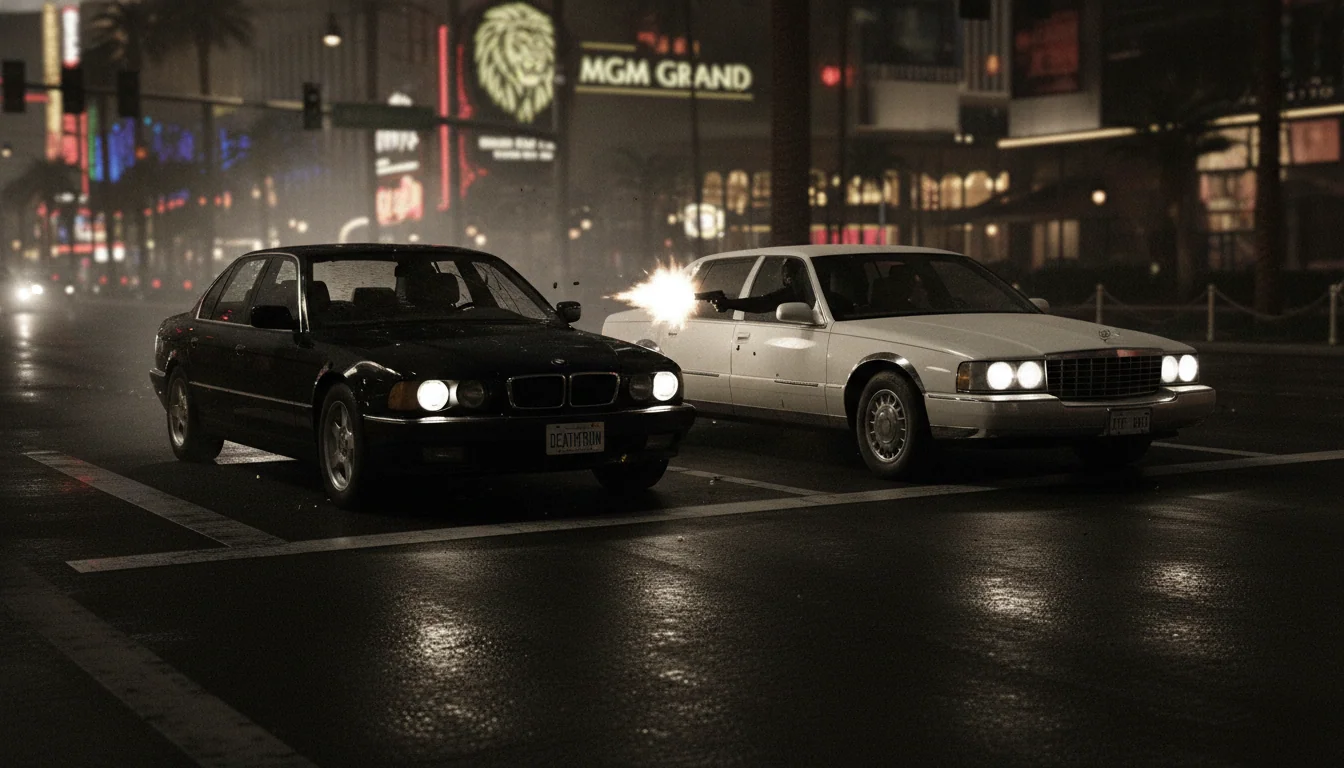
By 1996 he was one of the biggest-selling rap artists in the United States and at the center of a highly publicized feud with Death Row Records, the Los Angeles label run by Marion "Suge" Knight, and with Death Row's flagship artist Tupac Shakur. The feud was partly manufactured by the music industry and partly rooted in genuine competition and old debts. Tupac Shakur was shot six times in Las Vegas on September 7, 1996, after attending a Mike Tyson boxing match, and died six days later. Six months after Tupac's death, Wallace flew to Los Angeles for the Soul Train Awards. Some associates warned against the trip.
The investigation
The LAPD investigation was troubled from its opening weeks in ways that went beyond ordinary homicide complexity.
Detective Russell Poole was assigned to the case. In the course of his work he developed a theory that LAPD officer David Mack, who was being separately investigated for a bank robbery, was connected to the Wallace killing. Mack had associations with Death Row Records and with a man named Harry Billups, known in criminal circles as Mack Poochie, whom Poole believed was the actual shooter. Poole also gathered evidence suggesting that Suge Knight, who was traveling directly behind Wallace in the convoy that night, might have been involved in organizing the attack.
LAPD leadership declined to pursue these leads to Poole's satisfaction. He resigned in 1998 and went public with his findings. The department denied that any officer involvement had been substantiated. David Mack was convicted of a separate bank robbery charge in 1997 and sentenced to fourteen years in federal prison. He was never charged with any connection to Wallace's death.
Voletta Wallace filed a wrongful death lawsuit against the City of Los Angeles, alleging that the LAPD had failed to properly investigate and had possibly participated in the killing. The suit dragged through courts for years before a federal judge dismissed it in 2010, finding insufficient evidence of city liability.
Meanwhile, the Los Angeles Times published a 2002 investigation by reporter Chuck Philips claiming that Death Row Records had paid a gang member to carry out the killing. Philips published follow-up reporting with broader claims years later. That story was subsequently retracted after the FBI revealed that key supporting documents were forgeries. The retraction damaged the broader Death Row theory by contaminating the evidentiary record and forcing investigators to separate what had been independently verified from what had been fed to reporters as disinformation.
The Keffe D development
The most significant development in the overlapping Biggie-Tupac investigations came slowly, over decades.
Duane Keith Davis, known as Keffe D, was a South Side Compton Crips leader who for years gave interviews hinting at his knowledge of both killings. In his memoir he made more explicit claims: that he had been in the car from which Tupac was shot, that the attack was organized in retaliation for an assault on his nephew Orlando Anderson, and that the same network was involved in subsequent violence against Wallace.
In September 2023, Las Vegas Metropolitan Police arrested Davis and charged him with first-degree murder in connection with Tupac's death. His case was pending as of this writing. His claims about the Biggie killing have not been independently substantiated in any formal legal proceeding.
What the Davis arrest established, at minimum, is that the working theory - South Side Compton Crips acting on financial or personal motivation, with possible Death Row backing - is not simply tabloid speculation. It has a named defendant, a partial evidentiary chain, and decades of corroborating circumstance. Whether that chain extends to Wallace's death, in a different city six months later, remains the unresolved question.
What the investigation failed to do
Russell Poole spent decades pressing the officer-involvement theory. He died in 2019 while being interviewed by Los Angeles Sheriff's detectives about the case, suffering a fatal heart attack during a contentious session. His death did not resolve the question he had devoted his career to asking.
The LAPD formally closed its investigation into Wallace's murder in 2024, having failed to identify a prosecutable suspect. The department said it had exhausted available leads. Critics of the closure argue that the investigation was compromised from the start by internal conflict over the Poole findings, potential witness intimidation, and years of mishandled evidence.
The physical evidence was limited. No usable fingerprints were recovered from the Impala, which was found abandoned shortly after the shooting. The intersection had sparse surveillance coverage by 1997 standards. Witnesses in the convoy gave accounts that varied in their details of the Impala's movements in the minutes before the attack. Whether the shooter had advance knowledge of Wallace's travel plans - which would confirm a deliberate targeted operation rather than an opportunistic encounter - was never definitively established.
What it leaves
Christopher Wallace released Life After Death three weeks after he was killed. It debuted at number one and remains one of the most commercially successful rap albums in American history.
The Notorious B.I.G. murder and Tupac Shakur's death have become the most discussed unsolved homicides in the history of popular music. Part of this is because both men were killed at the peak of their creative powers. Part of it is because both investigations left visible loose threads - named suspects who were never charged, documents that turned out to be fabricated, officers whose conduct was questioned and never fully explained.
What is not in dispute is that Wallace was shot by someone who moved into position deliberately, fired with accuracy through a car window at night, and disappeared into Los Angeles traffic within seconds. Whatever the origin of the order, this was not a random encounter.
Who gave that order, who carried it out, and what chain of decisions led from the Petersen Museum parking lot to the red light on Wilshire Boulevard is not public knowledge. After twenty-seven years, it may never be.
For more on major unsolved criminal cases, see The Long Island Serial Killer and The Wanda Beach Murders.
Quick Answers
Common questions about this topic
Who killed Notorious B.I.G.?
Nobody has ever been charged with the murder of Christopher Wallace. The most widely discussed theory implicates members of the South Side Compton Crips acting on behalf of Death Row Records, but LAPD investigations were repeatedly hampered by internal conflicts, allegations of officer involvement, and contested evidence. The case remains officially unsolved.
How was Biggie killed?
Wallace was shot four times by a .40-caliber handgun fired from a dark Chevrolet Impala that pulled alongside his GMC Suburban at a red light on Wilshire Boulevard near Fairfax Avenue in Los Angeles, shortly after midnight on March 9, 1997. He was pronounced dead at Cedars-Sinai Medical Center approximately an hour later.
Was the LAPD involved in Biggie's murder?
The allegation was seriously pursued by LAPD detective Russell Poole, who resigned in 1998 after department leadership refused to follow leads he believed pointed to officer David Mack and Mack's associate as participants in the killing. Mack was later convicted of bank robbery but never charged in connection with Wallace's death. The LAPD has denied that any of its officers were involved.
Was the murder connected to Tupac Shakur's death?
The two killings - Tupac's in Las Vegas in September 1996 and Biggie's in Los Angeles six months later - are linked in public perception and in some investigative theories, but no investigation has conclusively connected them. In 2023, Duane Keith Davis (Keffe D) was arrested for Tupac's murder and in his memoir claimed knowledge of a coordinated response targeting Wallace, but those claims remain unproven in court.

Want to Interrogate the Suspects?
Chat with historical figures and uncover the truth behind history's greatest mysteries.
Create your free account →No card required. Some figures and features require a paid plan.
Join the HistorIQly Club
Get smarter about the past.
Weekly stories, deep dives, and exclusive content straight to your inbox.