The Dark Countess of Hildburghausen: Was She Marie Antoinette's Daughter?
The Dark Countess of Hildburghausen spent thirty years veiled in a German castle. Was she Marie Antoinette's daughter, hidden to escape the guillotine?
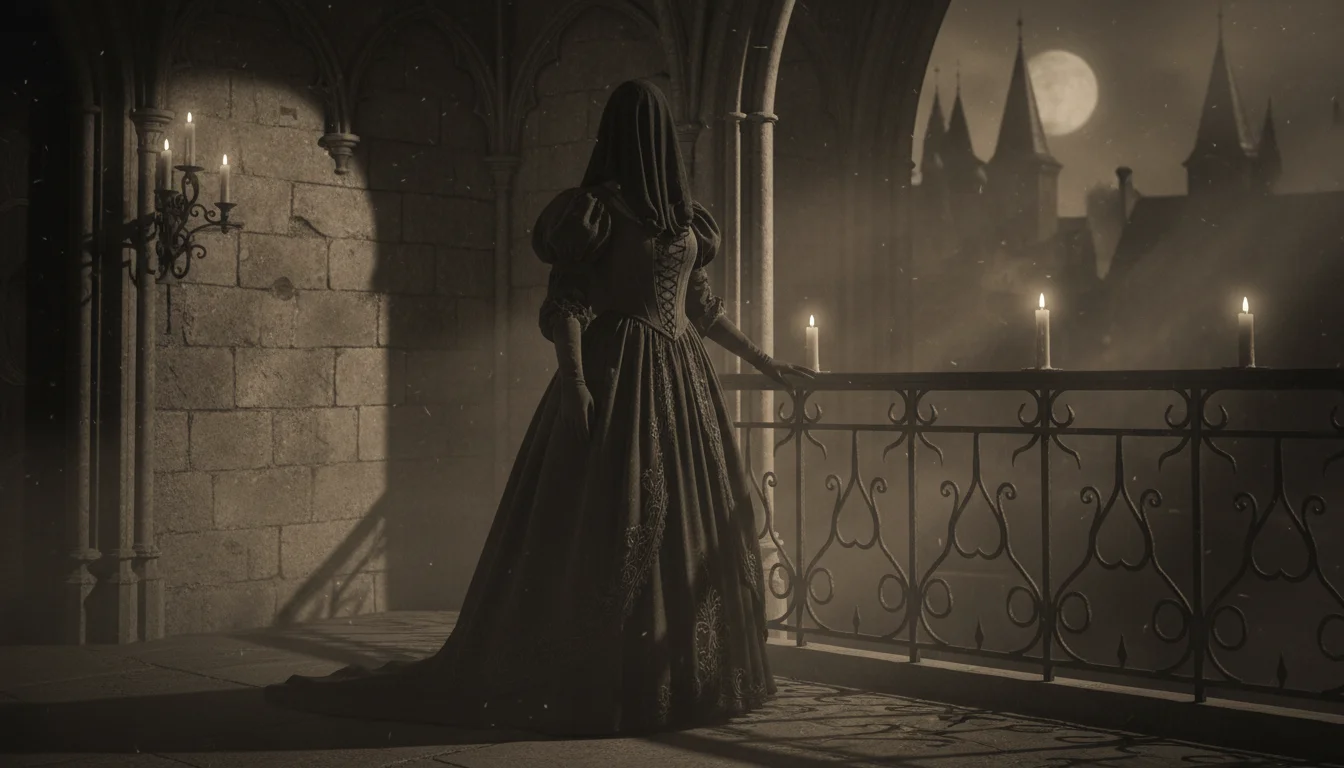
On a cold February day in 1807, a carriage arrived in the small German town of Hildburghausen carrying two passengers who would become the most enigmatic residents in the region's history. The man introduced himself as Count Vavel de Versay. The woman remained nameless, faceless, and utterly silent to the outside world.
For the next thirty years, the townspeople would catch only fleeting glimpses of her - always veiled, always hidden, never speaking. They called her the Dunkelgräfin, the Dark Countess of Hildburghausen, and they whispered that she might be the most famous missing person in Europe: Marie-Thérèse Charlotte, the surviving daughter of Marie Antoinette and Louis XVI.
The Arrival of the Dark Counts
The couple's behavior was immediately suspicious. They rented the finest accommodations available but refused all social invitations. The Count handled all business matters while the woman remained sequestered. When she did venture outside - rarely, always by carriage - she wore a heavy veil that completely obscured her features.
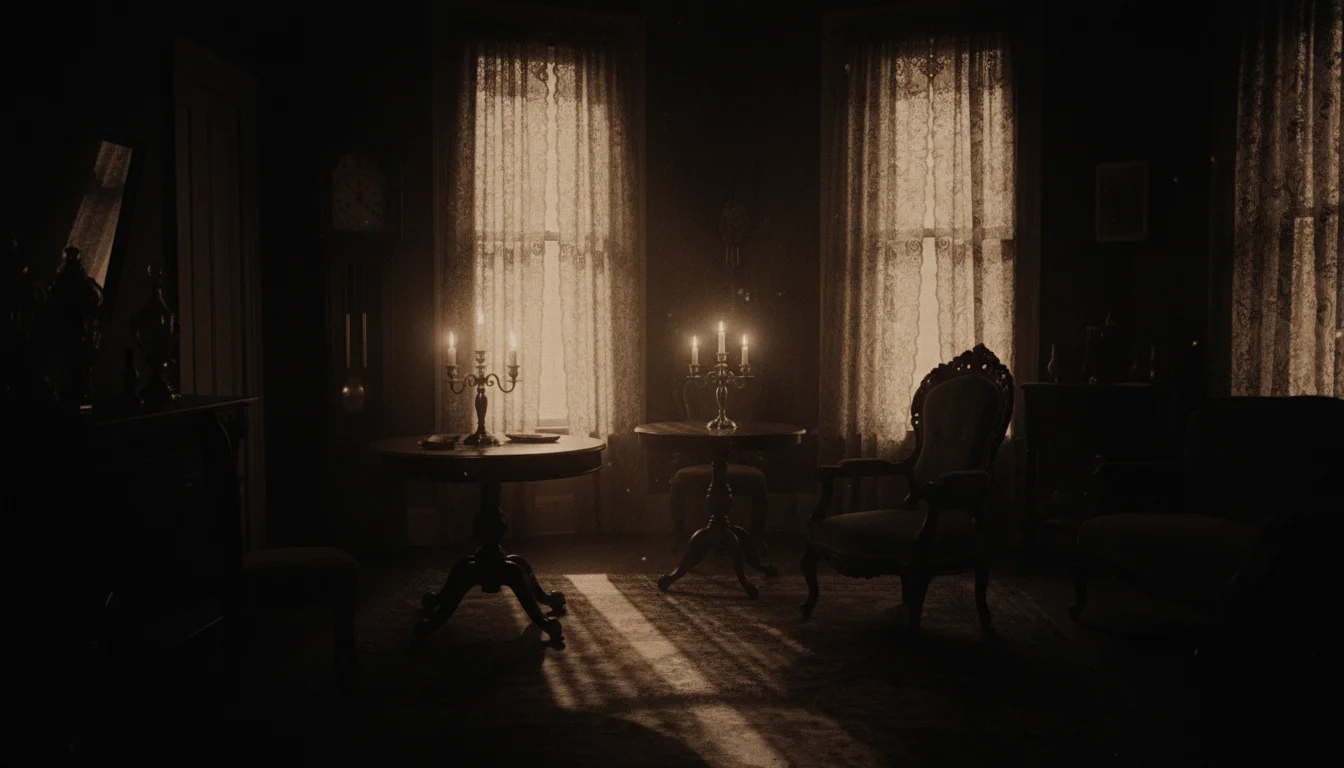
In 1810, they moved to the even more isolated Eishausen Castle on the outskirts of town, where their seclusion became absolute. The Dark Countess reportedly spent her days reading, walking in the enclosed gardens, and staring out windows at a world she refused to join.
Servants who caught glimpses of her face were immediately dismissed. Local physicians who attended to her illnesses were sworn to secrecy. The Count paid handsomely for this silence, suggesting he had substantial resources - and substantial reasons for hiding his companion's identity.
The Theory That Captivated Europe
What made this mystery so compelling was its connection to the greatest tragedy of the French Revolution. In 1795, Marie-Thérèse Charlotte was released from the Temple Prison in Paris, where she had spent three years watching her family destroyed. Her father, Louis XVI, had been guillotined in January 1793. Her mother, Marie Antoinette, followed in October. Her younger brother Louis-Charles died in prison in June 1795 under horrific conditions.
Marie-Thérèse was seventeen years old, the sole survivor of the most famous family in Europe. She was exchanged for French prisoners held by Austria and sent to join her Habsburg relatives in Vienna.
But something was wrong.
When she arrived in Austria, those who had known her before her imprisonment noticed changes they couldn't explain. Her hair had darkened. Her personality seemed different. Her Austrian relatives reportedly found her cold and distant, even given what she had endured.
And then there was the blackmail.
Renée Suzanne de Soucy, who had accompanied Marie-Thérèse on her journey from Paris to the Austrian border, later extracted money from the princess through threats that were never explained. What did de Soucy know? What had happened during that journey?
The Switch Theory
The theory that emerged - and persisted for two centuries - was breathtakingly dramatic: the real Marie-Thérèse never made it to Austria.
According to this hypothesis, the traumatized princess couldn't face returning to public life. Perhaps she was pregnant from rape during her imprisonment. Perhaps she was simply broken beyond repair. Whatever the reason, she allegedly switched places with Ernestine de Lambriquet, her adoptive sister and possibly her half-sister (some historians believe Ernestine was an illegitimate daughter of Louis XVI).
Ernestine would have continued to Vienna to live out Marie-Thérèse's life, eventually marrying her cousin Louis-Antoine, Duke of Angoulême, and becoming Dauphine of France during the Bourbon Restoration. The real Marie-Thérèse, meanwhile, would have hidden in Germany, eventually settling in Hildburghausen with a protector - the man who called himself Count Vavel de Versay.
The timeline fit almost perfectly. Ernestine de Lambriquet had been living under the protection of Renée Suzanne de Soucy since 1792. The Austrian Emperor had specifically requested that Ernestine accompany Marie-Thérèse to Vienna, but was told she couldn't be located - a lie, since the Mackau family knew exactly where she was.
And then there was the mysterious "Pierre de Soucy" listed on the travel passports - supposedly Renée's son, except she had no son by that name. Was this the disguised Ernestine, traveling in the convoy to facilitate the switch?
Death Behind the Veil
The Dark Countess died on November 28, 1837. The Count buried her with unseemly haste, possibly without a religious service, in a garden plot on Schulersberg hill that she had purchased years earlier - as if planning for this moment.
He gave her name as Sophie Botta, a single woman from Westphalia. The attending physician estimated her age at approximately sixty, which would place her birth around 1777 - the exact year Marie-Thérèse was born.
Count Vavel de Versay lived another eight years, dying in 1845. He was eventually identified as Leonardus Cornelius van der Valck, born in Amsterdam in 1769, who had served in the Dutch embassy in Paris during the chaotic years of the French Revolution. He would have been perfectly positioned to know the truth about Marie-Thérèse's fate - and to help her disappear.
The DNA Verdict
For over two hundred years, the mystery festered. Books were written. Theories proliferated. The German public remained fascinated by the veiled woman in the castle.
In October 2013, scientists finally exhumed the Dark Countess's remains for DNA testing. Modern forensic technology could definitively answer whether she shared mitochondrial DNA with the Habsburg family.
She did not.
The tests confirmed that the Dark Countess was not Marie-Thérèse, not a daughter of Marie Antoinette, not a member of any European royal family. The most romantic theory was definitively debunked.
The Mystery That Remains
But here's the strange thing: we still don't know who she was.
The DNA tests eliminated the royal theory but couldn't identify the woman. Sophie Botta from Westphalia doesn't appear in any civil registry. The Count's elaborate precautions - the veils, the dismissed servants, the secret burial - suggest someone with powerful reasons to hide.
Why would a Dutch diplomat spend decades protecting a woman's identity if she wasn't royal? What secret was worth a lifetime of silence?
Some researchers now believe she may have been Agnes Berthelmy, a married woman who had a romantic relationship with the Count in the 1790s - letters from this period were found among his effects. Perhaps she was fleeing a scandal, an abusive husband, or some other threat that required complete anonymity.
But this theory has its own problems. Would a bourgeois affair really require thirty years of absolute secrecy? Would it justify the near-religious devotion the Count showed in protecting her identity?
The Dark Countess took her secrets to the grave on Schulersberg hill. We know she wasn't Marie Antoinette's daughter. We don't know who she actually was.
She remains, as she was in life, a woman behind a veil - visible only as a silhouette, a mystery, a question that history cannot quite answer.
The grave of the Dark Countess still stands near Hildburghausen, visited by tourists drawn to one of history's most elegant mysteries. The castle where she lived was demolished in 1873, but her story - of trauma, secrecy, and identity - continues to captivate those who encounter it.
For more cold cases involving hidden identities and unresolved mysteries, see our coverage of the Connie Converse disappearance and the Frederick Valentich UFO disappearance.

Want to Interrogate the Suspects?
Chat with historical figures and uncover the truth behind history's greatest mysteries.
Start Your InvestigationJoin the HistorIQly Club
Get smarter about the past.
Weekly stories, deep dives, and exclusive content straight to your inbox.