The Death Valley Germans: Four Tourists Vanished Into America's Hottest Desert
The Death Valley Germans: in 1996, a German family of four vanished into America's hottest desert. It took thirteen years to find out what happened to them.
Read Wikipedia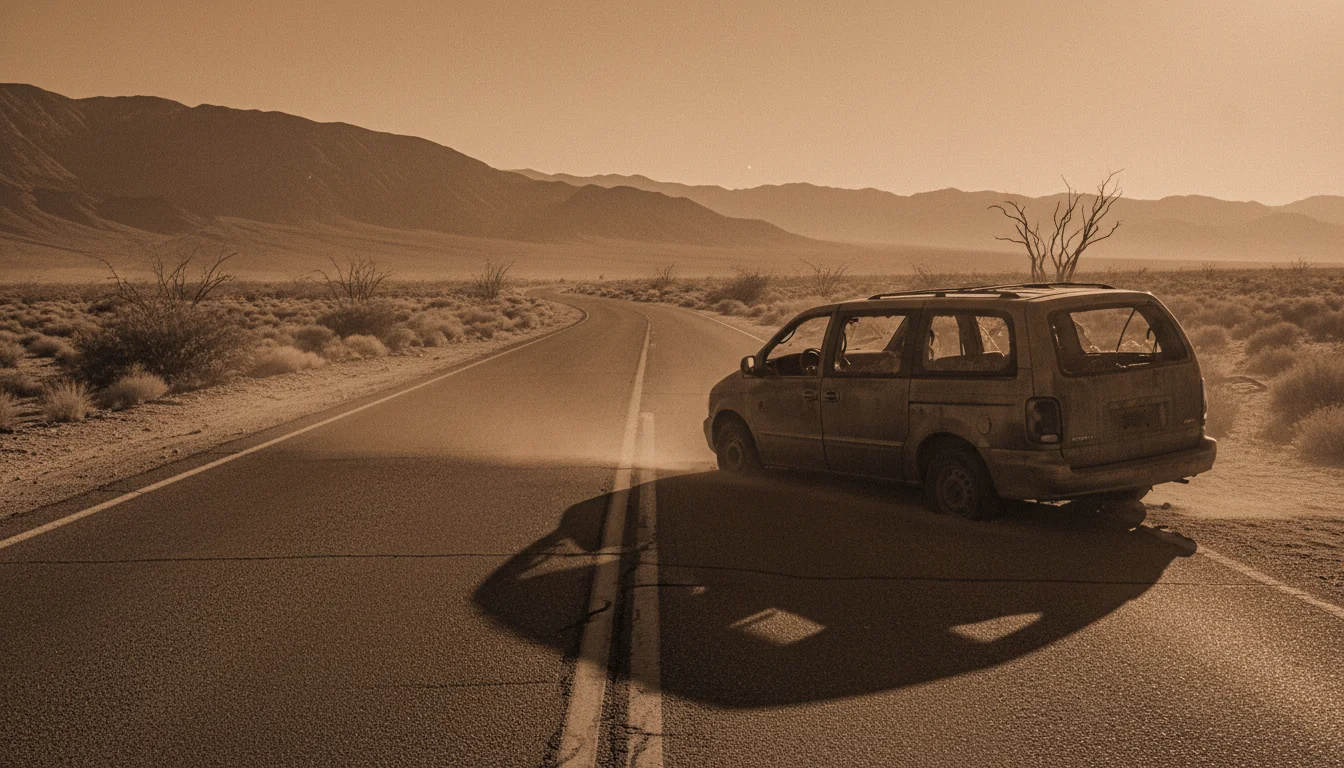
On July 22, 1996, a Plymouth Voyager rental van sat abandoned on Anvil Spring Canyon Road, deep in one of the most unforgiving landscapes on Earth. The doors were unlocked. Personal belongings remained inside. The keys were gone. And somewhere in the vast, sun-scorched wilderness of Death Valley, a German family of four had vanished.
Egbert Rimkus, 34, and Cornelia Meyer, 28, were experienced travelers who had visited the American Southwest before. They had brought Cornelia's sons - Max, 11, and Phillip, 4 - for what should have been an unforgettable summer adventure. Instead, they became one of Death Valley's most haunting mysteries, a case that would take thirteen years to partially solve.
The Last Known Movements
The family had rented the minivan in Los Angeles on July 8, 1996. Their itinerary included Las Vegas, where they stayed at the Mirage and won modest jackpots at the slot machines. Security footage from July 20 showed them healthy and in good spirits.
From Vegas, they drove toward Death Valley. The last confirmed sighting placed them in the Mojave Desert town of Baker on July 21. After that, silence.
When the Rimkus family failed to return to Germany, authorities launched a search. The van was discovered on Anvil Spring Canyon Road - a rough, unpaved track that most tourists would never consider attempting. The location was bizarre. This wasn't a scenic route or a marked trail. It was a road that led essentially nowhere, used occasionally by miners and those with serious off-road vehicles.
Why had a family in a rental minivan driven there?
A Deadly Wrong Turn
The prevailing theory centers on a fatal navigation error. In 1996, GPS was not yet standard in rental cars. Travelers relied on paper maps. And Death Valley's map showed what appeared to be a shortcut - a road cutting through the park that could save significant driving time.
On paper, it looked reasonable. On the ground, it was a death trap.
The road the Germans apparently attempted - a route connecting Warm Spring Canyon to the eastern exit - was impassable in a standard vehicle. When they realized their mistake, they may have tried to backtrack and gotten lost in the maze of similar-looking dirt roads that crisscross the region.
The van was found with its fuel tank nearly empty. They had driven until they couldn't drive anymore.
Into the Wilderness
The family's remains wouldn't be found for over a decade. When searchers initially canvassed the area in 1996, they found nothing. The vastness of Death Valley - over 3.4 million acres of brutal terrain - made comprehensive searches nearly impossible. Ground temperatures can exceed 200°F. Water is nonexistent. A human being exposed to these conditions in summer, without adequate supplies, faces death within hours.
Search and rescue teams concluded that the family had likely perished in the desert, but the specifics remained unknown. The case went cold.
The Geologist's Obsession
In 2009, a retired geologist named Tom Mahood became fascinated with the case. Mahood had extensive experience in Death Valley and a methodical, analytical mind. He began studying the terrain, the likely decision points the Germans might have faced, and the physics of survival in extreme heat.
His key insight was psychological. When people become lost and desperate, they make predictable decisions. They seek high ground to get their bearings. They follow washes - dry streambeds - because walking on sand is easier than climbing rocky slopes. They move during cooler hours and rest during the worst heat.
Working backward from these principles, Mahood identified the most likely routes the family would have taken after abandoning their van. Then he started walking them himself.
The Discovery
On November 12, 2009, Mahood and his search partner Les Walker found human remains in Goler Wash, approximately five miles from the abandoned van. Scattered across the rocky terrain were bones, later confirmed through DNA testing to belong to Egbert Rimkus. His camera was recovered nearby.
The film inside had long since degraded, but investigators hoped it might yield some record of the family's final days. It didn't. Whatever images it once contained were gone.
Near the bones lay a child's shoe.
Additional remains were found in subsequent searches - more bones confirmed as Egbert's, and two others whose DNA couldn't be definitively matched but were consistent with the missing family members. Cornelia Meyer and the two boys were never officially identified, though the evidence strongly suggests they perished alongside Egbert.
Reconstructing the Final Hours
Based on the evidence, investigators pieced together a probable sequence of events.
After the van ran out of fuel or became stuck, the family decided to walk out. They may have believed help was closer than it actually was - the optical illusions common in desert terrain make distances extremely difficult to judge. Mountains that appear a few miles away might be twenty miles distant.
They walked south, following the path of least resistance down Anvil Spring Canyon. The temperature on July 22, 1996, exceeded 110°F. They likely had limited water. The children, especially four-year-old Phillip, would have succumbed quickly.
The five-mile distance covered suggests they survived longer than expected - perhaps walking in the pre-dawn darkness when temperatures were more survivable, then collapsing as the sun rose. Egbert's remains were found on higher ground, consistent with a final desperate attempt to spot civilization or a road.
They died within sight of nothing but more desert.
Questions That Remain
While the discovery of remains closed the chapter on what happened, several questions linger.
Why did they take Anvil Spring Canyon Road in the first place? Even for lost tourists, it was an unusual choice. The road isn't signed as a through-route. Did they receive bad directions? Was there a misunderstanding with a map? Did they simply take a wrong turn and then compound the error with more wrong turns?
Where is Cornelia Meyer? Her remains have never been definitively identified. The bones found could belong to her, or they might not. The desert scatters remains widely - scavenged by coyotes, scattered by flash floods, buried by shifting sands.
What was on the camera? The degraded film represents a lost record of their final journey. Did they photograph landmarks that might explain their route? Did they leave a visual record of their ordeal? We'll never know.
The Cruelty of the Desert
The Death Valley Germans case became a cautionary tale, studied by search and rescue teams worldwide. It illustrates how quickly a wrong turn can become fatal in extreme environments, how technological failures (no GPS, no cell service) compound human errors, and how the vastness of wilderness can swallow people whole.
Mahood, the geologist who finally found them, wrote extensively about his search methodology. His techniques have been applied to other missing person cases in remote areas. Something good came from the tragedy.
But for the families in Germany who waited thirteen years to learn the fate of their loved ones, and for the four people who walked into that merciless landscape and never returned, the Death Valley mystery offers no comfort - only a reminder of how thin the margin between adventure and catastrophe can be.
The Memorial
Today, a small memorial marks the approximate location where Egbert Rimkus's remains were found. Visitors occasionally leave flowers or stones. The desert remains unchanged - vast, indifferent, and absolutely unforgiving.
The temperature still climbs past 120°F in summer. The roads still confuse travelers. And somewhere in those 3.4 million acres, the complete story of what happened to Cornelia, Max, and Phillip may still lie waiting to be found.
If you ever visit Death Valley, bring more water than you think you need, tell someone your route, and never, ever leave the paved roads unless you know exactly where you're going.
For other mysterious disappearances in wilderness settings, see The Dyatlov Pass Incident and Kris Kremers and Lisanne Froon.

Want to Interrogate the Suspects?
Chat with historical figures and uncover the truth behind history's greatest mysteries.
Create your free account →No card required. Some figures and features require a paid plan.
Join the HistorIQly Club
Get smarter about the past.
Weekly stories, deep dives, and exclusive content straight to your inbox.