The Benjaman Kyle Amnesia Mystery: America's Most Unusual John Doe
Benjaman Kyle was found behind a Georgia Burger King in 2004 with no memory of his identity - the only John Doe listed as a missing person in American history.
Read Wikipedia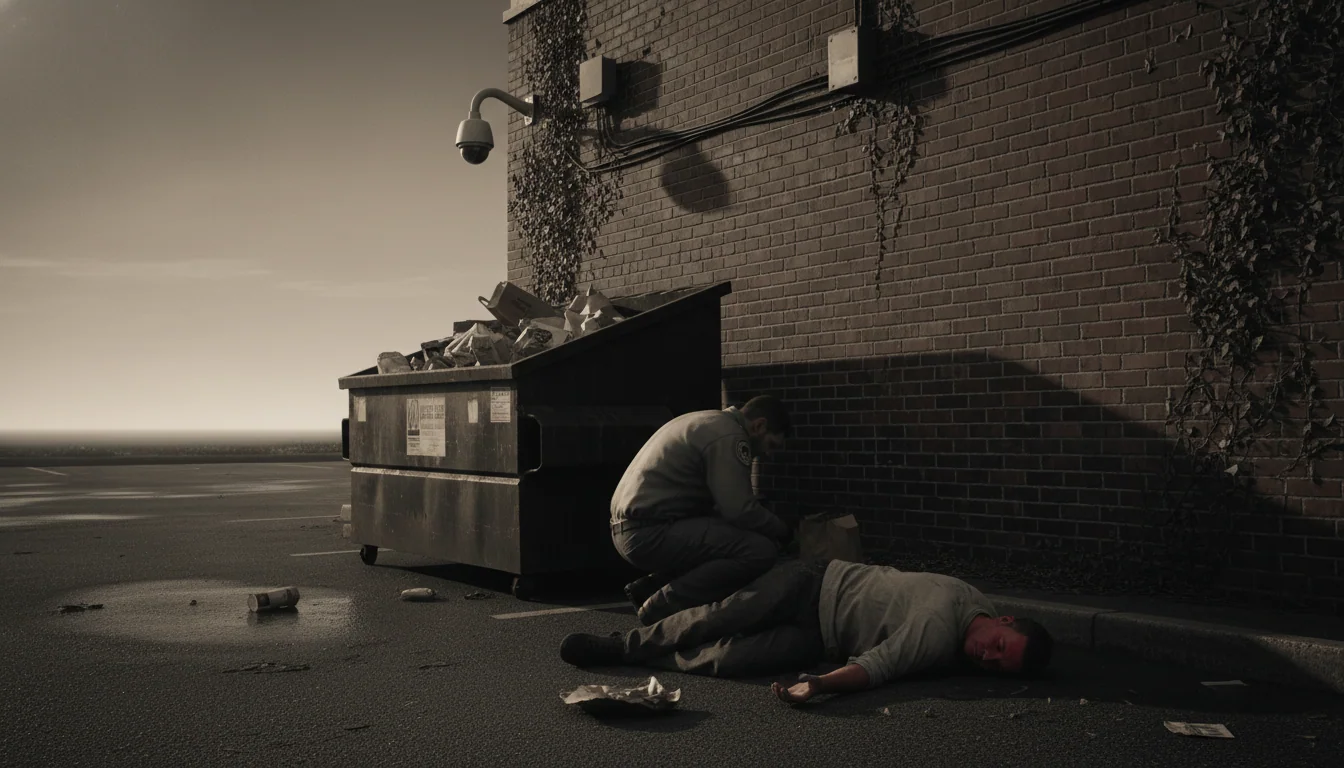
On August 31, 2004, employees at a Burger King restaurant in Richmond Hill, Georgia arrived at work and found a man lying near the dumpster area behind the building. He was naked. He had sunburns consistent with extended outdoor exposure. He had three dog bites. He was disoriented, heavily confused, and had almost no memory of who he was.
He could speak. He could tell the paramedics who brought him to Memorial Medical Center in Savannah that he thought he might have been in Indianapolis at some point. He knew what a Burger King was. He was educated enough to discuss a range of topics with the medical staff treating him. But he could not tell them his name, his birthdate, his address, or anything about his life before waking up in a parking lot on the Georgia coast.
This was the beginning of one of the most unusual identity cases in American history.
The name
His fingerprints were run through every available database. No match came back. His DNA was collected and submitted. Still nothing. Dental records produced no identification. The Bryan County Sheriff's Office had no missing persons report that matched him.
He needed a name. Sitting in a Savannah shelter, he chose one himself. "BK" for Burger King, the place he had been found, became Benjaman Kyle - deliberately spelled with an A in the first name to distinguish himself from the more common spelling. The surname Kyle came from a Georgia town he had heard mentioned.
For most people, a name is not something you construct from scratch in a shelter. For this man, it was necessary to have one at all.
Life without a self
What followed was an extended confrontation with systems entirely unprepared for a person who had no documented identity. Without a Social Security number, Kyle could not work legally. Without a birth certificate or state ID, he could not obtain the documents needed to get either. Without proof of citizenship, he could not access most federal assistance. The situation was circular and nearly inescapable: the paperwork required to exist required him to already exist, on paper, somewhere else.
He was supported through a combination of local charity, community generosity, and the goodwill of people who learned his story through media coverage. For stretches of his early post-hospital years he worked informally at restaurants and food service jobs, which suited both his apparent familiarity with the industry and the informal nature of his employment situation.
He was the first John Doe in U.S. history to be entered into the FBI's National Crime Information Center as a missing person. Most missing person filings involve people who have disappeared from a known identity outward. Kyle's case ran the other direction: a man who existed physically but had no documentary anchor to any prior life. The FBI filing was a creative use of an existing system, not a category the system had been designed for. Investigators worked around the gap.
Neurologists who examined him noted findings consistent with dissociative amnesia of some kind, likely triggered by severe trauma. The specific mechanism - whether purely psychological, caused by head injury, or some combination - was never definitively established. His memory for general knowledge remained largely intact. His autobiographical memory, everything personal about his own history, was effectively gone.
Attention and the documentary
The case attracted intermittent media attention through the late 2000s and early 2010s. A 2013 documentary film by filmmaker John Wikstrom, titled "Finding Benjaman," followed his situation with sustained attention and helped bring his case to a broader audience. The film captured not just the search for his identity but the day-to-day reality of living without one: the bureaucratic walls, the moments of frustration, and the strange half-life of a person who knew they had a history but could access none of it.
Kyle participated actively in efforts to identify himself. He was willing to be filmed, interviewed, and subjected to repeated genetic testing as techniques improved. He maintained public profiles documenting his situation, making him one of the more transparent subjects in any ongoing identity investigation.
The documentary raised the obvious question that investigators had been circling for years: how had a man with an apparent education, a clear sense of his own intelligence, and a memory for general knowledge ended up naked and injured behind a fast food restaurant with no identification and no one looking for him? The absence of a missing persons report was among the most disturbing elements of the case. Someone who had apparently existed in the world, who had presumably had a job and an address and relationships, had vanished without anyone filing paperwork.
The identification
In September 2015, genetic genealogist CeCe Moore, working in collaboration with Identifinders International, used autosomal DNA testing through a consumer ancestry database to generate family matches. The results pointed toward a family in Indiana. Cross-referencing the DNA matches with family-tree records, Moore and her colleagues narrowed the identification to William Burgess Powell, born in Indianapolis in 1948.
Contact was made with surviving relatives. A sibling confirmed the identification. Powell - who continued to use the name Benjaman Kyle publicly - accepted the identification and was able to apply for legal identity documents using the birth record.
The resolution moved quickly once the genealogy method clicked into place. The identification that had seemed impossible for eleven years came from technology barely in existence when he was first found: consumer-facing ancestry DNA platforms and the publicly contributed genealogy databases that made them useful for forensic identification. Kyle's case was an early and prominent example of genetic genealogy being used to restore an identity rather than simply identify an unknown person - a distinction that matters practically, since restoring identity means providing living people with documents, not just names for case files.
What was not answered
The identification established who he was before 2004. It did not establish what happened to him.
No one has come forward to explain why William Burgess Powell was found naked, beaten, and dog-bitten behind a Burger King in coastal Georgia on August 31, 2004. No one has explained what he was doing in Richmond Hill, a small city far from Indianapolis. No one has explained the dog bites, the sunburn indicating prolonged outdoor exposure before discovery, or the complete absence of clothing or identification.
The criminal investigation produced nothing actionable. The Bryan County Sheriff's Office had little to work with in 2004: an unidentified victim with no memory of the event made the investigative trail nearly impossible to follow. The identification in 2015 gave investigators a name and a pre-2004 history to work backward from, but the gap between Powell's earlier life in Indiana and his appearance on the Georgia coast remained unexplained.
Theories circulate, most of them speculative. Some observers have noted that the physical circumstances - no clothing, dog bites, prolonged outdoor exposure - suggest someone who had been kept somewhere against their will, or who had been subject to mistreatment over a period of time rather than a single violent incident. Others have suggested connections to transient communities that move through the Savannah coastal area. None of these theories has produced evidence, and none has generated a serious investigative lead.
The broader question
Kyle's case became, in the years after 2013, a reference point in discussions of several larger issues: the fragility of identity in a documentation-dependent society, the inadequacy of support systems for people who fall through institutional floors, and the surprising power of commercial DNA databases once they reach the critical mass needed for forensic matching.
The identification also illustrated something less comfortable: that an American citizen could lose his documented self entirely, live for eleven years without any legal existence, and be failed by every fingerprint database, dental record archive, and missing persons system in the country - and be finally identified not by government forensics but by a consumer DNA service originally built for tracing ancestry.
What that means for the criminal question is ambiguous. The person or persons responsible for what happened to William Powell in 2004 have had more than twenty years of anonymity. The case remains technically open. Active investigation, such as it is, has produced nothing publicly reported.
Benjaman Kyle - William Powell - is alive. He has his name back, his documents, and some contact with family. What he does not have, and may never have, is an account of the years that were taken from him, or a satisfying explanation of how he ended up in Richmond Hill in the first place.
The one thing the case demonstrated decisively is how much of a modern life rests on paper. Take that away from someone, even briefly, and they cease to exist in every system that matters. Take it away permanently and they become, as Powell was for eleven years, a ghost moving through a world that has no record of them.
For other baffling identity mysteries, see The Somerton Man and the Tamam Shud Case and The Disappearance of Dorothy Arnold.
Quick Answers
Common questions about this topic
Who was Benjaman Kyle?
Benjaman Kyle was the name adopted by a man found severely beaten and naked behind a Burger King in Richmond Hill, Georgia, on August 31, 2004, with no memory of his identity. He was later identified in 2015 as William Burgess Powell, born in Indianapolis, Indiana, in 1948. He remains notable as the first John Doe in U.S. history to be formally listed as a missing person.
How was Benjaman Kyle identified?
In 2015, genetic genealogist CeCe Moore used autosomal DNA testing and family-tree matching to identify him as William Burgess Powell. The identification was corroborated by contact with surviving relatives, including a sibling.
Was Benjaman Kyle's attacker ever found?
No. Who beat him and left him behind the Burger King, and what his life was before the attack, have never been established. The identification of his name resolved one mystery while leaving the criminal case entirely open.
Is the Benjaman Kyle case fully solved?
His legal identity was restored in 2015, and he has spoken publicly since. But why he was found naked and beaten, where he had been living before 2004, and who was responsible for his condition remain unanswered.

Want to Interrogate the Suspects?
Chat with historical figures and uncover the truth behind history's greatest mysteries.
Create your free account →No card required. Some figures and features require a paid plan.
Join the HistorIQly Club
Get smarter about the past.
Weekly stories, deep dives, and exclusive content straight to your inbox.