The Bear Brook Murders: Four Victims, Two Barrels, and a Killer Who Died with His Secrets
The Bear Brook murders: four bodies found in sealed steel drums in New Hampshire, a suspect who died in prison, and two victims still unidentified today.
Read Wikipedia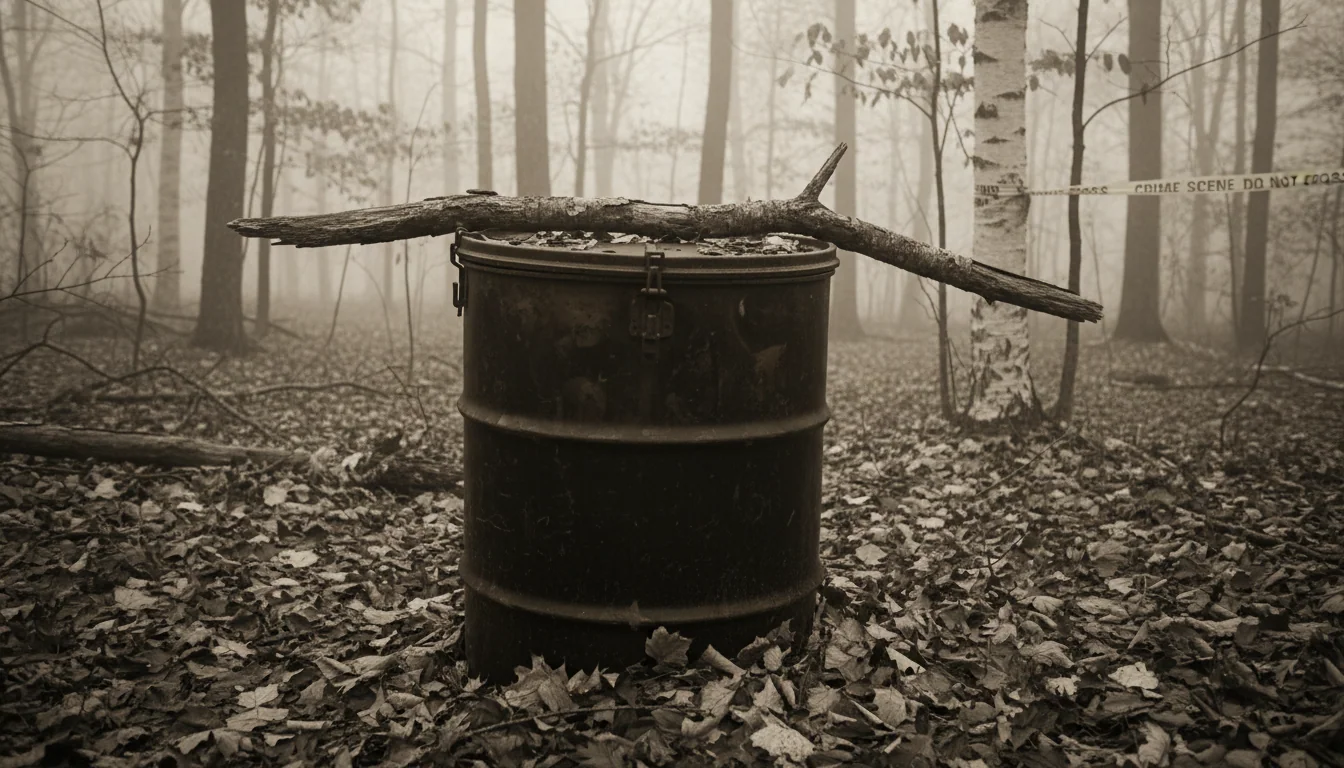
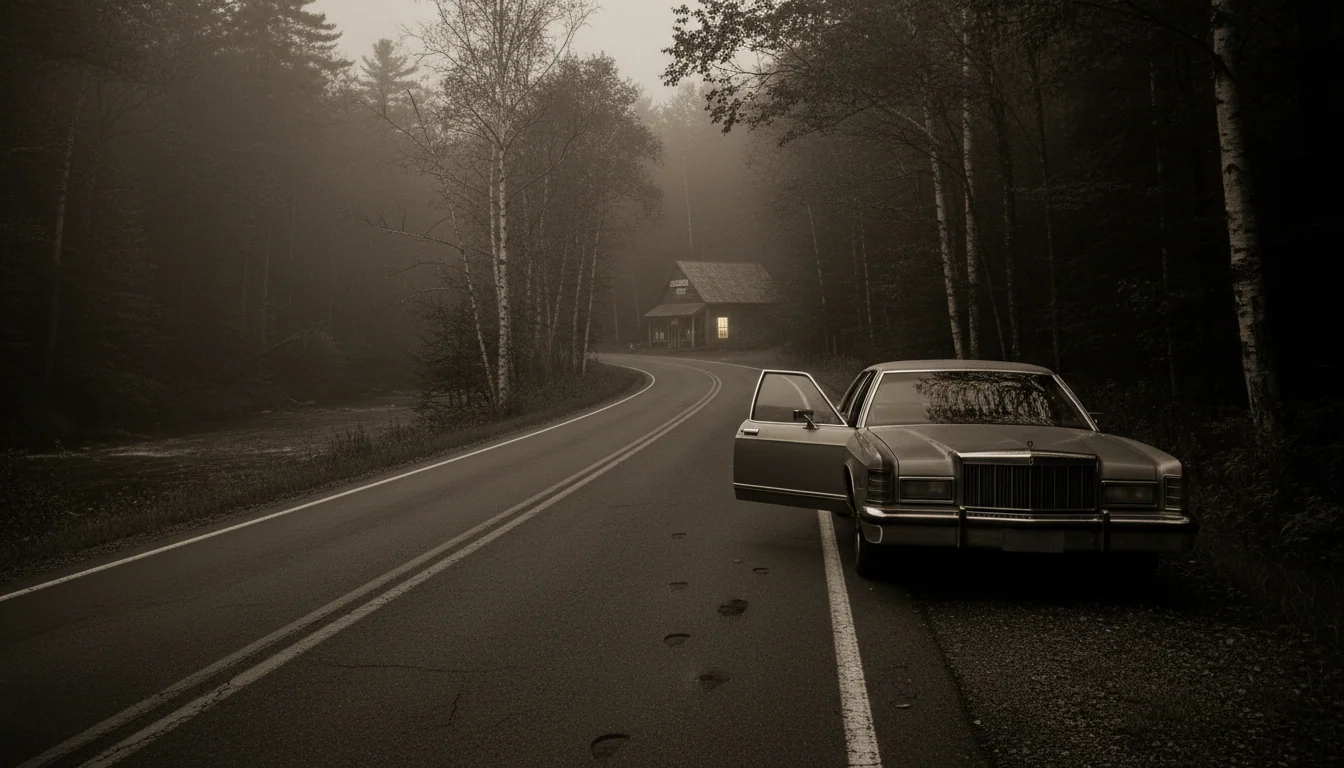
On October 10, 1985, a hunter walking through Bear Brook State Park in Allenstown, New Hampshire, found a black 55-gallon steel drum off a fire road. Inside were two bodies - an adult woman and a young child - wrapped in plastic bags. The medical examiner's office could establish that they had been dead for some time before discovery. No identification, no clothing that led anywhere, no matches in the missing persons files. The case went cold within months, and for years the park remained one of the more peaceful stretches of forest in central New Hampshire.
Fifteen years later it stopped being peaceful.
The second discovery
In May 2000, a dirt biker exploring a different section of the same park noticed disturbed ground near a cluster of trees. Investigation uncovered two more steel drums, each containing the body of a young child. The barrels were consistent with those found in 1985, and investigators quickly established a connection. DNA testing confirmed that the four victims were biologically related - the three children were related to the adult woman found in the first barrel. The same killer, the same methodology, and the same park. Two barrels in 1985, two more in 2000, four dead, none identified.
The case acquired a name - the Bear Brook murders, sometimes called the Allenstown Four - and a profile of methodical, organized violence. Whoever had put those bodies in those barrels had not panicked. The drums were sealed. The locations were chosen with care, off obvious paths but accessible enough that the bodies were deposited, not dragged any great distance. The killer knew how to handle what he had done.
What investigators knew, and what they didn't
The adult woman was estimated to be between 23 and 33 years old at time of death. The children ranged in approximate age from perhaps 2-3 to roughly 10-11, though skeletal analysis of decomposed remains carries wide margins. Investigators could determine sex, approximate age ranges, and biological relationships. They could not determine cause of death with certainty, given the condition of the remains. They could not put names to the faces.
The absence of identity is the deepest problem in cases like this one. A named victim has a history - a family who reported her missing, a last known location, a trail of documents. An unnamed victim has none of that. Investigators circulated the case nationally, checked missing persons databases, ran dental records against whatever comparative material existed. Nothing matched.
New Hampshire State Police worked the case over the years with the resources available, but cold cases without identities face a particular wall. You cannot build a timeline, cannot find witnesses to a specific disappearance, cannot trace financial records or phone calls, when you don't know who the victim is.
Robert Evans, alias Terry Rasmussen
A partial break came from an unexpected direction. Investigators pursuing a separate murder case in California were working the death of Eunsoon Jun, a woman who had been killed in San Jose around 2001. The man charged was a drifter known locally as Larry Vanner. When his fingerprints were run, they came back as Terry Peder Rasmussen, one of several aliases for a man who also went by Robert Evans and other names across different states and decades.
Rasmussen had a documented pattern: he moved frequently, used different identities, attached himself to women, and left destruction behind him. He was convicted of Eunsoon Jun's murder and began serving a sentence in California. DNA was taken as part of that process. When that DNA was checked against biological material recovered from the Bear Brook victims, it matched as a biological relative - investigators concluded he was likely the father of at least one of the children.
Rasmussen died in prison in California in 2010. He was never charged in connection with the Bear Brook murders. Whatever he knew about those four victims - who they were, how they came to be in that park, and when - died with him.
Forensic genealogy and the 2019 identification
By 2018, forensic genealogy had emerged as a serious investigative tool following its successful application in the identification of the Golden State Killer. The technique uses DNA extracted from unidentified remains, builds a partial genetic profile, and matches that profile against consumer genealogy databases to find distant relatives. From distant relatives, investigators build out a family tree and narrow toward the victim's identity through records research.
The DNA Doe Project and state investigators applied these methods to the Bear Brook adult woman. In January 2019, she was publicly identified as Marlyse Elizabeth Honeychurch, born in the early 1950s and originally from the northeastern United States. One of the children found with her was subsequently identified as her daughter Marie Elizabeth Vaughn.
The identifications answered the question of who two of the four victims were. They opened new questions about Marlyse's last years - how she and her daughter came to be in that park, when exactly they died, what connection Rasmussen had to her life. Some of those questions have been partially answered through records research. Others have not.
The two who remain unnamed
The other two children - both young girls, found in the second set of barrels - have not been identified as of this writing. Forensic genealogy has been applied to their DNA as well. The work has proven harder, either because their biological family lines are less represented in genealogy databases, or because the relevant records are more sparse, or both.
Their approximate ages at death are difficult to establish precisely. They were young. They were in that park. They were related, by DNA, to the other victims in ways that suggest a family grouping, though the exact nature of those relationships has not been publicly confirmed in full detail.
The Bear Brook case is unusual in several respects. Four victims in a single location is a high count for an unsolved American murder case. The methodology - the sealed barrels, the forested location, the multiple trips - suggests someone who killed more than once and had thought about the logistics. The geographic footprint of Rasmussen's documented life spans several states, and investigators have examined whether he may be connected to other unresolved deaths and disappearances elsewhere. Those investigations have not yet produced confirmed additional connections.
What the case represents
Bear Brook is, in some ways, a case that has been partially solved by technology that did not exist when the first barrel was found. DNA science in 1985 was in its infancy for forensic use. Genealogical databases built by consumer ancestry services did not exist until decades later. The investigators who first worked the case could not have done what was done in 2019 with the tools available to them. The identification of Marlyse Honeychurch and her daughter is a direct result of scientific and technical development that happened after the murders.
That development has also made clear how much remains undone. Two victims are still unidentified in a case that has been open for four decades. A man believed to be responsible died in a different prison, for a different crime, without any accounting for what happened in the park.
The Bear Brook State Park is still a functioning recreational area. Trails cross the land where the barrels were found. Most visitors have no reason to know the history of the place. For investigators and the families who now know some of what happened, the case sits in a specific painful category: more known than before, less known than needed, with the person who held all the answers gone before anyone could compel him to speak.
The DNA Doe Project continues efforts to identify the two remaining children. The New Hampshire Cold Case Unit carries the file. For two young girls who died before anyone outside that park knew they were gone, the work of putting a name to the death has not finished. Other cases where victim identity remained the central obstacle include the Long Island Serial Killer investigation and the D.B. Cooper hijacking mystery, in which the identity of the perpetrator proved equally elusive.
Quick Answers
Common questions about this topic
Who are the Bear Brook murder victims?
Four victims were found in Bear Brook State Park in Allenstown, New Hampshire in 1985 and 2000. In 2019, genealogical DNA testing identified the adult woman as Marlyse Elizabeth Honeychurch and one child as her daughter Marie Elizabeth Vaughn. The other two young children remain unidentified.
Who is the suspect in the Bear Brook murders?
The prime suspect is Robert Evans, also known as Terry Peder Rasmussen, a drifter who used multiple aliases across multiple states. DNA evidence confirmed he was biologically related to at least one of the children. He died in a California prison in 2010 while serving a sentence for the murder of a different woman, Eunsoon Jun.
How were the Bear Brook victims discovered?
The first barrel was found on October 10, 1985, by a hunter in the park. It contained the bodies of an adult woman and a young child. In May 2000, a dirt biker discovered two more barrels in a different area of the park, each containing the body of another young child.
Have the Bear Brook murders been solved?
Partially. Investigators believe Robert Evans is responsible for all four deaths, and forensic genealogy placed him as a biological relative of at least one victim. But he died in prison without being charged, and two of the four victims have never been identified. The case remains officially unsolved.

Want to Interrogate the Suspects?
Chat with historical figures and uncover the truth behind history's greatest mysteries.
Create your free account →No card required. Some figures and features require a paid plan.
Join the HistorIQly Club
Get smarter about the past.
Weekly stories, deep dives, and exclusive content straight to your inbox.