The Flannan Isles Lighthouse Mystery: Three Keepers Who Vanished Into the Storm
The Flannan Isles Lighthouse mystery: three experienced keepers vanished in 1900, leaving an untouched meal and stopped clocks. Over a century later, no explanation has ever satisfied.
Read Wikipedia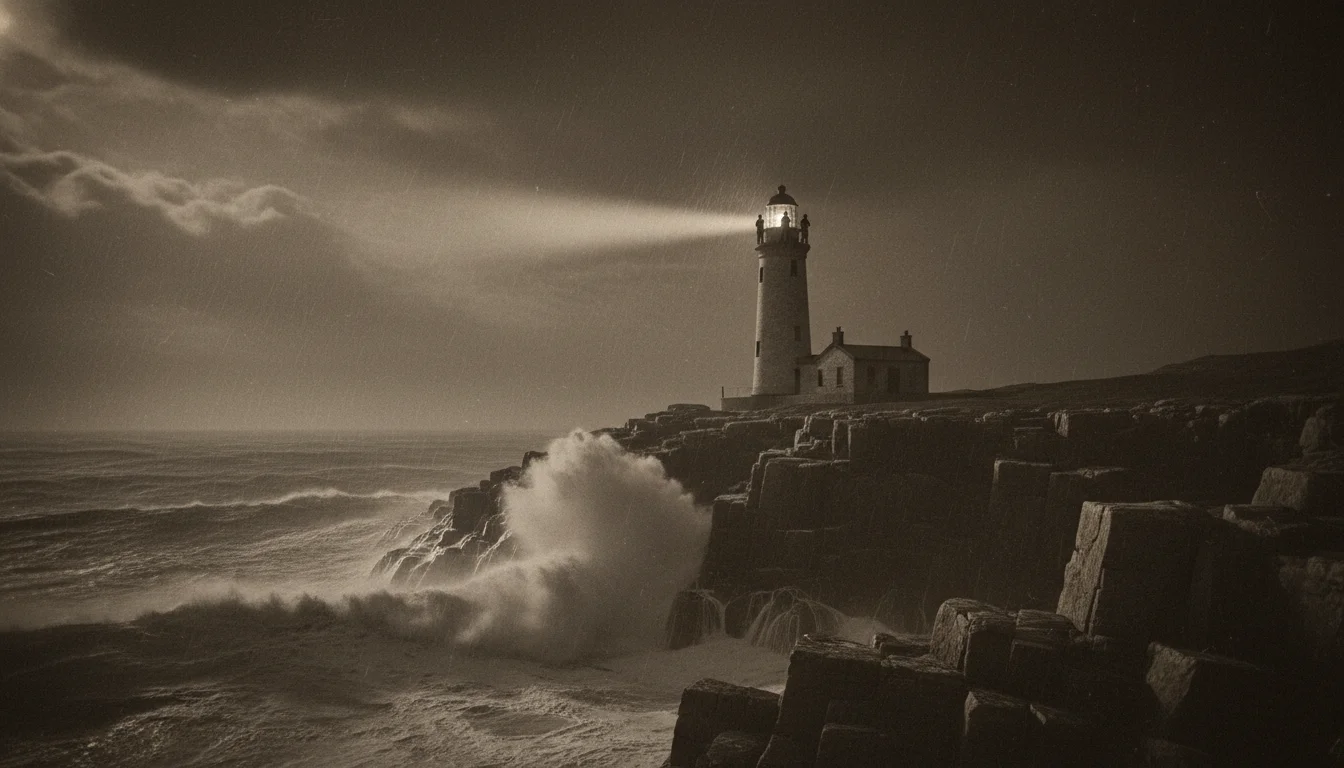
On December 26, 1900, the relief vessel Hesperus approached the Flannan Isles - a cluster of rocky, windswept islands in the Outer Hebrides, about 20 miles west of the Scottish mainland. Joseph Moore, the relief keeper, was expecting to see his colleagues waiting on the landing platform as usual. Instead, he found nothing. No flag flying. No keepers in sight. And the lighthouse light - which had been dark for eleven days - was silent and cold.
What Moore discovered inside would become one of the most haunting unsolved mysteries in maritime history.
The Light Goes Dark
The Flannan Isles Lighthouse had been operational since December 1899, built on the highest point of Eilean Mor, the largest of the seven islands. Keeping the light burning was the sole purpose of three men stationed there at any given time: Thomas Marshall (28, the assistant keeper), James Ducat (43, the principal keeper), and Donald MacArthur (40, the occasional keeper filling in for a regular crew member).
On December 15, 1900, the steamer Archer reported that the Flannan Isles light was not burning. This was deeply unusual. The light was vital for ships navigating the treacherous waters around the Hebrides, and the keepers were experienced, disciplined men who understood what failure meant.
The Hesperus, scheduled to bring relief keeper Joseph Moore to the island, was delayed by brutal winter storms. It did not arrive until December 26 - eleven days after the light had gone dark.
An Island Frozen in Time
When Moore finally climbed the steep path to the lighthouse compound, the silence unsettled him immediately. The entrance gate and main door were both closed but not locked. Inside, the clock had stopped. Two of the three sets of oilskin coats and boots were missing from the hallway - but the third set remained on its hook.
In the kitchen, an untouched meal sat on the table. The chairs were arranged normally, except one had been knocked over. The beds were unmade. Everything suggested the men had left in a hurry - but not in panic. The lighthouse itself was in order: the lamp had been cleaned, the oil fountains refilled, and the wicks trimmed. The last entry in the lighthouse log, written by Marshall, was dated December 15.
The final log entries would prove to be the first real puzzle.
The Disturbing Log Entries (Mostly a Legend)
For decades, retellings of this case have claimed Marshall's log recorded severe storms on December 12, 13, and 14, with Ducat, the experienced principal keeper, gone "very quiet," MacArthur reduced to tears, and all three men praying - ending with a final entry reading "Storm ended, sea calm. God is over all."
It is a haunting image, and largely fiction. Journalist Mike Dash traced these dramatic entries and found them to be later embellishments that crept into the story over the decades, not the actual log. Joseph Moore's genuine first-hand account mentions no tears or prayers - only that the kitchen utensils were clean, suggesting the men vanished sometime after a meal.
After that - nothing.
The Investigation
Robert Muirhead, the superintendent of the Northern Lighthouse Board, conducted the official investigation. His findings were meticulous but ultimately inconclusive.
On the island's western landing platform, the damage was severe. Iron railings had been bent and twisted by the force of the sea. A heavy stone block, estimated to weigh over a ton, had been displaced from its position. A life buoy and its ropes had been torn away. The damage was consistent with waves of extraordinary power - the kind that could sweep a man into the ocean in seconds.
The eastern landing, sheltered from the prevailing winds, was undamaged.
Muirhead's theory, which became the official explanation, was relatively straightforward: two of the keepers had gone to the western platform to secure equipment during or after the storm. Something happened - a massive rogue wave, perhaps - that swept them into the sea. The third keeper, seeing his colleagues in danger, rushed out without his oilskins to help and was also taken by the water.
It was a reasonable explanation. But it left questions unanswered.
The Problems With the Official Story
First, there was the weather. The log described the storm ending on the morning of December 15, with "sea calm." If the storm had passed, why would the keepers need to secure the western platform? And if conditions were truly calm, how could a wave powerful enough to bend iron railings have struck without warning?
Second, there was the missing oilskin. One set remained inside. Lighthouse protocol was absolute: no keeper left the building in storm conditions without full weather gear. If conditions were dangerous enough to threaten the platform, no experienced keeper would venture out without protection. Yet one of them apparently did.
Third, the meal on the table. If the men had gone out for routine maintenance in calm weather, why abandon a prepared meal? And if they left in response to an emergency, the timeline becomes strange - the food suggested they were interrupted mid-routine.
Fourth, the legend itself. The famous tale of prayer and tears in the log turned out to be a later embellishment rather than the true record. But that raises its own question: why did a case with a comparatively mundane official finding - a rogue wave, a tragic accident - still spawn a century of myth-making rather than simply fading into a footnote?
Alternative Theories
Over the decades, the mystery has attracted dozens of theories, ranging from the plausible to the fantastical.
The rogue wave theory remains the most accepted explanation. The Flannan Isles are known for extreme wave conditions, and "sneaker waves" - unexpectedly massive waves that appear without warning even in relatively calm seas - are well-documented in the region. One such wave could have caught two keepers on the platform, with the third rushing to help.
The waterspout theory suggests a sudden, violent waterspout struck the island, creating conditions so disorienting and dangerous that all three men were pulled into the sea. Waterspouts are not unknown in Scottish waters, and they can form quickly even after storms pass.
The mental breakdown theory points to the log entries as evidence of psychological deterioration. Isolation, confinement, and the relentless battering of winter storms could have pushed one or more of the keepers past their limit. Perhaps a confrontation occurred. Perhaps one man attacked the others. This theory, however, has no physical evidence to support it.
The structural collapse theory proposes that a section of the cliff face or the landing platform gave way, taking the men with it. The damaged western platform is consistent with this, though no specific collapse was documented.
And then there are the more colorful theories - sea monsters, abduction by foreign agents, even supernatural forces drawn to the ancient chapel ruins on Eilean Mor, where early Christian monks once lived and which locals considered haunted long before the lighthouse was built.
A Century of Silence
The Flannan Isles Lighthouse was automated in 1971, ending the need for human keepers. Today, the buildings stand empty, slowly weathering in the Atlantic wind. The islands are a designated nature reserve, home to thousands of seabirds but no permanent human inhabitants.
The mystery has inspired poetry, novels, films, and an opera. Wilfrid Wilson Gibson's 1912 poem "Flannan Isle" captured the eerie atmosphere perfectly, describing the abandoned meal and the silence that greeted Moore. The 2018 film The Vanishing (titled Keepers in some markets) offered a fictional take, imagining a found treasure that drove the men to violence.
But the real answer - what actually happened on that storm-lashed rock in December 1900 - remains unknown. The sea, as always, keeps its secrets.
Three men went to tend a light. The light went dark. They never came home. Even the legend that grew up around them - of tears, prayer, and an eerie final message - turned out to be a story added later, a reminder of how quickly folklore fills the silence the sea leaves behind.
For other cold cases involving vanished victims and unanswerable questions, see our coverage of the Wanda Beach murders and the Hinterkaifeck murders.

Want to Interrogate the Suspects?
Chat with historical figures and uncover the truth behind history's greatest mysteries.
Create your free account →No card required. Some figures and features require a paid plan.
Join the HistorIQly Club
Get smarter about the past.
Weekly stories, deep dives, and exclusive content straight to your inbox.