The Lord Lucan Disappearance: The British Aristocrat Who Vanished After a Murder
The Lord Lucan disappearance began on November 7, 1974, the night his nanny was murdered. Half a century later, no body has ever been found and no one has been tried.
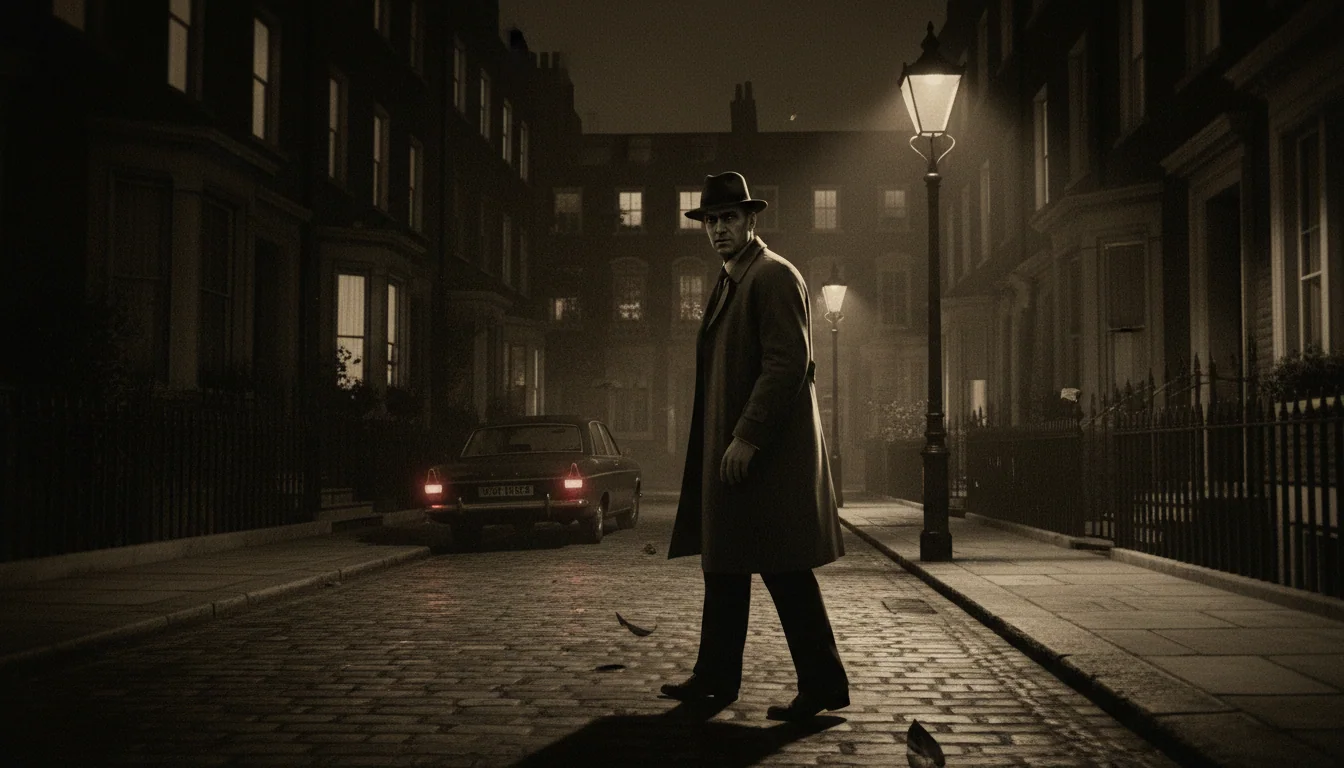
The British public has never had a more enduring missing aristocrat than John Bingham, 7th Earl of Lucan, known to almost everyone simply as Lord Lucan. On the evening of November 7, 1974, his estranged wife's nanny was bludgeoned to death in the basement kitchen of a fashionable Belgravia townhouse. Lady Lucan was attacked moments later. She survived, named her husband as her attacker, and ran to a nearby pub covered in blood.
Lord Lucan was never seen again. The Lord Lucan disappearance became one of the most discussed unsolved cases in British history.
Over the next fifty years, the case became one of the most famous unsolved disappearances in British history, fed by aristocratic intrigue, wealthy friends, alleged sightings on three continents, and a justice system that named him as a murderer in absentia and then could not produce him.
The man who vanished
John Richard Bingham was born in 1934 into one of Britain's older peerages, although by the 20th century the Lucan title was more decorative than economically significant. Educated at Eton and commissioned into the Coldstream Guards, he became, in adulthood, a professional gambler and a recognizable figure in the smoke-filled gambling clubs of postwar London.
His preferred haunt was the Clermont Club in Berkeley Square, owned by John Aspinall, an immensely wealthy zoo owner and gambler whose social circle included Sir James Goldsmith, the journalist and intelligence-linked editor John Pearson, and several other men of significant means. Lucan's gambling fortunes were inconsistent, but his presence at the Clermont was constant.
He married Veronica Duncan in 1963. The marriage produced three children but became increasingly volatile. By 1972 the couple was separated, with Lady Lucan keeping the children at the family townhouse at 46 Lower Belgrave Street while Lucan lived nearby. Custody had been awarded to Lady Lucan after a contested hearing that Lucan resented bitterly. He had been pursuing private surveillance of his wife, hoping to reverse the decision.
By autumn 1974 he had run through significant amounts of money on lawyers and gambling, and had grown obsessed with the idea that Lady Lucan was unfit to keep the children.
The night of November 7, 1974
The story of what happened that evening is reconstructed from Lady Lucan's testimony, forensic evidence, the statements of friends, and the scattering of letters Lucan left behind.
Sandra Rivett, the 29-year-old nanny, normally took Thursdays off but had switched her day off that week. At about 8:55 p.m. she went down to the basement kitchen of 46 Lower Belgrave Street to make tea for Lady Lucan. The basement light was off when she entered, which was unusual.
In the dark she was struck on the head multiple times with a length of lead piping wrapped in surgical tape. She died from her injuries. Her body was placed in a U.S. mailbag.
Some minutes later, Lady Lucan came down to look for her. According to her account, given to police that night and consistent across decades of subsequent interviews, she was attacked at the foot of the basement stairs by a man she immediately recognized as her husband. She was beaten about the head, struggled, and escaped up the stairs and out the front door, running fifty yards to the Plumber's Arms pub.
She arrived at the pub bleeding heavily, screaming that her husband had killed the nanny and tried to kill her. Police were called.
By the time officers reached 46 Lower Belgrave Street, Lord Lucan was gone.
The disappearance
Within an hour or two of leaving the house, Lord Lucan made several phone calls and wrote two letters. He drove a borrowed Ford Corsair to the Sussex coast and visited the home of his friend Susan Maxwell-Scott in Uckfield. He told her he had been passing the house, had seen a man attacking his wife in the basement, had intervened, and had been mistakenly accused.
He wrote two letters there to his brother-in-law, William Shand Kydd, asking him to take care of the children and saying that the situation looked impossible. He left at about 1:15 a.m. on November 8 and drove off into the night.
The Ford Corsair was found three days later in Newhaven, a Channel ferry port. Inside were a length of lead piping similar to the murder weapon, along with traces of blood matching both Sandra Rivett's and Lady Lucan's blood types.
After that, nothing.
The inquest verdict
In June 1975, a coroner's inquest jury delivered an unprecedented verdict: it named Lord Lucan as the murderer of Sandra Rivett. This was the last time in English legal history that a coroner's inquest could formally accuse a named individual of murder. The law was changed shortly afterwards. Lucan was never formally tried, because he was never apprehended.
In February 2016, after more than four decades of legal wrangling, the High Court declared him dead, allowing his son George to inherit the Lucan title.
Theories of what happened next
The mystery that has held British attention for fifty years is not really who killed Sandra Rivett. The official verdict has stood, and the evidence against Lucan, the lead pipe, the blood, the testimony of his wife, the letters, the abandoned car, is consistent with his presence at the scene. The mystery is what happened to him after he left the Maxwell-Scott home in the early hours of November 8.
Suicide at sea
The most widely accepted theory among police and many of those who knew him is that Lucan drove the Corsair to the Sussex coast, abandoned it, and jumped from a Channel ferry, drowning in the night. This is consistent with the position of the abandoned car, the despair evident in his letters, and the absence of any subsequent verifiable trace.
The weakness of this theory is that no body was ever found. Bodies thrown into the Channel often come ashore eventually. None did.
Spirited away by friends
This is the theory that has generated the most popular interest. It holds that Lucan's gambling friends, particularly John Aspinall and James Goldsmith, helped him escape Britain and supported him financially in exile. Aspinall gave a famously evasive television interview in 1990 in which he refused to say whether he had helped Lucan, and merely said that he would have done so if asked.
In 2003, John Pearson published a book based on years of interviews with Aspinall and his circle, in which Aspinall reportedly hinted that Lucan had been kept alive in Africa and possibly fed to one of his tigers when he became a liability. Pearson's reporting is unverified and Aspinall's statements may have been intended to mythologize his own legend rather than to record fact.
Reported sightings
Over the decades, hundreds of alleged sightings have been reported in countries including India, South Africa, Botswana, Mozambique, Australia, and New Zealand. The most persistent thread, investigated by Scotland Yard in 2007, suggested that Lucan had spent decades in Goa under an assumed identity. The investigation produced no conclusive identification.
One former friend, Lady Annabel Goldsmith, has said publicly that she believes Lucan committed suicide. Lucan's brother Hugh, who died in 2024, expressed the same belief.
His son's view
George Bingham, the 8th Earl of Lucan, has consistently said over the years that he believes his father is dead, almost certainly by suicide on the night of the murder. He pursued the High Court declaration of death in 2016 to allow the family to move forward.
What the case actually represents
The Lord Lucan case has endured because it sits at the intersection of British class anxiety, post-imperial nostalgia, and the genuine drama of a real murder. The aristocrat-on-the-run narrative is irresistible. The notion that wealthy, well-connected friends might have helped him vanish flatters every suspicion the country has about its own elite. The endless reported sightings keep the story alive in tabloid form.
But behind the legend is Sandra Rivett, a 29-year-old single mother who died on a Thursday night while making tea. Her story is far less told. The Lucan disappearance has accumulated so much aristocratic atmosphere over the years that the woman whose murder triggered the entire case is often nearly invisible.
Whether John Bingham drowned in the Channel in November 1974, lived out a long exile in southern Africa, or was killed by friends who decided he was too dangerous to keep alive, no one has produced an answer that has held up to scrutiny. He is the most famous missing person in modern British history, and almost certainly will remain so. Other British cold cases that share this quality of perpetual open verdict include the Julia Wallace murder and the Phantom of Heilbronn.
Quick Answers
Common questions about this topic
Who was Lord Lucan?
John Bingham, 7th Earl of Lucan, was a British aristocrat born in 1934 who became infamous for his disappearance on November 7, 1974, the night his children's nanny was murdered in his estranged wife's London townhouse. He was a professional gambler, a former Coldstream Guards officer, and a fixture of London's wealthy nightlife.
Who killed Sandra Rivett?
An inquest jury concluded in June 1975 that Sandra Rivett, the 29-year-old nanny working for Lady Lucan, had been murdered by Lord Lucan. He was named as the murderer in absentia. The verdict has never been formally challenged in a criminal court because Lucan was never found.
What happened on the night of the murder?
On the evening of November 7, 1974, Sandra Rivett went down to the basement kitchen of 46 Lower Belgrave Street to make tea. She was beaten to death with a length of lead piping. Lady Lucan was attacked shortly afterwards but escaped and ran to a nearby pub, the Plumber's Arms, with serious head injuries. She named her estranged husband as her attacker.
Was Lord Lucan ever found?
No. Despite hundreds of reported sightings across Africa, India, South America, Australia, and New Zealand, Lord Lucan was never confirmed to have been seen alive after the early hours of November 8, 1974. He was officially declared dead by the High Court in February 2016 to allow his son to inherit the title.

Want to Interrogate the Suspects?
Chat with historical figures and uncover the truth behind history's greatest mysteries.
Start Your InvestigationJoin the HistorIQly Club
Get smarter about the past.
Weekly stories, deep dives, and exclusive content straight to your inbox.