The Green Children of Woolpit: England's Strangest Medieval Mystery
Two green-skinned children appeared near a 12th-century English village, speaking an unknown tongue. One died. The other adapted. No one ever solved the mystery.
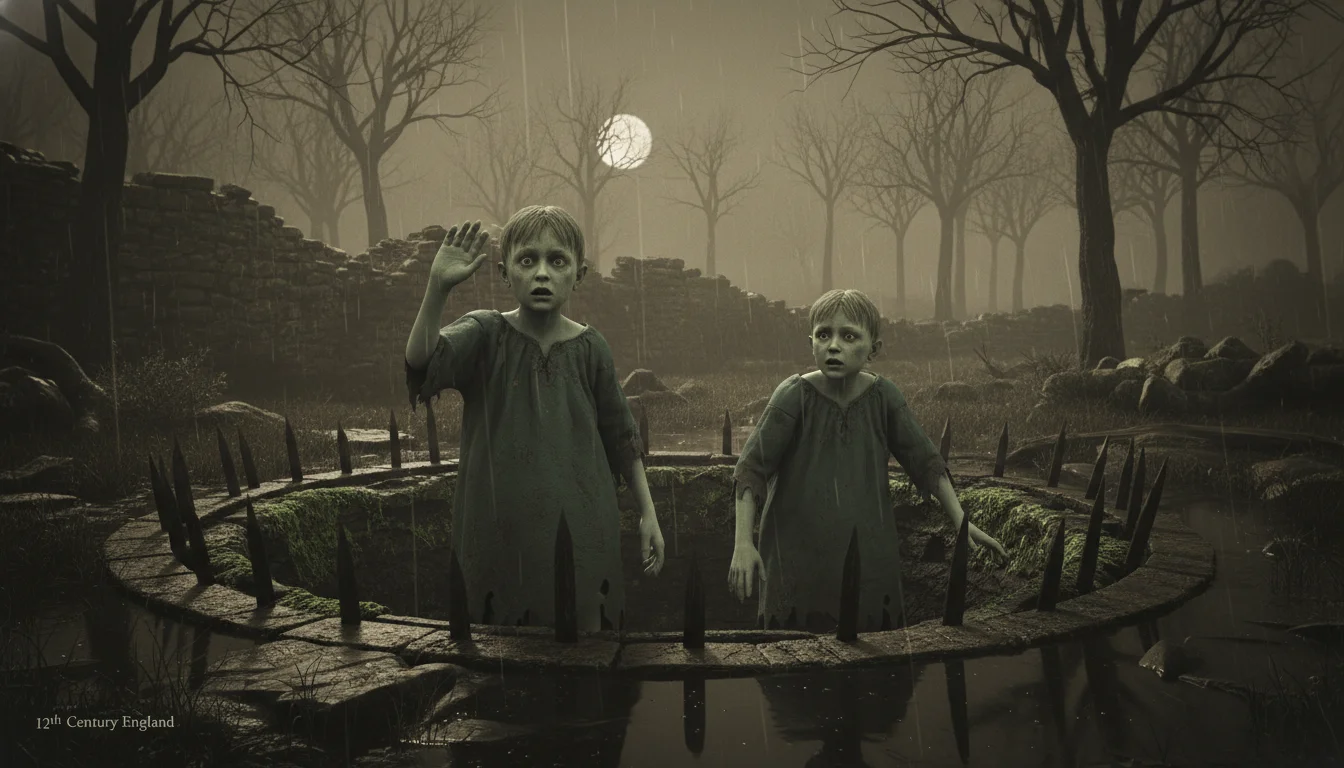
In a Suffolk village sometime in the 12th century, during the reign of King Stephen or perhaps Henry II, harvesters found two children near the wolf pits of Woolpit.
That alone was not remarkable. Medieval England was full of abandoned children, wandering strangers, and small human tragedies that rarely made it into history.
What made this case unforgettable was what the villagers claimed to see.
The children had green skin.
They wore unfamiliar clothes. They spoke a language nobody in the village could understand. They refused bread, meat, and nearly every food offered to them. Only when they discovered raw broad beans did they eat, tearing eagerly into the stalks and pods as if they had finally found something from home.
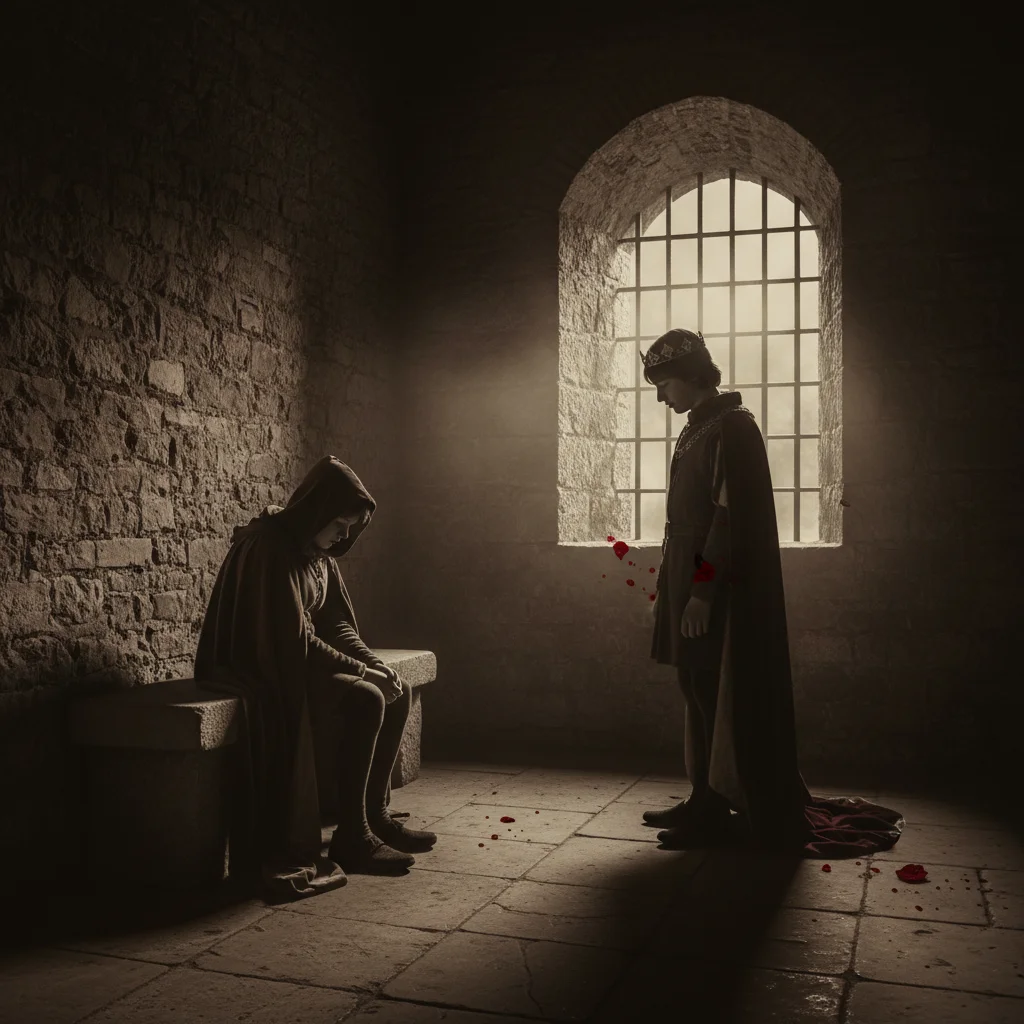
The boy was weak and soon died. The girl survived, gradually lost her green color, learned English, and was later baptized. According to chroniclers, she explained that she and her brother had come from a place called Saint Martin's Land, where everyone was green, the sun never shone brightly, and a great luminous country could be seen across a river.
Then the trail goes cold.
No one has ever explained the Green Children of Woolpit with certainty. Nearly 900 years later, the story remains one of the most bizarre unsolved mysteries in English history.
The Sources
The case survives because two respected medieval writers recorded it independently.
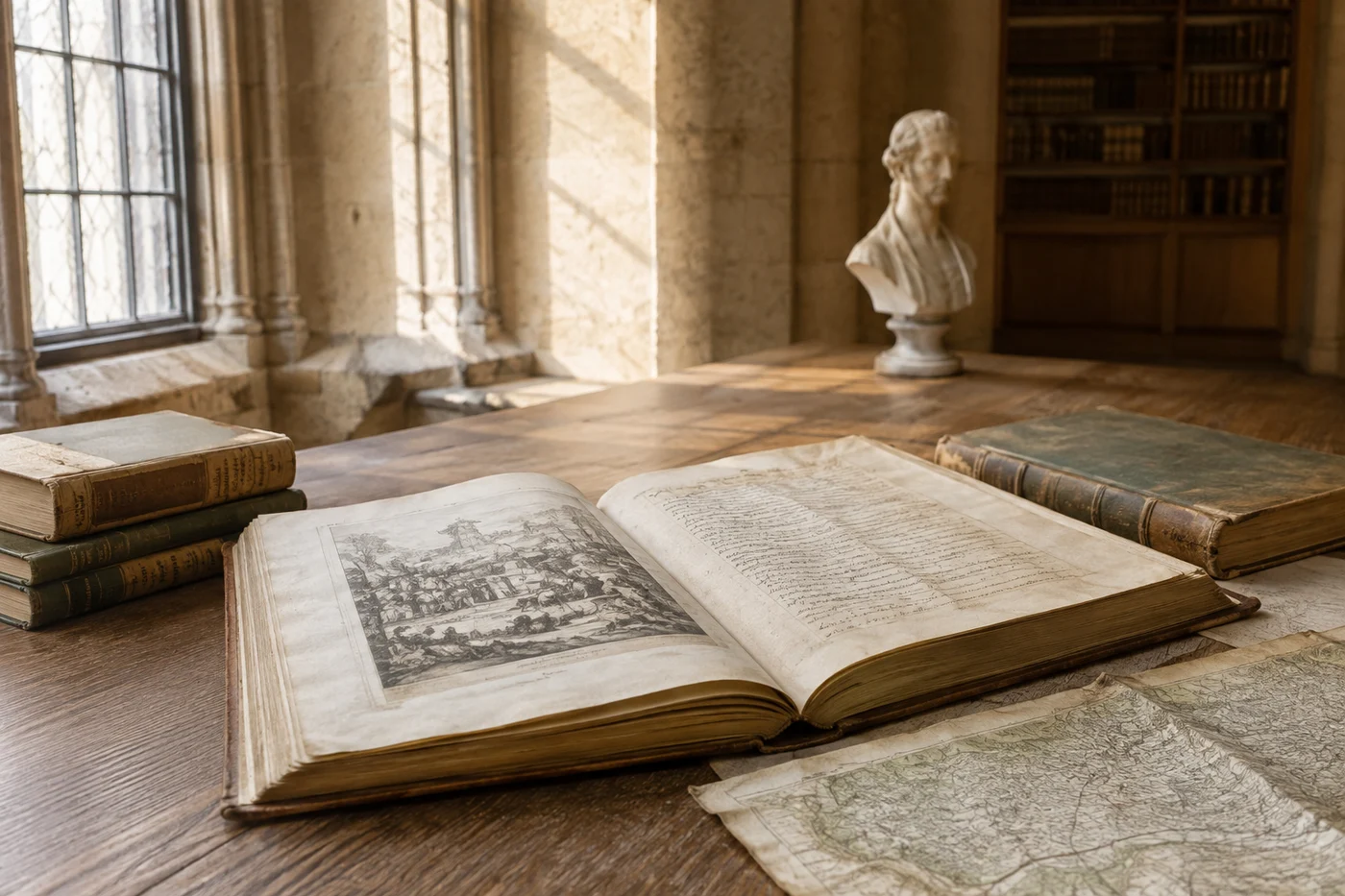
One was Ralph of Coggeshall, an abbot in Essex who wrote the Chronicon Anglicanum. The other was William of Newburgh, a Yorkshire canon whose Historia Rerum Anglicarum is often considered one of the more careful chronicles of the age.
That matters. Medieval chronicles are full of miracles, monsters, and moral tales, but William of Newburgh in particular was not famous for gullibility. He called the event astonishing, but still chose to record it.
Both accounts agree on the core details: two children, brother and sister, appeared near Woolpit; their skin was green; their speech was incomprehensible; they ate beans; the boy died; the girl survived and later gave an account of their homeland.
The details differ slightly, as you would expect from secondhand reporting, but the broad shape of the story is stable.
For historians, that creates an uncomfortable middle ground. The event was unusual enough that serious writers preserved it. But the sources are still hearsay, written after the fact, in an age when rumor and wonder traveled together.
What Actually Happened at Woolpit?
The first mystery is the simplest one: were there really two children?
Most historians think probably yes.
The story contains a lot of texture that does not feel purely mythical. The children were not described as fairies or demons. They were frightened, hungry, and dirty. The villagers did not worship them or flee from them. They tried to feed them. The children became a practical local problem before they became a legend.
The girl's eventual assimilation also gives the story a realistic spine. She did not remain an enchanted being. She learned the language, converted to Christianity, and reportedly lived as an ordinary woman. Later traditions even give her a name, Agnes, though that part is less secure.
If the core event was real, the real question becomes this: why did the children seem so alien?
Theory One: They Were Foreign Refugees
The most grounded explanation is that the children were simply foreigners.
In the 12th century, eastern England had contact with immigrant communities from Flanders, in present-day Belgium. Political violence and economic upheaval displaced many Flemish settlers. Some historians have proposed that the children may have been Flemish orphans who became separated from their community.
That would explain several things at once.
Their language would have sounded incomprehensible to English villagers. Their clothing could have seemed strange. Their fear and refusal of unfamiliar food would make sense for traumatized children. If they had wandered through forest and farmland before being found, they might have been half-starved and disoriented.
The strongest version of this theory links them to the nearby village of Fornham St. Martin, once associated with Flemish settlers. Over time, "St. Martin" in the girl's story may have been transformed into the mysterious "Saint Martin's Land."
This is elegant, but it does not fully solve the green skin.
Theory Two: Malnutrition Made Them Green
One medical explanation suggests the children suffered from hypochromic anemia, sometimes called "chlorosis" in older literature. Severe malnutrition can produce a pale greenish tinge, especially in people already weak, sick, and underfed.
That theory pairs naturally with the refugee hypothesis. Lost, hungry children with anemia might appear green to villagers already primed to see oddity. Once the girl was properly fed, the color gradually disappeared, which is exactly what the chroniclers say happened.
This explanation has a lot going for it because it removes the need for fantasy. It turns the strangest feature of the story into a symptom of deprivation.
But there is a catch. People in the Middle Ages knew what sick children looked like. Why would both chroniclers emphasize the green color so strongly if it was only a faint tint from malnutrition? Either the color was more dramatic than modern skeptics assume, or it became exaggerated as the story spread.
Theory Three: A Folktale Wrapped Around a Real Incident
Another possibility is that a mundane event was slowly transformed into a wonder tale.
This happens constantly in history. A real mystery occurs. People retell it. Each retelling sharpens the strange parts and trims the ordinary ones. Soon the story has symbolic features: green skin, a twilight land, a river dividing worlds, a church bell drawing children into another realm.
In this reading, the Green Children of Woolpit sit on the border between history and folklore. The children may have been real, but their origin story was shaped by medieval beliefs about hidden worlds, spirits, and the thin places where ordinary reality touched the supernatural.
Saint Martin's Land sounds less like geography than mythology. A dim land without full sunlight feels dreamlike. So does the idea of children following cattle, hearing bells, and suddenly crossing into another world.
The problem with this theory is that it explains too much. Yes, legends grow. But if we dismiss every bizarre account as folklore, we stop doing history and start doing cleanup.
Theory Four: Something Stranger
It would be irresponsible to pretend the supernatural theories have no staying power.
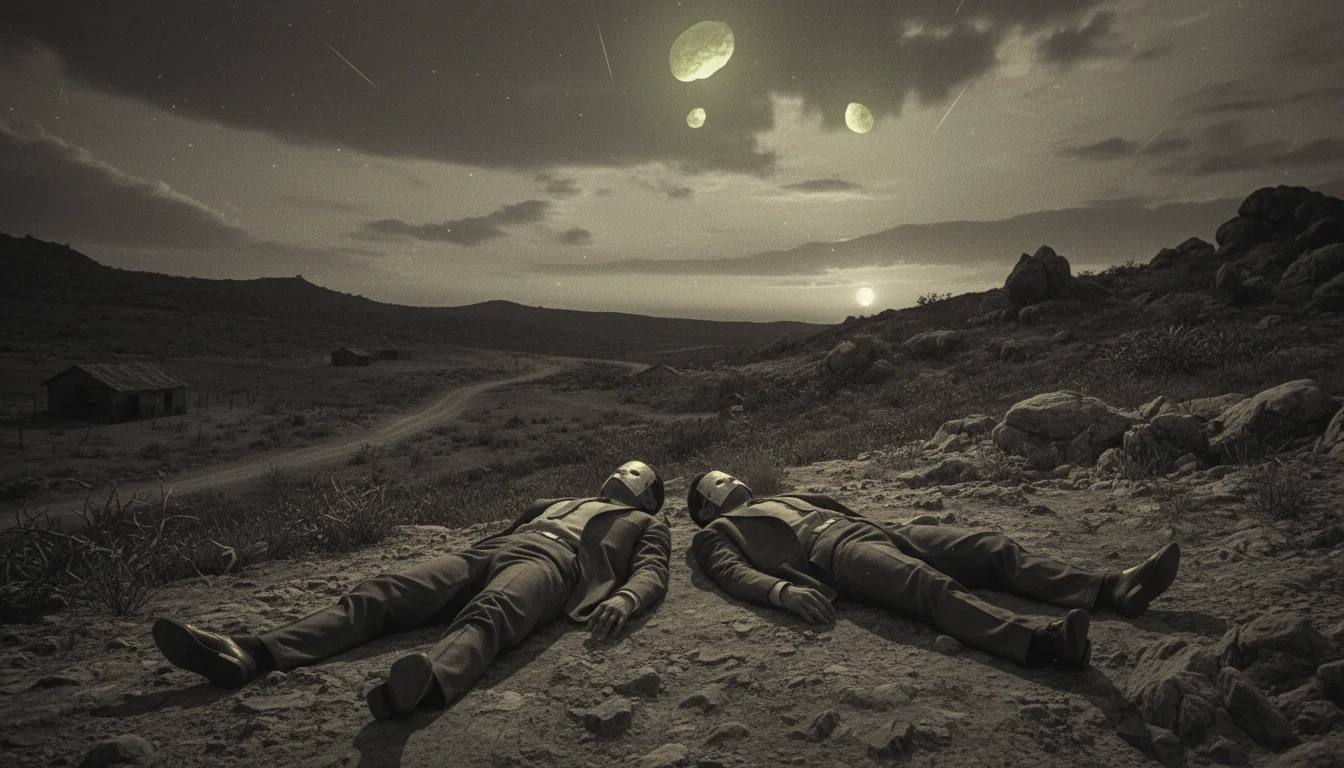
For centuries, people have suggested the children came from a fairy realm, an underground world, or even, in modern retellings, another planet or dimension. The girl's description of a shadowy land and a bright region beyond a river practically begs for symbolic interpretation.
I do not think those explanations are persuasive. They tell us more about human imagination than medieval reality.
Still, they are part of why the mystery survived. The Woolpit children are memorable precisely because the story refuses to stay pinned down. It can be read as social history, medical puzzle, folktale, or paranormal encounter depending on what kind of mystery you want.
The Girl Who Lived
The saddest part of the story is also the most revealing.
The boy died quickly. Whatever ordeal the children had endured, he could not recover from it.
The girl did. She adapted, learned the local language, and eventually described her past in terms the villagers could understand. But by then, translation itself had become part of the mystery. Was she describing real places through the limited vocabulary of a child? Was she reshaping trauma into story? Were adults hearing what they wanted to hear?
We cannot cross-examine her. We do not have a direct statement. We have only chroniclers, memory, and medieval filters layered over an already strange event.
That is why the case remains open. The only witness who might have explained everything was heard through other people.
Why Woolpit Still Haunts Us
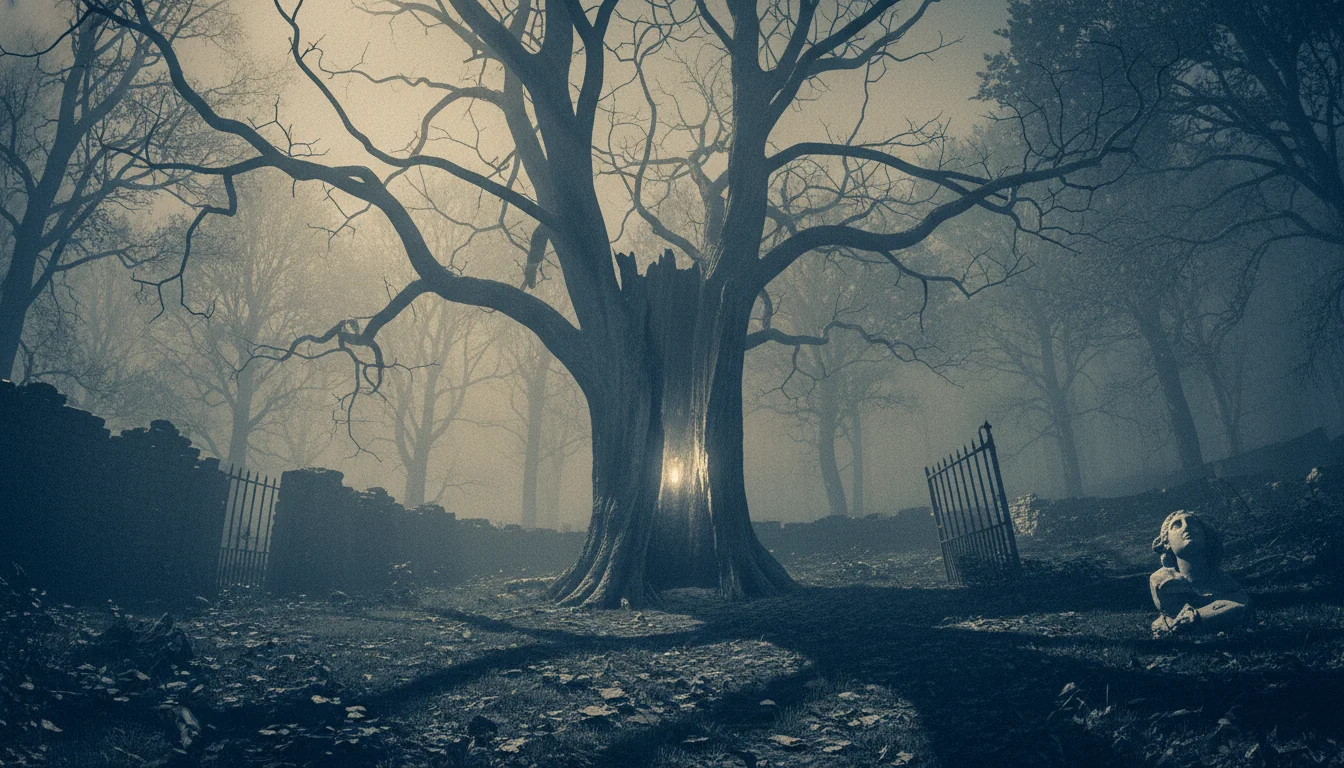
The Green Children of Woolpit endure because they touch a very old fear: that someone can arrive from just beyond the edge of your world carrying a truth you cannot decode. The same shiver runs through the Bella in the Wych Elm case and the Devil's Footprints of 1855.
At heart, this is not really a story about aliens or fairies. It is a story about encountering human beings who are so lost, so foreign, or so damaged that they seem to belong to another reality.
That may be why the best explanation is also the bleakest one. The green children were probably not magical visitors. They were likely real children, displaced by violence or poverty, their bodies altered by hunger, their words unintelligible to the people who found them.
But "probably" is not enough to close the file.
We still do not know who they were. We do not know where they entered the record of English history. We do not know what language they spoke. We do not know whether Saint Martin's Land was a child's confused memory of home, a garbled place-name, or the invention of generations who could not resist wonder.
In Woolpit, the facts and the folklore fused too early to separate cleanly.
So the case remains what it has always been: one of medieval Europe's most haunting unsolved mysteries, with two frightened children standing at its center, green as spring leaves, asking questions history never learned how to answer.

Want to Interrogate the Suspects?
Chat with historical figures and uncover the truth behind history's greatest mysteries.
Start Your InvestigationJoin the HistorIQly Club
Get smarter about the past.
Weekly stories, deep dives, and exclusive content straight to your inbox.