The ISDAL Woman Case (2026 Update): Coded Notebook, 8 False Identities, Still Unsolved
The Isdal Woman: coded notebook decoded, 8 false identities, sanded fingerprints, isotope analysis pointing to Nuremberg - still unidentified in 2026.
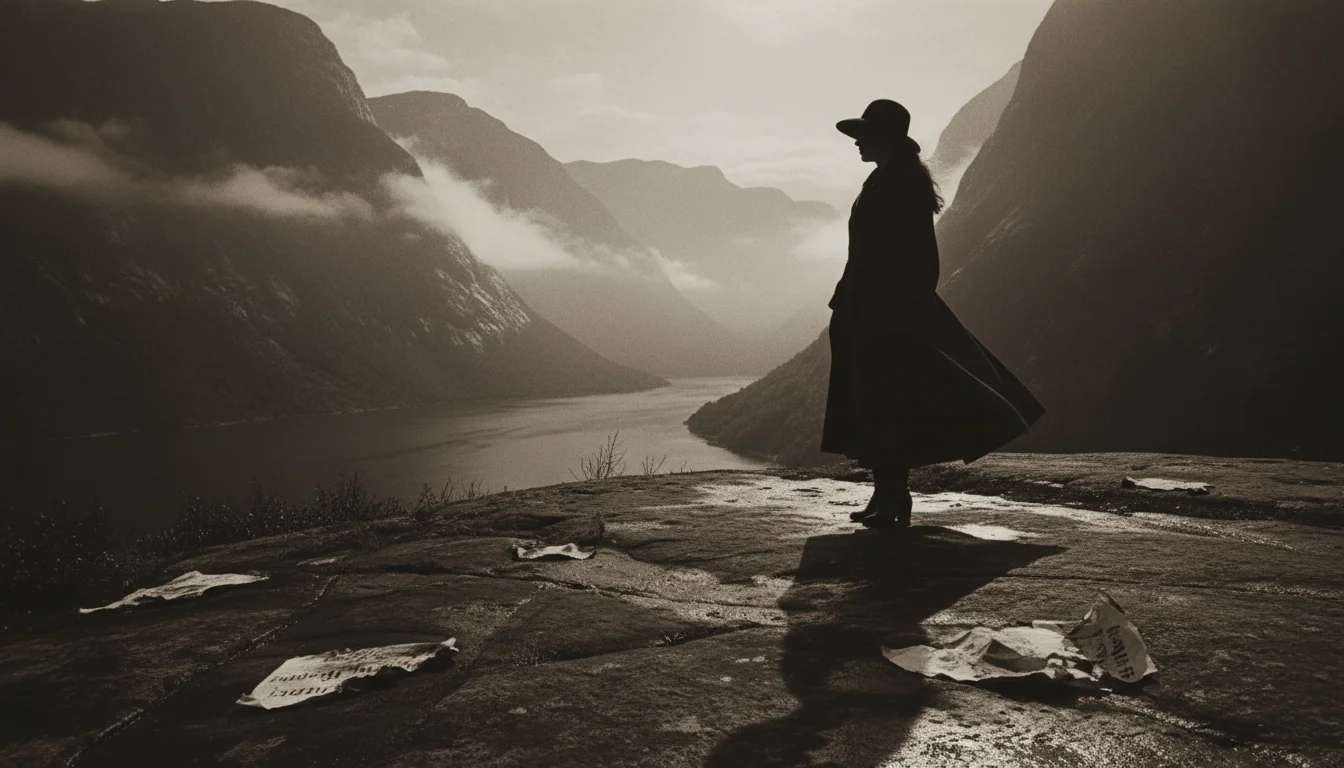
On November 29, 1970, a university professor and his two young daughters went hiking in the Isdalen Valley near Bergen, Norway. The valley's name translates to "Ice Valley" - but locals had long called it "Death Valley," after a history of suicides there dating back to the Middle Ages and more recent hiking accidents. That afternoon, the professor's daughters would add another chapter to the valley's grim reputation.
Hidden among the rocks, they found the partially burned body of a woman. She lay on her back, arms raised in what forensic experts recognized as a "pugilistic pose" - a position caused by extreme heat contracting the muscles. Around her were scattered sleeping pills, a bottle of liquor, and a fur hat later found to bear traces of petrol. Her death was horrifying enough. But what investigators found next turned a tragic discovery into one of Europe's most baffling mysteries.
Every Clue Led Nowhere
The woman carried no identification. That alone wasn't unusual. What was unusual - deeply, disturbingly unusual - was the effort someone had taken to ensure she could never be identified.
Every label had been cut from her clothing. Investigators felt they had not been torn carelessly but cut with care, which some took as a sign of someone experienced in this kind of work. The labels on her shoes, her dress, her underwear - all removed. The manufacturer markings on her belongings had been systematically filed or scraped away. Her fingertips were too badly burned to yield usable prints at the scene, though a partial print later lifted from her sunglasses matched her hands.
Bergen police launched what would become one of Norway's most expensive and exhaustive investigations. They traced the woman's movements through hotel records and witness accounts, piecing together a strange trail across Scandinavia and Europe. She had checked into hotels in Bergen, Trondheim, and Stavanger using at least eight different fake identities, consistently claiming Belgian nationality on passports and forms filled out in German or French. She signed hotel registers with names that all turned out to be fabrications. She always paid in cash.
A Suitcase Full of Questions
Two suitcases linked to the woman were found at the Bergen train station. Their contents only deepened the mystery.
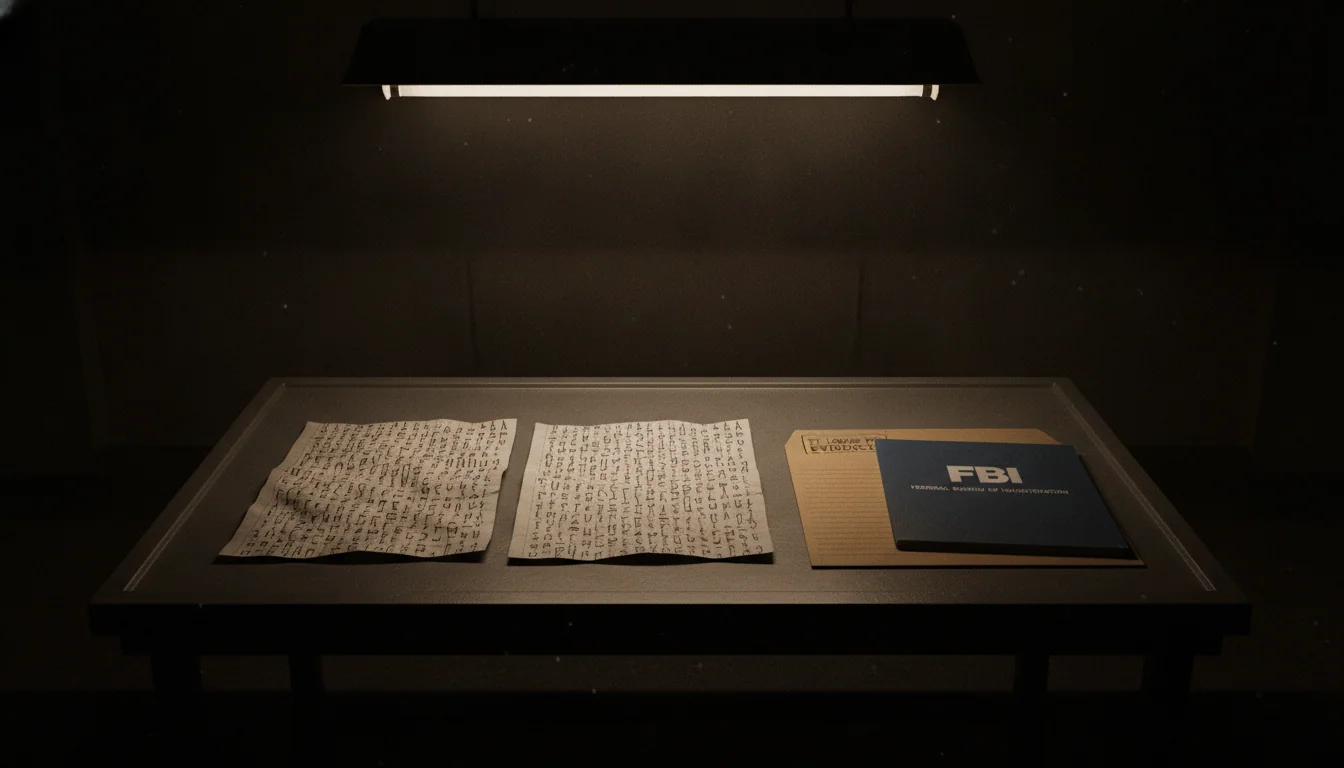
Inside, investigators discovered wigs, eczema cream, foreign currency from multiple countries, a pair of non-prescription glasses, and a notebook filled with what appeared to be coded entries. The codes, when eventually cracked by police, turned out to correspond to dates and locations - a travel diary written in cipher.
The suitcases also contained clothing with the labels removed, just like the garments on her body. Whoever this woman was, her obsession with anonymity was total and systematic.
Witnesses who had encountered her at various hotels described an elegant, well-dressed woman who spoke French, German, English, and possibly Dutch - but with an accent nobody could quite place. She seemed nervous, frequently changing rooms and requesting ones with a view of the entrance. Several hotel staff recalled her asking to switch rooms after initially being assigned one without a clear sightline to the lobby or parking lot.
The Espionage Theory
By the early 1970s, Cold War tensions ran high, and Bergen held strategic importance as a major NATO naval base. Norwegian intelligence took a quiet interest in the case. The woman's behavior - the multiple identities, the coded notebook, the compulsive counter-surveillance habits, the label removal - struck several investigators as consistent with tradecraft, hallmarks they believed suggested a trained intelligence operative.
Some investigators believed she was a spy working for one of the Eastern Bloc nations, possibly gathering intelligence on NATO naval movements along the Norwegian coast. Her travel pattern, hopping between port cities, supported this theory. Others speculated she might have been a double agent whose cover was blown, leading to her elimination disguised as suicide.
The official cause of death was ruled a combination of carbon monoxide poisoning from the fire and an overdose of Fenemal, a barbiturate sleeping pill. Around 50 to 70 pills were found in her stomach. Norwegian police officially classified her death as suicide.
But the suicide ruling never sat comfortably with everyone. Why would a suicidal person remove all identifying labels from their clothing? Why sand down their own fingerprints? Why travel under eight false identities? The level of preparation suggested either a professional covering their own tracks - or someone else covering them.
The Investigation That Would Not Die
The case went cold, but it never truly disappeared. In 2016, Norwegian journalist Marit Higraff and the NRK investigative team reopened the investigation with modern forensic tools. Using isotope analysis on the woman's teeth, scientists determined she had likely grown up in a border region of France and Germany, possibly near the Nuremberg area.
Further DNA analysis placed her within a maternal genetic lineage (mtDNA haplogroup H24) tracing to southeastern Europe or southwestern Asia, narrowing the search further - but no identity has been confirmed, and Norwegian police have not officially closed the case. The woman's origins appear to trace back to a region that straddled Cold War fault lines, adding weight to the espionage theory.
Forensic odontology revealed extensive and expensive dental work, suggesting someone with access to quality healthcare - or an intelligence service willing to invest in an operative's appearance. Her estimated age at death was 25 to 40, though the fire damage made precise determination difficult.
What We Still Don't Know
More than fifty years after a professor's daughters stumbled upon a burned body in Ice Valley, the fundamental questions remain unanswered. Who was the ISDAL Woman? Which country did she serve? Was her death suicide, murder, or something more complicated?
The coded notebook has been partially deciphered but yields only dates and places, not motives or handlers. The eight false identities lead to dead ends. The witnesses are aging or gone. Norwegian police maintain an open file, but each passing year makes resolution less likely.
What makes the ISDAL Woman case so haunting is not just the mystery of her identity, but the completeness of its erasure. Someone - whether the woman herself or an organization behind her - executed a thorough, professional obliteration of every trace that could connect her to a real name, a real country, a real life. In an era before digital records, they nearly succeeded completely.
She was buried in a zinc coffin in Bergen's Mollendal Cemetery in February 1971, in a plot paid for by the state. The grave remains unmarked - no name, no dates, no plaque - just the hope that someday, someone will finally tell her who she was.
For other cold cases built around deliberate identity concealment, see the Bella in the Wych Elm Mystery and the Voynich Manuscript.

Want to Interrogate the Suspects?
Chat with historical figures and uncover the truth behind history's greatest mysteries.
Start Your InvestigationJoin the HistorIQly Club
Get smarter about the past.
Weekly stories, deep dives, and exclusive content straight to your inbox.