The Zodiac Killer: America's Most Taunting Unsolved Case
The Zodiac killer's unbroken ciphers still baffle investigators fifty years on. A California serial killer taunted police with codes, murders, and letters - and was never caught.
On the evening of December 20, 1968, two teenagers parked on a quiet road near Benicia, California. David Faraday and Betty Lou Jensen never made it home. A gunman approached their car, ordered them out, and shot them both. Betty Lou died at the scene. David died en route to the hospital. It was the beginning of something that would haunt the American imagination for over half a century.
A Killer Who Craved Attention
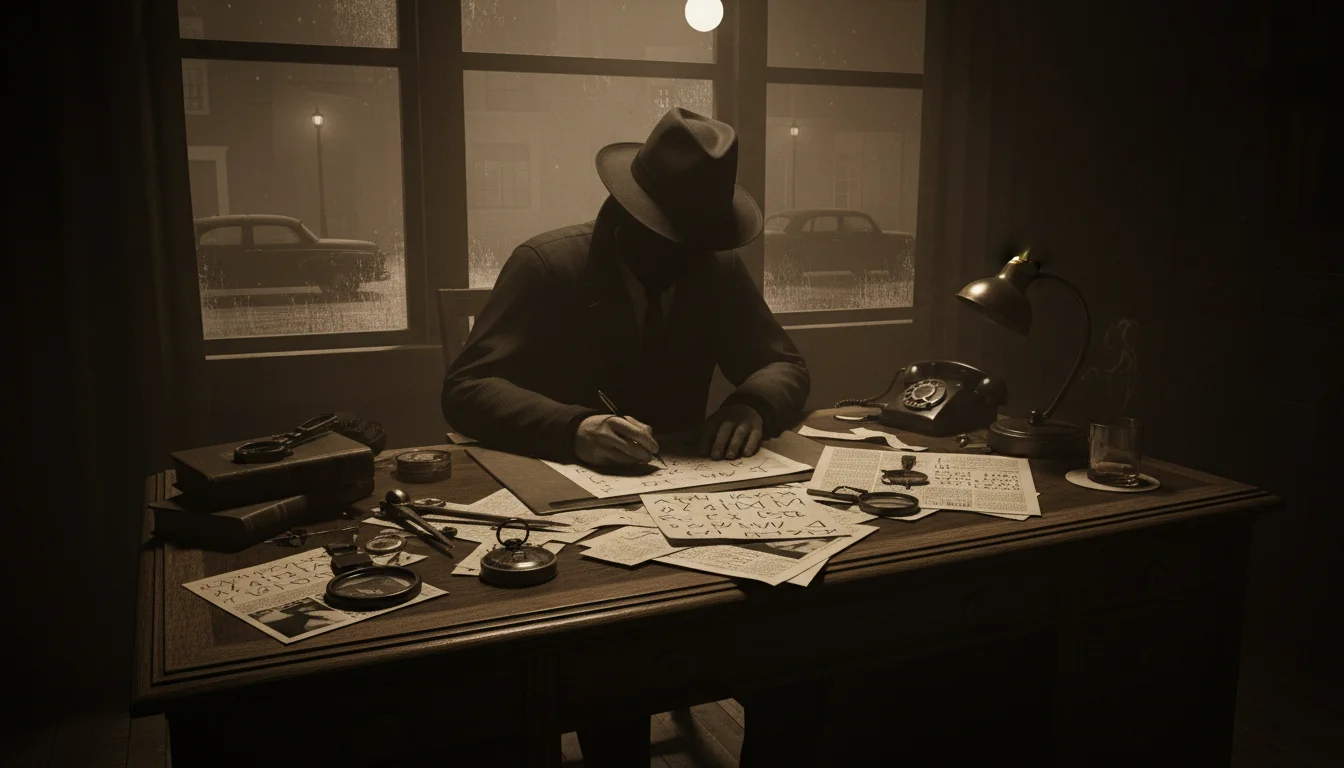
What set the Zodiac apart from other serial killers wasn't just the murders, though those were brutal enough. It was his compulsion to communicate. Between 1969 and 1974, the killer sent at least 18 letters to San Francisco Bay Area newspapers, filled with boasts, threats, and elaborate cryptograms he claimed would reveal his identity.
His first letters arrived on August 1, 1969, addressed to the San Francisco Chronicle, the San Francisco Examiner, and the Vallejo Times-Herald. Each contained one-third of a 408-symbol cipher. He demanded the newspapers publish the ciphers on their front pages. If they refused, he wrote, he would go on a killing rampage.
The newspapers complied. Within a week, a high school teacher named Donald Harden and his wife Bettye cracked the 408-character cipher. The decrypted text was chilling but ultimately useless. It described the thrill of killing but contained no name. "I like killing people because it is so much fun," it read. The Zodiac had played his first game and won.
The Confirmed Attacks
Between December 1968 and October 1969, the Zodiac claimed five confirmed victims across three crime scenes in Northern California:
Lake Herman Road (December 20, 1968): David Faraday, 17, and Betty Lou Jensen, 16, shot near Benicia. Jensen died; Faraday died hours later.
Blue Rock Springs Park (July 4, 1969): Darlene Ferrin, 22, and Mike Mageau, 19, shot in their car in Vallejo. Ferrin died. Mageau survived and later provided a physical description.
Lake Berryessa (September 27, 1969): Bryan Hartnell and Cecelia Shepard were picnicking when a man in a bizarre executioner-style hood approached them. He tied them up and stabbed them repeatedly. Shepard died two days later. Hartnell survived. Before leaving, the killer wrote the dates and locations of his attacks on Hartnell's car door with a felt-tip pen.
Presidio Heights (October 11, 1969): Taxi driver Paul Stine was shot in the head while driving through San Francisco. The Zodiac tore a piece of Stine's bloodstained shirt and later mailed it to the Chronicle as proof.
The Zodiac claimed responsibility for as many as 37 murders in his letters, but investigators have only confirmed five victims. Whether the true count is higher remains one of many open questions.
The Ciphers That Broke Cryptography's Pride
The Zodiac sent four ciphers in total. Only two have ever been solved.
Z408 was cracked within a week by the Hardens in 1969. Z340, a more complex 340-character cipher, resisted every attempt for 51 years until a team of codebreakers finally cracked it in December 2020. The decoded message was another taunt: "I hope you are having lots of fun in trying to catch me... I am not afraid of the gas chamber because it will send me to paradice all the sooner."
But two ciphers remain unbroken. Z13, a short 13-character string, supposedly contains the Zodiac's real name. Z32, embedded in a 1970 letter, allegedly reveals the location of a bomb the killer claimed to have planted. Both are so short that cryptanalysts say they may be unsolvable without the key, or they may not be real ciphers at all, just nonsense designed to waste investigators' time.
The possibility that the Zodiac's greatest puzzle is a deliberate dead end is, in many ways, the most Zodiac thing imaginable.
The Suspects Who Almost Fit
Over the decades, investigators have pursued hundreds of suspects. A handful have become fixtures in Zodiac lore.
Arthur Leigh Allen was the primary suspect for decades. He lived in Vallejo, owned the same type of watch brand (Zodiac) referenced in the killer's symbol, and was identified by surviving victim Mike Mageau in a 1991 police lineup. But Allen's fingerprints and DNA never matched evidence from the crime scenes. He died in 1992 without being charged.
Rick Marshall, a silent-film enthusiast, was flagged because of connections to the film The Most Dangerous Game, which the Zodiac referenced. The lead went nowhere conclusive.
Lawrence Kane, a real estate agent with a criminal history, was investigated in the early 2000s. He matched physical descriptions and lived near several crime scenes, but again, no definitive evidence linked him.
In 2021, an independent cold case team called The Case Breakers publicly named Gary Francis Poste as the Zodiac. They claimed to have matched darkroom photos and decoded anagrams in the killer's letters. Law enforcement agencies responded cautiously, and the FBI stated the case remained open.
Why It Stays Unsolved
The Zodiac case sits at a frustrating intersection of abundant evidence and zero resolution. The killer left fingerprints on a taxi cab, DNA on stamp envelopes, handwriting across dozens of letters, and eyewitness descriptions from multiple survivors. In theory, this should be one of the most solvable cold cases in American history.
In practice, the evidence has never converged on a single suspect. The fingerprints don't match the DNA. The DNA results have been contested. The handwriting analysis has been inconclusive. And the eyewitness descriptions vary enough to support multiple suspects.
Modern genetic genealogy, the technique that caught the Golden State Killer in 2018, has been applied to the Zodiac case but hasn't produced results. The DNA samples may be too degraded, or they may belong to postal workers who handled the letters rather than the killer himself.
The FBI officially considers the case open. The San Francisco Police Department, the Vallejo Police Department, and the Napa County Sheriff's Office all maintain active files. But with each passing year, the odds of a living suspect grow slimmer.
The Legacy of a Phantom
The Zodiac didn't just kill people. He created a template. His ciphers, his taunting letters, his theatrical costume at Lake Berryessa, his demand for newspaper coverage - these became the blueprint for how American culture imagines a serial killer as a puzzle to be solved rather than simply a criminal to be caught.
The case inspired Dirty Harry, Zodiac (David Fincher's masterful 2007 film), and countless books, podcasts, and amateur investigations. It turned cryptography into a spectator sport and made the San Francisco fog feel a little more sinister.
Somewhere in those unbroken ciphers, in those faded fingerprints, in the contradictions between DNA and witnesses, the answer may still exist. Or perhaps the Zodiac's final trick was ensuring we'd never stop looking.
Either way, he's still winning.
For the original never-caught serial killer whose case defined the cold-case genre, see Jack the Ripper. For another California mystery built on taunting messages and no arrest, see D.B. Cooper.
Quick Answers
Common questions about this topic
How many people did the Zodiac killer murder?
The Zodiac claimed responsibility for as many as 37 murders in his letters, but investigators have only confirmed five victims: David Faraday and Betty Lou Jensen at Lake Herman Road (December 1968), Darlene Ferrin at Blue Rock Springs Park (July 1969), Cecelia Shepard at Lake Berryessa (September 1969), and taxi driver Paul Stine in Presidio Heights (October 1969).
How many Zodiac ciphers have been solved?
The Zodiac sent four ciphers. Only two have been solved. Z408 was cracked within a week in 1969 by high school teacher Donald Harden and his wife Bettye. Z340 resisted for 51 years until a team of codebreakers finally cracked it in December 2020. Z13 (supposedly containing the killer's name) and Z32 (allegedly revealing a bomb location) remain unsolved.
Who were the main Zodiac killer suspects?
Arthur Leigh Allen was the primary suspect for decades - he owned the same type of Zodiac brand watch referenced in the killer's symbol and was identified by surviving victim Mike Mageau in a 1991 police lineup, but his fingerprints and DNA never matched crime-scene evidence. Other suspects include Rick Marshall, Lawrence Kane, and Gary Francis Poste, who was named publicly by The Case Breakers team in 2021.
Why is the Zodiac case still unsolved?
The evidence never converged on a single suspect. The killer left fingerprints, DNA on stamp envelopes, handwriting across dozens of letters, and eyewitness descriptions - but the fingerprints don't match the DNA, the DNA results have been contested, and handwriting analysis has been inconclusive. Modern genetic genealogy has been applied but hasn't produced results, possibly because the DNA is degraded or belongs to postal workers rather than the killer.

Want to Interrogate the Suspects?
Chat with historical figures and uncover the truth behind history's greatest mysteries.
Start Your InvestigationJoin the HistorIQly Club
Get smarter about the past.
Weekly stories, deep dives, and exclusive content straight to your inbox.