Lincoln vs. History: How Accurate Is Spielberg's Political Masterpiece?
We check the Lincoln historical accuracy of Spielberg's 2012 Oscar winner: Day-Lewis is eerily authentic, but the Connecticut vote and Black abolitionist agency fall short.
Read Wikipedia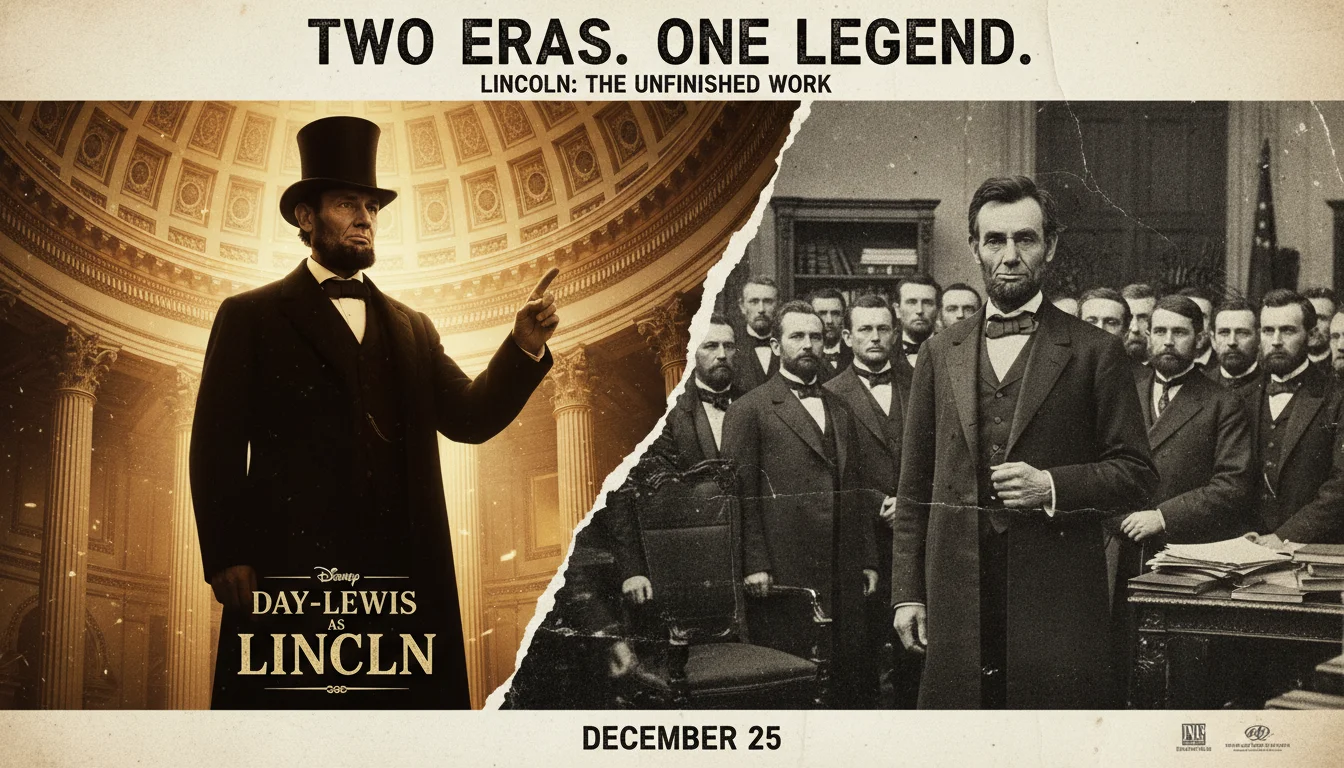
Steven Spielberg's Lincoln (2012) made an unusual bet for a Hollywood blockbuster - instead of battlefield spectacle, it gave us committee rooms, backroom deals, and parliamentary procedure. Daniel Day-Lewis's portrayal of Abraham Lincoln during the fight to pass the 13th Amendment earned him his third Oscar, and the film was widely praised as one of the most historically grounded political dramas ever made.
But how much of it actually happened? Let's separate the history from the Hollywood.
What Hollywood Got Right
The 13th Amendment Fight Was Real Political Warfare
The central drama of the film - Lincoln's desperate push to pass the 13th Amendment before the Civil War ended - is historically accurate and brilliantly depicted. Lincoln understood that the Emancipation Proclamation was a wartime executive order that could be overturned once peace arrived. A constitutional amendment was the only permanent solution.
The film correctly shows Lincoln deliberately delaying Confederate peace envoys to maintain urgency in the House. If peace came first, the political will for abolition might evaporate overnight. This was real high-stakes political calculation, and the movie captures it with remarkable precision.
Daniel Day-Lewis's Lincoln Is Eerily Authentic
Historians nearly unanimously agree that Day-Lewis nailed it. The high-pitched voice (not the deep baritone we often imagine), the melancholy demeanor, the folksy storytelling, the stooped posture - all of this matches contemporary accounts from people who actually knew Lincoln.
Even small details, like Lincoln removing his glasses and rubbing his temples while thinking, were reportedly observed behaviors recorded in letters and diaries. Spielberg even sent someone to the Kentucky Historical Society to record the ticking of Lincoln's actual pocket watch for use in the film's sound design. That level of obsession paid off.
The Backroom Deals and Political Horse-Trading
The messiest parts of the film are also the most accurate. Lobbyists like William N. Bilbo (played by James Spader) were indeed recruited to sway lame-duck Democrats with offers of government jobs, ambassadorships, and patronage positions. Lincoln himself maintained plausible deniability while being fully aware of what his allies were doing.
This wasn't corruption by the standards of 1865 - it was simply how American politics worked. The film captures this moral ambiguity without flinching.
Thaddeus Stevens's Strategic Restraint
Tommy Lee Jones's portrayal of Thaddeus Stevens, the fiery Radical Republican abolitionist, is one of the film's highlights - and largely accurate. Stevens had spent years advocating full racial equality, but during the crucial House debate, he deliberately moderated his rhetoric, stating only that all men are equal "before the law" rather than in all things.
This wasn't hypocrisy. It was political strategy. Stevens understood that demanding too much would cost votes and sink the amendment entirely. The film captures this painful compromise beautifully.
Lincoln's Relationship with His Son Robert
The tension between Lincoln and his eldest son Robert (played by Joseph Gordon-Levitt) reflects genuine family strain. Robert desperately wanted to enlist while his parents - particularly Mary Todd Lincoln, still grieving the death of their son Willie - fought to keep him safe. Lincoln eventually secured Robert a position on General Grant's staff, a compromise that kept him relatively out of danger.
What Hollywood Got Wrong
The Connecticut Voting Scene
One of the film's most notable historical errors involves the final vote on the 13th Amendment. The movie shows two Connecticut congressmen voting against the amendment. In reality, all four of Connecticut's representatives voted in favor. Connecticut's congressional delegation was so upset by this portrayal that their objections made national news. Spielberg later acknowledged the error, calling it a dramatic choice that shouldn't have been made at the expense of Connecticut's actual historical record.
Black Characters Are Too Passive
The film has been criticized - fairly - for marginalizing Black voices in a story about their liberation. Free African Americans were actively involved in pushing for the 13th Amendment. Frederick Douglass, one of the most influential voices for abolition, doesn't appear in the film at all. Elizabeth Keckley, Mary Todd Lincoln's dressmaker and a leader in Washington's Black community, appears but is given little agency.
Professor Eric Foner noted that "slavery died on the ground" through the actions of abolitionists, free Blacks, and enslaved people themselves - not just through white politicians in Washington. The film's tight focus on Lincoln and Congress is a legitimate storytelling choice, but it creates a misleading impression that abolition was delivered to Black Americans rather than fought for by them.
The Timeline Gets Compressed
Like most historical films, Lincoln compresses and rearranges events for dramatic effect. The relationship between the Confederate peace commission and the 13th Amendment vote was real but more loosely connected than the film suggests. The movie implies Lincoln directly orchestrated the timing of both events as a unified strategy, when the reality was messier and more improvised.
Several conversations and confrontations that the film presents as happening in quick succession actually unfolded over weeks or months.
Mary Todd Lincoln Gets Simplified
Sally Field's Mary Todd Lincoln is compelling but incomplete. The film shows her grief and emotional instability but underplays her political intelligence. Mary Todd was a sophisticated political operator in her own right - she attended congressional debates, cultivated relationships with politicians, and actively influenced her husband's thinking. The movie reduces her primarily to a grieving mother and difficult spouse, missing the fuller picture of a complex historical figure.
The Assassination Ending Is Misleading
The film ends with Lincoln's assassination at Ford's Theatre - but it shows Tad Lincoln learning about the shooting while attending a different play at Grover's Theatre. While Tad was indeed at Grover's Theatre that night, the way the scene is staged implies he learned about it almost immediately during his own performance. In reality, the sequence of events was less cinematically tidy.
Historical Accuracy Score: 7/10
Lincoln earns its reputation as one of the most historically accurate political dramas Hollywood has produced. The central narrative - the political fight for the 13th Amendment - is remarkably faithful to the historical record, and Day-Lewis's portrayal of Lincoln is as close to the real man as any actor has come.
The film loses points for marginalizing Black agency in a story about Black liberation, for the Connecticut voting error, and for compressing timelines in ways that oversimplify the messy reality of 1865 politics. But these are relatively minor sins in a genre known for wholesale fabrication.
Spielberg made a film about democracy at its most unglamorous - the horse-trading, the moral compromises, the exhausting procedural battles - and got most of it right. That alone is a remarkable achievement.
Lincoln is available on major streaming platforms.
For more on Civil War-era historical accuracy, see our 12 Years a Slave review. For Spielberg's accuracy record in other war dramas, compare Saving Private Ryan vs. history.

Debate the Accuracy with the Real Figures
Ask the real people what Hollywood got wrong about their lives.
Create your free account →No card required. Some figures and features require a paid plan.
Join the HistorIQly Club
Get smarter about the past.
Weekly stories, deep dives, and exclusive content straight to your inbox.