Master and Commander vs. History: How Accurate Is Peter Weir's Naval Masterpiece?
Master and Commander historical accuracy examined: why Peter Weir's 2003 naval film is remarkably authentic - except for one major change Hollywood made deliberately.
Read Wikipedia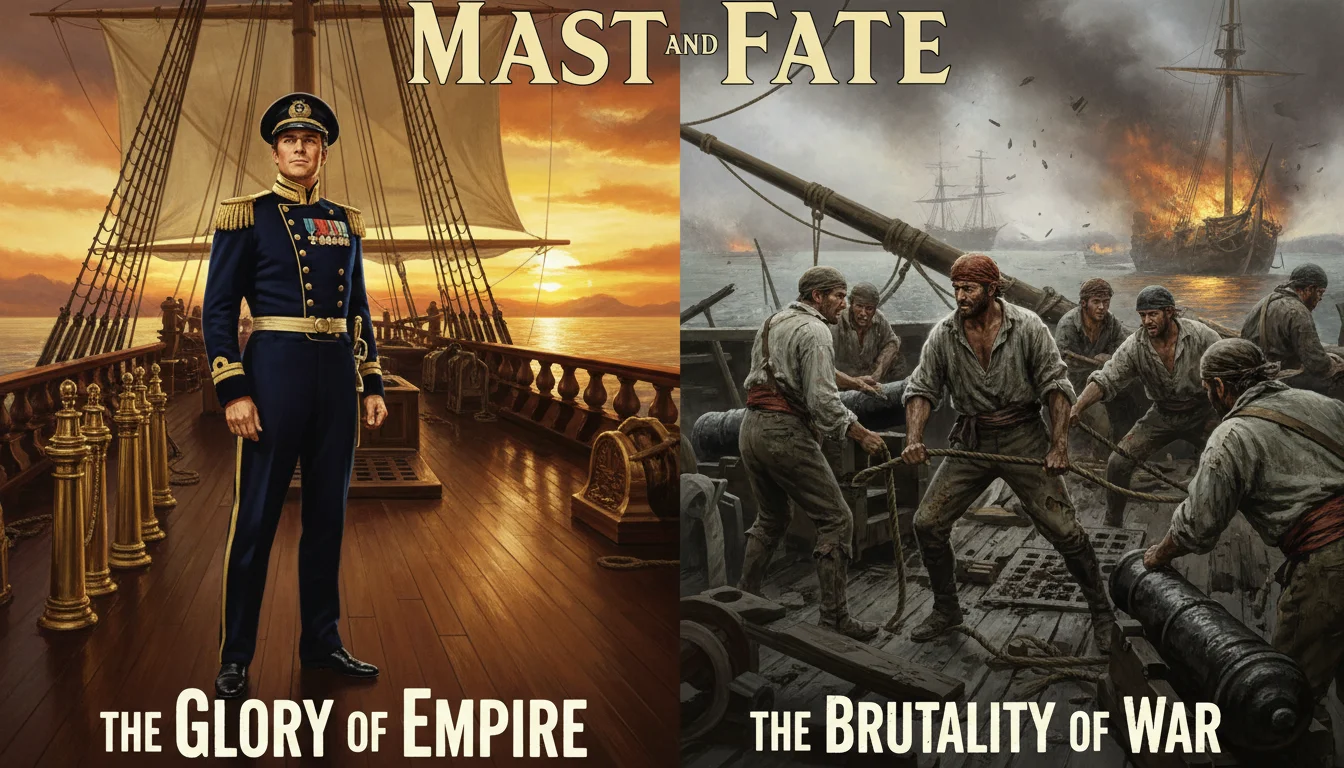
Peter Weir's 2003 film Master and Commander: The Far Side of the World is often called the most historically accurate naval film ever made. Starring Russell Crowe as Captain "Lucky Jack" Aubrey and Paul Bettany as ship's surgeon Stephen Maturin, the film plunges viewers into the brutal, beautiful world of the Royal Navy during the Napoleonic Wars.
But just how accurate is this beloved film? The answer is fascinating: extraordinarily accurate in almost every detail - except for one massive historical change made specifically because American studios feared audiences couldn't handle the truth.
Quick verdict: Master and Commander is not a single true story. Jack Aubrey and the Acheron pursuit are fictional, while the shipboard routines, discipline, medicine, and combat detail closely reflect the Royal Navy of the period. Historical accuracy: 8/10.
What Hollywood Got RIGHT
The Ship Itself
The HMS Surprise depicted in the film closely matches historical schematics of the real vessel. The actual HMS Surprise was originally a French corvette called Unité, captured by the British in 1796 and renamed. She gained fame in 1799 under Captain Sir Edward Hamilton for the daring recapture of HMS Hermione after that ship's crew mutinied and killed their officers.
The filmmakers went to extraordinary lengths for authenticity. They built a full-scale replica ship and hired Gordon Laco, a naval historian who had previously worked as a consultant on similar productions, to ensure every rope, cannon, and sail was period-accurate.
Boy Officers and Midshipmen
Modern viewers might find it shocking to see children serving as officers aboard a warship, but this was completely accurate. Young William Blakeney, the midshipman who loses his arm in the film, represents a historical reality: aristocratic boys as young as 11 or 12 were sent to sea to begin their naval careers.
The reasoning was practical. Naval command required years of experience to master - understanding the complex rigging, navigation, seamanship, and tactics took decades. Wealthy families secured their sons' futures by placing them aboard ships under friendly captains. These "young gentlemen" served as midshipmen, warrant officers who were essentially officers-in-training.
The film perfectly captures this system. We see young Blakeney learning leadership while simultaneously studying mathematics and navigation, just as real midshipmen did.
The Civility Under Fire
One detail that might seem unrealistic is the calm, formal dialogue during battle. "Mr. Harland, if you please" seems absurd when cannonballs are smashing through the hull. Yet this was entirely accurate.
Naval discipline of the era emphasized maintaining composure under pressure. The formal language helped officers give clear commands amid chaos, and the drilling was so thorough that responses became automatic. This same psychological principle is seen today in airline pilots, who are trained to remain eerily calm during emergencies to maintain clarity of thought.
The Sound Design
The filmmakers placed microphones at the base of period-accurate cannons and fired various types of ammunition - chain shot, grapeshot, and round shot - to capture authentic sounds. Every splintering crash and booming explosion in the film uses these actual recordings, making Master and Commander perhaps the most sonically accurate naval film ever produced.
"Lucky Jack" Aubrey's Character
While Jack Aubrey is fictional, his exploits were drawn from real naval officers, particularly Lord Thomas Cochrane. Cochrane was a brilliant, unconventional captain who repeatedly won against superior forces through cunning tactics. His habit of disobeying cautious orders (while still achieving victory) earned him both fame and the enmity of the Admiralty.
The film's central tactic - disguising the Surprise as a whaler to ambush the enemy - mirrors a real Cochrane stratagem. In 1800, commanding HMS Speedy, Cochrane used deception and audacity to defeat far larger vessels.
Medical Accuracy
Dr. Stephen Maturin's medical procedures, including the gruesome arm amputation and his self-surgery to remove a musket ball, reflect actual naval medical practice. Ship's surgeons operated without anesthesia (beyond rum), used basic instruments, and had to work quickly. The survival rates were grim, but the procedures shown are historically authentic.
What Hollywood Got WRONG
The Big One: The Enemy Ship
Here's where Hollywood made its most significant historical change - and did so deliberately.
In Patrick O'Brian's original novel The Far Side of the World, the enemy isn't French. The book is set during the War of 1812, and the Surprise chases an American ship called the USS Norfolk. The novel imagines a scenario where Lucky Jack must defeat a technologically superior American vessel - specifically, one with the advanced hull design of the real USS Constitution, "Old Ironsides."
The USS Constitution earned its nickname in 1812 when British cannonballs bounced harmlessly off its hull during battle with HMS Guerriere. The Constitution used a combination of white oak and live oak that made it faster and more durable than standard British ships - exactly like the "phantom" Acheron described in the film.
But American studios financing the film couldn't stomach making Americans the enemy. As director Peter Weir diplomatically explained in DVD commentary: "The Americans would never back a film in which they were the enemy. It was just confusing emotionally for the audience."
So the setting was moved from 1812 to 1805, and the American ship became a French privateer. This change created a historical impossibility: how did the French acquire an American-built "ironside" vessel in 1805, seven years before such ships proved their worth against the British?
The film never explains this, because it can't.
The Valparaíso Problem
At the film's end, the captured Acheron is sent to the Spanish colonial port of Valparaíso in Chile. This creates two historical problems.
First, Valparaíso in 1805 was still a minor colonial outpost, not the major port it would become decades later. Second, and more critically, Spain was allied with Napoleonic France at this time. Sending a captured French vessel to a Spanish port would essentially be returning it to the enemy.
Captain Aubrey would have known this. The real Royal Navy would have sent the prize to a British-controlled port instead.
The Nelson Biography Timeline
Young Midshipman Blakeney is shown reading a biography of Lord Nelson. While this is a touching detail, the specific biography he holds wasn't published until roughly a year after the film's events. A small error, but notable given the production's obsessive attention to other details.
The First Battle's Logic
The opening engagement stretches believability. The Acheron surprises the Surprise in fog, delivers two devastating broadsides, and causes catastrophic damage - but then somehow loses contact while the British ship limps away.
Given the Acheron's stated advantages in speed and firepower, it's difficult to imagine why she wouldn't simply finish the job. This feels more like a narrative necessity than a realistic tactical outcome.
The Verdict
Master and Commander Historical Accuracy Score: 8/10
Master and Commander remains one of the most historically authentic films ever made about naval warfare. The attention to detail in ship construction, crew life, medical practice, and combat tactics is unparalleled. Patrick O'Brian's source novels were renowned for their research, and the filmmakers honored that legacy.
The film loses points only for its central historical impossibility: a French ship that couldn't logically exist, created solely because American studios feared their audiences couldn't root for British sailors fighting Americans.
It's a curious irony. A film that strives so hard for authenticity in every rope and rigging line ultimately fails at its most fundamental level - the very identity of the enemy - because Hollywood assumed Americans were too "sensitive" to handle a war their own country actually fought.
Still, if you want to understand what life was like aboard a Napoleonic-era warship, there is no better film. The wooden world of cannons, courage, and command comes alive in a way no other movie has achieved.
Just don't think too hard about why a French ship is built like an American ironside.
For more historical war-film accuracy, see The Patriot vs. History and our same-era review of Napoleon vs. History.
Quick Answers
Common questions about this topic
Is Master and Commander based on a true story?
Not on one true story. Jack Aubrey and the Acheron pursuit are fictional, though Patrick O'Brian drew Aubrey's exploits from real Royal Navy officers and events.
How historically accurate is Master and Commander?
Its shipboard routines, discipline, medicine, sound, and combat detail are exceptionally authentic. Its largest change is turning the source novel's American enemy into a French privateer. This review rates it 8/10.
Was HMS Surprise a real ship?
Yes. The real HMS Surprise began as the French corvette Unité, which Britain captured and renamed in 1796.
Why was the enemy changed from American to French?
The source novel is set during the War of 1812 and uses an American enemy. The film moved the story to 1805 and made the enemy French because its backers were reluctant to ask American audiences to root against an American ship.

Debate the Accuracy with the Real Figures
Ask the real people what Hollywood got wrong about their lives.
Create your free account →No card required. Some figures and features require a paid plan.
Join the HistorIQly Club
Get smarter about the past.
Weekly stories, deep dives, and exclusive content straight to your inbox.