The Mary Phagan Murder and the Leo Frank Lynching
The Leo Frank case of 1913 Atlanta traces how a girl's murder led to a wrongful conviction, a mob lynching, the founding of the ADL, and the KKK's rebirth.
Read Wikipedia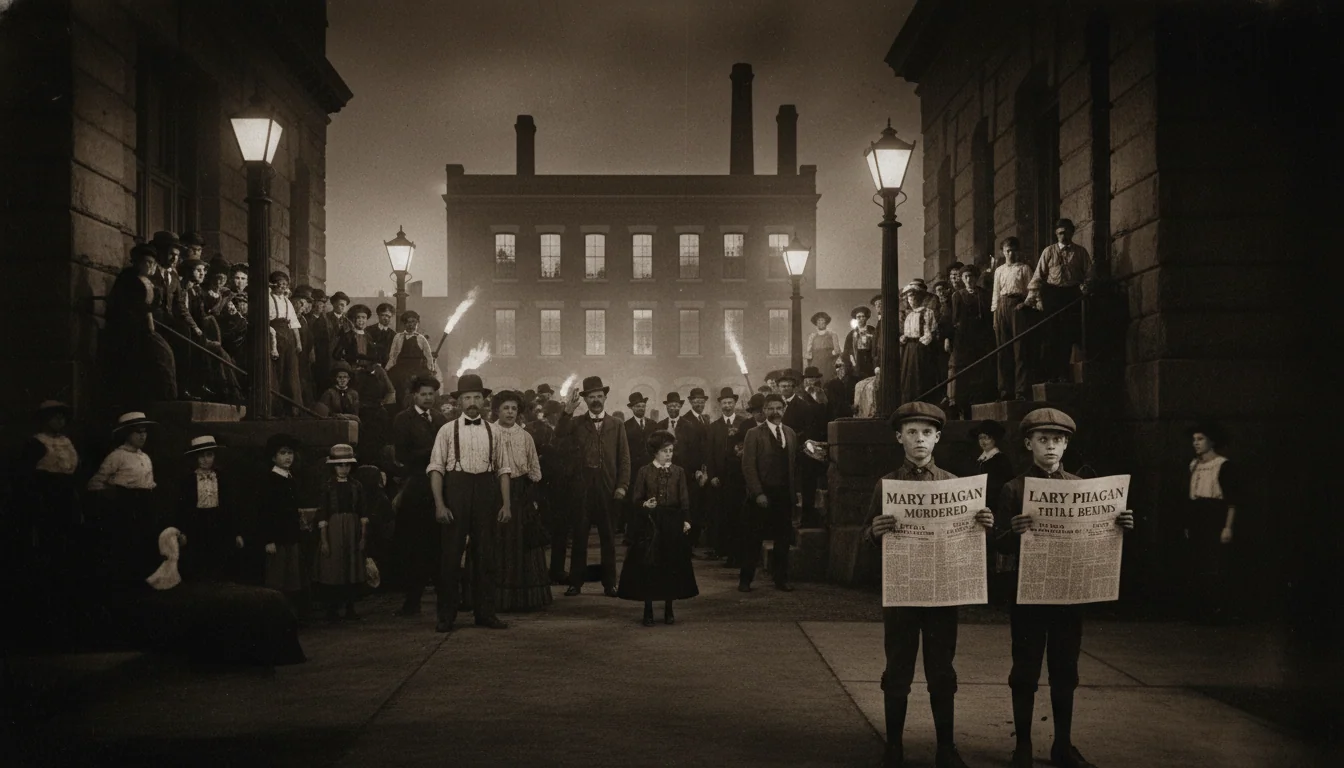
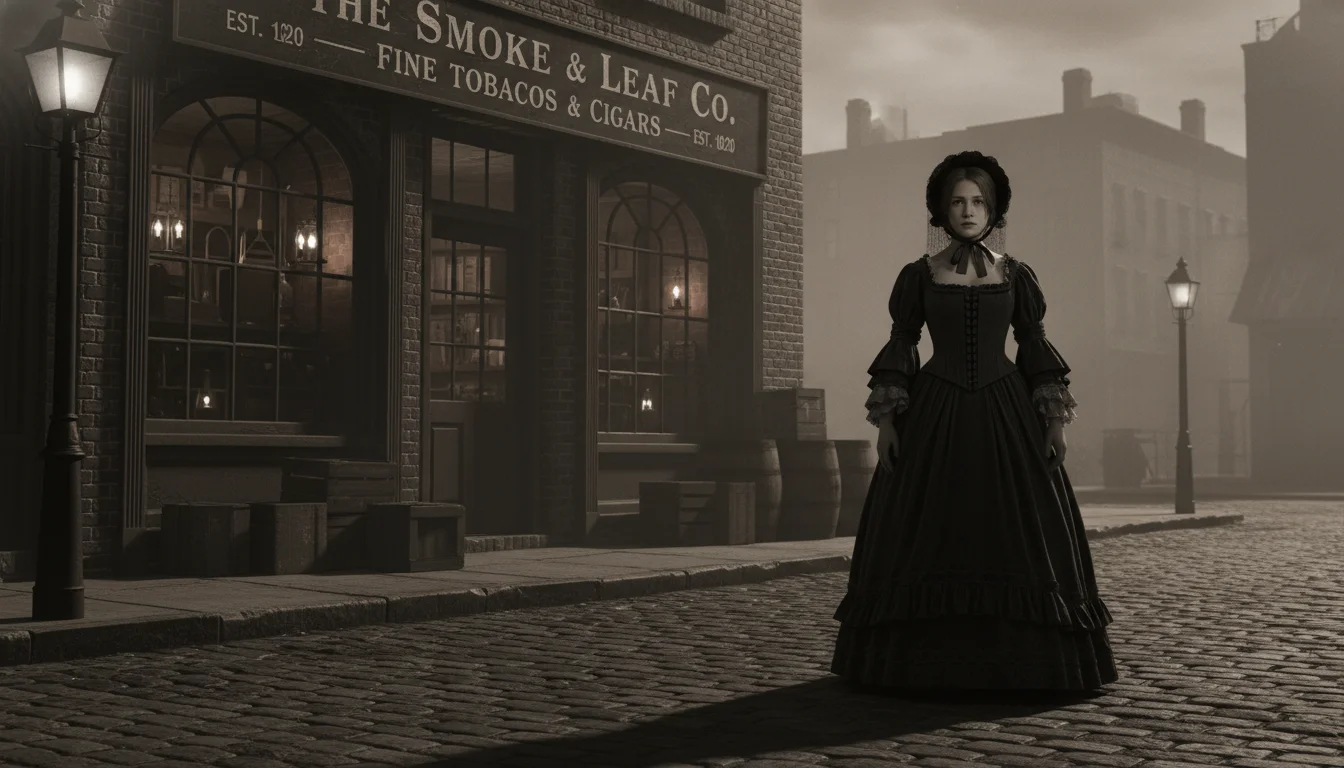
Confederate Memorial Day fell on April 26 in Georgia in 1913, and the National Pencil Factory on South Forsyth Street in Atlanta was closed. Most workers had the holiday off. Mary Phagan, thirteen years old, did not need to work that day - she came in only to collect her weekly wages of $1.20 from Leo Frank, the factory's superintendent. She was found dead in the factory basement the following morning, strangled and badly beaten, with two handwritten notes lying near her body.
Those notes have puzzled analysts for over a century. Written in crude vernacular English and apparently in the voice of the victim, they described a figure called the "night witch" as the attacker and referred to a Black man. The notes had been written on pencil factory notepad paper. Most historians who have examined them believe they were composed by the actual killer in a clumsy attempt to deflect blame. The identity of the author of those notes is, in many ways, the key to the whole case.
The factory, the superintendent, and the investigation
Leo Frank was 29 years old, a Cornell-educated mechanical engineer from Brooklyn who had come south in 1908 to manage the Atlanta plant owned by his uncle's family. He was Jewish, a member of Atlanta's small but visible Reform Jewish community, and a Northerner whose professional status made him an outsider to some of the city's working-class white population.
On the morning of April 27, 1913, the factory's night watchman found a body in the basement and alerted police. Frank was called in. By his own account he was nervous during questioning - not unusual, he later said, for a man who suddenly realized he was surrounded by investigators who appeared to have already decided on their suspect. From the start, investigators narrowed their focus to two men: Frank himself, and Jim Conley, the factory's janitor, who had a prior petty-theft record and who had been seen washing something in the factory on the morning the body was discovered.
Over the following weeks, Conley was questioned repeatedly. His story shifted at least three times. In his first statement he denied being at the factory on April 26. In his second he admitted being there but denied knowing anything about the murder. In his third and final account, he produced a detailed narrative in which he claimed Frank had called him to the second floor, showed him Mary's body, and instructed him to write the notes before carrying the body to the basement. Each new version of Conley's account appeared precisely when prosecutors needed it to plug holes in the previous one.
Investigators chose to believe the third version.
The trial
Leo Frank's trial began in late July 1913. The courtroom stood in the middle of a city that had, in the preceding months, been worked into a frenzy. Tom Watson, a former Populist politician turned nativist demagogue who ran an influential newspaper called The Jeffersonian, had been openly calling for Frank's conviction in language that drew directly on anti-Semitic tropes about Jewish men and gentile women. Crowds gathered outside the courthouse daily and were audible inside the building. The judge later acknowledged he had feared a riot if the jury acquitted.
Inside the courtroom, the prosecution's case rested almost entirely on Conley's testimony. No physical evidence linked Frank to the murder. No witness could place Frank with Mary Phagan after she left his office. The two notes, far from implicating Frank, were consistent with having been written by someone who knew the factory's layout and the role of the night watchman. Frank's defense team called dozens of character witnesses and challenged Conley's credibility systematically, noting the multiple contradictions in his shifting accounts.
The jury deliberated for less than four hours and returned a guilty verdict in August 1913. Frank was sentenced to death. The judge, worried about public order, had advised Frank and his attorney not to be present when the verdict was announced.
The commutation and its consequences
The verdict triggered a national conversation. Legal scholars who reviewed the trial record found it alarming. The newly founded Anti-Defamation League, established by B'nai B'rith in October 1913 partly in direct response to Frank's plight, mounted a sustained campaign for review. Petitions carrying hundreds of thousands of signatures arrived in Georgia from across the country.
Governor John Slaton spent weeks personally reading the case record. He found the wood evidence questionable, Conley's multiple contradictions deeply troubling, and the overall trial atmosphere incompatible with a fair proceeding. In June 1915, two weeks before the end of his term, Slaton commuted Frank's death sentence to life imprisonment at hard labor. It was the most consequential decision of his career and it ended it. He was hanged in effigy across Georgia, required National Guard escorts to leave Atlanta safely, and never returned to elective politics.
The commutation enraged a group of men from Marietta, Mary Phagan's hometown, who organized under the name the Knights of Mary Phagan. On the night of August 16, 1915, approximately 25 men - later identified as including a former governor, a former sheriff, a judge, and a clergyman - cut the telephone wires around the Milledgeville State Prison Farm, overpowered the guards, and removed Leo Frank from his cell. They drove through the night to Marietta and hanged him from an oak tree. The lynching was photographed. Souvenir postcards were later printed from the images.
No one was ever prosecuted for the kidnapping or the murder.
Three months later, in November 1915, William Joseph Simmons led a group that included many of the same men up Stone Mountain outside Atlanta and lit a cross. The second Ku Klux Klan was born. It would grow to four million members by the mid-1920s.
What Alonzo Mann saw
For almost seventy years after Frank's death, Jim Conley maintained his story, served a sentence for accessory after the fact that lasted less than a year, and lived until 1962. The case settled into history as a conviction, a commutation, and a lynching.
Then, in 1982, an 83-year-old retired insurance agent named Alonzo Mann contacted a Nashville newspaper. Mann had been fourteen years old in April 1913 and worked as an office boy at the pencil factory. On the afternoon of April 26, he said, he had returned to the factory after lunch and found Jim Conley standing alone in the lobby, holding the body of Mary Phagan. Conley had warned him: "If you ever mention this, I will kill you." Mann went home and told his mother, who told him to forget what he had seen. He had stayed silent for 69 years.
Mann underwent a polygraph examination administered by a forensic examiner with no prior connection to the case. The examiner concluded he was telling the truth.
The Georgia Board of Pardons and Paroles opened a review. In 1986, they granted Frank a posthumous pardon - carefully worded. The board said the state had failed to protect Frank from mob violence and had denied him due process. It declined to declare him innocent of the murder of Mary Phagan. That narrow wording satisfied almost no one.
Why the case still matters
The Leo Frank case is conventionally taught as a case study in mob justice and institutional failure, which it is. But three other things happened simultaneously that give it a longer reach.
First, it demonstrated how racial hierarchies could be deliberately inverted when they served a particular narrative. Jim Conley, a Black man in the Jim Crow South who had admitted to being present at the scene, admitted to lying repeatedly under questioning, and admitted to helping write messages left near a murder victim, was the star prosecution witness rather than the defendant. This happened because prosecutors calculated that a Jewish factory superintendent from New York was a more satisfying villain for their audience than the janitor. They were right, and that calculation killed a man.
Second, it is a direct origin point for two institutions that remain active today. The Anti-Defamation League was created partly in response to Frank's conviction. The second Ku Klux Klan was created partly by the men who killed him.
Third, and most simply, Mary Phagan's murder has never been officially resolved. No one was ever convicted of killing her. The state of Georgia convicted Leo Frank, then implicitly acknowledged the conviction may have been wrong, then pardoned him without exonerating him. The actual murder, the act that set all of this in motion, remains an open question in any legal sense.
She was thirteen. She came to pick up a dollar and twenty cents. Whoever killed her, and the evidence points strongly toward Jim Conley, walked free and died at liberty. The question of what happened in that factory basement on a Confederate holiday afternoon in 1913 was never answered in any court of law, and the odds of it being answered now are effectively zero.
For other cases where the wrong person bore the blame - or where justice was simply never served - see the Lizzie Borden axe murders and the Colonial Parkway murders.
Quick Answers
Common questions about this topic
Who was convicted of killing Mary Phagan?
Leo Frank, the 29-year-old superintendent of the National Pencil Factory in Atlanta, was convicted of Mary Phagan's murder in August 1913. The conviction relied heavily on the testimony of Jim Conley, a janitor at the factory. The evidence against Frank was largely circumstantial, and many historians believe he was innocent.
Who actually killed Mary Phagan?
Most historians now believe Jim Conley, the janitor whose testimony convicted Frank, was the actual killer. Conley admitted to being at the factory on the day of the murder and admitted to helping draft the mysterious notes found near the body. In 1982, Alonzo Mann signed an affidavit stating he had seen Conley carrying Phagan's body but had been warned to say nothing.
Was Leo Frank ever pardoned?
Yes, posthumously. In 1986, the Georgia Board of Pardons and Paroles granted Frank a pardon on the grounds that the state had failed to protect him - not as a formal declaration of innocence. The board stopped short of explicitly exonerating him of the murder charge.
What were the major consequences of the Leo Frank case?
The case had two landmark institutional consequences. The Anti-Defamation League was founded in 1913 by B'nai B'rith partly in response to the anti-Semitic treatment of Frank during his trial. And the vigilante group that lynched Frank, calling themselves the Knights of Mary Phagan, provided the organizational nucleus for William Joseph Simmons' revival of the Ku Klux Klan at Stone Mountain in November 1915.

Want to Interrogate the Suspects?
Chat with historical figures and uncover the truth behind history's greatest mysteries.
Create your free account →No card required. Some figures and features require a paid plan.
Join the HistorIQly Club
Get smarter about the past.
Weekly stories, deep dives, and exclusive content straight to your inbox.