The Murder of Mary Rogers: The Beautiful Cigar Girl Who Inspired Edgar Allan Poe
The Beautiful Cigar Girl, Mary Rogers, was found dead in New York's Hudson River in 1841. Her unsolved murder inspired Poe's detective fiction and remains America's original cold case.
Read Wikipedia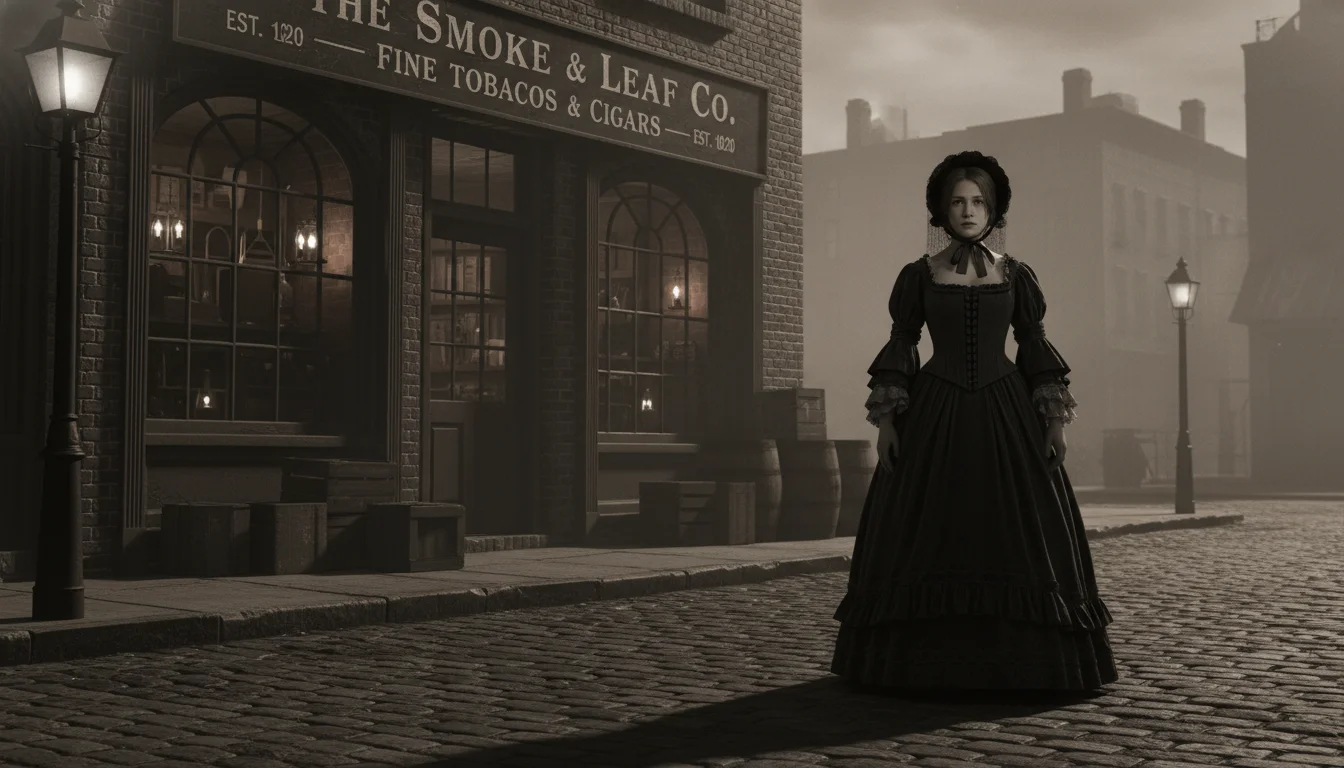
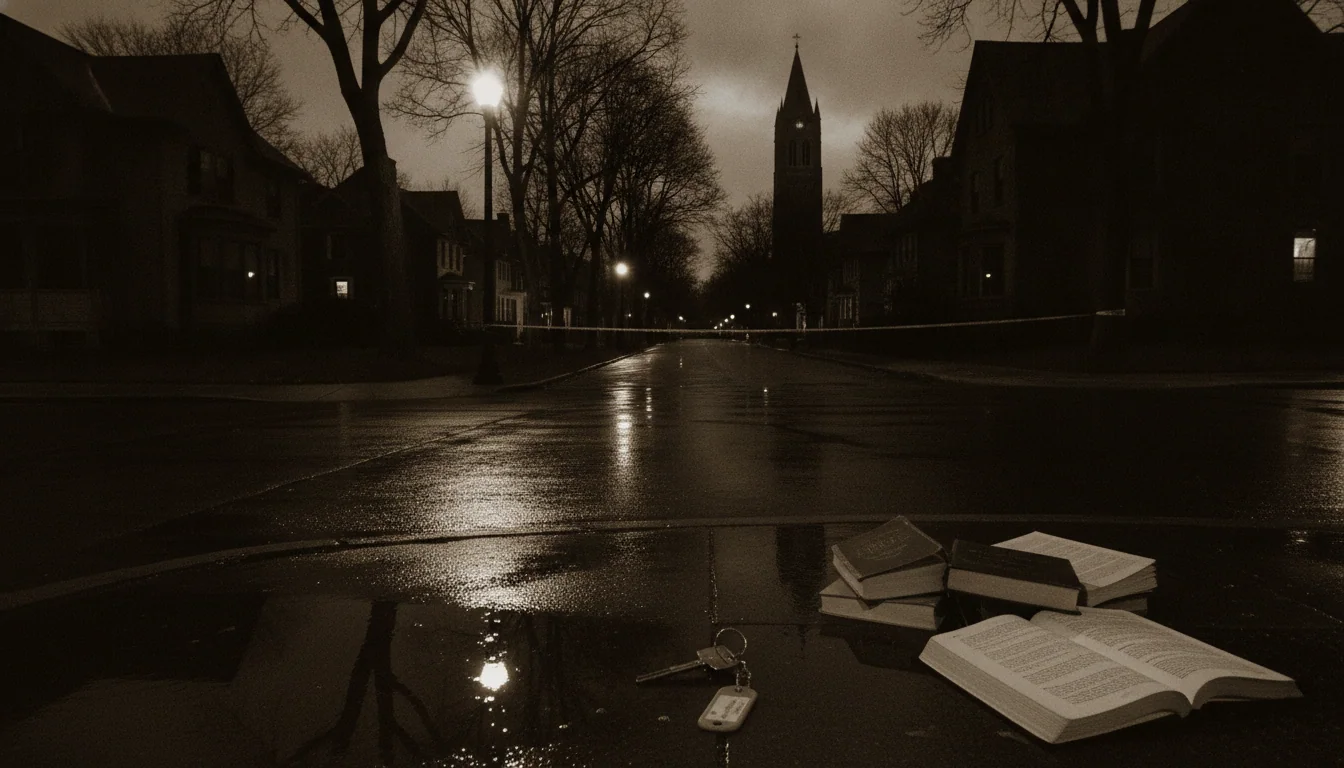
On July 28, 1841, two men walking along the shores of Hoboken, New Jersey noticed something floating in the Hudson River. They procured a boat and rowed out to investigate. What they pulled from the water was the battered body of Mary Cecilia Rogers - a 20-year-old woman whose beauty had made her famous across New York City.
Her murder would become America's first true tabloid sensation, expose the incompetence of New York's primitive police force, inspire Edgar Allan Poe to write pioneering detective fiction, and remain stubbornly unsolved for nearly two centuries.
The Beautiful Cigar Girl
Mary Rogers was born around 1820 in Lyme, Connecticut. Her father, James Rogers, died in a steamboat explosion when she was seventeen. Left with nothing, Mary and her widowed mother Phoebe moved to New York City, where Phoebe opened a boarding house on Nassau Street.
Mary was extraordinarily beautiful - the kind of beauty that stopped men in their tracks. When tobacco shop owner John Anderson met her, he immediately recognized an opportunity. He hired Mary to work the counter at his Broadway establishment, correctly predicting that her presence would draw customers like moths to flame.
He was right. Anderson's shop became the most popular tobacco store in Manhattan. Distinguished men spent entire afternoons pretending to browse cigars, hoping to exchange glances with the "Beautiful Cigar Girl." Literary giants like James Fenimore Cooper and Washington Irving numbered among her admirers. One besotted customer published a poem in the New York Herald praising her "heaven-like smile" and "star-like eyes."
Mary became something unprecedented in American culture: a celebrity based purely on beauty. She was the subject of gossip, poetry, and male fantasy across the city. Everyone knew who the Beautiful Cigar Girl was.
A Strange Disappearance
In October 1838, Mary vanished. Her mother discovered what appeared to be a suicide note, and newspapers reported that the Beautiful Cigar Girl had destroyed herself over unrequited love.
Then she returned.
Mary turned up in Brooklyn, claiming she had simply been visiting relatives. Some suspected the whole affair was a publicity stunt orchestrated by Anderson to drum up business. Mary never explained herself, and the newspapers moved on to other scandals.
Three years later, on July 25, 1841, Mary left her mother's boarding house, telling her fiance Daniel Payne that she planned to visit relatives. She never came back.
Three Days in the River
On July 28th, Henry Mallin and James Boullard spotted Mary's body floating in the Hudson near Hoboken. The coroner's examination revealed horrific injuries.
Her face was dark and swollen with suffused blood. Frothy blood still issued from her mouth. Bruises the size and shape of a man's thumb marked one side of her neck, with finger-shaped marks on the other - evidence she had been throttled. Her wrists showed abrasions suggesting they had been bound. A strip torn from her own petticoat was tied around her mouth as a gag. A piece of lace from her collar had been knotted so tightly around her neck that it was embedded in her flesh.
Deep scratches covered her back and shoulders - wounds consistent with being held down on rough ground while she struggled.
The coroner's conclusion: Mary Rogers had been raped and strangled, then dumped in the river.
A City of Suspects
New York in 1841 was a city of 320,000 people served by an absurdly inadequate police force - just one night watch, 100 marshals, 31 constables, and 51 officers. They were woefully unprepared for a case of this magnitude.
The most popular theory blamed gang violence. Hoboken and the surrounding areas were known haunts of roving criminal gangs who attacked isolated travelers. The brutality of the assault fit this profile.
But witnesses complicated the picture.
A stagecoach driver and another man had seen Mary leaving the Hoboken ferry around 3:00 PM on July 25th. She was accompanied by a "dark-complexioned young gentleman." Frederica Loss, who ran a tavern near the crime scene, said Mary and her mysterious companion stopped for lemonade before walking toward a nearby hill.
Then came the screaming.
Loss claimed she heard "frightful screaming, as of a young girl in great distress, partly choked, and calling for assistance." There was sounds of struggling, a stifled cry, then silence.
The Fiance's Suicide
Daniel Payne, Mary's fiance, became an immediate suspect. The newspapers noted darkly that when Payne learned Mary's body had been found in Hoboken, he didn't rush to identify her - in fact, he never went at all.
Payne produced an alibi for his whereabouts during Mary's disappearance. But the strain proved too much.
On October 7, 1841 - just weeks after Mary's death - Payne traveled to Hoboken. He made his way to Sybil's Cave, a popular tourist spot near where Mary's body had been found. There, he overdosed on laudanum during a bout of heavy drinking.
Among his papers, investigators found a note: "To the World - here I am on the very spot. May God forgive me for my misspent life."
The newspapers went wild with speculation. Was this a confession? Had Payne murdered his fiancee and returned to the scene of the crime to take his own life from guilt? Or was this simply a grief-stricken man who couldn't live without the woman he loved?
The Deathbed Confession
The investigation stalled. Then, in November 1842, Frederica Loss - the tavern keeper who had served Mary lemonade on her final afternoon - came forward with explosive new information.
Loss was dying. She had been accidentally shot by her own son, and on her deathbed, she swore that Mary Rogers had not been murdered by a gang at all.
According to Loss, Mary had come to her establishment seeking an abortion. The procedure went wrong. Mary Rogers died not from rape and strangulation, but from a botched operation, and her body had been dumped in the river to cover up the crime.
Police dismissed Loss's story. The coroner had documented clear evidence of violence - the ligature marks, the bruising, the bound wrists. Loss's confession seemed designed to protect someone, but who?
Edgar Allan Poe's Investigation
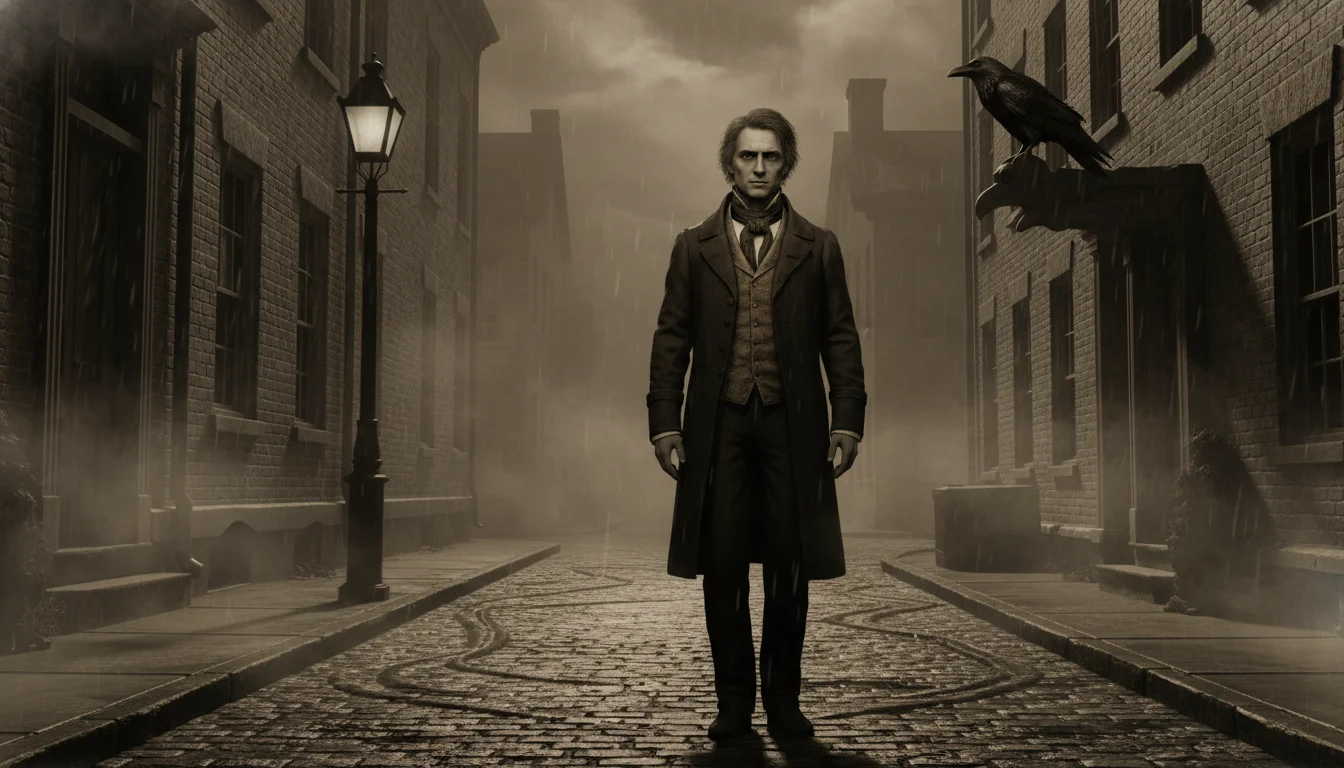
By September 1842, the Mary Rogers case had captivated the nation. Enter Edgar Allan Poe.
Poe had just published "The Murders in the Rue Morgue," widely considered the first modern detective story. He saw in the Mary Rogers case an opportunity to demonstrate his powers of deduction.
"Under the pretense of showing how Dupin unravelled the mystery of Marie's assassination," Poe wrote to a friend, "I, in fact, enter into a very rigorous analysis of the real tragedy in New York."
The result was "The Mystery of Marie Roget," published in late 1842 and early 1843. Poe relocated the story to Paris, renamed the victim Marie Roget, and had his detective C. Auguste Dupin analyze newspaper accounts to solve the crime.
Poe believed the gang theory was wrong. His analysis suggested a single perpetrator - someone Mary knew intimately, someone who had lured her to a secluded spot for a specific purpose. He hinted strongly at the abortion theory without stating it outright.
But Poe never named the killer. The story ends with Dupin suggesting several possibilities, leaving the solution tantalizingly incomplete. The father of detective fiction had tried to solve a real murder - and failed.
The Legacy
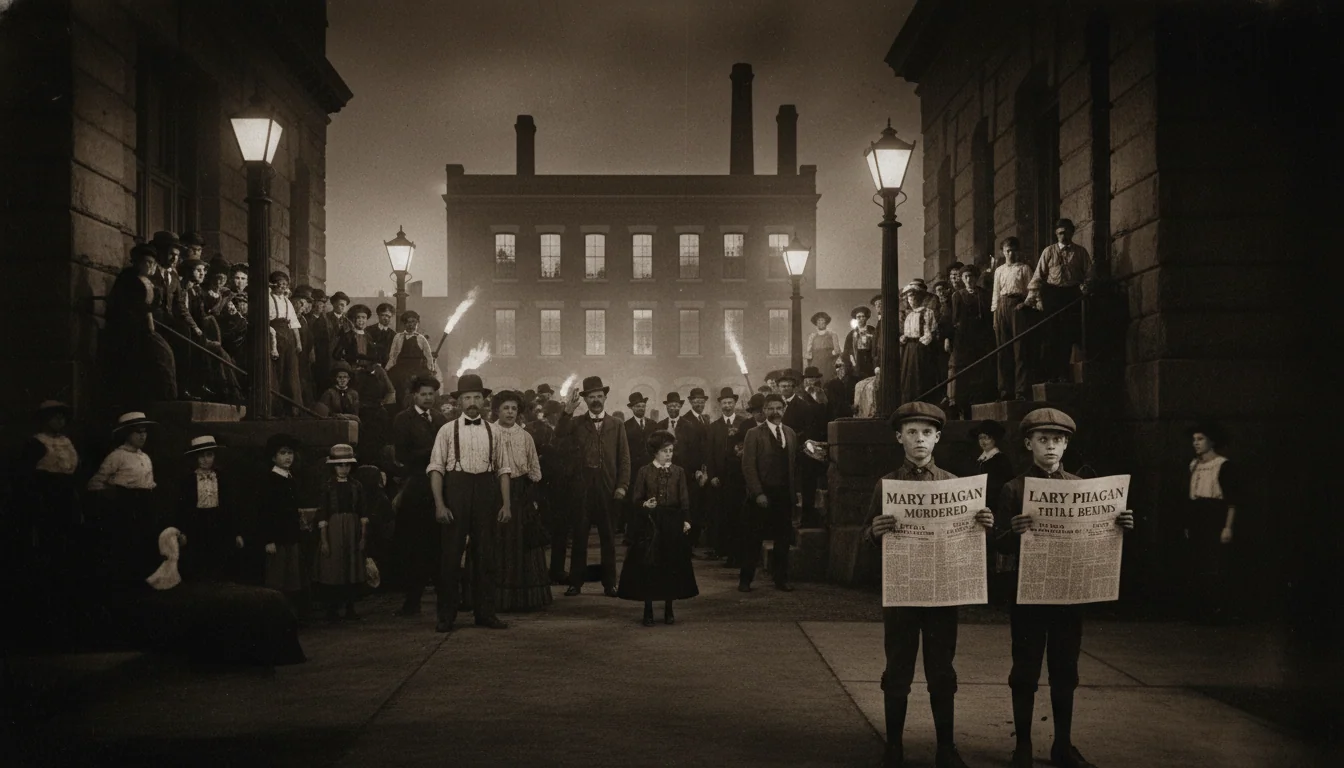
Interest in Mary Rogers faded quickly. Nine weeks after her death, the press became obsessed with the sensational murder trial of John C. Colt, who had killed a printer named Samuel Adams. The Beautiful Cigar Girl slipped from the headlines.
But her death left lasting marks on American culture.
The case exposed the inadequacy of New York's law enforcement, helping spur the creation of a professional police department in 1845. It demonstrated the power of newspapers to create and sustain national obsessions - a tabloid template that persists today.
And it gave Edgar Allan Poe the material for the first detective story based on a real crime, establishing a genre that would eventually include Truman Capote's "In Cold Blood" and countless true-crime podcasts.
What Really Happened?
Nearly 185 years later, we still don't know who killed Mary Rogers.
The gang theory remains possible but unsatisfying. Why would a random gang of criminals specifically target Mary Rogers, and how did she end up in their company?
The abortion theory explains her mysterious companion and her reason for being in Hoboken, but conflicts with the coroner's evidence of violence. Unless, of course, something went wrong during the procedure, and someone tried to cover up the death by making it look like a violent attack.
Daniel Payne's suicide note could be read as a confession - or as the final words of a man destroyed by grief and suspicion. "Here I am on the very spot" might mean he killed her there, or simply that he wanted to die where she did.
The dark-complexioned young gentleman was never identified.
Mary Rogers took her secrets to the Hudson River. Mary Rogers, the Beautiful Cigar Girl, became the Beautiful Mystery - a puzzle that fascinated Poe, bewildered investigators, and continues to haunt true crime enthusiasts nearly two centuries later.
Some mysteries, it seems, are meant to remain unsolved.
For related unsolved Victorian-era mysteries, see The Mysterious Death of Edgar Allan Poe and Jack the Ripper: The Whitechapel Murders.

Want to Interrogate the Suspects?
Chat with historical figures and uncover the truth behind history's greatest mysteries.
Create your free account →No card required. Some figures and features require a paid plan.
Join the HistorIQly Club
Get smarter about the past.
Weekly stories, deep dives, and exclusive content straight to your inbox.