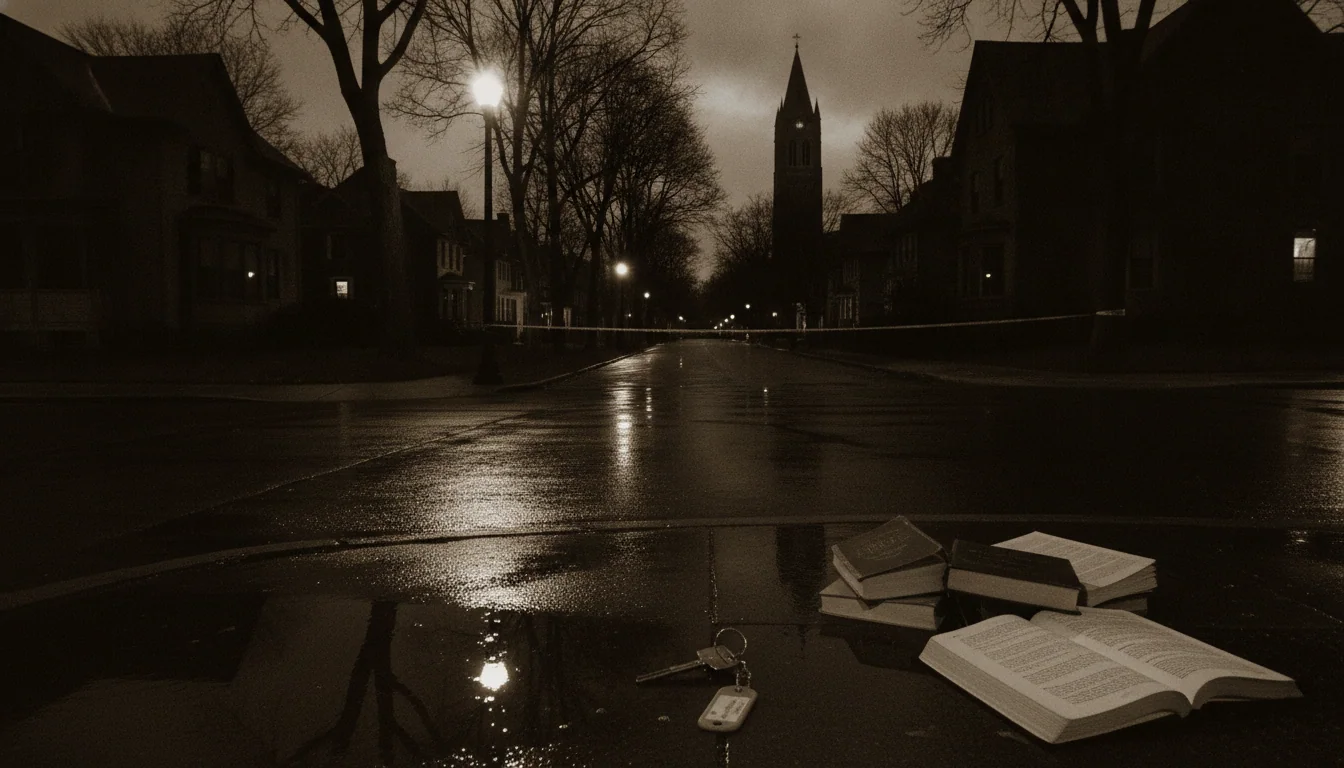
The Murder of Sister Cathy Cesnik: A Nun, a Predator, and a City That Looked Away
Sister Cathy Cesnik murder: Baltimore, 1969. A teaching nun vanished during a routine errand and was found shot months later. The case has never been solved.
Read Wikipedia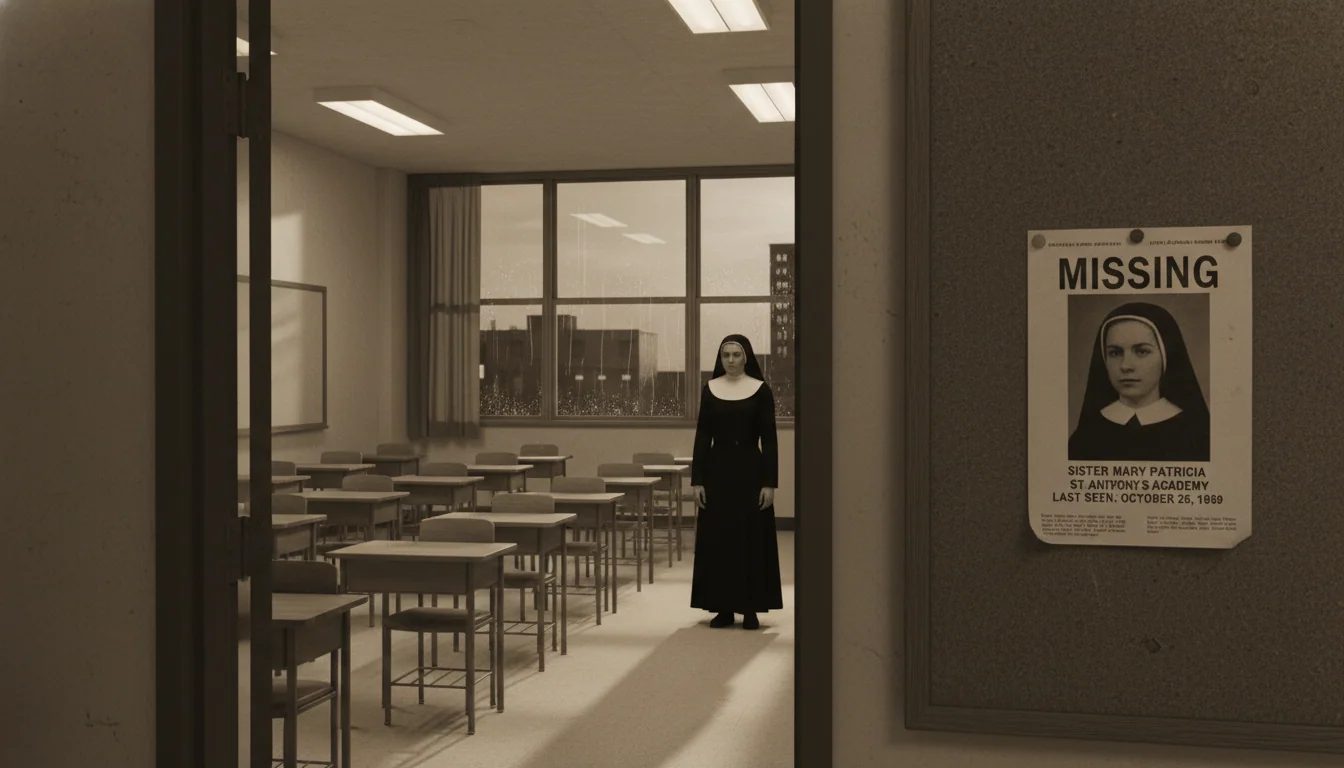
On the evening of November 7, 1969, a 26-year-old nun named Catherine Cesnik told her roommate, Sister Russell, that she was driving to a local shopping center in the Lansdowne neighborhood of Baltimore to pick up a ring she had ordered and stop at a bakery. She never came home. Her car was found the next morning in the parking lot of the Edmondson Village Shopping Center. She was not in it.
For nearly three months, no one knew what had happened. Then on February 3, 1970, a local man walking through a field near Loch Raven in northern Baltimore County found a human body, partially decomposed and partially covered by snow. It was Sister Cathy. She had been shot in the head. No one was ever charged with her murder.
Who she was
Catherine Cesnik grew up in Pittsburgh and entered the School Sisters of Notre Dame as a young woman. By 1969 she was teaching English and drama at Archbishop Keough High School in southwest Baltimore, a Catholic girls' school run by the Archdiocese. By every account from former students, she was not the kind of nun who kept students at a careful distance. She talked to them about real things. She let them stay late. She hugged them. She was, for many adolescent girls navigating a rigidly hierarchical Catholic institution, the one adult they trusted.
That trust appears to have become dangerous. According to multiple former students who came forward decades later, some girls had begun telling Sister Cathy in the months before her disappearance that the school's chaplain, Father Joseph Maskell, was sexually abusing them. Some alleged that Maskell had told counseling students that he would share what they said in confidence. That he functioned less as a pastoral counselor than as a predator with an institutional cover.
What happened next, and whether Cathy's confidences got her killed, has never been definitively established. What is established is that she disappeared in November 1969 and that Father Maskell continued working in Catholic ministry in Baltimore until the 1990s.
The disappearance
The immediate investigation treated her disappearance as a possible voluntary departure. That theory was quickly set aside; nothing in her behavior, her finances, or her relationships pointed toward a woman planning to vanish. She had been considering leaving religious life, as many younger nuns were in the late 1960s, but she had shared that prospect openly with friends and had concrete plans for the near future.
The shopping center where her car was found was a few miles from the school. The bakery and the jewelry shop were both real destinations that would have taken perhaps thirty minutes total. Something happened in that window. No witnesses were identified who saw her at either shop. No surveillance footage existed in that era. The trail, from the moment she left the convent, was almost entirely cold.
The body
The discovery in February 1970 confirmed the worst. Sister Cathy had been shot, and her body showed signs that she had been kept somewhere for some period before being left at the site where she was found. The exact sequence and timeline were complicated by the winter conditions and decomposition, and the case records from that era reflect an investigation that struggled with limited forensic tools.
Baltimore County police investigated but made no arrests. The Archdiocese of Baltimore cooperated at least formally with authorities, though critics would later argue that the institution's primary concern was its own reputation rather than justice for Cathy.
Father Maskell and the abuse allegations
Father A. Joseph Maskell served as chaplain at Keough from the mid-1960s and was regarded by many as a beloved and charismatic priest. He also, according to more than a dozen women who eventually went public, ran what amounted to a systematic abuse operation inside the school's counseling office.
The women who came forward described being sent to Maskell for counseling on routine matters - anxiety, family trouble, the ordinary distress of teenage girls - and being sexually abused during those sessions. Some alleged that Maskell had connections to law enforcement and other men who participated in or were aware of the abuse.
Two survivors in particular, referred to for many years in court documents as Jane Doe and Jean Doe and later identified as Teresa Lancaster and Sharon May Heisel, filed a civil lawsuit in 1994. In depositions from those proceedings, they alleged that Maskell had taken them to view Sister Cathy's body after her murder and told them, in effect, that the same fate awaited anyone who talked. The claim is harrowing and, if true, would mean Maskell had knowledge of the murder's location before the body was publicly discovered. It has never been corroborated by physical evidence.
The civil case was dismissed in 1995 on statute of limitations grounds. Maskell was removed from ministry in the late 1990s following the abuse allegations and was reassigned to a church in Ireland. He denied all wrongdoing. He died in 2001.
The Keepers
In May 2017, Netflix released a seven-part documentary called The Keepers, directed by Ryan White. The series followed two former Keough students, Gemma Hoskins and Abbie Schaub, who had spent years attempting to solve Sister Cathy's murder through grassroots research: tracking down witnesses, filing freedom of information requests, and connecting with other survivors of Maskell's alleged abuse.
The documentary drew enormous public attention. Within weeks of its release it had been viewed by millions of people in more than 190 countries. It introduced many viewers to the history of clergy abuse investigations before the Boston Globe's 2002 Spotlight reporting, and it reframed Sister Cathy's murder not as an isolated crime but as a possible consequence of institutional silence.
The Archdiocese of Baltimore responded by saying it had cooperated with law enforcement and that it had removed Maskell from ministry when the allegations were raised. Critics found that response insufficient given the decades between the initial allegations and any meaningful action.
What investigations have found since
Baltimore County police formally reopened their review of the case following The Keepers. In 2019, they obtained a court order to exhume the body of Edgar Davidson Jr., a former associate of Maskell identified by investigators as a person of interest. DNA taken from the exhumation was compared against samples from the original crime scene. The result was negative. Davidson was not the source of the material found with Sister Cathy.
The exhumation result narrowed one line of inquiry without pointing toward another. No new arrest or charge has followed.
The Archdiocese commissioned its own independent review, which found that records related to Maskell's tenure were incomplete and that the institution had failed survivors who had raised allegations for decades. The review stopped short of identifying who killed Sister Cathy.
What remains unknown
The central question - who killed Sister Catherine Cesnik and why - has never been answered with evidence sufficient for prosecution.
The circumstantial case against Father Maskell is compelling to many who have studied the file: his motive, if the survivors' allegations are accurate, would have been powerful; he was embedded in an institution capable of protecting him; and the geographic and timeline connections between his operations and her disappearance are difficult to dismiss. But circumstantial cases, however suggestive, are not convictions. Maskell is dead. The evidence that might have resolved the question was collected in an era with far less forensic capability than exists today.
What is harder to dispute is the secondary story inside the murder: that dozens of young women went to authorities, to the Archdiocese, and to the civil courts with allegations of serious abuse over more than two decades, and that the institutional response was persistently inadequate. Sister Cathy may have trusted the wrong people. The system she trusted instead of protecting her protected itself.
Her grave in Pittsburgh still receives flowers from former students who were children when she disappeared and who are now in their sixties and seventies. For them, the case has never been merely a cold case. It is the record of what happened when an institution decided its standing mattered more than one woman's life.
The murder of Sister Catherine Cesnik remains officially unsolved.
For another cold case involving an institution that may have protected the perpetrator, see Belle Gunness: Hell's Belle. For the most famous unsolved series of murders in the Victorian era, see Jack the Ripper and the Whitechapel Murders.
Quick Answers
Common questions about this topic
Who was Sister Cathy Cesnik?
Sister Catherine Ann Cesnik was a School Sister of Notre Dame who taught English and drama at Archbishop Keough High School in Baltimore, Maryland. She was 26 years old when she disappeared on November 7, 1969. Known as a caring and unconventional teacher, she had reportedly begun counseling students who told her they were being abused by the school's chaplain, Father Joseph Maskell.
Was Father Joseph Maskell ever charged with Sister Cathy's murder?
No. Father Maskell was never charged with Sister Cathy's murder or with the abuse allegations made against him. He died in 2001, and a DNA comparison conducted in 2016 did not match samples taken from the crime scene. The Baltimore County Police officially list the case as unsolved.
What is The Keepers and what did it reveal?
The Keepers is a seven-part Netflix documentary series released in 2017, directed by Ryan White. It profiled the efforts of two former Keough students, Gemma Hoskins and Abbie Schaub, to solve Sister Cathy's murder. The series brought national attention to abuse survivors who alleged that Father Maskell and other clergy had abused students for years and that Cathy's murder was connected to that abuse.
Has the case ever been officially reinvestigated?
Yes. Following The Keepers, the Baltimore County Police Department reopened a formal review of the case. In 2019, investigators exhumed the body of a man named Edgar Davidson Jr., a person of interest, and compared his DNA against evidence from the case. The match was negative. The case remains open and unsolved.

Want to Interrogate the Suspects?
Chat with historical figures and uncover the truth behind history's greatest mysteries.
Create your free account →No card required. Some figures and features require a paid plan.
Join the HistorIQly Club
Get smarter about the past.
Weekly stories, deep dives, and exclusive content straight to your inbox.