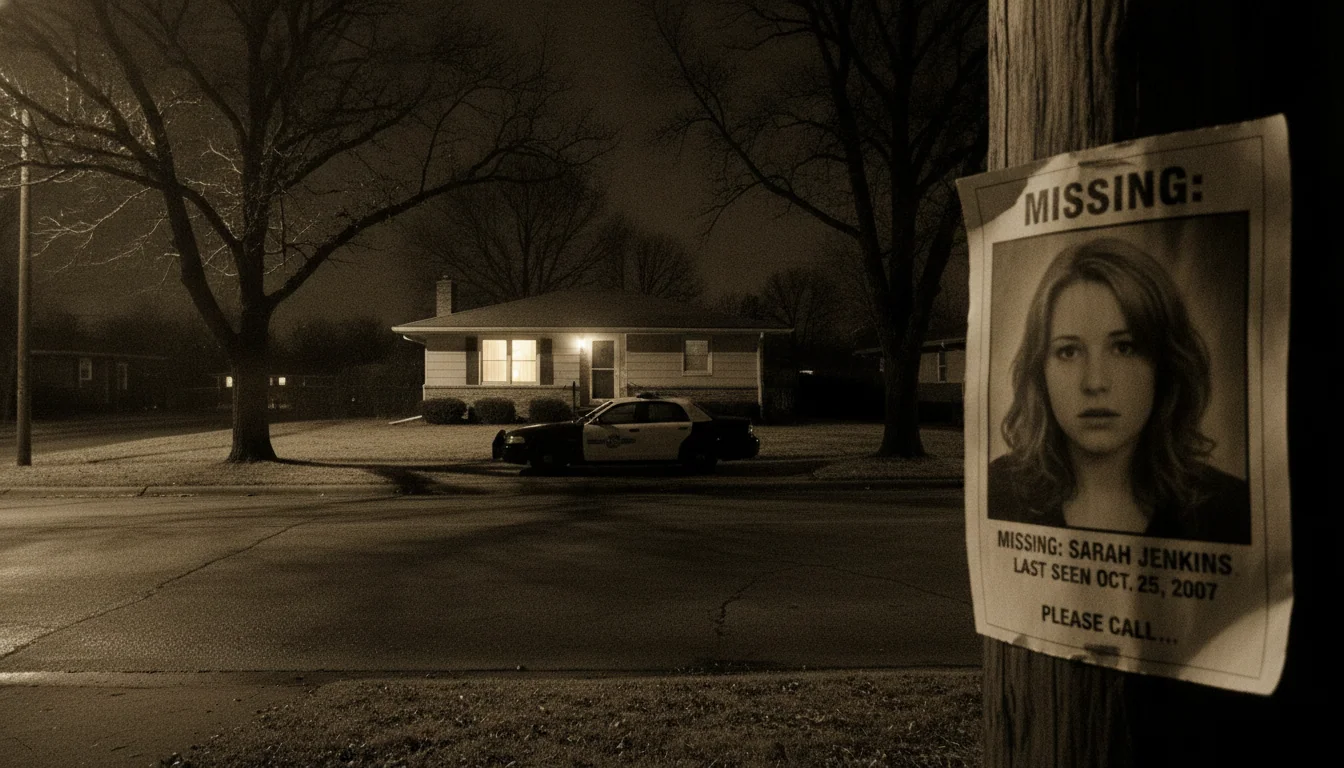
The Phantom of Heilbronn: How a Cold Case Was Solved by a Cotton Swab
The Phantom of Heilbronn haunted three countries for 16 years - DNA at 40 crime scenes, no suspect. The case collapsed when it was traced to a factory's cotton swab.
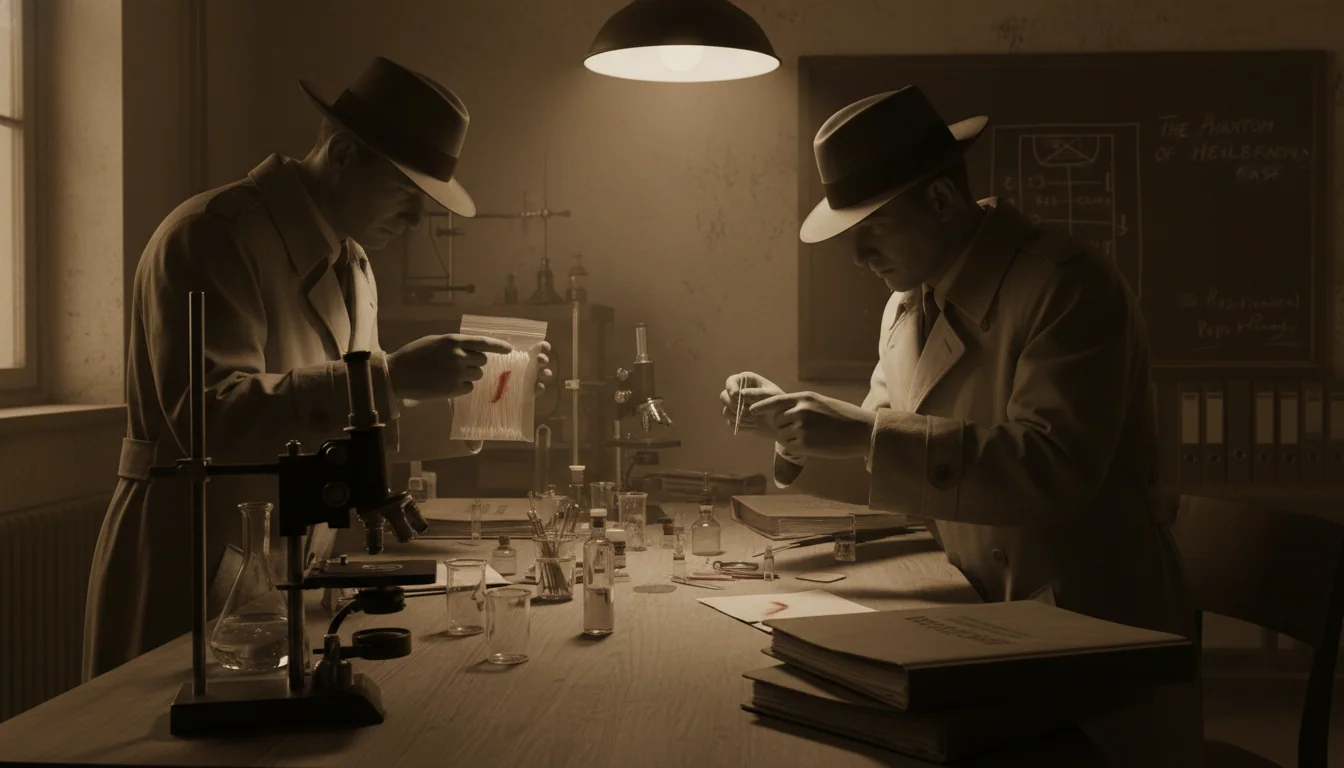
For sixteen years, German police hunted a serial offender they nicknamed the Phantom of Heilbronn, also called the Woman Without a Face. Her DNA appeared at 40 crime scenes across Germany, Austria, and France between 1993 and 2009. The cases ranged from a murdered police officer to a string of burglaries to a half-eaten biscuit found in a stolen car. Profilers theorized about her background. Newspapers gave her nicknames. A Bundesland-wide DNA collection campaign asked thousands of women to submit samples to police.
In March 2009, the case collapsed in one of the strangest forensic resolutions in European history. The DNA did not belong to a serial offender. It belonged to a factory worker in Bavaria who had been packaging cotton swabs.
The Phantom of Heilbronn was an artifact of the swab.
The first matches
The story begins in May 1993, when a 62-year-old woman named Lieselotte Schlenger was strangled in her apartment in Idar-Oberstein, Germany. A female DNA profile was recovered from a teacup on the kitchen table. The killing went unsolved.
Eight years later, in March 2001, the same DNA appeared at the scene of a burglary in Freiburg. The matches kept coming. Burglary scenes, drug houses, broken windows, doorknobs, abandoned vehicles, the same mysterious female profile turned up across southern Germany throughout the early 2000s.
By the mid-2000s, German investigators were facing a profile of an extraordinary serial offender: female (highly unusual for serial crime), active across an enormous geographic range, capable of committing crimes from petty theft to homicide, and apparently completely uncatchable. Profiles were drawn up. Theories were advanced. One hypothesis held that the offender was a member of an Eastern European organized crime network. Another held that she might be a homeless woman with a connection to multiple criminal subcultures.
Officer Michele Kiesewetter
The case became a national priority on April 25, 2007, when 22-year-old police officer Michele Kiesewetter was shot dead in her patrol car in Heilbronn, Germany. Her colleague Martin A. was severely wounded but survived. The killers escaped with the officers' service weapons.
Forensic investigators recovered the Phantom DNA from the back seat of the patrol car. The connection electrified the investigation. A woman who had been linked to dozens of crimes was now linked to the murder of a police officer.
The state of Baden-Württemberg announced a substantial reward for information leading to the Phantom's capture. Police set up dedicated task forces. The German press began running profiles, sketches, and theories. The case attracted international attention, including reporting in The New York Times, the BBC, and Le Monde.
For two years, every new Phantom DNA hit, including a stolen biscuit found in an Audi in Bavaria and a vehicle break-in near Marseille, was treated as another piece of an emerging puzzle.
The cracks in the theory
Some investigators began to notice strange patterns. The Phantom appeared at crimes that seemed to have nothing in common. Different days, different motives, different victims, different criminal styles. She seemed to be everywhere and nowhere. Her behavior did not match any conventional profile of a serial offender.
In late 2008, investigators in southern Germany were looking into the case of a male asylum seeker whose body had been found burned beyond recognition. They were attempting to identify him through fingerprints and DNA. To their astonishment, his sample matched the Phantom of Heilbronn.
It was impossible. The Phantom's profile was female. The body was definitively male.
The investigators went back to the laboratory. They examined the sample collection process. They looked at the cotton swabs they had used to collect the DNA. They ran tests on unused swabs from the same supplier.
The unused swabs contained the Phantom's DNA.
The factory in Bavaria
The cotton swabs had been manufactured by Greiner Bio-One, a German company specializing in laboratory products. The swabs were marketed as "sterile" but were not certified DNA-free, a distinction that turned out to matter enormously. Sterilization kills microbes but does not eliminate the trace DNA from skin cells, sweat, or saliva that may have contaminated a product during manufacture.
Investigators traced the contamination to a single female factory worker at the Greiner production facility in Bavaria. Her DNA had ended up on swabs as they were assembled and packaged. Those swabs had then been sold to police forces, hospitals, and forensic laboratories across Germany, Austria, and France. Whenever investigators used a contaminated swab to collect a sample, they recovered her DNA along with whatever was actually at the crime scene.
The Phantom of Heilbronn did not exist. The DNA at 40 crime scenes was the DNA of a single Eastern European woman who had spent her working days assembling forensic supplies in a factory.
The aftermath
The revelation in March 2009 was a forensic catastrophe. Investigators across three countries had spent more than a decade chasing a chimera. Resources had been diverted from real cases. The investigation of Officer Kiesewetter's murder had been substantially distorted by the Phantom theory. Public confidence in DNA evidence took a serious hit.
The factory worker herself was not charged with any crime, since the contamination was unintentional and the manufacturing process had not been her responsibility. She was reported to be deeply disturbed by what had happened. Her name was kept out of public reports, which is why she remains anonymous in most accounts.
The German federal forensic regulator, the BKA, issued new requirements for DNA-grade swabs. Police forces across Europe replaced their stocks. The cost of forensic supplies rose. Manufacturers were required to certify DNA-free production for any swab sold to law enforcement.
The Kiesewetter case, finally solved
The murder of Officer Michele Kiesewetter remained unsolved when the Phantom theory collapsed in 2009. Investigators had to rebuild the case from scratch.
In November 2011, the breakthrough came from an entirely unrelated source. After a bank robbery in Eisenach, Germany, two men killed themselves in a camper van rather than be caught by police. The men were Uwe Mundlos and Uwe Böhnhardt, members of a far-right German neo-Nazi cell that had been operating since the late 1990s. Investigators searching the wreckage found Officer Kiesewetter's service weapon.
Further investigation revealed that Mundlos, Böhnhardt, and their accomplice Beate Zschäpe had been members of a terrorist group calling itself the National Socialist Underground (NSU). The group had committed at least ten murders since 2000, including nine of immigrant background. Officer Kiesewetter, who was ethnically German, may have been killed for her weapon rather than for any ideological motive.
Zschäpe was arrested in 2011 and convicted in 2018. The NSU case became one of the most significant criminal trials of post-reunification Germany, exposing serious failures in how German intelligence services had monitored the far-right.
What the Phantom case actually showed
The Phantom of Heilbronn is, in retrospect, a parable about forensic science and institutional confidence. DNA evidence is so powerful that investigators trust it almost reflexively. When the same profile shows up at multiple scenes, the assumption is that the same offender is involved. That assumption was so strong, in this case, that it overrode every internal doubt about the geographic and behavioral implausibility of the Phantom theory.
The case also exposed a quiet but important gap in forensic infrastructure. The certification of DNA-free supplies was, before 2009, not standardized in Europe. Police forces purchased swabs from suppliers based on cost and convenience. The assumption that "sterile" meant "DNA-free" was widespread, even though the two conditions are different.
The factory worker whose DNA contaminated the swabs is one of the strangest victims of modern forensic policing. She did nothing wrong. She held a perfectly ordinary job. Her presence in a manufacturing line, however, fooled three national police forces and produced one of the most expensive false leads in European law enforcement history.
The Phantom of Heilbronn was solved by science correcting itself. The lesson, painfully learned, is that even the most powerful evidence requires institutional skepticism about its sources, its collection, and its limits.
For other European cold cases where evidence gaps derailed the investigation, see the Hinterkaifeck murders and the Flannan Isles lighthouse mystery, two cases where a missing piece of evidence left the central question permanently open.
Quick Answers
Common questions about this topic
Who was the Phantom of Heilbronn?
The Phantom of Heilbronn was the nickname for an unknown female DNA profile that appeared at 40 crime scenes across Germany, Austria, and France between 1993 and 2009. The cases ranged from murders to burglaries to a stolen biscuit found in a vehicle. German police spent more than a decade hunting an apparent female serial offender who in fact did not exist.
How was the Phantom of Heilbronn case solved?
In March 2009, investigators discovered that the DNA on the cotton swabs used to collect crime scene samples actually belonged to a female factory worker at the Greiner Bio-One company in Bavaria, where the swabs were manufactured. The swabs had been sold as forensic-grade but were not certified DNA-free. The Phantom did not exist. The DNA was contamination from the assembly line.
What was the Michele Kiesewetter case?
Officer Michele Kiesewetter was a 22-year-old German police officer murdered in Heilbronn on April 25, 2007. The Phantom DNA was found on the back seat of her patrol car, which made the case central to the manhunt. Her actual killers were later identified as members of the National Socialist Underground (NSU), a far-right terrorist cell. The Phantom DNA was unrelated.
How much did the Phantom investigation cost?
Estimates of the cumulative investigative cost across 16 years and three countries run into the tens of millions of euros, including dedicated task force operations, extensive DNA collection campaigns from women across Europe, and international coordination. The case is one of the most expensive forensic embarrassments in modern European policing.

Want to Interrogate the Suspects?
Chat with historical figures and uncover the truth behind history's greatest mysteries.
Start Your InvestigationJoin the HistorIQly Club
Get smarter about the past.
Weekly stories, deep dives, and exclusive content straight to your inbox.