Spotlight vs. History: How Accurate Is the Catholic Church Scandal Film?
The Spotlight team exposed the Catholic Church's abuse cover-up in Boston. Our accuracy verdict on how well the Oscar-winning film captures what really happened.
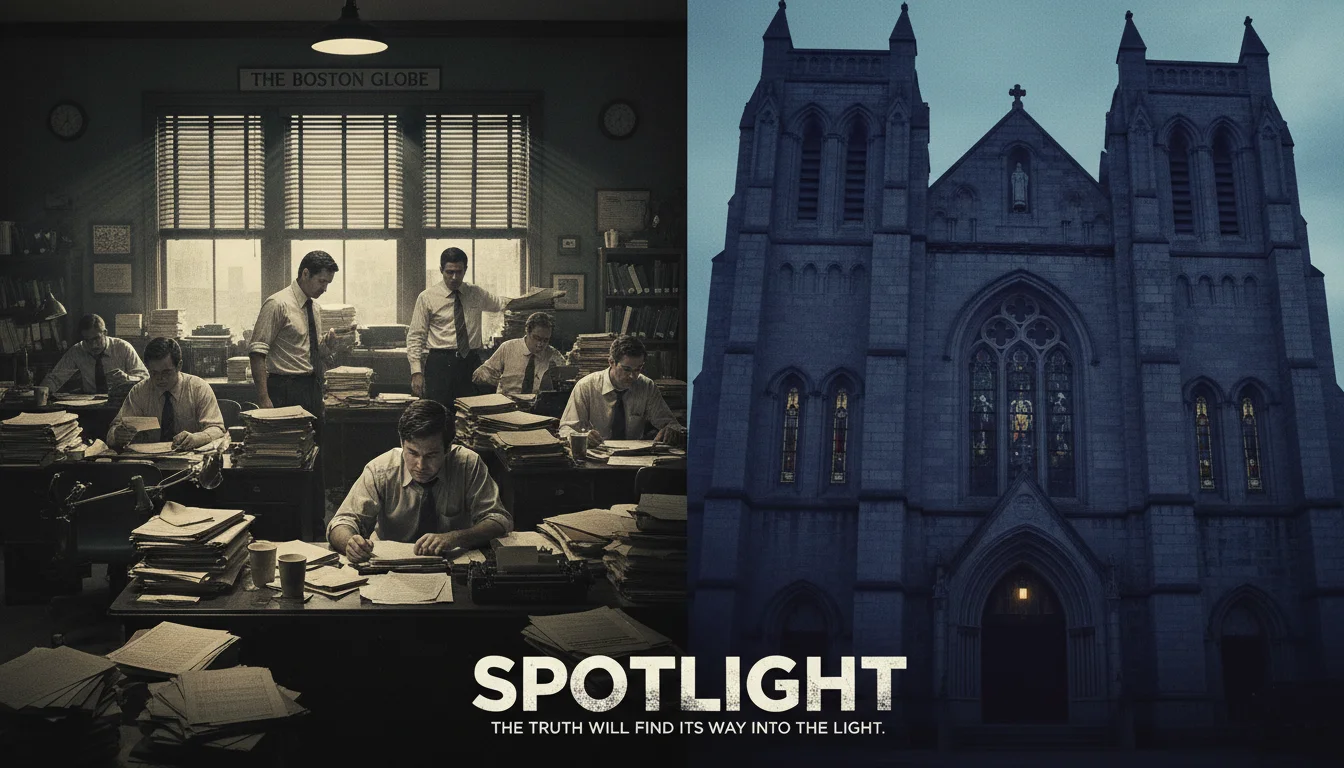
In January 2002, the Boston Globe published a story that would shake one of the world's oldest and most powerful institutions to its core. The paper's Spotlight investigative team had uncovered evidence that the Catholic Church in Boston had systematically covered up the sexual abuse of children by priests for decades - and that Cardinal Bernard Law knew about it.
Tom McCarthy's 2015 film Spotlight dramatizes the months of painstaking journalism that led to that explosive revelation. The film won the Academy Award for Best Picture and Best Original Screenplay, earning praise for its meticulous, procedural approach to storytelling. But how closely does it hew to the actual events? Here's our Spotlight vs. history breakdown of what the filmmakers got right and what they changed.
What Hollywood Got Right
The Core Investigation
The fundamental story Spotlight tells is remarkably accurate. The Spotlight team - Walter "Robby" Robinson, Michael Rezendes, Sacha Pfeiffer, and Matt Carroll - did spend months investigating Father John Geoghan and discovered the abuse scandal was far larger than anyone initially suspected. Their investigation revealed that nearly 250 priests in Boston had molested children over several decades, and the Church had covered it up by shuffling predatory clergy from parish to parish.
The film accurately depicts how new editor Marty Baron, freshly arrived from the Miami Herald, pushed the team to pursue the story. Baron's outsider status - he was new to Boston and Jewish in a heavily Catholic city - gave him the perspective to see what longtime Boston journalists had overlooked or been reluctant to pursue.
The Power Dynamic
Spotlight accurately portrays the Catholic Church's immense political power in Boston. As the real Walter Robinson told NPR, "You had to be very, very careful because of its power." The film shows how this power created a culture of deference that allowed abuse to continue unchecked for decades. Lawyers, judges, and even journalists looked the other way or accepted quiet settlements rather than challenging the Church.
The Victims' Stories
The film treats the abuse survivors with dignity and accuracy. Phil Saviano, who founded SNAP (Survivors Network of those Abused by Priests) and is portrayed by Neal Huff, was a real whistleblower who had tried for years to get someone to listen. The movie accurately shows how he was initially dismissed as having an axe to grind before the Spotlight team took his claims seriously.
The Reporters' Loss of Faith
One of the film's most poignant threads is how the investigation affected the reporters personally. All four Spotlight team members were lapsed Catholics who still considered themselves Catholic. The real Michael Rezendes has said that after the investigation, returning to the Church became impossible: "What we discovered was just too shattering." The film captures this spiritual devastation authentically.
The Document Hunt
The film accurately depicts the crucial role of court documents in breaking the story open. Mitchell Garabedian, the tenacious lawyer played by Stanley Tucci, really did have documents proving Cardinal Law's knowledge of the abuse. The Spotlight team's legal battle to unseal those records was a pivotal moment in the investigation.
What Hollywood Got Wrong
The Paquin Interview
In a memorable scene, Sacha Pfeiffer (Rachel McAdams) interviews former priest Ronald Paquin at his door, and he casually admits to molesting boys while insisting he "never felt gratified." In reality, this interview was conducted by reporter Steve Kurkjian, not Pfeiffer, and it happened months after the film's timeline suggests. The interview also took place in Paquin's living room, not at his front door. While Pfeiffer did write the story based on Kurkjian's notes, attributing the interview to her was a dramatic license.
Timeline Compression
Like most films based on true events, Spotlight compresses the timeline for dramatic effect. The investigation actually took longer than depicted, and some events shown happening simultaneously were spread out over many months. The team published nearly 600 articles about the scandal, not just the single blockbuster story the film focuses on.
The Jack Dunn Controversy
The film's most significant factual error involved Jack Dunn, the public affairs director at Boston College who was also a board member at Boston College High School. Spotlight depicts him as dismissive and complicit in covering up abuse. In reality, Dunn was an advocate for abuse victims and actively worked to help them.
After the film's release, Dunn's attorneys demanded corrections, calling his portrayal "defamatory." In a settlement announced shortly after Spotlight won the Oscar, Open Road Pictures acknowledged that "Spotlight contains fictionalized dialogue that was attributed to Mr. Dunn" and confirmed he "was not part of the Archdiocesan cover-up." This remains the film's most significant departure from the truth.
Missing the Psychologists
Critics, including The Media Report's David F. Pierre Jr., argued the film failed to mention the psychologists and therapists who assured Church officials that abusive priests could be safely returned to ministry after treatment. This context doesn't excuse the Church's actions, but it does show that some Church leaders believed they were following expert medical advice - a nuance the film omits.
Cardinal Law's Fate
The film ends with Cardinal Law's resignation in December 2002, implying some measure of accountability. What it doesn't show is that Law was later promoted to Archpriest of the Basilica di Santa Maria Maggiore in Rome - one of the most prestigious churches in Catholicism. He died in Rome in 2017, never having faced criminal charges. The Church didn't establish a tribunal to hold bishops accountable for their role in the cover-up until 2015 - 13 years after the story broke.
The Bigger Picture
Spotlight is unusual among "based on a true story" films in how closely it adheres to actual events. The real Spotlight team members were involved throughout production, reviewing drafts and providing feedback. "There is very little license in terms of changing things that happened along the way," Sacha Pfeiffer said of the final film.
The movie's most important accuracy is in capturing the scope of institutional failure. This wasn't about a few bad priests - it was about a system designed to protect the institution at the expense of children. The Spotlight team's reporting revealed that approximately 6% of priests had been involved in abuse, a rate consistent with the general population but made infinitely worse by the Church's systematic cover-up.
The film also accurately depicts how the 9/11 attacks nearly killed the story. The team had been working on the investigation for months when the towers fell, and suddenly Boston's archbishop conducting an interfaith prayer service seemed more important than pursuing allegations against him. The reporters' determination to publish despite this pressure is portrayed faithfully.
Historical Accuracy Score: 8/10
Spotlight earns one of the highest accuracy scores we've given a film based on true events. The core story - the investigation, the evidence, the cover-up, the human cost - is portrayed with remarkable fidelity. The film's errors are relatively minor: timeline compression, interviewer attribution, and one serious misstep with the Jack Dunn character.
What makes Spotlight exceptional is its commitment to showing journalism as it actually works: tedious, collaborative, and dependent on documents rather than dramatic confrontations. The film resists the temptation to invent villainous speeches or fabricate climactic moments. The real story was damning enough.
The Spotlight team's reporting eventually led to investigations of Catholic clergy abuse in every diocese in America and around the world. More than 300 victims came forward in Boston alone after the story broke. The ripple effects continue today, with dioceses still releasing names of accused priests and survivors still seeking justice.
Sometimes, the truth is more powerful than anything Hollywood could invent.
For other films about investigative journalism that take the truth seriously, see our accuracy reviews of All the President's Men and The Post.

Debate the Accuracy with the Real Figures
Ask the real people what Hollywood got wrong about their lives.
Chat with HistoryJoin the HistorIQly Club
Get smarter about the past.
Weekly stories, deep dives, and exclusive content straight to your inbox.