The Tara Calico Mystery: The Polaroid That Haunted a Nation
The Tara Calico Polaroid case: a 19-year-old vanishes on a bike ride, and nine months later a disturbing photo surfaces 1,200 miles away. Is it her?
On September 20, 1988, Tara Leigh Calico left her home in Belen, New Mexico, for a routine bike ride. She was 19 years old, a student at the University of New Mexico, with plans to play tennis with her boyfriend at 12:30 that afternoon.
She never came home. And what happened next would become one of the most haunting unsolved mysteries in American history - a case that would span decades, produce disturbing photographic evidence, and leave investigators with more questions than answers.
The Morning She Disappeared
Tara had a ritual. Almost every morning, she rode her bicycle along New Mexico State Road 47, a desolate stretch of highway near her home. Her mother, Patty Doel, sometimes joined her but had recently stopped - she felt she was being stalked by a motorist and had warned Tara to carry mace. Tara refused.
That Tuesday morning, Tara left around 9:30 AM wearing shorts and a T-shirt, her Sony Walkman playing her favorite music. She told her mother: "Come and get me if I'm not home by noon."
By noon, Tara hadn't returned. Patty Doel drove the route her daughter always took. No sign of her. The police found pieces of Tara's Sony Walkman and a cassette tape scattered along the road - her mother believed Tara had dropped them deliberately, marking her trail.
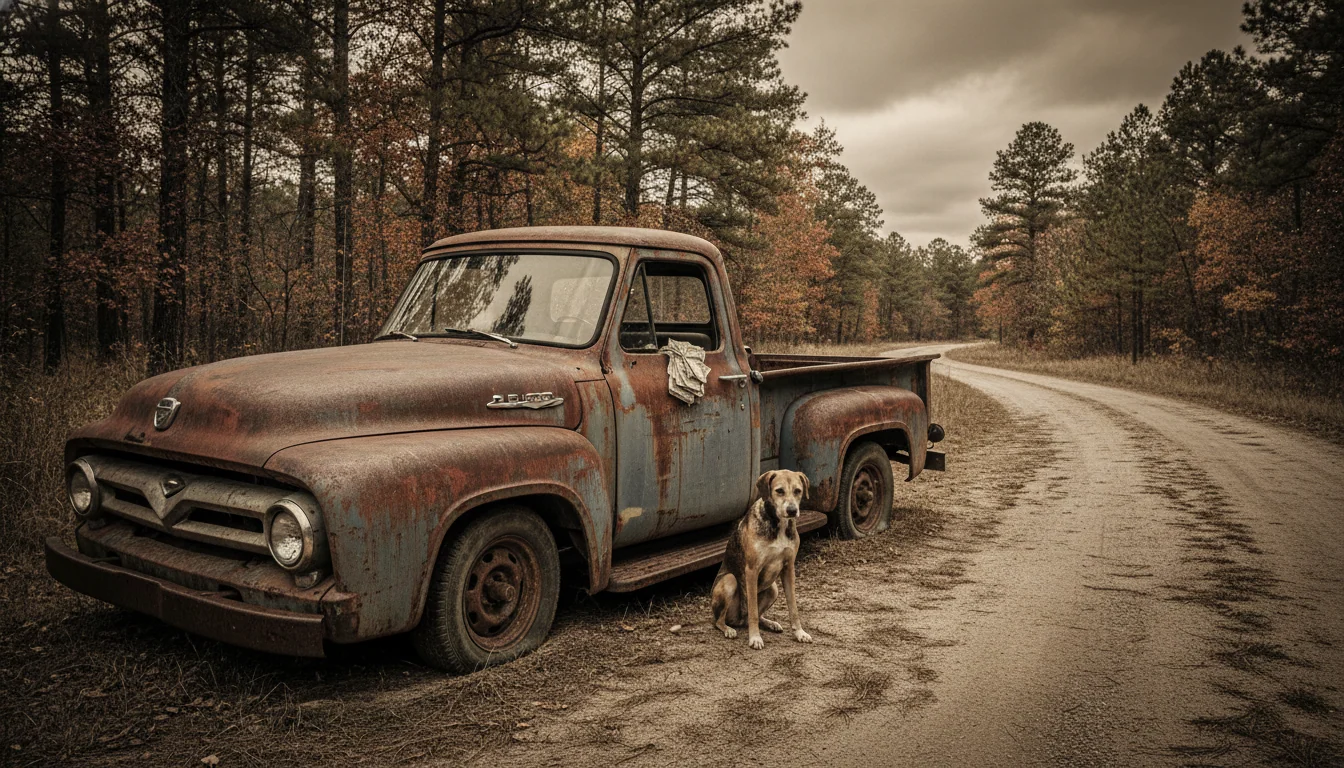
Several witnesses reported seeing Tara that morning. They also saw something else: a light-colored pickup truck, possibly a 1953 Ford with a camper shell, following closely behind her.
Tara's bicycle was never found.
The Polaroid
Nine months passed. Then, on June 15, 1989, something extraordinary happened.
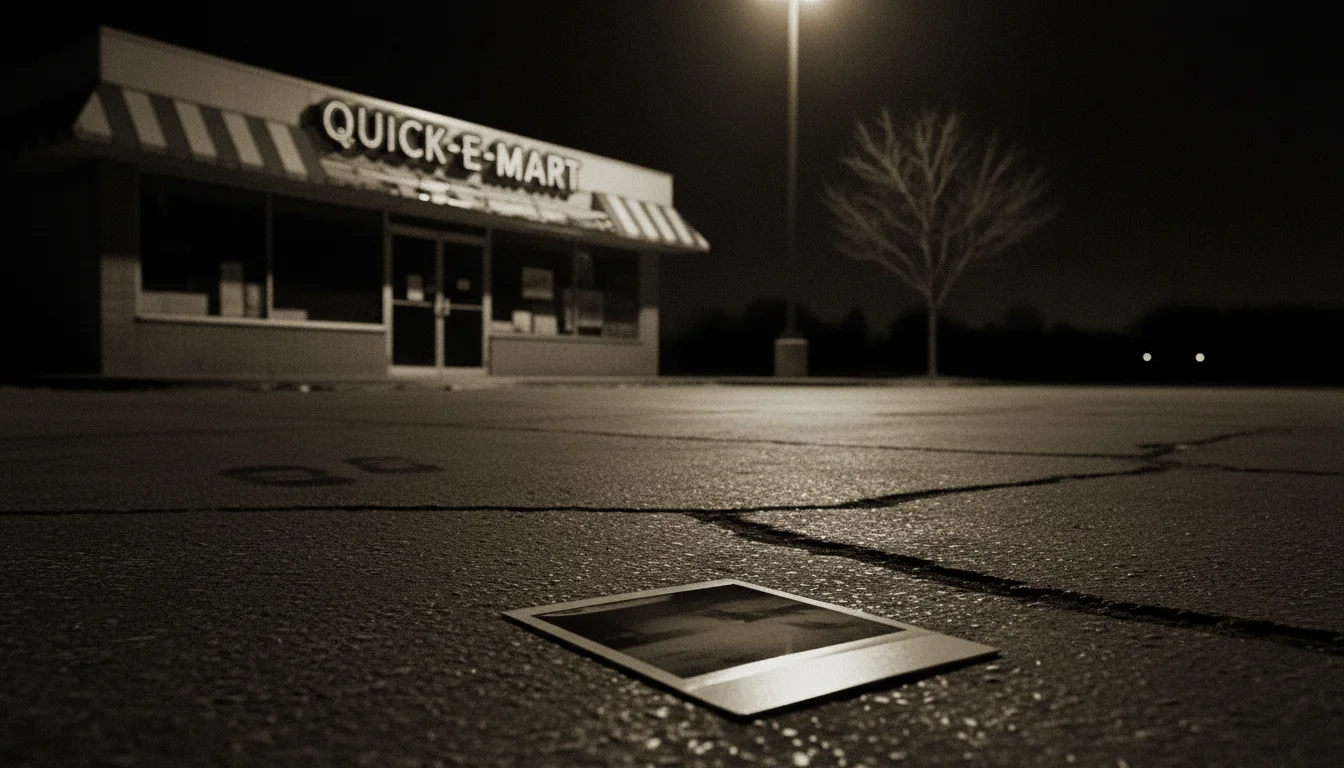
A woman walked out of a convenience store in Port St. Joe, Florida - 1,200 miles from Belen, New Mexico. In the parking space where a white windowless Toyota cargo van had been parked moments earlier, she noticed something on the ground.
It was a Polaroid photograph.
The image showed two figures - a young woman and a boy - gagged with black duct tape and seemingly bound. They appeared to be in the back of a van. The woman looked terrified. The boy seemed younger, perhaps a child.
The woman who found the photo remembered the van's driver: a man with a mustache, appearing to be in his 30s. Police set up roadblocks immediately. The van and its driver were never found.
When the Polaroid aired on A Current Affair in July 1989, Patty Doel's phone rang. Friends who had seen the broadcast told her the same thing: That looks like Tara.
"I'm Convinced It's Her"
Patty Doel traveled to examine the photograph. What she saw made her blood run cold.
The woman in the Polaroid had a scar on her leg - in the exact same location as a scar Tara had received in a car accident. Lying next to her was a paperback copy of My Sweet Audrina by V.C. Andrews, one of Tara's favorite books.
"I'm convinced," Patty told investigators. Scotland Yard analyzed the photograph and agreed - they concluded the woman was Tara Calico.
But scientists at Los Alamos National Laboratory reached a different conclusion. "Definitely not Tara," their forensic expert stated.
The FBI's analysis was inconclusive.
The boy in the photograph sparked his own identification. Michael Henley's parents saw the broadcast and believed it was their son, who had vanished in New Mexico in April 1988 during a family camping trip. His mother said she was "almost certain."
But in June 1990, Michael Henley's remains were found in the Zuñi Mountains, just 7 miles from where he had disappeared - 75 miles from where Tara vanished. Police concluded he had wandered off and died of exposure. If the boy in the Polaroid wasn't Michael Henley, then who was he?
The Other Polaroids
Two more disturbing photographs surfaced over the years.
In July 1989, just days after the first Polaroid made news, a blurry photograph was found near a construction site in Montecito, California. It showed a girl's face with tape covering her mouth. The fabric behind her looked similar to the pillow visible in the first Polaroid. Polaroid officials confirmed the film wasn't available until June 1989 - two months after the photograph would have been taken if it showed Tara at the time of her disappearance.
A third photograph emerged even later: a woman loosely bound in gauze, her eyes covered with gauze and large black-framed glasses, sitting next to a male passenger on an Amtrak train. The film wasn't available until February 1990.
Tara's mother believed the first photograph was her daughter. She thought the third might be a hoax.
The Doe Network maintained case files on all three photographs. Those files were eventually closed, for reasons never explained.
"Two Teenagers Hit Her With a Truck"
For years, the investigation stalled. Then, in 2008, Valencia County Sheriff Rene Rivera made a stunning announcement.
He had received information that two teenagers had accidentally hit Tara with a truck, panicked, and killed her. According to Rivera, the boys knew Tara. They drove up behind her, and "some form of an accident followed." Tara died, and those responsible covered up the crime.
Rivera said he knew the names of those involved. But without a body, he couldn't make a case.
Tara's stepfather was furious. If the sheriff had strong circumstantial evidence, why wasn't he making arrests? What about the Polaroid? How did a photograph of what appeared to be a kidnapping victim end up in Florida if Tara was killed in a traffic accident in New Mexico?
The questions multiplied. The answers didn't.
The 2009 Letters
Twenty years after the original Polaroid surfaced, something strange happened in Port St. Joe.
Police Chief David Barnes received two letters, postmarked from Albuquerque, New Mexico - Tara's home state. Inside were photographs of a young boy with sandy brown hair. Someone had drawn a black band in ink over the boy's mouth, mimicking the duct tape in the original Polaroid.
A third letter arrived at the local newspaper. Same postmark. Same image.
No return address. No note explaining who the child was. The letters remain unexplained.
A Breakthrough - And More Silence
In October 2013, a six-person task force was established to reinvestigate Tara's disappearance.
Ten years later, in June 2023, Valencia County Sheriff Denise Vigil announced a breakthrough. After exhaustive investigation, authorities declared they had identified "the offenders associated with Tara Calico's disappearance." They believed they had sufficient evidence to submit the case to the district attorney for potential charges.
The identities of the persons of interest remain sealed by court order.
As of 2026, no arrests have been made. No body has been found. The case remains officially open.
What We Know - And What We Don't
Tara Calico was declared legally dead in 1998. A judge ruled her death a homicide.
Her father, David Calico, was beaten and mugged by two men in Albuquerque in 2002. He died from his injuries at 64. Her mother, Patty Doel, died in 2006 from complications after a series of strokes. Neither parent lived to see justice.
The FBI still offers a $20,000 reward for information leading to answers.
What haunts investigators - and the public - is the Polaroid. If the woman in that photograph is Tara Calico, then someone took her. Someone transported her across the country. Someone photographed her in captivity and then dropped that photograph in a parking lot, either accidentally or as a message.
If it isn't Tara, then two mysteries exist instead of one: what happened to Tara Calico, and who is the terrified woman in the photograph?
Scotland Yard says it's her. Los Alamos says it isn't. The FBI can't decide.
Tara's sister once said: "They had a striking, uncalming resemblance. As for me, I will not rule them out."
Somewhere, in a parking lot in Florida, someone dropped a photograph. Somewhere, in the desert of New Mexico, a 19-year-old woman vanished during a morning bike ride.
Thirty-seven years later, those two events may be connected. Or they may not be. And that uncertainty - that horrifying, persistent uncertainty - is what makes the Tara Calico case one of the most disturbing unsolved mysteries in American history.
The Polaroid still exists. The questions it raised have never been answered.
For similar cases where the evidence raises more questions than it answers, the Dyatlov Pass Incident from 1959 Siberia and the Hinterkaifeck murders from 1920s Bavaria both remain officially unresolved.
And Tara Leigh Calico is still missing.

Want to Interrogate the Suspects?
Chat with historical figures and uncover the truth behind history's greatest mysteries.
Start Your InvestigationJoin the HistorIQly Club
Get smarter about the past.
Weekly stories, deep dives, and exclusive content straight to your inbox.