The Monster with 21 Faces: Japan’s Most Elaborate Unsolved Mystery
The Monster with 21 Faces held Japan’s food industry hostage with kidnappings, arson, and cyanide candy. 125,000 suspects investigated. They were never caught.
On the night of March 18, 1984, the history of Japanese crime was forever changed. Two masked men, armed with a pistol and a rifle, broke into the home of Katsuhisa Ezaki, the president of the Glico candy company. They tied up his family, cut the telephone lines, and abducted Ezaki naked from his bathtub. They demanded a ransom of one billion yen and 100 kilograms of gold bullion.
It was the start of the Glico-Morinaga Case, a campaign of terror that would last 17 months, involve the poisoning of consumer goods, and lead to the public shaming and suicide of a police superintendent. Yet, despite an investigation that involved over a million man-hours and 125,000 suspects, the group behind it, known as "The Monster with 21 Faces", would vanish without a trace, leaving behind a mystery that remains unsolved over forty years later.
The Shape-Shifting Villain
The group adopted their name from a shape-shifting villain in the detective novels of Edogawa Rampo. Like their namesake, they seemed to be everywhere and nowhere at once. After Ezaki managed to escape his captors three days into his kidnapping, the group didn't stop. Instead, they escalated.
They began sending letters to the police and the media, taunting them with a mix of arrogance and dark humor. Written in a distinctive Osaka dialect and using a typewriter that was never traced, the letters mocked the "stupid" police and provided clues that led nowhere. One letter read: "Dear dumb police officers. Don’t tell a lie. All crimes begin with a lie as we say in Japan. Don’t you know that?"
The Poisoned Candy
The group's tactics shifted from kidnapping to corporate extortion. They targeted Glico, setting fire to company vehicles and sending containers of hydrochloric acid to their offices. In May 1984, they took a terrifying step: they claimed to have laced Glico candies with potassium cyanide and placed them on store shelves.
The resulting panic was absolute. Glico was forced to pull all of its products from store shelves across Japan. The company’s stock plummeted, and it lost more than $130 million in sales, leading to the layoff of hundreds of workers. Although no poisoned Glico candy was actually found during this phase, the economic and psychological damage was done.
Then, as suddenly as they had started, the group sent a letter "forgiving" Glico. "The president of Glico has already gone around with his head down long enough," they wrote. "We would like to forgive him." But they weren't done with Japan's food industry. They turned their sights on other giants: Morinaga, Marudai Food, and House Food Corporation.
The Fox-Eyed Man
In October 1984, the Monster with 21 Faces sent letters addressed to "Moms of the Nation," warning that 20 packages of Morinaga candy had been laced with sodium cyanide. This time, it wasn't a bluff. Police found several boxes of Morinaga chocolate in stores with warning labels attached: "This has poison in it. If you eat it you will die." Testing confirmed the presence of lethal doses of cyanide.
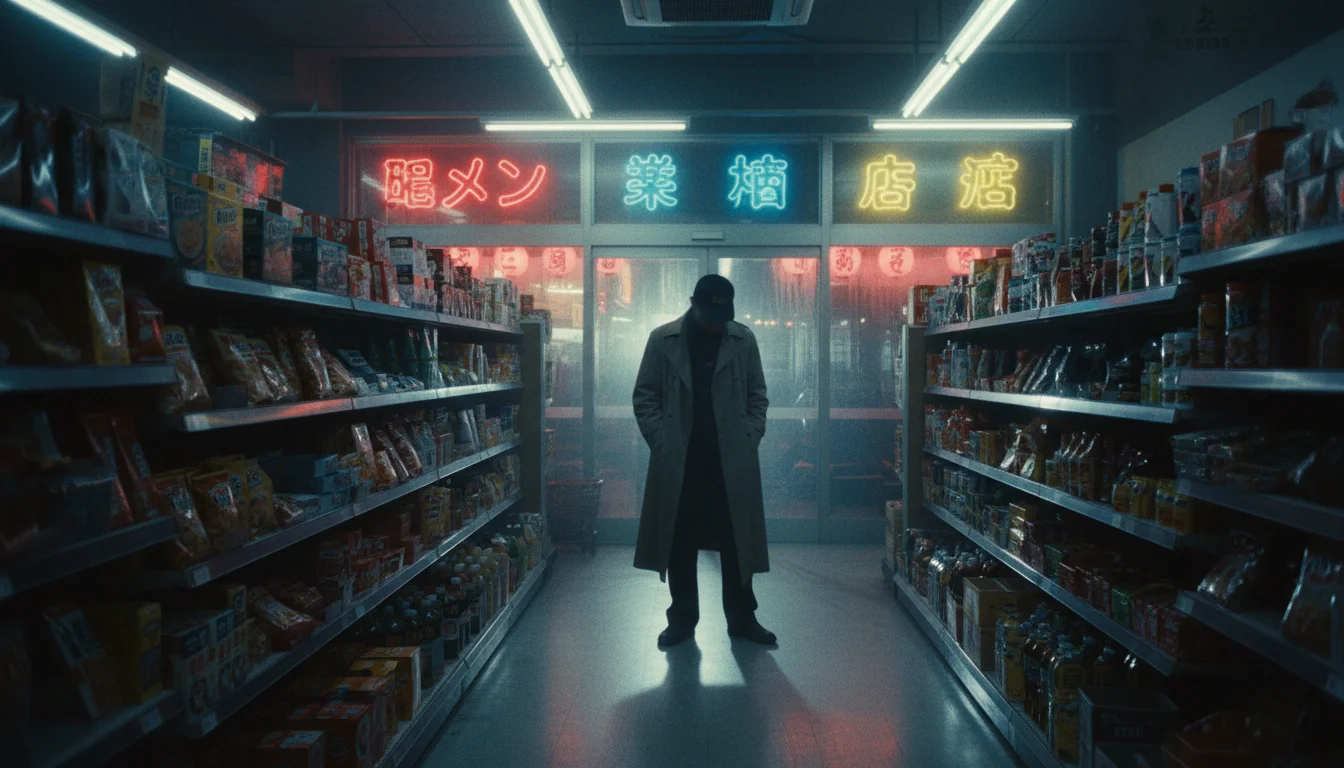
The police were desperate. They focused on two primary suspects based on surveillance footage and eyewitness accounts. The first was "The Videotaped Man," a man caught on camera in a grocery store wearing a Yomiuri Giants baseball cap while placing Glico chocolate on a shelf. The second, and more legendary, was "The Fox-Eyed Man."
During a failed ransom drop-off on a train, an investigator spotted a man who appeared to be monitoring the police. He was described as having "eyes like a fox" and a lean, athletic build. This man was nearly captured during a high-speed car chase in November 1984, but he managed to vanish into the night, leaving behind a stolen car and a police radio scanner.
The Tragic End
The pressure on the Japanese police was immense. The public was terrified, the economy was reeling, and the criminals were laughing in the national press. In August 1985, the strain became too much for Shoji Yamamoto, the Police Superintendent of Shiga Prefecture. Deeply shamed by his force's failure to capture the Fox-Eyed Man during the car chase, Yamamoto committed suicide by self-immolation in his own garden.
The Monster with 21 Faces sent one final letter five days later. In a chilling display of their strange code of conduct, they mocked Yamamoto’s death but also declared an end to their campaign:
"Yamamoto of Shiga Prefecture Police died. How stupid of him! We have no friends or secret hiding place in Shiga. It’s Yoshino or Kuyama who should have died. What have they been doing for as long as one year and five months? Don’t let bad guys like us get away with it... We decided to forget about torturing food-making companies. If anyone blackmails any of the food-making companies, it’s not us but someone copying us. It’s fun to lead a bad man’s life."
With that, the Monster with 21 Faces disappeared.
A Mystery for the Ages
The statute of limitations for the crimes expired in 2000, meaning the perpetrators can never be prosecuted, even if they were identified today. Theories about the group's identity range from disgruntled former employees to the yakuza, or even a foreign intelligence agency. Some believe they were a group of leftist radicals, while others think they were simply bored geniuses playing a high-stakes game.
The Glico-Morinaga case changed Japan. It exposed vulnerabilities in the nation's supply chain and showed how a small, well-organized group could hold an entire society hostage. Today, the case is remembered as a haunting reminder of a time when a "monster" with many faces outsmarted a nation and then walked away, leaving only taunting letters and a trail of questions.
For other cases where a perpetrator vanished without a trace, see the Harold Holt disappearance and the Flannan Isles Lighthouse Mystery.
Quick Answers
Common questions about this topic
Who was the Monster with 21 Faces?
The Monster with 21 Faces (Kaijin Nijuichi Menso) was a mysterious criminal group that ran a 17-month campaign of kidnapping, extortion, arson, and product poisoning against Japanese food companies starting in March 1984. They kidnapped Glico president Katsuhisa Ezaki, then shifted to poisoning threats and ransom demands against multiple confectionery giants, causing massive damage to Japan's food industry.
What was the Glico-Morinaga Case?
The case was a series of attacks on the Glico and Morinaga candy companies. In May 1984, the group warned they had laced Glico's candies with potassium cyanide, forcing the company to pull all products from stores nationwide - resulting in roughly $130 million in sales losses and 450 layoffs. In October, they actually planted cyanide-laced Morinaga chocolates on store shelves.
Who was the Fox-Eyed Man?
The Fox-Eyed Man was a suspicious individual described as about 40 years old with a lean, athletic build and distinctive fox-like eyes who appeared during failed ransom drop-offs in June and November 1984. Despite a police operation designed to intercept him during a high-speed chase, he escaped into a wooded area. He was never definitively identified or caught, and remains the case's most iconic figure.
Why did the Monster with 21 Faces stop?
Shoji Yamamoto, Police Superintendent of Shiga Prefecture, was in charge of the botched operation against the Fox-Eyed Man. Unable to live with the perceived failure, Yamamoto set himself on fire on August 7, 1985, and died from his injuries. The Monster with 21 Faces sent their final mocking letter five days later and then ceased all communication, permanently.

Want to Interrogate the Suspects?
Chat with historical figures and uncover the truth behind history's greatest mysteries.
Start Your InvestigationJoin the HistorIQly Club
Get smarter about the past.
Weekly stories, deep dives, and exclusive content straight to your inbox.