The 1920 Wall Street Bombing: America's First Terrorist Attack Remains Unsolved
The 1920 Wall Street bombing killed 38 people when a horse-drawn cart exploded outside J.P. Morgan headquarters. Over a century later, no one has ever been charged.
Read Wikipedia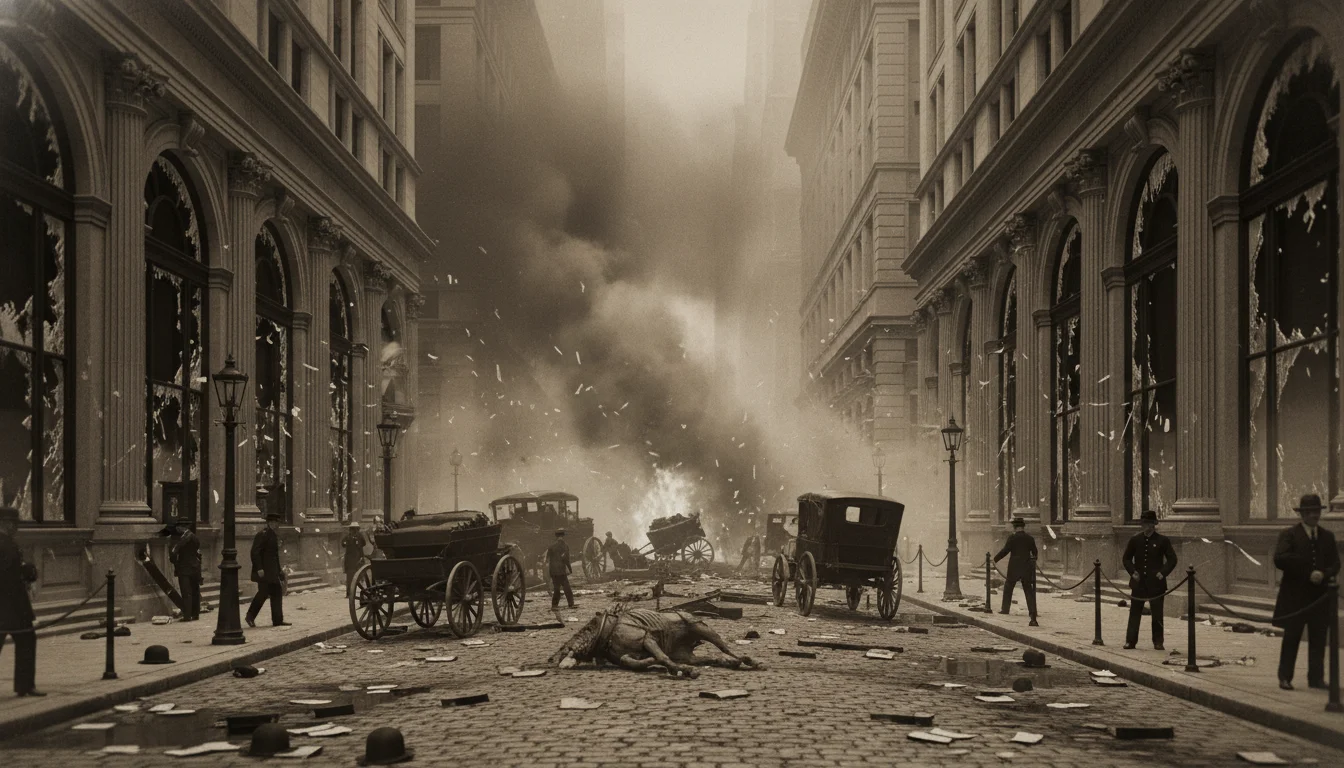
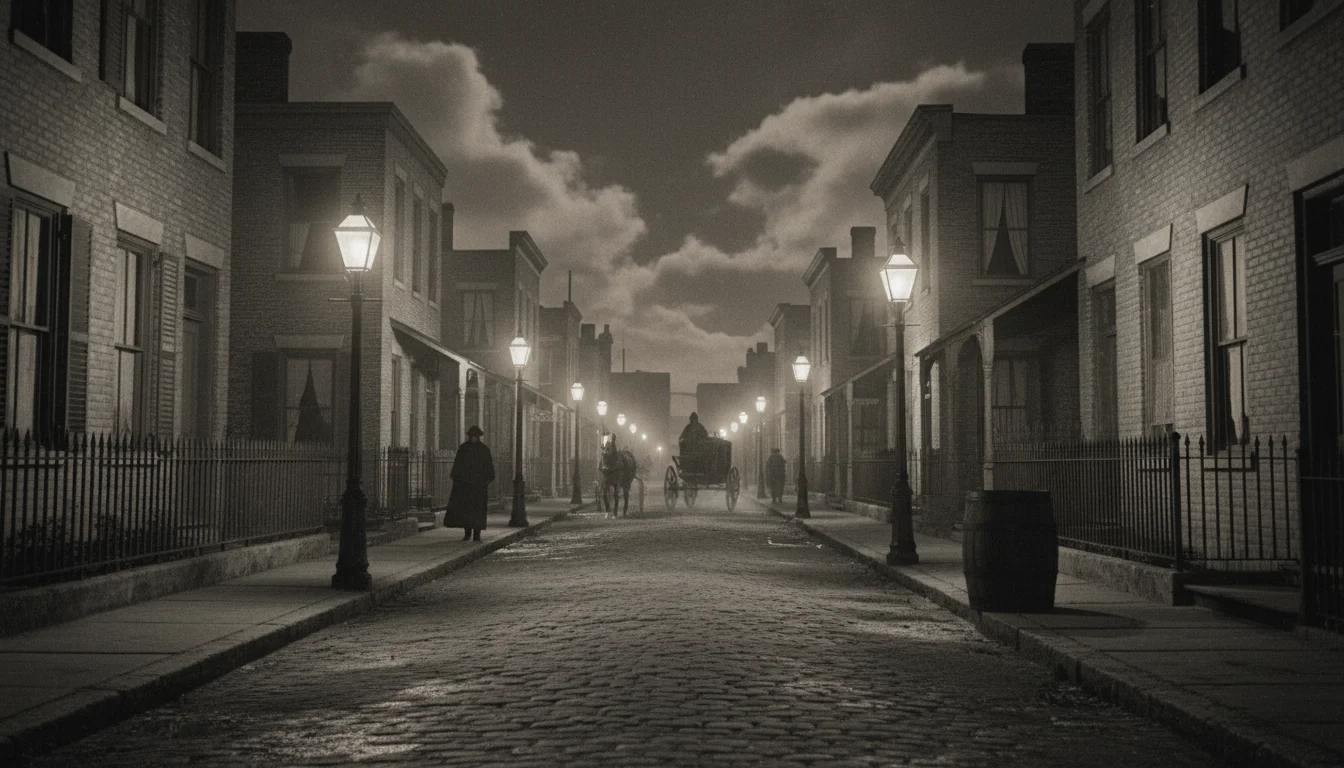
The lunch crowd was just beginning to fill the narrow streets of Manhattan's Financial District when a nondescript horse-drawn wagon rolled to a stop at the corner of Wall and Broad Streets. It was September 16, 1920, the most ordinary of Thursdays. Clerks, stenographers, and messengers streamed past the cart, their minds on sandwiches and the market's morning numbers.
At precisely 12:01 PM, one hundred pounds of dynamite detonated inside that wagon.
The blast ripped through the heart of American capitalism with a force that shattered windows for blocks and sent five hundred pounds of cast-iron sash weights tearing through the lunchtime crowd like shrapnel. The horse was vaporized. The wagon disintegrated. And thirty people died where they stood, their bodies scattered across the cobblestones in front of the most powerful bank on Earth.
Ground Zero: 23 Wall Street
The bomb had been positioned with chilling precision. It detonated directly across from the headquarters of J.P. Morgan & Co. at 23 Wall Street - not just any bank, but the financial institution whose decisions could move markets and whose partners had helped finance the Allied war effort. J.P. Morgan Jr. himself escaped death only because he was traveling in Europe. His son Junius was wounded by flying debris.
The explosion was heard in Brooklyn, across the East River. Smoke billowed through Lower Manhattan as the street filled with screaming, bleeding victims and bewildered survivors. Within minutes, the sidewalk was carpeted with shattered glass, smoldering debris, and bodies.
William Joyce, the chief clerk of J.P. Morgan, had been seated near a front window when the blast struck. He never had a chance. Most of the thirty-eight fatalities were young - messengers, stenographers, clerks - workers in their teens and twenties whose only crime was being in the wrong place at the wrong minute.
Another eight people would die from their injuries in the following days. More than three hundred were wounded, many grievously. One 24-year-old clerk was found inside the bank with a chunk of debris embedded in his skull. A streetcar two blocks away was knocked over by the shockwave, injuring its passengers.
The Investigation Begins
William H. Remick, president of the New York Stock Exchange, suspended trading within sixty seconds of the explosion to prevent a panic. Police and soldiers from Governors Island flooded the area, commandeering automobiles to transport the wounded to hospitals. A seventeen-year-old messenger named James Saul personally ferried thirty injured people to medical care using a commandeered car.
But even as rescuers worked frantically, the investigation was already being compromised. In their rush to restore normalcy and reopen the exchange the following day, city officials ordered crews to clean the blast site overnight. Physical evidence that might have identified the bombers was swept away with the broken glass.
The next morning, as if in defiance, thousands gathered at the exact same intersection for a previously scheduled Constitution Day rally organized by the Sons of the American Revolution. Wall Street refused to be intimidated.
The Anarchist Connection
Within twenty-four hours, investigators found something ominous: anarchist flyers that had been deposited in a nearby mailbox shortly before the explosion. Printed in red ink on white paper, they declared:
"Remember, we will not tolerate any longer. Free the political prisoners, or it will be sure death for all of you."
The flyers were signed "American Anarchist Fighters."
The timing was significant. Just five months earlier, in April 1920, two Italian anarchists named Nicola Sacco and Bartolomeo Vanzetti had been arrested for a robbery and double murder in Massachusetts. Their case would become a global cause celebre, but in September 1920, they were simply two radicals facing execution. The bomb on Wall Street appeared to be a message - or revenge.
William J. Flynn, director of the Bureau of Investigation (the precursor to the FBI), recognized the flyers immediately. They resembled leaflets found at the scene of the June 1919 anarchist bombings, when Galleanist radicals had planted bombs at the homes of politicians, judges, and businessmen across the country, including Attorney General A. Mitchell Palmer himself.
The Galleanists were followers of Luigi Galleani, an Italian anarchist who advocated violent revolution against capitalism and the state. Many had been rounded up and deported during the Palmer Raids of 1919-1920. The Wall Street bombing looked like their answer.
The Suspect Who Got Away
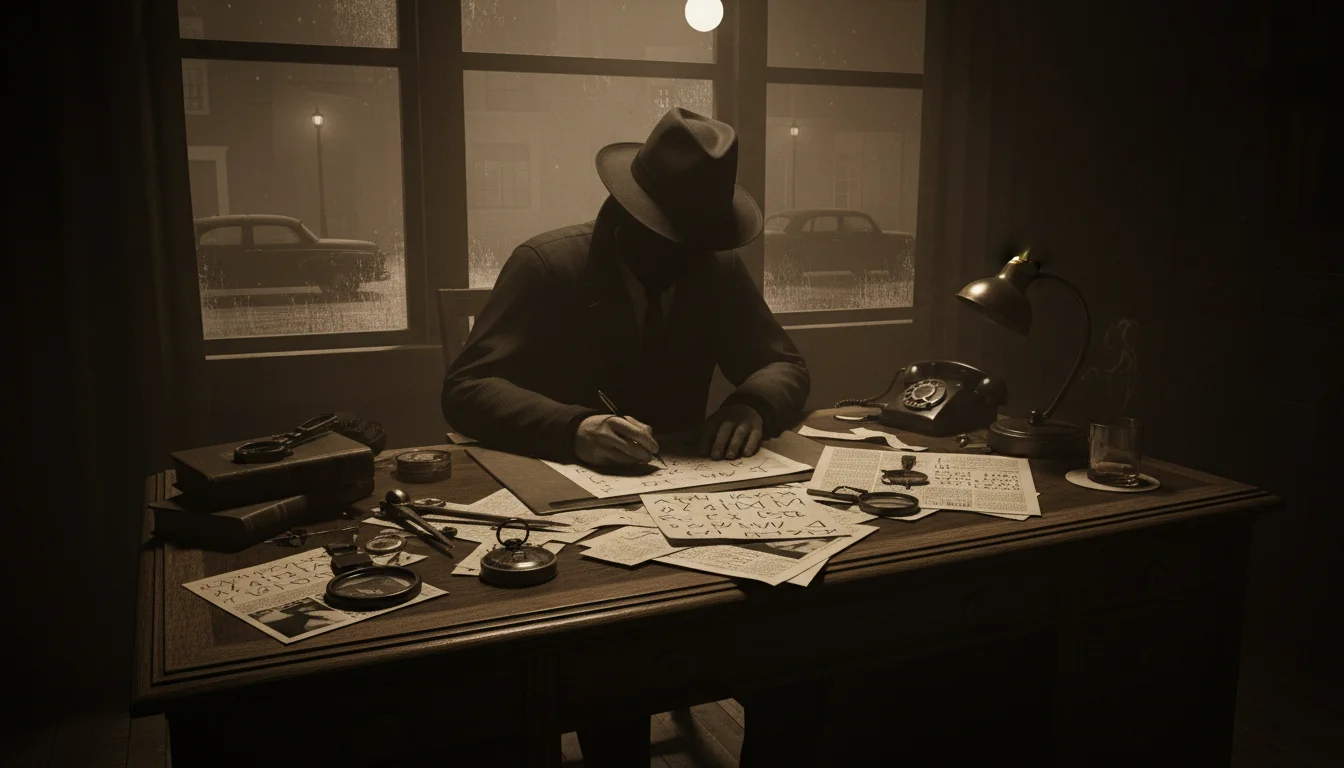
Investigators tracked every lead they could find. They interviewed blacksmiths across the eastern seaboard, hoping to identify who had recently shod the doomed horse. When they finally located the smith in October, he could tell them nothing useful. They questioned thousands of radicals, communists, and anarchists. They arrested many. They charged no one.
One early suspect was Edwin P. Fischer, a lawyer and tennis champion with a history of psychiatric hospitalizations. Fischer had written postcards to friends warning them to stay away from Wall Street on September 16. When police found him, he explained that he had received the information "through the air." Investigators discovered Fischer made a habit of issuing such warnings and had him committed to an asylum. He was deemed harmless - just a madman whose delusion happened to coincide with reality.
But there was another suspect whom investigators couldn't touch: Mario Buda.
Buda was an Italian anarchist and close associate of Sacco and Vanzetti. He was an expert bombmaker who had likely been involved in the 1919 anarchist bombings. Most significantly, he owned the car that had led police to arrest Sacco and Vanzetti in the first place. When his comrades were indicted, Buda had every motive for revenge - and he had the skills to deliver it.
Historian Paul Avrich, after decades of research, concluded that Buda was almost certainly the Wall Street bomber. Buda's own nephew and fellow anarchists later confirmed his involvement in interviews. But by the time anyone was certain, Buda was long gone. He had sailed back to Italy just days after the bombing and lived there until his death in 1963, never facing justice for the worst terrorist attack in American history up to that time.
The Case Goes Cold
The Bureau of Investigation pursued the case for over three years without success. Occasional arrests made headlines but never led to indictments. In 1944, the FBI reopened the investigation and concluded that Italian anarchists were most likely responsible - but by then, the principal suspects were dead, deported, or beyond reach.
The case was officially dropped in 1940. It has never been solved.
No memorial marks the spot where thirty-eight people died. The only reminder is the building itself: 23 Wall Street still bears the pockmarks and scars from the blast, its limestone facade deliberately left unrepaired as a silent testimony to what happened on that September afternoon.
A Century of Silence
Over one hundred years have passed since the Wall Street bombing, and its status as the deadliest terrorist attack in New York City held until September 11, 2001. The crime remains officially unsolved - one of the most significant cold cases in American history.
The evidence points almost certainly to Mario Buda and his Galleanist network, seeking vengeance for the arrest of Sacco and Vanzetti. But "almost certainly" is not "beyond reasonable doubt." No one was ever charged. No one was ever convicted. The victims' families never saw justice.
The thirty-eight dead are largely forgotten now, their names lost to history except in academic studies and archival records. They were ordinary workers - young people just beginning their careers in the most dynamic financial center in the world. They died because they happened to be walking past a horse-drawn cart at the wrong moment, in an era when terrorism was becoming a weapon against the powerful that killed the powerless.
The scars on 23 Wall Street remain. The questions remain. And after more than a century, the 1920 Wall Street bombing still stands as a reminder that some crimes are never solved - and some killers are never caught.
For other American cold cases that remain open after decades, see our investigations into the Villisca axe murders and the 1982 Tylenol murders.

Want to Interrogate the Suspects?
Chat with historical figures and uncover the truth behind history's greatest mysteries.
Create your free account →No card required. Some figures and features require a paid plan.
Join the HistorIQly Club
Get smarter about the past.
Weekly stories, deep dives, and exclusive content straight to your inbox.