The Yuba County Five: Why Did They Drive Into the Mountains to Die?
In 1978, the Yuba County Five abandoned their working car on a remote mountain road after a basketball game and walked into the snow. The mystery has never been solved.
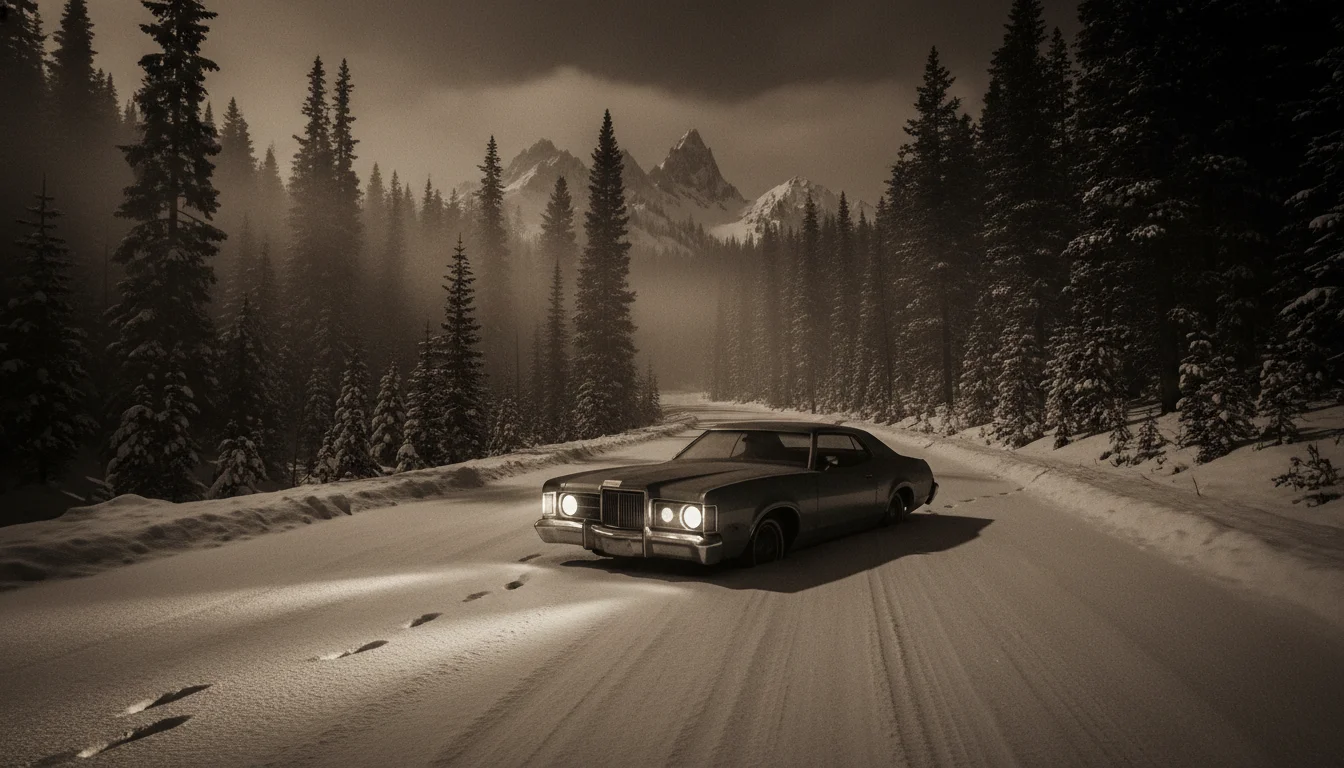
On the evening of February 24, 1978, five young men from Yuba City, California piled into a turquoise Mercury Montego and drove to a college basketball game in Chico. They never came home. What happened between the final buzzer and their disappearance remains one of the strangest unsolved cases in American history.
A Normal Night That Wasn't
The five men - Jack Madruga (30), Bill Sterling (29), Ted Weiher (32), Jack Huett (24), and Gary Mathias (25) - were friends who attended a program for adults with mild intellectual disabilities or mental health conditions. They were high-functioning, held jobs, and shared a deep love of basketball. That night, UC Davis was playing in a tournament game, and they had tickets.
Witnesses confirmed they arrived at the game and appeared to be in good spirits. They bought snacks at halftime. UC Davis won. The group left the arena around 10 PM.
They should have driven south on Highway 99 back to Yuba City, a straight 50-mile shot. Instead, their car was found days later on a mountain road 70 miles in the opposite direction, at an elevation of 4,000 feet, on a route leading into the Plumas National Forest.
The car was in perfect working order. The tank was nearly full. There was no mechanical reason to stop. Yet all five men had apparently gotten out and walked into the frozen wilderness.
The Mountain
The road where the Montego was found was a remote logging route called the Oroville-Quincy Highway. In late February, snow was heavy at that altitude. Temperatures dropped well below freezing at night. None of the five men were dressed for the conditions - they wore light jackets at best.
A man named Joseph Schons had been stranded on that same road the night of February 24, stuck in the snow with his car. He later told investigators he saw headlights approach around midnight, then heard voices and doors opening. He called out for help. No one responded. The headlights went dark.
Schons said he also heard a woman screaming and a baby crying that night, though no women or children were ever placed at the scene. He was suffering from a mild heart episode at the time, and investigators debated whether his account was reliable. But the timeline matched.
The Search
When the men failed to return home, their families raised the alarm immediately. These were men of routine. They did not go on spontaneous road trips. They did not vanish.
Searchers found the Mercury Montego on February 28, four days after the game. It was unlocked, sitting in the snow. The windows were rolled up. Inside were candy bar wrappers from the game. No signs of struggle.
The trail from the car led uphill, deeper into the mountains, through increasingly difficult terrain. Footprints in the snow showed the group walking in single file. They appeared to be heading toward a Forest Service trailer called the Bowman cabin, located five miles up the mountain at 5,400 feet.
The question that haunted investigators was simple: why didn't they just turn the car around?
What They Found at the Cabin
It took months for the snow to melt enough for a thorough search. In June 1978, rangers reached the trailer.
Inside, they found Ted Weiher. He was dead, lying in a bed, wrapped in eight sheets. He had lost significant weight - an estimated 80 to 100 pounds. A crude beard had grown. Medical examiners determined he had survived for weeks, possibly as long as two to three months, before dying of hypothermia and starvation.
The cabin was stocked with supplies. There were canned goods, heating oil, matches, and heavy clothing. A propane heater sat nearby. Almost none of it had been used. Some food cans had been opened, but the heater was never lit. The heating oil was untouched.
Someone had pulled the sheets over Weiher carefully, suggesting at least one other person had been alive to tend to him. But whoever it was had left - or died trying to find help.
The Others
Jack Madruga and Bill Sterling were found in the forest between the car and the cabin, roughly two and three miles from the Montego respectively. Both died of hypothermia. Their bodies were relatively intact, consistent with dying in the first night or two.
Jack Huett's remains were found further from the cabin, partially scattered by animals. His death was also attributed to exposure, though the condition of his remains made precise analysis difficult.
Gary Mathias was never found.
The Theories
Were they chased? Some investigators believed the men were followed or frightened by someone on the road, causing them to flee into the mountains. Joseph Schons' account of the screaming and the mysterious silence when he called for help could suggest they were hiding from a threat. But no evidence of foul play was found at the car or along the trail.
Were they disoriented? The men had varying degrees of cognitive challenges. Jack Madruga, the driver, was the most independent and typically reliable behind the wheel. But a wrong turn in the dark, combined with unfamiliar roads and possible confusion, could have led them astray. Once stuck or uncertain, group dynamics might have taken over, with no single person asserting clear leadership.
Was Gary Mathias the key? Mathias was a Vietnam veteran diagnosed with schizophrenia. He was the only member of the group with a serious psychiatric condition, though friends and family insisted he had been stable and doing well. Some theorists speculate he may have experienced an episode that influenced the group's decisions. His disappearance - the only body never recovered - adds to the mystery. His shoes were found near the cabin.
Why didn't Weiher use the supplies? This is perhaps the most disturbing question. A man survived for weeks in a cabin stocked with everything he needed to stay warm and nourished, yet he barely touched the supplies and never lit the heater. Was he too impaired? Too frightened? Was someone else rationing the supplies before leaving? No explanation has ever been satisfactory.
47 Years of Silence
The Yuba County Five case was never solved. No arrests were made. No definitive explanation was established for why five men drove in the wrong direction, abandoned a working car, and walked into the mountains in freezing conditions.
The families spent decades pushing for answers. Jack Huett's mother posted flyers until she was in her 80s. Gary Mathias' mother maintained until her death that her son would not have voluntarily walked into those mountains.
The case has drawn comparisons to the Dyatlov Pass incident for its combination of seemingly irrational behavior and incomplete evidence. Like Dyatlov, the Yuba County Five presents a scenario where the known facts resist a single coherent explanation.
Something happened on that road. Something made five men leave a warm, working car and walk into the snow. After nearly half a century, the mountains have not given up the answer. The Yuba County Five case is often compared to the Dyatlov Pass incident, where a group similarly died in wilderness conditions after apparently irrational decisions - and to the smiley face killers theory, which proposed a connected explanation for a series of young men found drowned after similar unexplained departures.

Want to Interrogate the Suspects?
Chat with historical figures and uncover the truth behind history's greatest mysteries.
Start Your InvestigationJoin the HistorIQly Club
Get smarter about the past.
Weekly stories, deep dives, and exclusive content straight to your inbox.