The Great Alcatraz Escape of 1962: Did They Make It Out Alive?
The Alcatraz escape 1962 mystery: Frank Morris and the Anglin brothers vanished from the island prison on a homemade raft. Bodies never found. Case still technically open.
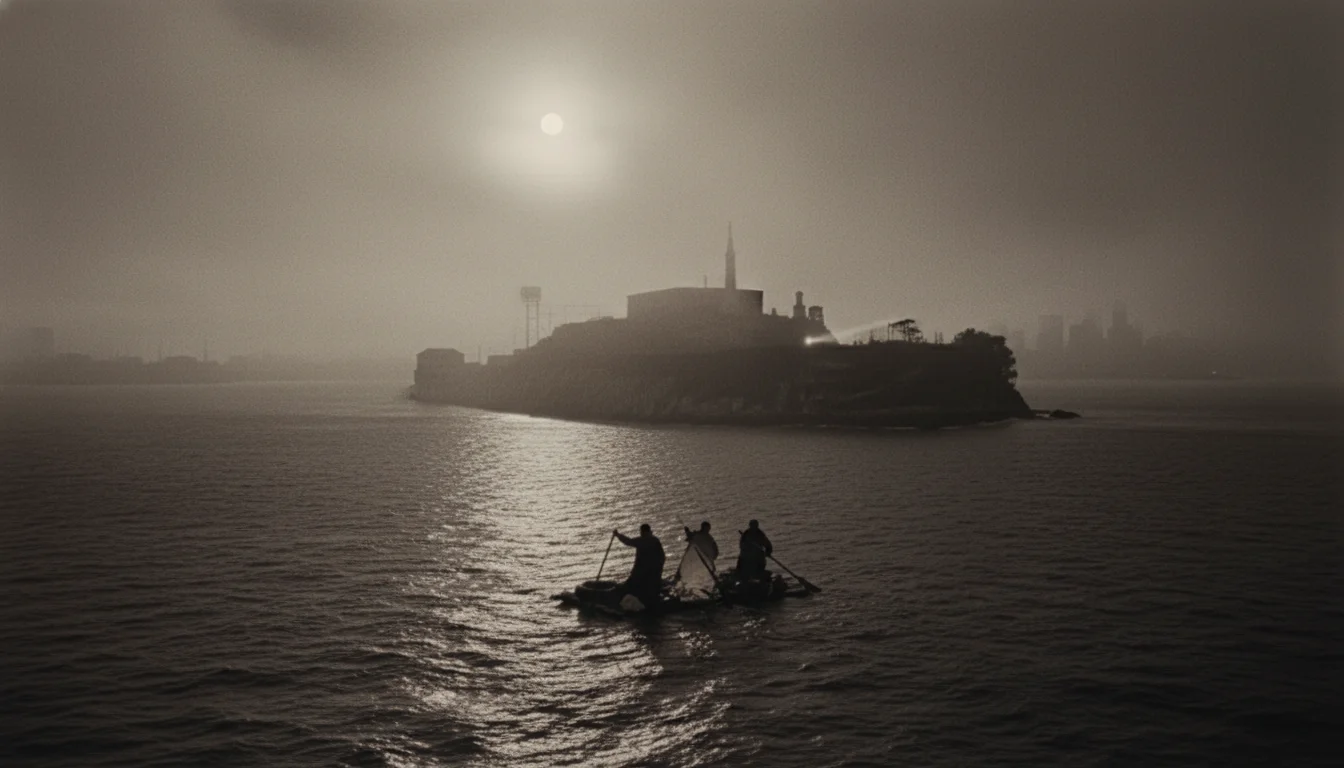
On the night of June 11, 1962, three men did the impossible: they escaped from Alcatraz Federal Penitentiary, the fortress prison built on a rock in the middle of San Francisco Bay that was supposed to be inescapable.
Frank Morris and brothers John and Clarence Anglin were never seen again.
The FBI officially closed the case in 1979, declaring them drowned in the frigid waters of the Bay. But their bodies were never recovered. And over the decades, evidence has emerged suggesting they might have pulled off one of history's greatest prison breaks.
The Masterminds
Frank Lee Morris was the brains of the operation. An orphan raised in foster homes, he had an IQ of 133 and a lifetime of crime behind him. By age 13, he was convicted of his first crime. By 20, he'd escaped from the Louisiana State Penitentiary. When he arrived at Alcatraz in 1960 for bank robbery, the warden knew he had a problem inmate.
John and Clarence Anglin were brothers from a family of 13 children in rural Georgia. They'd been robbing banks together since the 1950s. What made them special was their swimming ability - they'd spent childhood summers swimming in Florida's lakes and rivers.
That skill would matter.
The Plan: 18 Months in the Making
Morris and the Anglins were cellmates on Block B. Starting in December 1961, they began one of the most elaborate escape plans in prison history.
The Tools: They stole or improvised everything. Spoons stolen from the cafeteria became chisels. A vacuum cleaner motor became a drill. They made a life raft and life vests from over 50 stolen raincoats, stitched together with glue stolen from the glove shop where they worked.
The Tunnel: Every night after lights out, they chiseled away at the ventilation grates in their cells. The concrete around the vents was old and corroded from decades of salt air. Progress was slow but steady.
The Decoys: To fool guards during head counts, they crafted incredibly realistic dummy heads from soap, toilet paper, and real hair collected from the prison barbershop. They painted them with flesh-toned paint stolen from the art supplies.
The Route: Once through the vents, they'd climb up a shaft, cross the roof, descend to the shore, then use their raft to cross the Bay.
The Night of the Escape
On June 11, 1962, everything came together.
Around 10 PM, after lights out, each man placed his dummy head on his pillow and squeezed through the ventilation hole he'd been widening for months. The holes were barely large enough - just 9.5 by 13 inches.
They climbed the utility corridor behind the cells up to the roof, then descended 50 feet down a drainpipe to the shore. Somewhere on that rocky beach, they inflated their makeshift raft using a converted accordion as a bellows.
Then they vanished into the fog and darkness of San Francisco Bay.
The escape wasn't discovered until morning head count. By then, they had a 10-hour lead.
The Investigation
The FBI launched one of the largest manhunts in history. What they found told a confusing story:
Evidence They Drowned:
- The currents in the Bay are treacherous, pulling at 7-9 mph toward the Golden Gate and open ocean
- Water temperature that night was 50-54°F, cold enough for hypothermia in 30 minutes
- No confirmed sightings of the men were ever made
- Personal effects belonging to the Anglins washed up on Angel Island
- Paddle fragments from the raft were found
Evidence They Survived:
- A Norwegian freighter reported seeing a body in the Bay... that then disappeared
- In 1962, a man resembling Frank Morris was reportedly seen in a bar in the Deep South
- The raft was never found - only paddle pieces
- In 2013, the San Francisco Police Department received a letter allegedly from John Anglin, claiming all three men survived and that Morris died in 2008. Handwriting analysis was inconclusive.
- In 2015, a History Channel investigation used scientific analysis to show the currents that night could have carried swimmers to shore if they left at the right time
The Aftermath
The escape was a black eye for the Federal Bureau of Prisons. Alcatraz was supposed to be escape-proof. The prison closed permanently in 1963 - though officially for budget reasons, the escape didn't help.
The FBI kept the case active until December 1979, when they officially concluded the men had drowned. However, U.S. Marshals never close escape cases until the fugitive is found or proven dead beyond age 99. As of 2026, the case technically remains open.
Did They Make It?
The Skeptics' Case:
The odds were impossibly stacked against them. San Francisco Bay is one of the deadliest bodies of water in North America. The water temperature, the currents, the distance to shore - professional swimmers have died attempting less in better conditions.
If they survived the swim, they'd have emerged on the Marin shoreline soaking wet, in prison clothes, with no resources. They'd somehow have to evade the massive manhunt, obtain civilian clothes, transportation, and disappear completely.
Not one confirmed sighting in 60+ years. Not one slip-up. Not one deathbed confession or bragging to the wrong person. That takes superhuman discipline.
The Believers' Case:
The bodies were never found. That's not normal for drowning victims in the Bay - bodies usually surface within 14 days.
The 2013 letter is compelling. While handwriting experts couldn't definitively authenticate it, they couldn't rule it out either. The letter writer knew details not publicly known.
Computer modeling by Dutch researchers in 2014 showed that if the men left before midnight and swam toward the Marin headlands instead of directly east, they had a realistic chance of making landfall.
And there's this: Frank Morris and the Anglin brothers weren't ordinary criminals. They were intelligent, resourceful, and had months to research tides and currents. They'd planned everything else meticulously. Why not the swim?
The Legend Lives On
The Alcatraz escape of 1962 has inspired countless books, documentaries, and films - most famously "Escape from Alcatraz" (1979) starring Clint Eastwood.
Tour guides at the now-abandoned prison tell the story daily to fascinated visitors. The dummy heads are still on display in the cells where they were found.
And somewhere - in a file cabinet at the U.S. Marshals Service - Frank Morris (prisoner #AZ1441), John Anglin (#AZ1476), and Clarence Anglin (#AZ1485) remain listed as active fugitives.
The official stance: They drowned.
The truth: After 64 years, we still don't know.
And that's exactly the kind of mystery three brilliant criminals might have wanted to leave behind.
For more audacious cold cases where the evidence raises more questions than answers, the Gardner Museum heist is the largest unsolved art theft in history, and the Black Dahlia murder is another case where investigators have theories but no conviction after eight decades.
Quick Answers
Common questions about this topic
Did three men really escape from Alcatraz in 1962?
Yes. On June 11, 1962, Frank Morris and brothers John and Clarence Anglin escaped from Alcatraz Federal Penitentiary. They squeezed through widened ventilation holes, descended a utility corridor, climbed to the roof, and dropped to the shore before pushing off into San Francisco Bay on an improvised raft. They were never officially seen again.
How long did the Alcatraz escape take to plan?
Starting in December 1961, they spent roughly 18 months preparing. They used spoons and an improvised drill to widen ventilation grates, made a life raft and vests from over 50 stolen raincoats glued and stitched together, and crafted dummy heads from soap, toilet paper, and real hair collected from the prison barbershop to fool the nightly headcount.
Did the Alcatraz escapees drown or survive?
Nobody knows for sure. The FBI officially closed the case in 1979, concluding the men most likely drowned, but no bodies were ever recovered. A 2013 letter allegedly from John Anglin claimed all three survived and that Morris died in 2008, though handwriting analysis was inconclusive. The U.S. Marshals Service keeps the case open and will not close it until the escapees would be 99 years old.
What physical evidence was found after the Alcatraz escape?
Personal effects belonging to the Anglins were found on nearby Angel Island, and paddle fragments from the raft were recovered, but the raft itself was never found. A 2015 History Channel analysis using tidal modeling suggested the currents that night could have carried the escapees to shore if they had launched at the right time.

Want to Interrogate the Suspects?
Chat with historical figures and uncover the truth behind history's greatest mysteries.
Start Your InvestigationJoin the HistorIQly Club
Get smarter about the past.
Weekly stories, deep dives, and exclusive content straight to your inbox.