The Bennington Triangle Disappearances: Five People Vanished in Vermont's Haunted Wilderness
Five people vanished near Glastenbury Mountain between 1945 and 1950 in the Bennington Triangle disappearances. Not one case has ever been explained.
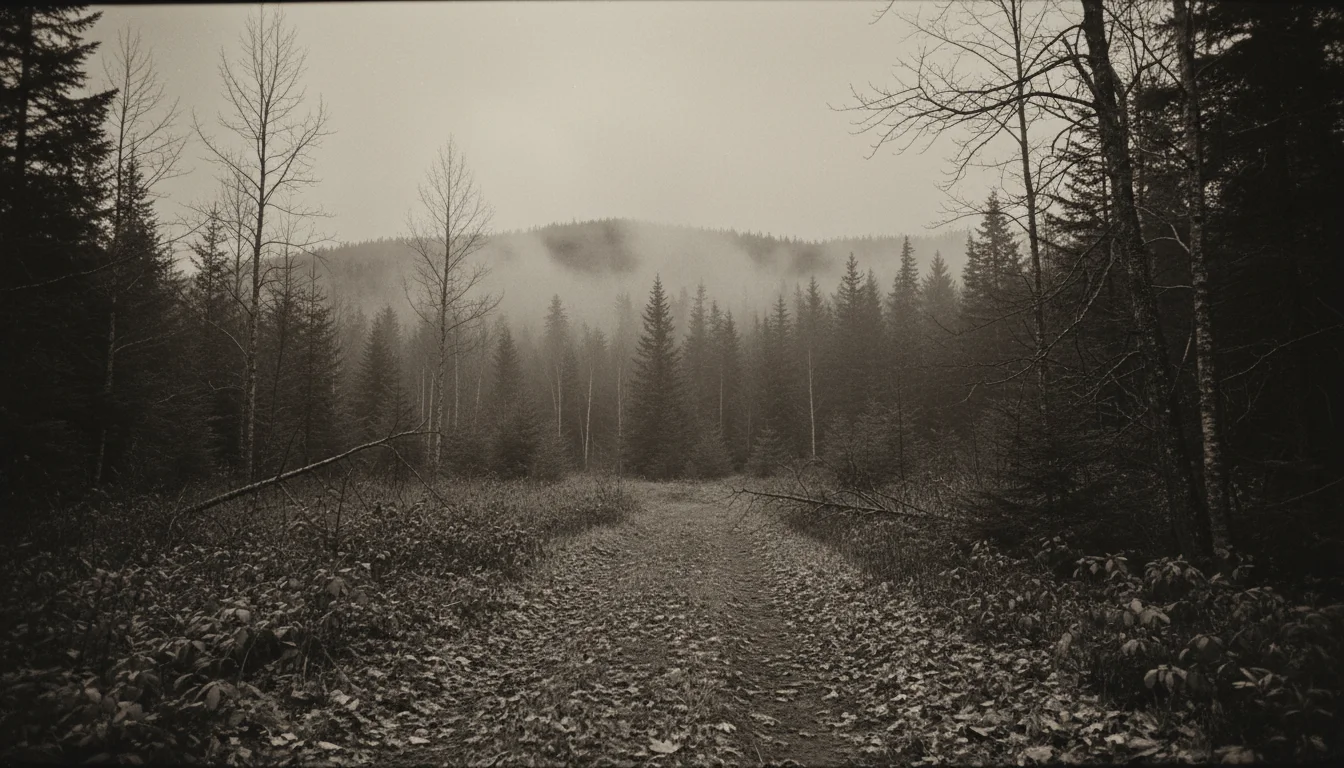
In the remote wilderness of southwestern Vermont, where abandoned logging roads wind through dense forests and fog clings to the peaks of the Green Mountains, five people vanished between 1945 and 1950. No bodies were recovered. No suspects were identified. No explanations made sense.
The area, centered on the ghost town of Glastenbury and its eponymous mountain, would later be dubbed the "Bennington Triangle" by author Joseph A. Citro. But for the families who lost loved ones in those five years, no catchy name could capture the horror of having someone simply... cease to exist.
The Hunter Who Knew Every Trail
It started on November 12, 1945, with Middie Rivers.
Rivers was 74 years old, but age hadn't slowed him down. He was a lifelong woodsman, an experienced hunting guide who knew the trails around Glastenbury Mountain better than anyone. He had spent decades leading parties through these woods, navigating terrain that would confuse far younger men.
That November day, Rivers was guiding four hunters through Bickford Hollow, about four miles west of Bennington. Around 4 PM, he got ahead of his group. A friend spotted him on a nearby trail, walking in the opposite direction from camp.
He was never seen again.
The search was massive. Over 300 volunteers joined U.S. Army soldiers from Fort Devens in Massachusetts, combing the wilderness for eight days. Search party leaders were confident they would find him - people got lost in these woods before, and they were always found eventually.
But all searchers discovered was Rivers' handkerchief, found by a hiker the following spring along a trail south of where he had last been seen. No body. No other belongings. A man who knew every rock and stream in these mountains had simply evaporated.
The Girl in the Red Coat
Exactly one year and nineteen days later, on December 1, 1946, the Bennington Triangle claimed its most famous victim.
Paula Jean Welden was 18 years old, a sophomore at Bennington College. While most students had gone home for Thanksgiving break, Paula decided to hike a section of the Long Trail, which at that time crossed Vermont Route 9 near Glastenbury Mountain.
She left campus in the early afternoon, hitchhiking to the trailhead. Multiple witnesses saw her that day - a local man gave her a ride, a Bennington Banner employee gave her directions. She was easy to spot in her bright red jacket, jeans, and lightweight sneakers. She carried no camping gear, no warm clothing.
She walked into the forest around 4 PM. By the next morning, when she failed to appear for class, the alarm was raised.
The search for Paula Welden dwarfed the effort for Middie Rivers. Over a thousand people scoured the wilderness. The FBI joined the investigation. A $5,000 reward was posted - a fortune in 1946. Aircraft flew grid patterns over the mountains.
They found nothing. Not a thread from her red jacket. Not a footprint. Not a single clue.
Paula's father was so frustrated by the investigation's failures that his criticism helped spur the creation of the Vermont State Police seven months later. But even with better-organized law enforcement, the case went cold. It remains officially open to this day.
Paula Welden's disappearance so haunted the region that it inspired author Shirley Jackson's 1951 novel Hangsaman.
The Man Who Vanished from a Moving Bus
If Paula Welden's case was baffling, James Tedford's was impossible.
On December 1, 1949 - exactly three years to the day after Welden disappeared - the 68-year-old World War I veteran boarded a bus in St. Albans, Vermont, heading home to the Vermont Soldiers' Home in Bennington.
His relatives watched him get on the bus. A friend spoke with him at the Burlington depot when he transferred to the Bennington-bound bus around 6:15 PM. The driver and multiple passengers confirmed he was in his seat for most of the journey.
Then came the final stretch. Route 7 passed through the Bennington Triangle. When the bus pulled into Bennington, James Tedford was gone.
His luggage remained on his seat. An open bus timetable lay where he had been sitting. But the man himself had vanished - from inside a moving vehicle.
Newspaper reports later revealed that Tedford suffered from mental illness and had been "despondent" about returning to Bennington. The bus driver reported that someone matching Tedford's description may have gotten off in Brandon, about 70 miles north. That same night, Brandon police investigated a man "acting queerly" in the village downtown.
But no trace of James Tedford was ever found. A week passed before the Soldiers' Home even reported him missing. By then, whatever trail might have existed had gone cold.
The Little Boy at the Dump
On October 12, 1950, the triangle claimed its youngest victim.
Paul "Buddy" Jepson was eight years old. He had special needs. His mother brought him along while she tended to the family's pigs at the Bennington town dump, where his parents worked as caretakers.
She left him in the pickup truck around 3 PM. When she returned thirty minutes later, he was gone.
A bloodhound from New Hampshire picked up Paul's scent and tracked it along an adjacent road - then lost it abruptly at a crossroads. The trail simply ended.
Police theorized that perhaps a driver had accidentally struck the boy and taken his body in a panic. His father suggested searchers might have missed Paul in the woods because his brown and tan clothing blended with the autumn leaves.
But the father also said something strange to the Albany Times Union. He mentioned that Paul had "talked of nothing else for days" before his disappearance - the lure of the mountains. As if something in the wilderness had been calling to his son.
The Body That Appeared from Nowhere
Sixteen days after Paul Jepson vanished, the Bennington Triangle took its final known victim of the era.
Frieda Langer was 53 years old, an experienced hiker and hunter who knew the Somerset area well. On October 28, 1950, she was hiking with her cousin Herbert Elsner when she slipped and fell into a stream.
"I'll take a shortcut back to the cabin to change," she told him. "I'll catch up with you later."
She never arrived.
The search was the largest yet. Aircraft from the Connecticut Coast Guard, the U.S. Army, and local Vermont agencies scoured the wilderness. Up to 400 people, including the Massachusetts National Guard, searched the area methodically.
They found nothing.
Then, on May 12, 1951 - six months after Frieda disappeared - fishermen found her body. It lay on the shore of the Deerfield River's eastern branch, three and a half miles from the campsite.
The location should have been impossible to miss. It was an open area that had been searched multiple times. Yet somehow, Frieda Langer's remains had materialized there as if placed by invisible hands.
Due to the body's advanced decomposition, no cause of death could be determined. Investigators theorized she had fallen into a deep pond, drowned, and been flushed out by spring flooding. But the theory raised more questions than it answered.
Frieda Langer remains the only victim of the Bennington Triangle era whose body was ever found. And even that discovery explained nothing.
What Stalked Glastenbury Mountain?
During the investigation into Paul Jepson's disappearance, journalists began noticing the pattern. Five people. Five years. All vanishing in the same remote corner of Vermont.
In November 1950, the Bennington Evening Banner published an article suggesting the region contained a "Lost Horizon" - a reference to James Hilton's novel about travelers trapped in a mystical mountain valley.
Over the decades, theories have multiplied. Some suspected a serial killer, though the victims' ages ranged from 8 to 74, and their genders varied - patterns that don't fit typical serial predator profiles. Others pointed to the mountain lions, bobcats, or lynx that roamed the area, though such animals rarely attack humans and no evidence of animal predation was ever found.
Paranormal theorists noted that most disappearances occurred between 3 PM and 4 PM, in the final months of the year. They pointed to Native American legends that described Glastenbury Mountain as "cursed" - a place that the indigenous Abenaki supposedly avoided.
UFO sightings and Bigfoot encounters have been reported in the area over the years. Dead-air radio broadcasts have allegedly captured terrifying voices. Hikers have reported unexplained navigation errors, finding themselves miles from where they should be.
The Triangle Today
Glastenbury and its neighboring township Somerset remain essentially ghost towns, unincorporated by the Vermont General Assembly in 1937. The wilderness has reclaimed what little human settlement once existed there.
But people still go missing in the Bennington Triangle. In 2008, a 27-year-old Bennington College student got lost in the area but was found safe by Vermont State Police - a rare happy ending. Others have not been so fortunate.
The Long Trail still crosses through the heart of the triangle. Hikers still walk paths where Paula Welden's red jacket was last seen. The fog still settles over Glastenbury Mountain in the late afternoon, around 3 or 4 PM, when the light fades and the forest grows dark.
Whatever took those five people between 1945 and 1950 has never been identified. Maybe it was human. Maybe it was natural. Maybe it was something else entirely.
The mountains keep their secrets.
And somewhere in Vermont's haunted wilderness, the Bennington Triangle waits.
For other wilderness clusters where disappearances defy simple explanation, see the Bermuda Triangle disappearances and the Dyatlov Pass incident.

Want to Interrogate the Suspects?
Chat with historical figures and uncover the truth behind history's greatest mysteries.
Start Your InvestigationJoin the HistorIQly Club
Get smarter about the past.
Weekly stories, deep dives, and exclusive content straight to your inbox.