12 Years a Slave vs. History: How Accurate Is Steve McQueen's Unflinching Masterpiece?
How does 12 Years a Slave historical accuracy hold up? McQueen's epic tells Solomon Northup's harrowing true story with remarkable fidelity to the memoir.
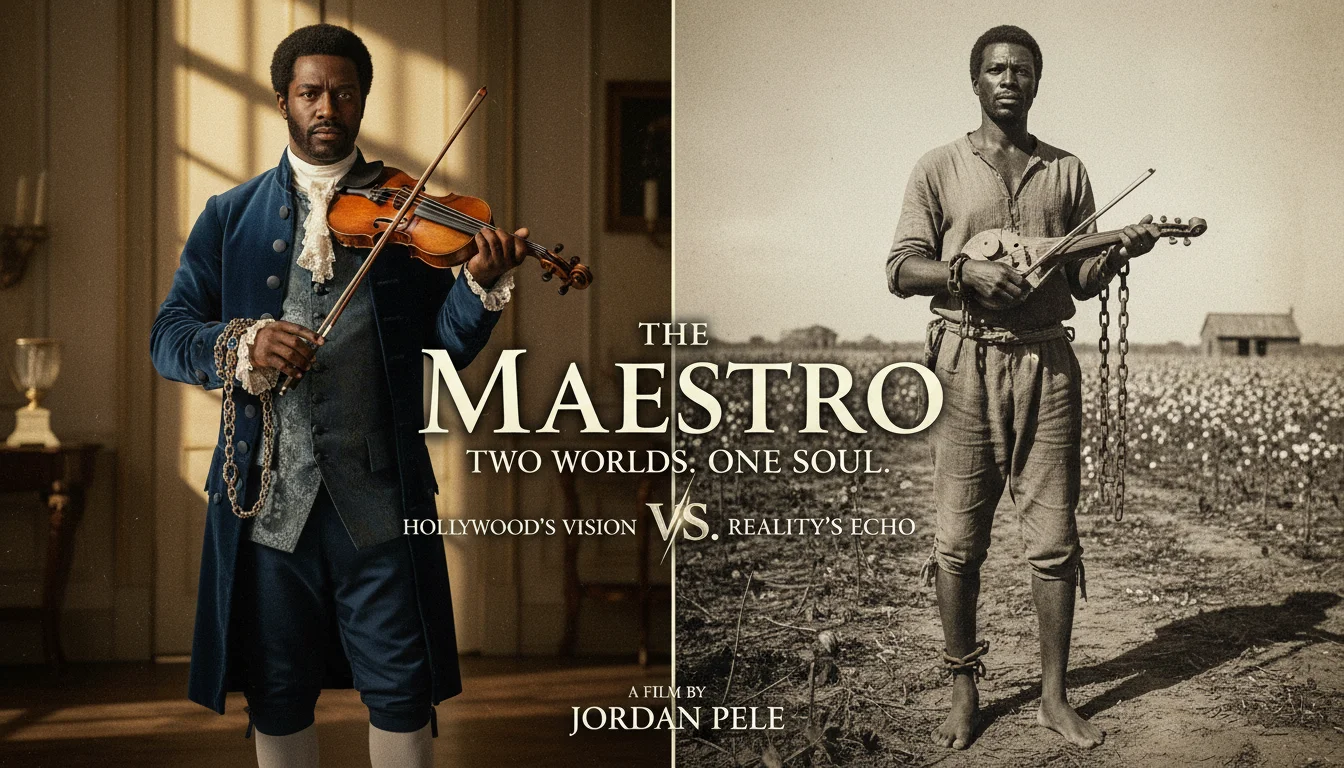
Steve McQueen's 2013 film 12 Years a Slave won three Academy Awards including Best Picture, bringing Solomon Northup's 1853 memoir to devastating life on screen. Chiwetel Ejiofor's portrayal of a free Black man kidnapped and sold into slavery shocked audiences with its unflinching depiction of antebellum brutality.
But this isn't a typical Hollywood historical drama - it's based on an actual autobiography written by the man who lived it. How closely did McQueen stick to Northup's own words? Let's separate historical fact from cinematic interpretation.
What Hollywood Got RIGHT
Solomon Northup Was Real - And His Story Is Verified
Unlike many historical films that take liberties with composite characters or invented narratives, Solomon Northup was absolutely real. Born free in Minerva, New York around 1807, he was a skilled carpenter, farmer, and accomplished violinist. He married Anne Hampton in 1829, and they had three children together - Margaret, Elizabeth, and Alonzo.
His memoir, Twelve Years a Slave, was published in 1853 and became a bestseller, moving 30,000 copies in its first two years. Historical records, court documents, and contemporary newspaper accounts corroborate nearly every major element of his story.
The Kidnapping in Washington D.C.
The film accurately depicts how Northup was lured to Washington D.C. in 1841 by two men, Hamilton and Brown, who claimed to be circus performers needing a musician. They drugged him at a tavern, and he awoke in chains in a slave pen called Williams' Slave Pen (depicted as "Burch's" in both the book and film - James H. Burch was the slave dealer who purchased him).
This really happened. Court records from Northup's eventual lawsuit confirm the kidnapping location and the involvement of slave traders in the nation's capital - a grim irony that slavery thrived within sight of the buildings where freedom was supposedly guaranteed.
The Brutality of Edwin Epps
Michael Fassbender's terrifying portrayal of plantation owner Edwin Epps is, if anything, toned down from Northup's own account. The real Epps was described by Northup as cruel, violent, and prone to drunken rages. The midnight dancing sessions, the obsessive jealousy over Patsey, the arbitrary whippings for failing to pick enough cotton - all documented in the memoir.
The infamous scene where Epps forces Northup to whip Patsey is taken directly from Northup's account. He describes it as one of the most horrific experiences of his captivity, writing that he was compelled to lash her until "her back was literally raw."
The Real Patsey
Lupita Nyong'o's Oscar-winning portrayal of Patsey captures the tragic reality of this remarkable woman. She was real - an extraordinarily skilled cotton picker whom Northup described as "the queen of the field." Epps's sexual abuse of her and his wife's jealous cruelty toward her are documented in the memoir.
What happened to Patsey after Northup's rescue remains unknown - a haunting silence that speaks to how many enslaved people vanished from historical record.
Samuel Bass and the Rescue
Brad Pitt's character Samuel Bass was a real person - a Canadian carpenter working in Louisiana who took the extraordinary risk of writing letters on Northup's behalf. Bass's anti-slavery views and his willingness to help are documented, and his letters did ultimately lead to Northup's rescue.
In January 1853, after Bass's letters reached Northup's family and New York officials, attorney Henry B. Northup (no relation, but a longtime friend of the family) traveled to Louisiana with legal documents proving Solomon's free status. The rescue really did happen as depicted, with Northup finally freed after 12 years of bondage.
What Hollywood Got WRONG (Or Changed)
Compressed Timeline and Multiple Owners
The film simplifies Northup's movements between plantations. In reality, he was owned by several different slaveholders over 12 years, not just William Ford and Edwin Epps. He spent significant time with other owners whose stories were compressed or eliminated for narrative clarity.
William Ford's Character
Benedict Cumberbatch portrays William Ford as a relatively kind master who recognized Northup's intelligence. While Northup did describe Ford favorably in his memoir - calling him a "kind, noble, candid Christian man" - historians debate whether this represented genuine decency or Stockholm syndrome, or simply Northup's strategic decision to avoid criticizing anyone who might still have power over people he cared about.
The film preserves Northup's charitable view, but modern historians question whether any enslaver could truly be "kind" while participating in the institution of slavery.
The Violence Against Tibeats
In the film, John Tibeats (Paul Dano) repeatedly antagonizes Northup, leading to a confrontation where Northup fights back. While this incident is based on real events, the memoir suggests the conflict was even more prolonged and dangerous. Northup nearly hanged for defending himself, saved only because he was technically Ford's property and killing him would have destroyed Ford's investment.
Some Composite Characters
Minor characters in the film are composites of people Northup encountered. This is standard biographical filmmaking, but it means some individuals who helped or hindered Northup along the way don't appear as themselves.
The Ending
The film shows Northup returning home to his family in an emotional reunion. While this did happen, the aftermath was more complicated. Northup tried to have his kidnappers prosecuted, but the case collapsed due to legal technicalities - Black people could not testify against white people in Washington D.C. courts.
Northup spent years lecturing about his experiences and working with the abolitionist movement. His death date and circumstances remain unknown - he simply disappears from historical records around 1857, leading to speculation about what happened to him.
Historical Accuracy Score: 9/10
12 Years a Slave is one of the most historically accurate films ever made about American slavery. Steve McQueen and screenwriter John Ridley treated Northup's memoir with remarkable fidelity, often using his actual words as dialogue. The few changes serve narrative clarity rather than historical distortion.
More importantly, the film captures the psychological and physical reality of slavery in ways previous Hollywood productions avoided. Earlier films often softened slavery's horrors or centered white savior narratives - a pattern also challenged by films like Selma, which depicts the civil rights movement with similar unflinching honesty. McQueen's refusal to look away - his long, unbroken shots of suffering - honors Northup's original purpose in writing his memoir: to make readers understand what slavery actually was.
The fact that a free man could be kidnapped and sold into bondage, that the entire system was designed to make escape nearly impossible, that millions lived and died under this regime - 12 Years a Slave makes these historical facts visceral in ways textbooks cannot.
The Larger Truth
Solomon Northup wrote his memoir to bear witness. He wanted the world to know that the people enslaved in the American South were human beings - fathers, mothers, musicians, craftsmen, people with hopes and sorrows and dignity. Steve McQueen's film honors that purpose.
When you watch 12 Years a Slave, you're not watching a Hollywood invention. You're watching something very close to what one man actually experienced, told in his own words, verified by historical records. That makes it not just a great film but an essential historical document - a window into a past that America has often preferred to forget.
Solomon Northup survived to tell his story. Millions of others did not. The film's accuracy matters because their stories deserve to be told truthfully. For another film that applies this same standard of care to African American history, see our review of Hidden Figures.

Debate the Accuracy with the Real Figures
Ask the real people what Hollywood got wrong about their lives.
Chat with HistoryJoin the HistorIQly Club
Get smarter about the past.
Weekly stories, deep dives, and exclusive content straight to your inbox.