Amadeus (1984) vs Real History - How Accurate Is the Mozart Movie?
Amadeus historical accuracy: Salieri as jealous murderer, Mozart as giggling genius. We separate the brilliant historical fiction from the surprising facts.
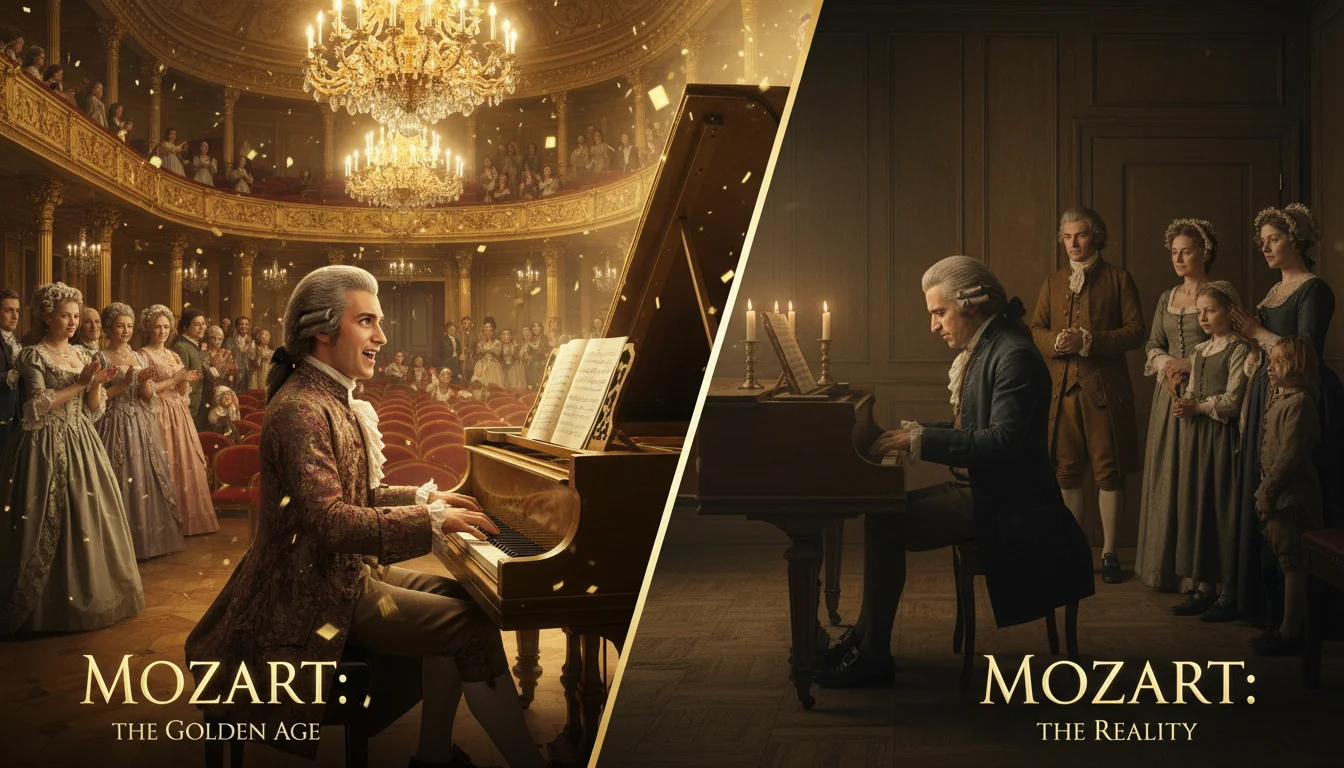
Few movies have shaped our understanding of a historical figure more than Milos Forman's Amadeus. Winner of eight Academy Awards including Best Picture, the 1984 film turned Wolfgang Amadeus Mozart into a cackling, potty-mouthed genius and Antonio Salieri into a jealous villain who plotted his rival's death. It remains one of the greatest films ever made about artistic genius.
But how much of it actually happened? Let's fact-check this masterpiece.
What Hollywood Got Right
Mozart's Crude Sense of Humor
That giggling, vulgar Mozart who shocks the Viennese court? Surprisingly accurate. Mozart's real letters - especially those to his father Leopold, his sister Nannerl, and his cousin Maria Anna Thekla - are full of juvenile humor that would make a twelve-year-old blush. He had a genuine fondness for phrases like "Leck mich im Arsch" (you can probably guess the translation). Whether he was quite as loud and obnoxious about it in public as Tom Hulce portrays is debatable, but the crude humor itself was very real.
The Mysterious Requiem Commission
One of the film's most haunting elements - a masked stranger appearing to commission a Requiem from the dying Mozart - is rooted in fact. Mozart really did receive an anonymous commission for a Requiem Mass near the end of his life. The mysterious patron was Count Franz von Walsegg, an amateur musician who wanted to pass off the work as his own composition, written in memory of his deceased wife. Mozart died before finishing it, and his student Franz Xaver Sussmayr completed the piece.
Mozart Was Terrible with Money
The film shows Mozart spiraling into debt despite his success, and this is accurate. When Mozart died in 1791 at age 35, he was genuinely in financial trouble. His wife Constanze had to petition Emperor Leopold II for a pension to support herself and their children. But here's the important nuance - this wasn't because Mozart was unsuccessful or unappreciated. He earned good money throughout his career. He was simply bad at managing it, spending lavishly and living beyond his means.
His Musical Genius Was Recognized
The film's central conceit - that Mozart's music was transcendently brilliant - needs no fact-checking. Even his contemporaries recognized his extraordinary talent. Emperor Joseph II did attend Mozart's operas, and they were generally well-received (more on that below). The idea that Mozart could compose complex pieces seemingly without effort, writing clean manuscripts with few corrections, is supported by surviving documents.
Mozart's Name Really Was "Amadeus" (Sort Of)
He was baptized Joannes Chrysostomus Wolfgangus Theophilus Mozart. "Theophilus" means "lover of God" in Greek, and Mozart freely translated it across languages - Amadeus (Latin), Gottlieb (German), Amadeo (Italian), and his apparent personal favorite, Amade (French). So the title works, even if he rarely used that exact form himself.
What Hollywood Got Wrong
The Entire Salieri Rivalry
This is the big one. The film's entire foundation - that Antonio Salieri was consumed by jealous hatred of Mozart and actively sabotaged his career - is almost certainly fiction. In reality, there's little evidence of a bitter rivalry between them. Salieri was one of the most respected composers in Vienna, a successful court composer who had plenty of work and recognition. He had no real reason to feel threatened.
Most tellingly, after Mozart's death, Salieri became the music teacher of Mozart's son Franz Xaver. Would a grieving widow entrust her child's education to the man who murdered her husband? The whole "deadly rivalry" narrative traces back to an 1830 play by Alexander Pushkin, not to historical fact.
Salieri Did Not Poison Mozart
Despite being the film's central plot point, there is virtually no credible evidence that Salieri poisoned Mozart. Mozart is said to have expressed fears of being poisoned near the end of his life; according to an early biographer's account relayed by Constanze, he told her, "I am sure I have been poisoned. I cannot rid myself of this idea." But the actual cause of his death remains unknown. Modern theories range from rheumatic fever to kidney disease to streptococcal infection. Salieri, for his part, reportedly denied the rumors during a hospital stay in 1823, saying "I can assure you on my word of honour that there is no truth in that absurd rumour."
Salieri Was No Lonely Bachelor
The film portrays Salieri as something of a dried-up, solitary figure whose devotion to God consumed his personal life. In reality, Salieri married Therese Helferstorfer in 1774 and had eight children. He was a devoted family man, a generous teacher, and widely liked by his peers. Among his students were Beethoven, Schubert, and Liszt - three of the greatest composers who ever lived. Hardly the bitter, isolated figure F. Murray Abraham so brilliantly portrayed.
The Requiem Deathbed Scene Never Happened
One of cinema's most powerful scenes shows a dying Mozart dictating the Requiem to Salieri, who frantically scribbles down the master's final notes. It's beautiful filmmaking, but pure invention. The Requiem was completed by Mozart's student Sussmayr, not Salieri. There's no evidence Salieri was involved in any way with the composition.
Mozart Was Not an Alcoholic
While the film suggests Mozart was a heavy drinker whose substance abuse contributed to his decline, historical evidence doesn't support this. He enjoyed socializing and certainly drank (it was 18th-century Vienna - everyone did), but there's no indication he was the stumbling drunk the movie sometimes implies.
His Operas Were Not Failures
The film suggests several of Mozart's works were poorly received, with performances cut short and audiences walking out. In reality, many of his operas were hits. The Marriage of Figaro was enormously popular in Prague. Don Giovanni was a sensation. Even The Magic Flute, which the film treats somewhat dismissively, was a commercial success that Mozart lived to enjoy in the final weeks of his life.
The Pauper's Funeral Myth
The film's haunting final image - Mozart's body dumped into a mass grave in the rain - suggests he died forgotten and dishonored. The truth is more mundane. Mozart received a standard "third-class" Viennese funeral, which was the norm for the middle class at the time. Emperor Joseph II had reformed funeral practices to discourage extravagant burials. Mozart's funeral was ordinary, not humiliating. The rain on that December day? Meteorological records suggest the weather was actually mild.
The Verdict
Historical Accuracy Score: 4/10
Amadeus is a magnificent film that is almost entirely wrong about everything it depicts. The Salieri rivalry is fiction. The poisoning is fiction. The deathbed Requiem scene is fiction. The film openly acknowledges this - Peter Shaffer called his work "a fantasia on the theme of Mozart and Salieri," and the clever framing device of an elderly, unreliable Salieri narrating the story gives the filmmakers a built-in excuse for every inaccuracy.
But here's what matters: the film captures something true about genius itself. The anguish of recognizing brilliance you can never match, the unfairness of talent's distribution, the way extraordinary art can emerge from very ordinary (even crude) human beings. Mozart's actual music carries the emotional weight of the film, and that music is presented with genuine reverence and stunning performances by the Academy of St Martin in the Fields.
Amadeus doesn't tell you what really happened between Mozart and Salieri. But it tells you something true about what it feels like to stand in the shadow of greatness - and that's why we still watch it, 40 years later.
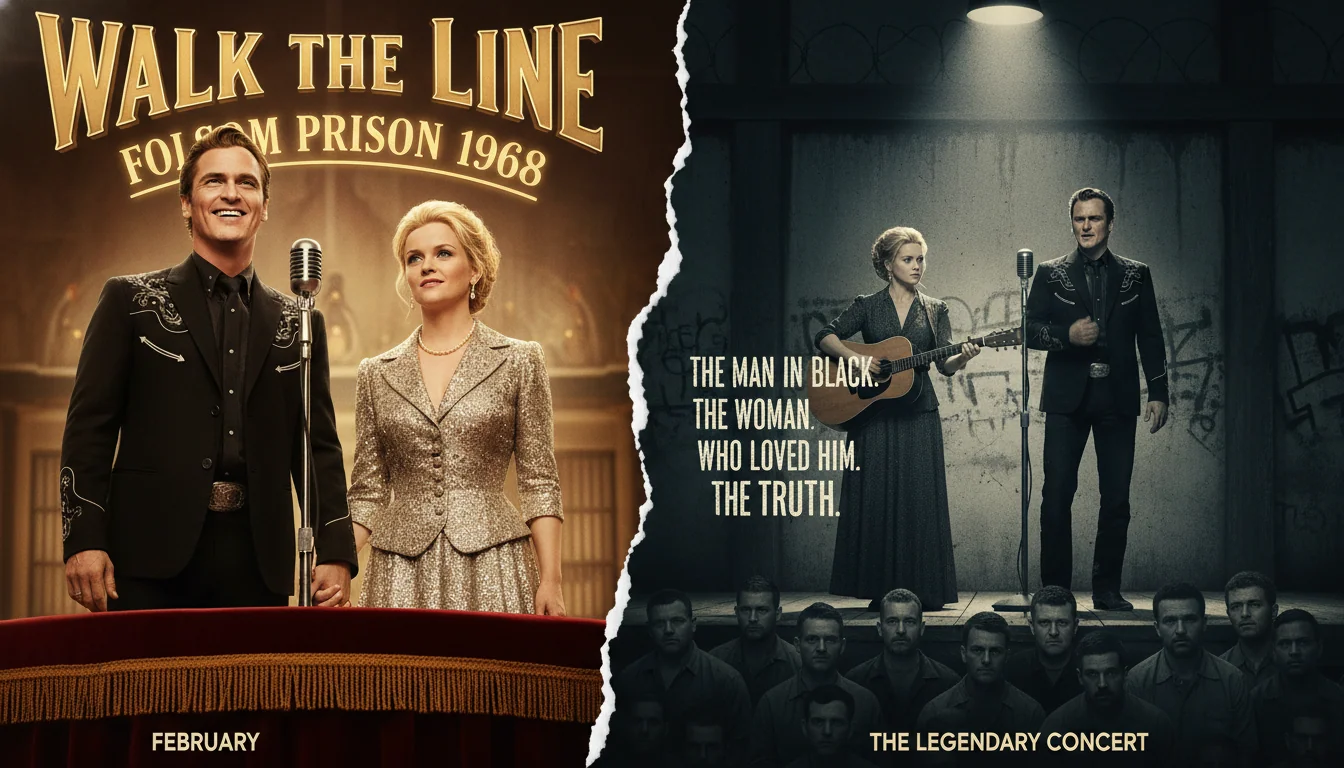
For other musician biopics subjected to the same fact-checking, see Bohemian Rhapsody vs history and Walk the Line vs history.
Quick Answers
Common questions about this topic
Was Mozart really crude and vulgar?
Yes. Mozart's real letters were full of juvenile scatological humor and crude jokes, which he traded with his family. Whether he was as loud and obnoxious about it in public salons as Tom Hulce plays him in the film is more debatable, but the core personality trait is well documented.
Did Salieri actually poison Mozart?
There is virtually no credible evidence that Salieri poisoned Mozart. Modern theories suggest Mozart died from rheumatic fever, kidney disease, or a streptococcal infection in 1791. Salieri himself denied the rumor during a hospital stay in 1823, two years before his death. The poisoning story traces to an 1830 play by Alexander Pushkin, not to historical fact.
Were Mozart and Salieri really rivals?
The entire film's foundation of a bitter rivalry is almost certainly fiction. There is little evidence of enmity between the two composers. Salieri was a respected, successful court composer with plenty of work and recognition, and had no obvious reason to feel threatened by Mozart.
Did Mozart receive a mysterious Requiem commission?
Yes, this part is rooted in fact. Mozart received an anonymous Requiem commission near the end of his life from Count Franz von Walsegg, who wanted to pass the piece off as his own. Mozart died before finishing it, and his student Franz Xaver Sussmayr completed the score - not Salieri, as the film implies.

Debate the Accuracy with the Real Figures
Ask the real people what Hollywood got wrong about their lives.
Chat with HistoryJoin the HistorIQly Club
Get smarter about the past.
Weekly stories, deep dives, and exclusive content straight to your inbox.