The Vanishing of the Amber Room: History's Greatest Stolen Treasure
The Amber Room, a baroque masterpiece valued at up to $500 million, disappeared during WWII and has never been found. Treasure hunters who searched for it ended up dead.
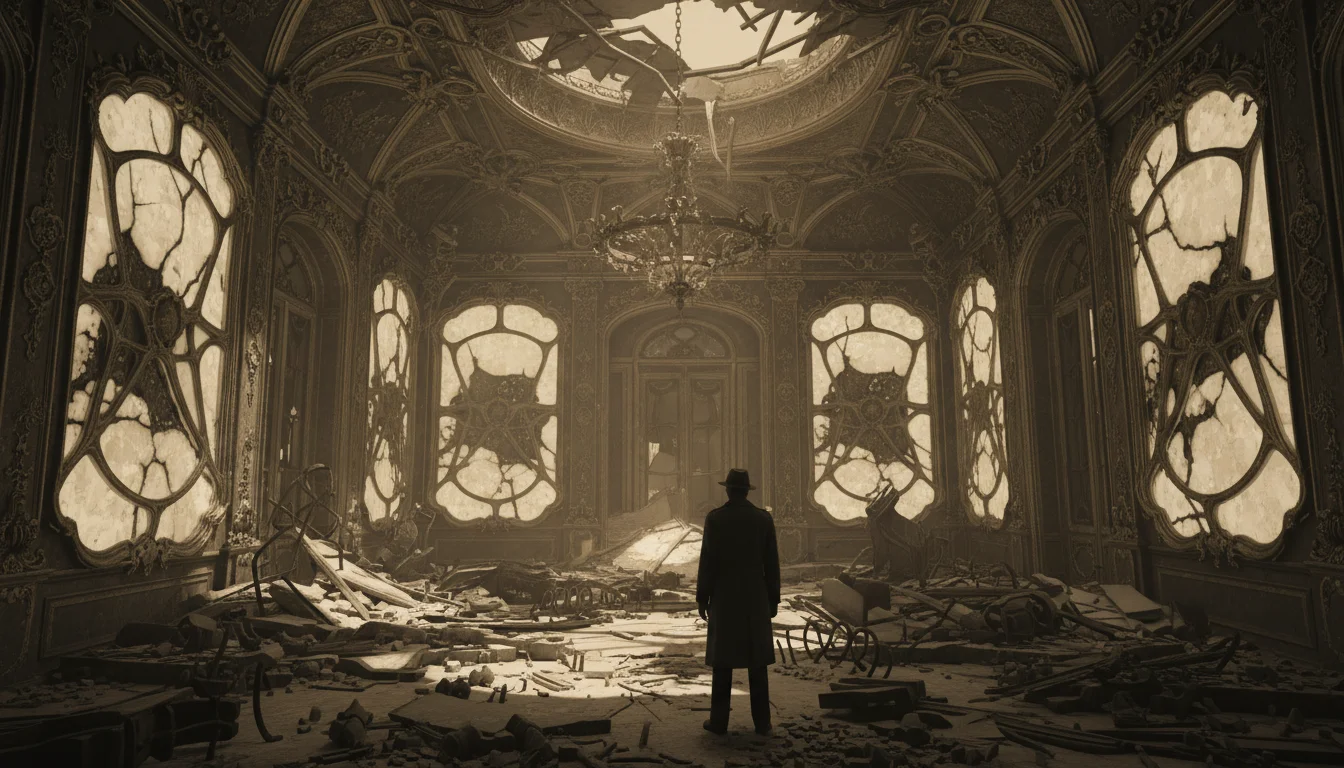
They called it the Eighth Wonder of the World. Six tons of amber panels backed with gold leaf and mirrors, stretching across 55 square meters of a Russian palace. In 1941, the Nazis stole it. By 1945, it had vanished completely. Eight decades later, nobody knows where it is, and several people who went looking for it never came back alive.
A Gift Between Kings
The Amber Room began as a Prussian flex. In 1701, sculptor Andreas Schluter and Danish amber craftsman Gottfried Wolfram designed it for King Frederick I of Prussia. The panels took over a decade to complete, each one a mosaic of thousands of precisely carved amber pieces in honey, gold, and cognac tones, backed by gold leaf and studded with precious stones.
In 1716, Frederick's son gave the entire room to Russian Tsar Peter the Great as a diplomatic gift, cementing an alliance against Sweden. Peter loved it. His daughter Empress Elizabeth later had it expanded and installed at the Catherine Palace in Tsarskoye Selo, just south of St. Petersburg. Italian architect Bartolomeo Francesco Rastrelli redesigned the room to fill a larger hall, adding mirrors, Venetian mosaics, and additional amber panels.
By the time it was finished, the Amber Room covered the walls of a chamber measuring more than 55 square meters, roughly 590 square feet. Visitors described stepping inside it as entering a glowing jewel box. Candles reflected endlessly through the amber and mirrors, casting everything in warm golden light. Modern estimates of its value range widely, from $142 million to over $500 million.
36 Hours
When Nazi Germany launched Operation Barbarossa in June 1941, Soviet curators at the Catherine Palace knew they had a problem. They tried to disassemble the Amber Room for evacuation, but the amber had grown brittle over two centuries. Panels cracked at the slightest touch. In desperation, they covered the walls with thin wallpaper and gauze, hoping the Germans might not notice.
They noticed.
Army Group North reached Tsarskoye Selo in September 1941. German soldiers, working under the direction of art historians who knew exactly what they were looking for, dismantled the entire room in just 36 hours. They packed 27 crates and shipped them to Konigsberg Castle in East Prussia (modern-day Kaliningrad, Russia), where the room was reassembled and put on display at the castle museum.
Alfred Rohde, the museum's director, proudly showed it off to visiting Nazi officials through 1943. Then the war turned.
The Last Sighting
In late August 1944, British bombers devastated Konigsberg. The castle sustained heavy damage. Rohde claimed he had packed the Amber Room into crates and stored them in the castle's cellars for protection. Soviet troops reached Konigsberg in April 1945 after a brutal three-day siege. When they searched the ruins, they found evidence of the Amber Room's crates but not the room itself.
Alfred Rohde was one of the last people known to have seen it. He died under murky circumstances shortly after the Soviet occupation, allegedly from typhus, though the timing struck investigators as suspicious. His wife died the same day. The doctor who signed their death certificates vanished.
From that point, the Amber Room simply ceased to exist.
Theories and Dead Ends
The most straightforward theory is that the Amber Room burned in the 1944 bombing or the 1945 siege. Amber is organic resin. It burns. Many historians believe the panels were simply incinerated, and that the decades of treasure hunting have been chasing ash.
But others are not convinced. Witnesses reported seeing crates being loaded onto trucks and trains leaving Konigsberg before the Soviet advance. If the room survived the bombing, where did it go?
Some investigators believe it was hidden in one of the hundreds of underground tunnels and bunkers that the Nazis built across East Prussia. The region is riddled with them, many still unexplored. Others think the crates were loaded onto a ship. At least three vessels that left East Prussian ports in early 1945 were sunk by Soviet submarines in the Baltic Sea. The Wilhelm Gustloff, which departed Gotenhafen (Gdynia) and was torpedoed on January 30, 1945, in the deadliest maritime disaster in history, has been proposed as a possible resting place, though divers have found no evidence of amber among its wreckage.
A more elaborate theory places the room in a secret Nazi bunker complex in the Ore Mountains along the Czech-German border, or in salt mines near the Austrian town of Altaussee, where the Nazis hid enormous quantities of looted art.
The Body Count
What makes the Amber Room story genuinely unsettling is what happened to the people who searched for it.
Georg Stein, a former German soldier who became obsessed with finding the room, spent decades following leads across Bavaria. In 1987, he was found dead in a forest near the town of Starnberg. His body was in the woods, and the official ruling was suicide. His research files were never recovered.
In 2008, a German TV journalist named Dmitri Nikitin traveled to Kaliningrad to investigate a lead on the room's location. His body was found in a local park. The cause of death was never conclusively determined.
Italian divers searching the Baltic wrecks have reported being warned off by unknown parties. A Polish team excavating a suspected tunnel entrance in 2015 received threatening letters. None of these incidents have been explained or connected to any suspect.
The Reconstruction and the Enduring Mystery
In 1979, the Soviet government decided to simply rebuild the Amber Room from scratch. Russian and German craftsmen worked for 24 years, using historic photographs and original techniques. The reconstruction was unveiled at the Catherine Palace in 2003. It is beautiful, and visitors can see it today. But it is a copy.
The only original piece ever recovered surfaced in 1997, when German police traced an amber mosaic panel to the son of a deceased soldier. The mosaic had been sitting in his family's possession for over 50 years. It now sits in a museum display, the sole surviving fragment of a room that once dazzled the courts of Europe.
Somewhere, the rest of it may still exist, buried in a collapsed tunnel, resting on the floor of the Baltic, or reduced to nothing by the fires of a war that destroyed so much beauty it is impossible to calculate the loss. The Amber Room was not just a treasure. It was a testament to what human hands could make from fossilized tree resin, gold, and light.
And then it was gone.
For other mysteries where the evidence points everywhere and nowhere, see the Flannan Isles Lighthouse Mystery and The Beale Ciphers.

Want to Interrogate the Suspects?
Chat with historical figures and uncover the truth behind history's greatest mysteries.
Start Your InvestigationJoin the HistorIQly Club
Get smarter about the past.
Weekly stories, deep dives, and exclusive content straight to your inbox.