Apocalypto vs History: How Accurate is Mel Gibson's Maya Epic?
We examine Apocalypto's historical accuracy, fact-checking Mel Gibson's Maya epic against what archaeologists actually know about ancient Mesoamerica.
Read Wikipedia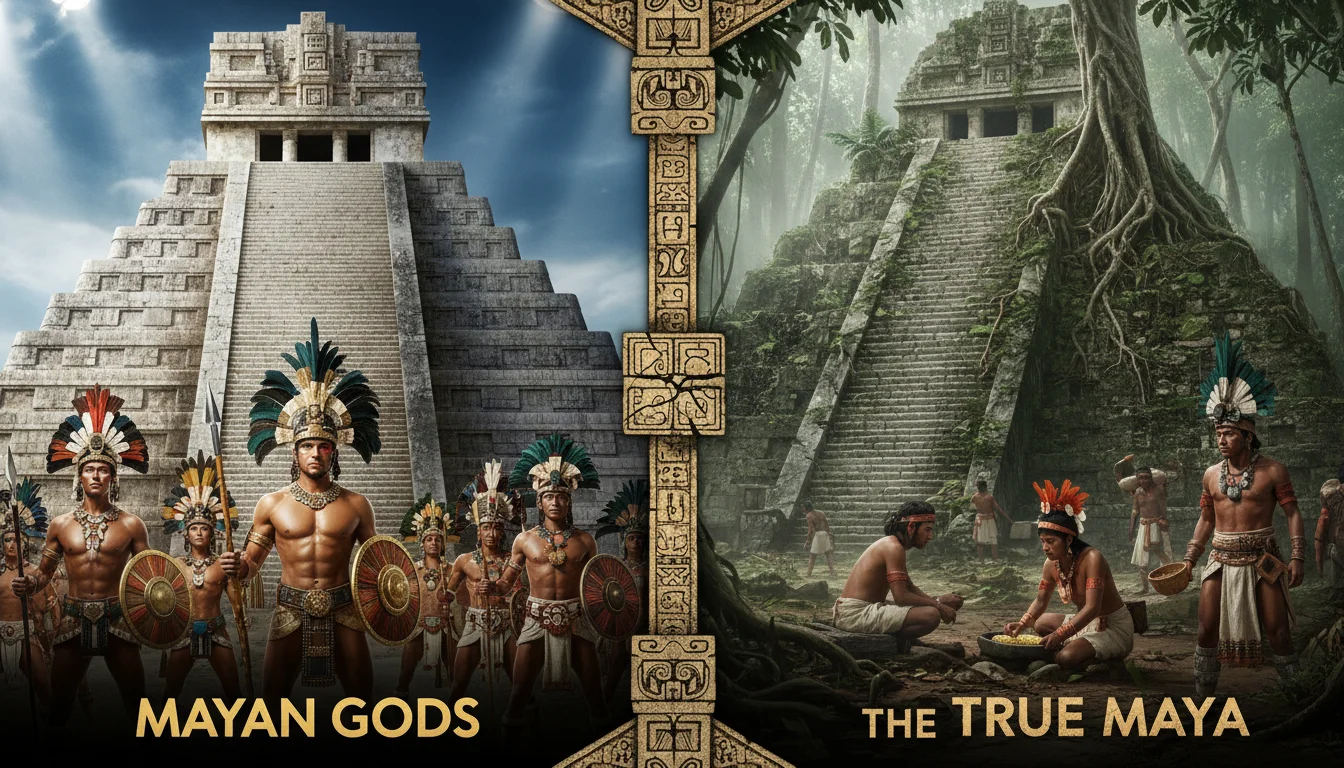
Mel Gibson's 2006 epic Apocalypto plunges viewers into the collapsing world of ancient Mesoamerica. Shot entirely in Yucatec Maya language and featuring brutal human sacrifices, towering pyramids, and a desperate chase through the jungle, it's one of the most visually ambitious historical films ever made. But what is Apocalypto's historical accuracy - and how much is Hollywood imagination?
What Hollywood Got RIGHT
The Visual Splendor of Maya Cities
Gibson deserves credit for capturing the sheer scale and sophistication of Maya urban centers. The film's recreation of a major Maya city - with its stepped pyramids, painted temples, bustling markets, and intricate murals - reflects genuine archaeological evidence. The Maya did build monumental architecture rivaling anything in the ancient world, and their cities housed tens of thousands of people.
The production team consulted with Maya scholar Richard Hansen, and it shows. The jade jewelry, elaborate headdresses, body paint, and tattooing are all supported by archaeological finds and Spanish colonial accounts. The scene where Jaguar Paw first enters the city genuinely conveys the sensory overload a rural villager would have experienced.
Human Sacrifice Was Real
Yes, the Maya practiced human sacrifice. This isn't colonial propaganda - it's confirmed by countless archaeological discoveries, including mass graves, decapitated skeletons, and graphic murals depicting the practice. The Postclassic Maya (the era Gibson was roughly depicting) increased these rituals as their civilization faced decline.
Heart extraction, while more famously associated with the Aztecs, was practiced by the Maya as well. The cenotes (natural sinkholes) of the Yucatan have yielded human remains consistent with sacrificial rituals, just as the film suggests.
Environmental Collapse
The film's backdrop of deforestation and environmental degradation reflects a real theory about Maya collapse. Many scholars argue that overcultivation, deforestation, and soil exhaustion contributed to the abandonment of major Maya cities during the Terminal Classic period (800-1000 CE). Gibson was tapping into genuine academic debate about sustainability and civilizational collapse.
The Language
Shooting the film entirely in Yucatec Maya was a bold and commendable choice. While not all dialogue is perfectly accurate (modern Maya differs from ancient forms), the decision to avoid English or Spanish added authenticity that most historical epics lack entirely.
What Hollywood Got WRONG
The Timeline is a Mess
Here's where Apocalypto falls apart for historians. The film compresses roughly 800 years of Maya history into a single moment.
The massive pyramid complexes and city-building shown in the film peaked during the Classic Period (250-900 CE). By the time Spanish conquistadors arrived - shown in the film's final scene - most of these grand cities had been abandoned for centuries. The Postclassic Maya (1000-1500 CE) lived in smaller, less monumental settlements.
Gibson essentially depicts Classic Period architecture with Postclassic-era decline while adding Spanish arrival, creating an impossible historical mashup.
The Maya Were Not the Aztecs
The film's depiction of mass sacrifice more closely resembles Aztec practices than documented Maya rituals. The Aztecs (who lived in central Mexico, not the Maya lowlands) conducted human sacrifice on an industrial scale - thousands of victims in single ceremonies. Maya sacrifice was significant but more selective, often involving captured nobles and warriors rather than random villagers grabbed from the jungle.
The scene where a marketplace vendor sells human jaws as necklaces? That's lifted straight from Aztec accounts, not Maya archaeology.
The "Savage Decline" Narrative
Gibson frames Maya civilization as primitive and decadent - a people so lost in bloodlust that they deserved to fall. This "noble savage meets corrupt empire" narrative has racist overtones that troubled many historians and Maya descendants.
In reality, Maya civilization was extraordinarily sophisticated. They independently invented zero, developed complex writing, created accurate astronomical calendars, and built sustainable agricultural systems. Portraying them primarily through violence erases these achievements.
Those Villagers Wouldn't Exist
The peaceful forest-dwelling villagers of the film's opening are essentially a fiction. By the Postclassic era, most Maya lived in organized communities connected to larger political networks, not isolated hunter-gatherer bands. The dichotomy between "pure jungle people" and "corrupt city dwellers" is a Hollywood invention.
The Spanish Arrival Scene
The film ends with Spanish ships appearing offshore, suggesting the conquistadors will bring "real" civilization. This is historically suspect and ideologically troubling.
First, Spanish contact didn't immediately follow the scenes depicted - there's a centuries-wide gap. Second, framing Spanish arrival as salvation ignores the catastrophic death toll that followed: disease, warfare, and colonization killed roughly 90% of the indigenous population.
Historical Accuracy Score: 5/10
Apocalypto gets points for visual ambition, linguistic authenticity, and acknowledging the reality of human sacrifice. But its fundamental timeline problems, conflation of Maya and Aztec practices, and troubling ideological framing drag it down significantly.
Gibson created a thrilling action movie that feels historically immersive. But scratch the surface, and you'll find an empire built on dramatic license rather than archaeological precision. The Maya deserve better than being reduced to a cautionary tale about savage decline.
The Verdict
Watch it for the cinematography and the chase sequences. Just don't cite it in your history paper.
Want more historical fact-checks? Follow @Historiqly for daily dives into the past. You can also explore our breakdowns of The Last Samurai vs. history and The Last King of Scotland vs. history.

Debate the Accuracy with the Real Figures
Ask the real people what Hollywood got wrong about their lives.
Create your free account →No card required. Some figures and features require a paid plan.
Join the HistorIQly Club
Get smarter about the past.
Weekly stories, deep dives, and exclusive content straight to your inbox.