Hacksaw Ridge vs. History: How Accurate Is Mel Gibson's WWII Masterpiece?
Hacksaw Ridge historical accuracy breakdown: Desmond Doss really did save 75 men without a weapon, but the film takes liberties with his family and the timeline.
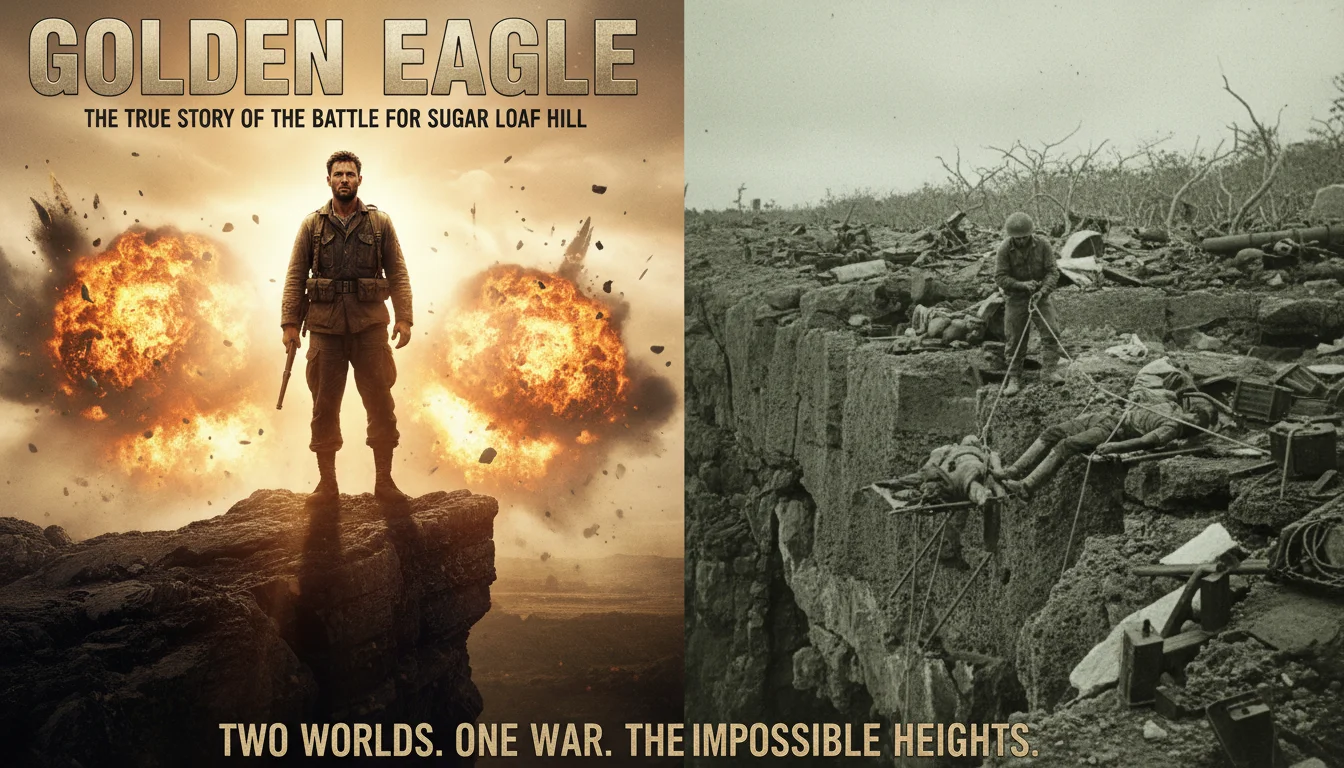
In 2016, Mel Gibson returned to the director's chair with Hacksaw Ridge, a film about Desmond Doss - the first conscientious objector to receive the Medal of Honor. Andrew Garfield's portrayal of the soft-spoken Seventh-day Adventist who refused to carry a weapon yet saved dozens of wounded soldiers on Okinawa earned him an Oscar nomination and moved audiences worldwide.
But how much of this incredible story actually happened? Let's climb the escarpment and find out.
What Hollywood Got RIGHT
The Core Story Is Real - And Almost Unbelievable
The central miracle of Hacksaw Ridge is not Hollywood invention. Desmond Doss truly was a Seventh-day Adventist who enlisted as a combat medic during WWII while refusing to carry a weapon. During the Battle of Okinawa in April-May 1945, he single-handedly rescued approximately 75 wounded soldiers from the top of the Maeda Escarpment - a sheer 400-foot cliff fortified with Japanese machine gun nests and booby traps. The real Doss lowered each man down the cliff face using a rope and a special knot he had learned in basic training, repeating the prayer "Lord, please let me get one more" with each rescue.
The Bullying Was Real
The film shows Doss being mercilessly bullied by fellow soldiers who viewed his pacifism as cowardice. This is well documented. Soldiers threw boots at him during his bedtime prayers, called him "Holy Jesus" and "Holy Joe," and one man even threatened to shoot him in combat. His commanding officer, Captain Jack Glover, actively tried to get him transferred out of the unit - or out of the army entirely. The military even convened a hearing to discharge Doss on a Section 8 for mental instability, though it went nowhere since Washington would never approve such a discharge solely on religious grounds.
The Court-Martial Threat
An officer named Captain Cunningham really did try to force a rifle into Doss's hands in front of the entire unit. When Doss refused, he was threatened with court-martial. Just as in the film, another officer intervened, and the charges were eventually dropped thanks to protections for conscientious objectors under the Articles of War.
His Father's WWI Trauma
The film accurately portrays Doss's father, Tom Doss, as a WWI veteran haunted by the war and prone to drinking. Tom Doss really did lose close friends in WWI, which contributed to his struggles with alcohol and depression during the Great Depression. The film captures the essence of how his father's pain shaped young Desmond's views on violence.
The Medal of Honor
President Harry Truman personally awarded Doss the Medal of Honor on October 12, 1945. Truman reportedly told him, "I'm proud of you. You really deserve this. I consider this a greater honor than being president." Doss was the first conscientious objector to receive the nation's highest military honor.
What Hollywood Got WRONG
Dorothy Was Not a Nurse
One of the film's most charming subplots - Doss meeting his future wife Dorothy Schutte when he donates blood at a hospital where she works as a nurse - is pure fiction. In reality, Doss met Dorothy at church in Lynchburg, Virginia, where she was selling Seventh-day Adventist books. She didn't become a nurse until after the war, when Doss's combat injuries left him unable to work full-time and she needed to support their family.
The Father Was Not That Abusive
While the film portrays Tom Doss as a volatile, physically abusive drunk who terrorizes the family, the reality was more nuanced. Tom Doss did struggle with alcohol and was affected by his WWI experiences, but the movie greatly exaggerates his behavior. The real incident that shaped Desmond's hatred of guns involved his father pulling a gun on his uncle (not his mother) during a drunken fight. His mother intervened and called the police. The film dramatizes this into a far more violent domestic scene.
Smitty Is Fictional
The character Smitty, played by Luke Bracey - who starts as Doss's chief tormentor and later becomes his ally - does not appear to be based on any single real person. He's a composite character created to give the bullying a dramatic arc and a satisfying redemption. In reality, the harassment came from many different soldiers, and there's no documented equivalent of Smitty's battlefield conversion.
The Wedding Day Drama Never Happened
The film shows Doss nearly missing his own wedding because he's denied a pass and thrown in a holding cell. This didn't happen. Desmond and Dorothy were married on August 17, 1942, before he went on active duty, without any last-minute military drama.
The Night Beating
In a powerful scene, Doss is dragged from his bed and beaten by his fellow soldiers under cover of darkness. While the bullying and intimidation were real and well documented, there appears to be no historical record of a coordinated nighttime assault. This seems to be a dramatic embellishment - borrowing from the boot camp trope seen in films like Full Metal Jacket.
The Battle Scenes Are Exaggerated
While the Battle of Okinawa was genuinely horrific, Gibson's depiction dials the carnage up to eleven. The constant wave attacks, the sheer density of explosions, and the almost zombie-like Japanese charges are cinematic amplifications. Veterans of the actual battle have noted that while it was indeed brutal, the film compresses days of fighting into what feels like continuous apocalyptic combat. The real battle for the escarpment took place over several weeks, not the condensed timeline the film suggests.
Previous Campaigns Omitted
The film jumps straight from training to Okinawa, but Doss served with distinction in three campaigns before Hacksaw Ridge. He participated in combat on Guam and Leyte in the Philippines, where he was already earning the respect of his unit as a fearless medic. By the time he reached Okinawa, he wasn't the untested newcomer the film implies - he was a seasoned combat medic.
The Verdict
Hacksaw Ridge gets the spirit of Desmond Doss's story remarkably right. The central facts - a man who refused to carry a weapon saving 75 lives on one of WWII's most brutal battlefields - are true and need no embellishment. Where Gibson takes liberties is in the domestic drama (making his father more villainous), the romance (inventing the nurse meet-cute), and the battle sequences (compressing and intensifying the combat). The fictional character of Smitty provides a neat narrative arc that reality didn't quite deliver, and the omission of Doss's earlier campaigns makes Okinawa seem like his first rodeo when it wasn't.
Still, the film treats its subject with genuine reverence, and the real Desmond Doss's story is so extraordinary that even Hollywood's version feels understated compared to some of the things the man actually did. His son, Desmond Doss Jr., noted that his father had turned down film offers for decades because none promised accuracy - a testament to how seriously the family took getting it right.
Historical Accuracy Score: 7/10 - The extraordinary true story carries the film, and the core facts hold up well. The Hollywood additions are mostly forgivable dramatic license rather than egregious distortions.
For other WWII films that blend fact and Hollywood drama, see Saving Private Ryan vs. History and The Bridge on the River Kwai vs. History.

Debate the Accuracy with the Real Figures
Ask the real people what Hollywood got wrong about their lives.
Chat with HistoryJoin the HistorIQly Club
Get smarter about the past.
Weekly stories, deep dives, and exclusive content straight to your inbox.