Argo vs. History: How Accurate Is Ben Affleck's Best Picture Winner?
Argo historical accuracy: Ben Affleck's CIA thriller about the Canadian Caper won three Oscars, but how much did Hollywood get right, and whose role got erased?
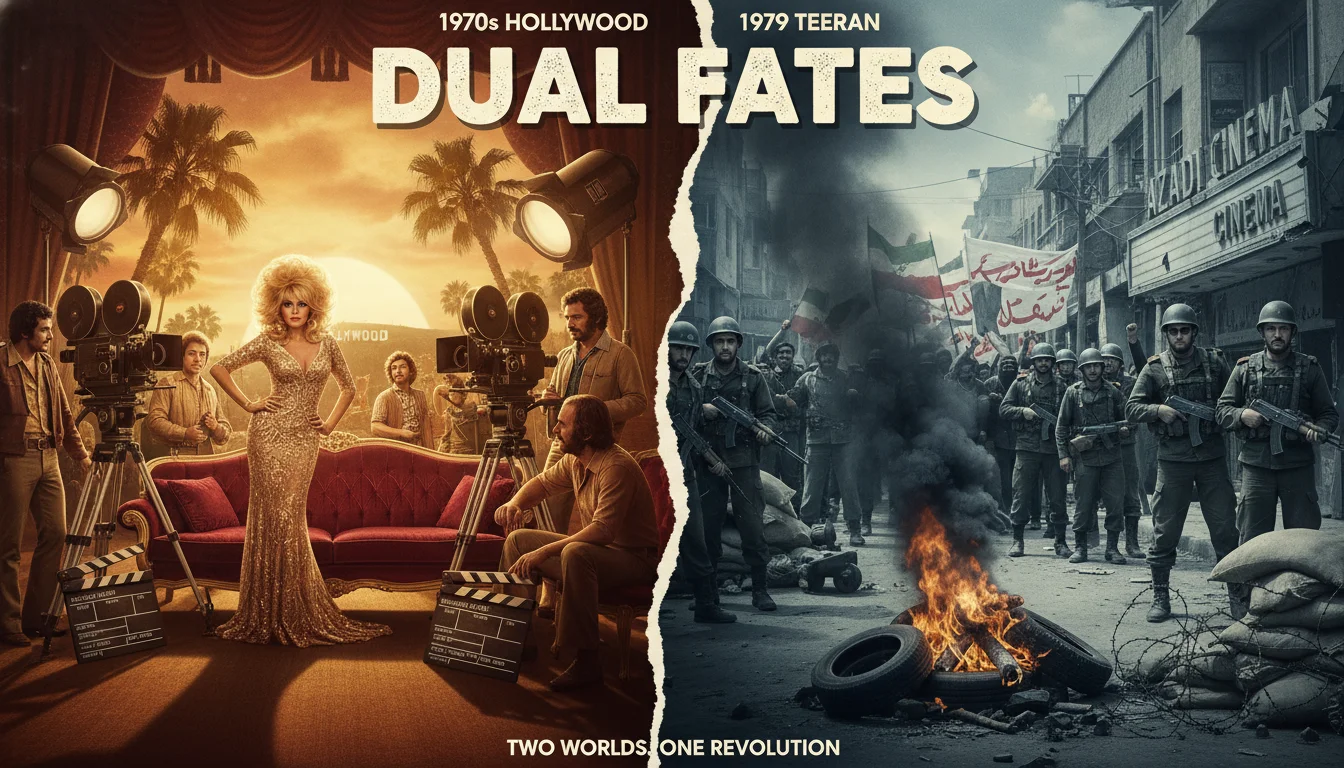
Ben Affleck's 2012 thriller Argo swept awards season, winning Best Picture at the Academy Awards and cementing itself as one of the decade's most acclaimed historical films. The movie tells the unbelievable-but-true story of how the CIA created a fake Hollywood production to rescue six American diplomats hiding in Tehran during the 1979 Iran hostage crisis.
It's the kind of story that sounds too ridiculous to be real. A CIA agent teams up with Hollywood makeup artists to create a phony science fiction film, complete with storyboards and trade magazine ads, then flies into revolutionary Iran to smuggle diplomats out while posing as Canadian filmmakers? Surely that's too absurd for reality.
Except it actually happened. The question is: how much of Argo reflects what really occurred, and how much is pure Hollywood invention?
What Hollywood Got RIGHT
The Fake Movie Scheme Really Existed
The central premise - creating a fake film production to provide cover for an extraction operation - is 100 percent true. CIA officer Tony Mendez really did devise this audacious plan after realizing that six American diplomats were hiding in the homes of Canadian officials while 52 of their colleagues remained hostages in the embassy.
Mendez genuinely believed that a Hollywood cover story would work better than alternatives like posing as teachers or agricultural workers. His reasoning was sound: everyone could imagine what Hollywood people acted like, and the film industry's reputation for eccentricity would explain any unusual behavior.
John Chambers: The Real Hollywood Spy
John Goodman's character, makeup artist John Chambers, was a real person who genuinely worked with the CIA. Chambers, who had won an Oscar for his work on Planet of the Apes, had been quietly helping the agency for years, providing disguises and makeup expertise for covert operations. When Mendez needed Hollywood credibility, Chambers was his first call.
The movie correctly shows Chambers as the crucial link between the CIA and the entertainment industry. He knew how to make the fake production look legitimate and had the connections to pull it off.
The Production Company Was Real
Mendez and Chambers actually established Studio Six Productions in Los Angeles. They rented office space, set up a working phone line, and placed advertisements in Variety and The Hollywood Reporter announcing their upcoming science fiction epic. The trade ads were real, the office was staffed, and the phone was answered - all to create a paper trail that could withstand scrutiny if Iranian officials decided to verify the cover story.
The attention to detail was remarkable. If anyone called the production office, a real person would answer and confirm that yes, the film was in pre-production, and yes, they were scouting locations in the Middle East.
The Escape Actually Worked
The operation succeeded exactly as planned. On January 28, 1980, the six Americans - carrying Canadian passports provided by the Canadian government - boarded a Swissair flight and left Iran. As Tony Mendez later recounted, when the plane crossed out of Iranian airspace, the Americans broke into cheers. Other passengers joined in too, though they had no idea why these particular travelers were so relieved to leave Tehran.
What Hollywood Got WRONG
The Biggest Deception: Canada's Role
Here's where Argo commits what former Canadian Ambassador Ken Taylor called "a disgrace to history." The film dramatically minimizes Canada's central role in what was, after all, known as the "Canadian Caper."
In the movie, Canada appears as helpful background support while the CIA masterminds everything. The reality was nearly the opposite. Ambassador Ken Taylor called the CIA a "junior partner" in the operation, and he wasn't exaggerating.
The Canadians didn't just provide a place to stay. They scouted the Tehran airport, sent people in and out of Iran to establish travel patterns and obtain copies of visas, purchased multiple sets of airline tickets, and coached the Americans on how to sound Canadian. Taylor himself was simultaneously conducting espionage for the United States throughout the hostage crisis, at the personal request of President Jimmy Carter.
The film shows all six Americans staying at Ambassador Taylor's residence. In reality, they were split between Taylor's home and that of Canadian immigration officer John Sheardown - who doesn't appear in the movie at all. Sheardown, who housed five of the six diplomats for months while risking his own safety, was essentially erased from history.
After Taylor saw the film, he expressed concern that Canadians were "portrayed as innkeepers who are waiting to be saved by the CIA." It's a fair criticism.
The Non-Existent Airport Chase
The film's heart-pounding climax - with Revolutionary Guards piecing together shredded documents, discovering an American's identity, and chasing the escape flight down the runway in police cars - never happened. It was invented entirely for dramatic effect.
In reality? The trip through the airport was what Mendez called "smooth as silk." There was no last-minute discovery, no chase down the tarmac, no armed guards trying to stop the plane. The Americans walked through checkpoints, boarded their flight, and left.
The most dramatic real moment was when one American's documents were briefly inspected and an official walked away - only to return with a cup of tea. He'd simply taken a break.
The Cancelled Tickets Crisis
In the movie, Washington cancels the operation at the last minute, leaving Mendez scrambling to get approval reinstated while the escapees wait nervously to learn if their plane tickets even exist. This creates a nail-biting sequence as calls are made to the White House in the middle of the night.
None of this happened. The Canadian government purchased the tickets in advance. The operation was never cancelled. The bureaucratic drama was pure invention.
The Script's Real Name
The film shows Mendez discovering a script called "Argo" in a pile of Hollywood properties. Actually, the original script was called Lord of Light, based on Roger Zelazny's award-winning science fiction novel. It was part of an ambitious (and ultimately failed) plan called Science Fiction Land that would have been the first sci-fi theme park.
The CIA changed the title to "Argo" - reportedly because Mendez liked a particular knock-knock joke. ("Who's there?" "Argo." "Argo who?" "Argo fuck yourself.") The movie assigns this joke a different origin and uses it as a recurring gag.
Alan Arkin's Character Is Fictional
Alan Arkin's scene-stealing performance as veteran Hollywood producer Lester Siegel earned him an Oscar nomination. The character is presented as a crucial element of the scheme, lending legitimacy to the fake production.
But Lester Siegel never existed. The real partner Chambers brought in was Robert Sidell, another makeup artist who had worked on films like E.T. Using a makeup artist rather than a famous producer made the operation less visible, not more - the opposite of what the movie depicts.
Tony Mendez Didn't Work Alone
Ben Affleck's Mendez is presented as a lone operative entering Iran to save the day. In reality, Mendez had a partner on the mission - another CIA officer who accompanied him throughout the operation. This partner received no mention in the film whatsoever.
Britain and New Zealand Got Erased Too
The movie shows the British and New Zealand embassies turning away the fleeing Americans on the day of the embassy takeover. British officials called this "absolute nonsense." In reality, the British embassy housed Americans for several days before they were moved to Canadian residences. New Zealand also provided assistance that went unacknowledged.
Historical Accuracy Score: 6/10
Argo gets its central premise right - the CIA really did use a fake Hollywood production to extract American diplomats from revolutionary Iran, and it really did work. The details about Studio Six Productions, the trade advertisements, and John Chambers' involvement are all accurate.
But the film's treatment of Canada - the nation that actually gave the operation its name and shouldered most of the risk - is a significant historical injustice. Ken Taylor and John Sheardown sheltered the Americans for 79 days while lying to Iranian authorities. Taylor was actively spying for the United States. The Canadian government authorized the use of Canadian passports for foreign nationals, a potentially explosive diplomatic decision.
All of that gets reduced to "helpful innkeepers" while Ben Affleck's CIA officer becomes the hero.
The fabricated airport chase is forgivable as dramatic license - filmmakers need tension, and watching people peacefully board a plane isn't cinematic. But erasing the contributions of allied nations crosses a different line.
Argo is a terrific thriller. It's also a reminder that Hollywood's version of history, no matter how many Oscars it wins, should always be verified. The true story of the Canadian Caper is actually more impressive than what made it to screen - it just doesn't fit the narrative of American heroism that Affleck wanted to tell.
For other Hollywood thrillers fact-checked against the record, The Patriot vs. History covers Mel Gibson's Revolutionary War epic, and Apocalypto vs. History examines another film where dramatic license outran the historical record.
The "Canadian Caper" remained classified until 1997, when President Bill Clinton declassified the operation. Tony Mendez, who died in 2019, was awarded the Intelligence Star - though he couldn't keep it until the mission was made public. Ken Taylor died in 2015, having spent decades correcting the record about Canada's role.

Debate the Accuracy with the Real Figures
Ask the real people what Hollywood got wrong about their lives.
Chat with HistoryJoin the HistorIQly Club
Get smarter about the past.
Weekly stories, deep dives, and exclusive content straight to your inbox.