The English Longbow: How Yew Wood Killed the Age of the Knight
The English longbow gave England two centuries of battlefield dominance. At Crécy and Agincourt, yew bowmen shredded French chivalry and changed medieval warfare.
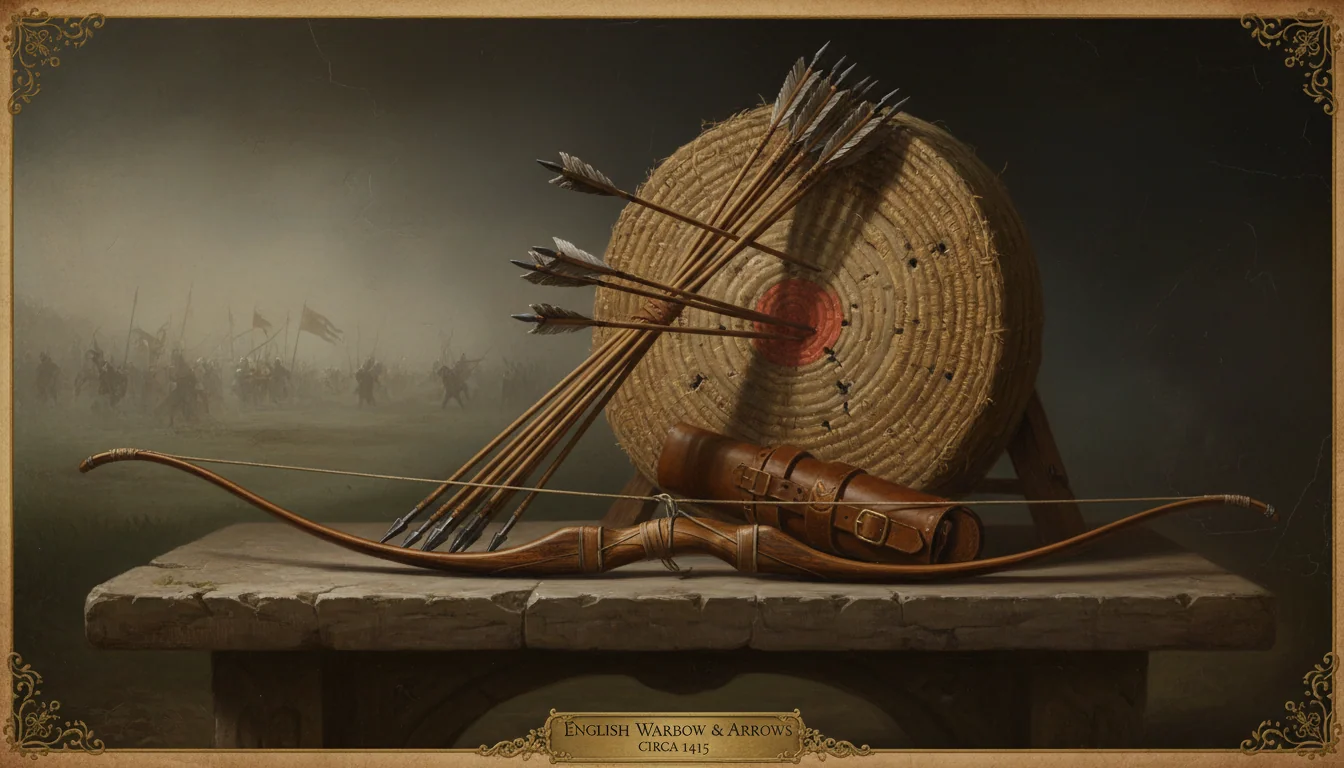
For more than two centuries, a single weapon dominated English warfare and traumatized the French nobility. The longbow was nothing more than a six-foot stave of yew wood, a hemp string, and an arrow with a bodkin point. It was simple enough that a child could understand it. Drawing it, however, took the work of a lifetime, and the kingdom that mastered it spent two hundred years bending its entire society around the production of archers. The result was a string of victories so lopsided that they changed how Europe imagined the relationship between commoner and king.
The Welsh inheritance
The longbow was not invented in England. Bows of yew wood, drawn to ear or chin, had been used across northern Europe since prehistory. What we now call the English longbow was a refined, oversized version of the war bow used by archers in southern Wales during the 11th and 12th centuries. Gerald of Wales, writing in the 1180s, described the bows of Gwent driving arrows clean through the oak doors of a castle gate and pinning a knight's mailed thigh to his horse.
Edward I, fighting the Welsh in the 1270s and 80s, took notice. After he completed his conquest of Wales, he absorbed Welsh archers into English armies. By the early 14th century, Edward III had built the longbow into the heart of English military doctrine, with statutes requiring villagers to practice every Sunday and forbidding lesser sports such as football that distracted from archery practice.
The technology
A war-grade English longbow was made from a single billet of yew, ideally taken from the southern slopes of the Italian or Iberian Alps where slow-growing trees produced the dense, springy wood the bowyers wanted. The bow's cross-section combined the hard outer sapwood, which resisted stretching, with the softer heartwood, which compressed under the bend. This natural laminate gave the bow its enormous draw weight without requiring composite construction.
The string was hemp or flax, waxed against the rain. The arrows were ash or birch, fletched with goose feathers, tipped with a variety of heads: broadheads for unarmored targets, needle-like bodkins for piercing mail, short heavy points for armor-piercing at short range. A typical English archer carried two sheaves of 24 arrows each, with resupply bundles brought up by squires during the battle.
Surviving examples of war bows are rare because wooden weapons rarely survive in soil. The exception is the wreck of Henry VIII's flagship Mary Rose, which sank in 1545 carrying 137 longbows and over 3,500 arrows. Recovered in the 1980s and now studied in detail, these bows have draw weights estimated at 100 to 180 pounds. Modern target archers shoot at 30 to 60 pounds. The skeletons of medieval English archers, when archaeologists find them, often show overdeveloped left shoulders and asymmetric spinal curvature from a lifetime of pulling such weights.
Crécy, 1346
The longbow's reputation was made on a hillside in northern France on the afternoon of August 26, 1346. Edward III's invading English army of about 12,000, including some 5,000 archers, took up a defensive position above the village of Crécy. The pursuing French force of perhaps 30,000, including a contingent of Genoese crossbowmen and the cream of French chivalry, attacked late in the day.
The battle began with a duel between the Genoese crossbowmen and the English archers. The Genoese, whose strings had been damaged by rain that morning and whose pavise shields were still being unloaded from the baggage train, were swept aside in minutes. The French knights, contemptuous of their own missile troops, charged through the survivors and into the storm of English arrows.
The English archers, shooting from the flanks of the line at high elevation, dropped arrows onto the heads and horses of the advancing French. Horses, unarmored on the rear, panicked and fell. Knights, weighed down by mail and plate, struggled to rise in the press. The French chronicler Jean Froissart described charge after charge, perhaps fifteen in total, breaking against the English line as evening fell. By the next morning, between 1,500 and 4,000 French knights and squires lay dead. English casualties were a few hundred at most.
Crécy was not the first or last battle won by the longbow. Halidon Hill, Poitiers, Agincourt, and Verneuil are equally famous. But Crécy was the moment when European military thinkers grasped that something fundamental had changed.
Agincourt, 1415
Sixty-nine years later, on October 25, 1415, a sick and outnumbered English army under Henry V repeated the trick on a muddy field in northern France. Henry's force of about 9,000, including roughly 7,000 archers, faced perhaps 20,000 to 30,000 French troops. The English position was narrow, flanked by woods, and the ground had been churned to mud by autumn rain.
The French dismounted their first line of knights and ordered them forward in their armor across the wet field. The longbows began work. Arrows did not always penetrate plate armor, but at the funnel of the field they brought down men, horses, and entire ranks of attackers, fouling the line behind them. When the surviving French reached the English line they were exhausted, mired, and packed too tightly to swing weapons. The archers dropped their bows, drew long knives and mauls, and went among the fallen.
By midafternoon, perhaps 6,000 French were dead. English losses are usually estimated at fewer than 500. Agincourt became the touchstone of English national mythology, and the longbow the weapon at its center.
The cost of the longbow
The longbow was cheap to make and brutally expensive to maintain. A skilled bowyer could turn out a war bow in a few hours. The arrow industry in 14th-century England, by contrast, demanded vast quantities of yew, ash, goose feathers, and iron arrowheads, all subject to royal requisition. The Crown imported yew from northern Italy, central Europe, and the Baltic, sometimes by the boatload, because English yew was insufficient for the volumes required.
The deeper cost was social. A competent archer was the product of fifteen to twenty years of practice begun in childhood. Statutes from 1363 required all able-bodied men to own a bow and practice every Sunday. Villages built butts behind the church. Coroners' rolls record the occupational hazards: archers killed by stray arrows during practice, children struck during the family parents shot. Archery was woven into every level of English life.
This made the longbow uniquely English. France could buy mercenary crossbowmen from Genoa, but it could not produce 7,000 of its own war archers in a generation. The longbow's strength was a national infrastructure, not an individual weapon.
The end
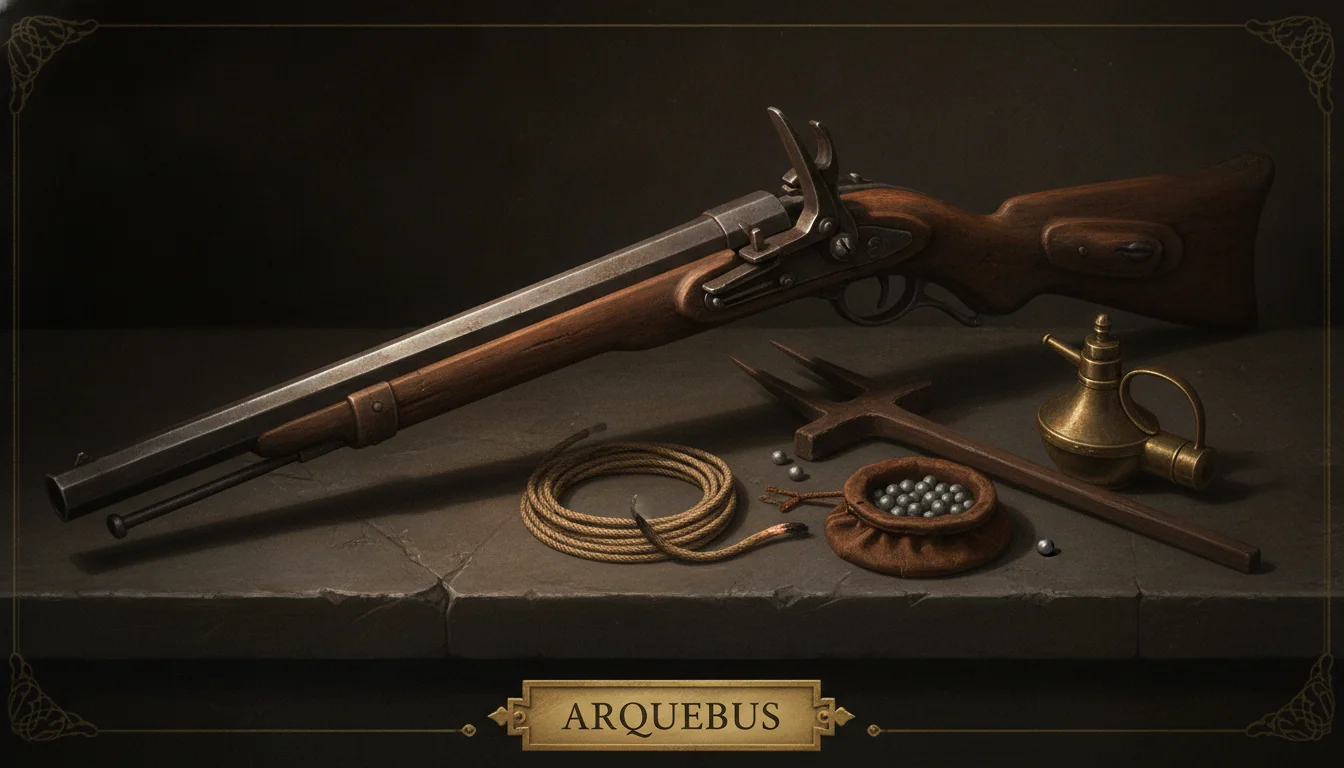
By the late 15th century, gunpowder weapons were closing the gap. Early matchlocks were inaccurate and slow, but they had two advantages the longbow could never match. They could be issued to a peasant with two weeks of training, and they steadily improved with each generation of metallurgy. The longbow had reached its theoretical maximum centuries earlier.
English military thinkers debated for another century. Sir John Smythe, writing in 1590, still argued that a trained longbowman outclassed a musketeer at every measure of speed, accuracy, and power. He was largely right. But the kingdom could no longer find such longbowmen in numbers. The supply of trained archers had quietly evaporated as the population shifted away from rural archery practice. The Privy Council formally retired the longbow in 1595.
Echoes
The longbow's reputation has long outlived its operational use. It remains the most famous medieval weapon outside the sword, and a fixture of English national memory at every level from school history to royal pageant. Along with weapons like the trebuchet, it represents the peak of pre-gunpowder military technology. The line of yew trees that still grows in many English churchyards is widely believed to be a relic of the medieval requirement to keep bow wood close to the village. Whether or not that origin is true, the bow's hold on the English imagination is.
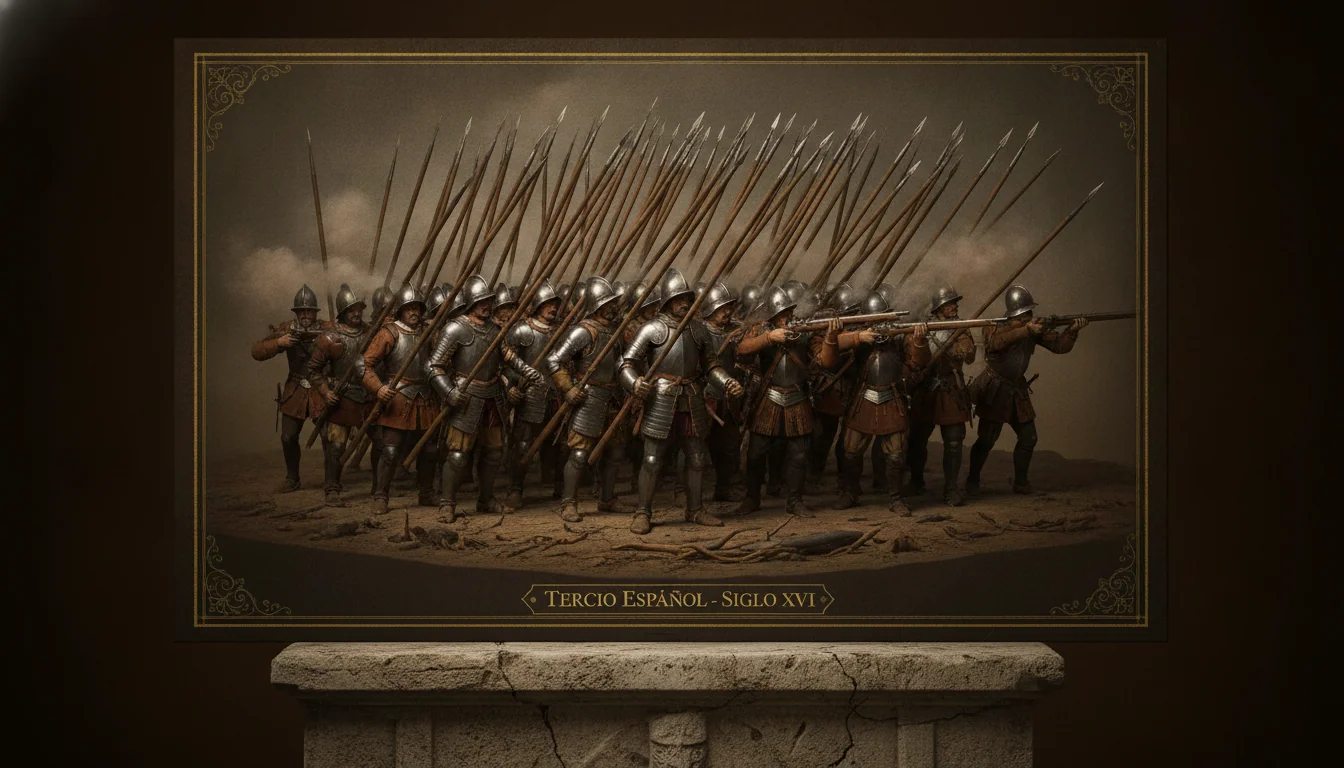
For two centuries the longbow taught Europe a hard lesson: that an army of disciplined commoners with a wooden stick could destroy the mounted nobility of the wealthiest kingdoms in the world. That lesson did not stay confined to the longbow. It carried forward into pike warfare, into the matchlock revolution, and eventually into the citizen armies of the modern era. The yew bow was, in its own quiet way, one of the first cracks in the structure of feudal Europe.
Quick Answers
Common questions about this topic
How powerful was an English longbow?
Surviving longbows recovered from the wreck of the Mary Rose, sunk in 1545, suggest draw weights between 100 and 180 pounds, with most clustering around 110-130. Modern recreational bows rarely exceed 60 pounds. A war-grade English longbow could send an arrow more than 240 yards and punch through mail at close range.
Was the longbow Welsh or English?
The design originated in Wales, where Edward I encountered it during his 13th-century campaigns. He absorbed Welsh archers into the English army and made the longbow the centerpiece of English military doctrine. By the time of the Hundred Years War, English archers from across the kingdom were using a weapon that was Welsh in origin but English in industrial scale.
Why did the longbow disappear?
The longbow required a lifetime of training, while a man with two weeks of practice could fire a matchlock musket. As firearms improved through the 16th century, no government wanted to depend on a weapon that took twenty years to produce a competent archer. The longbow was officially retired from English service in 1595, though it had effectively been replaced in front-line use decades earlier.
How fast could an archer shoot?
Trained English archers could fire 10-12 aimed arrows per minute, and a sustained barrage from 5,000 archers, the rough strength of the English line at Agincourt, would put more than 50,000 arrows in the air per minute. The volume of fire mattered as much as accuracy: French chronicles describe arrows falling like snow.

Talk to the People Who Wielded These Weapons
Chat with the soldiers, smiths, and commanders whose lives were shaped by the weapons of their age.
Talk to a WarriorJoin the HistorIQly Club
Get smarter about the past.
Weekly stories, deep dives, and exclusive content straight to your inbox.