The Katana: How the Samurai Sword Was Forged, Used, and Mythologized
The katana is the most famous sword in the world, and one of the most misunderstood. The history and evolution of the curved blade that defined the samurai class.
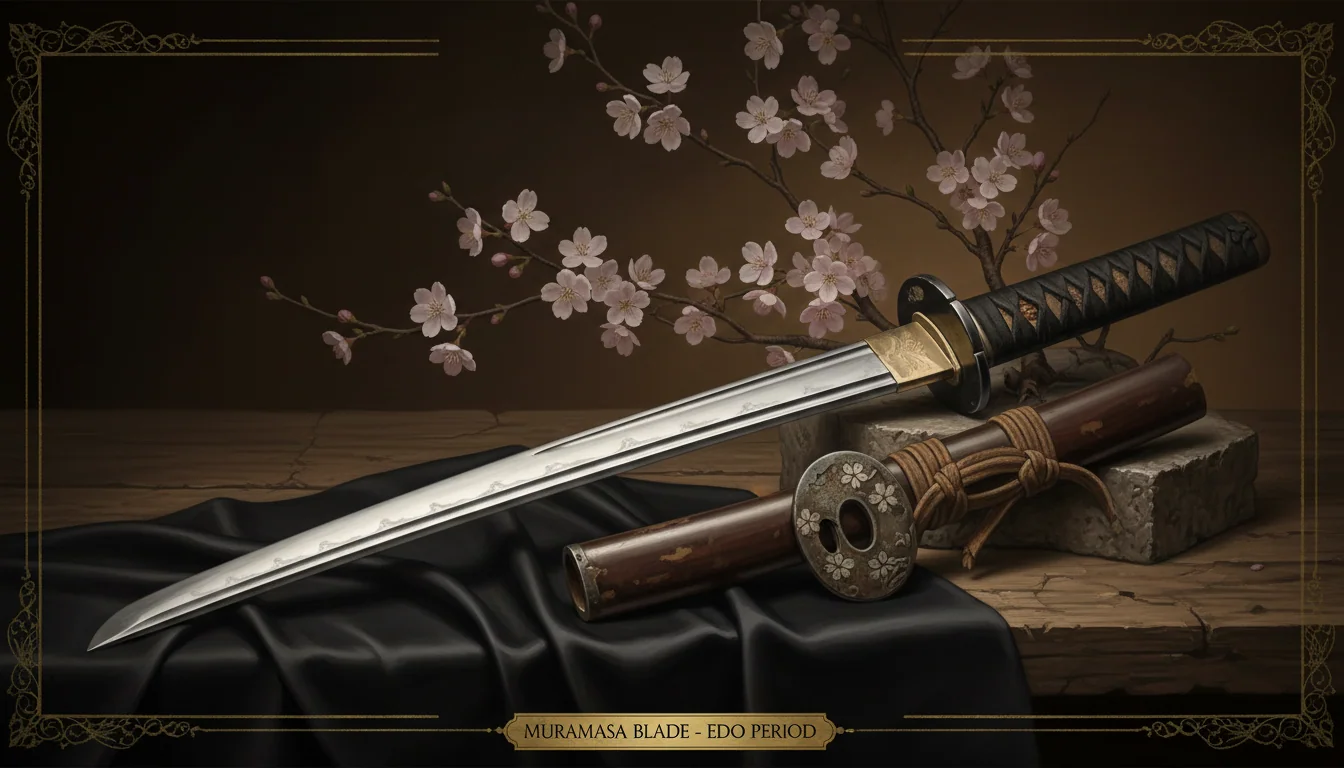
The katana is the most recognizable sword in the world. It has become shorthand for an entire culture, a martial discipline, and a school of metallurgy. It also carries some of the most persistent misconceptions of any historical weapon. Understanding the katana means separating the legitimate craft, which is genuinely extraordinary, from the layered myth that has accumulated around it over four centuries of literature, theater, cinema, and tourism.
Before the curve
The earliest swords found in Japanese archaeology, from the Yayoi and Kofun periods, are straight, double-edged blades imported from China and Korea. Even after Japanese smiths began producing their own blades in the 6th and 7th centuries, the standard sword was straight. The chokuto, used through the early Heian period (8th to 9th century), was essentially a regional variation of continental Asian sword design.
The transition to curved blades happened gradually between the 9th and 11th centuries. Mounted warriors fighting against the Emishi people in northern Honshu, and later in the dynastic civil wars of the Heian and early Kamakura periods, found that a curved blade with a single edge cut more efficiently from horseback. The earliest fully realized curved Japanese swords are the tachi, slung edge-down from the belt, designed for cavalry use.
The katana, as a distinct sword type, did not appear until the late Muromachi period (15th century). It is essentially a tachi reoriented and refined: edge up in the scabbard, slightly shorter, optimized for an infantry warrior who can draw and strike in the same motion. The crucial cultural moment is the standardization of the daisho, the paired long and short blades worn by samurai through the Edo period.
The forging tradition
A traditional katana is forged from tamahagane, a high-quality steel produced in a tatara, a clay smelting furnace fed with iron sand and charcoal. The smith starts with a billet of mixed-carbon steel, folds it repeatedly to homogenize the carbon content and remove impurities, and then differentially hardens the blade in a controlled quench.
The defining metallurgical trick is the differential hardening. The smith coats the blade with a clay slurry, thicker on the spine and thinner on the edge. When the heated blade is plunged into water, the thinly coated edge cools fast and forms hard martensite, while the spine cools more slowly and stays as softer pearlite. The result is a blade with an edge that holds a sharp grind for a long time and a spine that absorbs shock without cracking.
This differential hardening is also what produces the hamon, the wavy temper line visible along the blade after polishing. The hamon is functional first and aesthetic second, but generations of smiths have used its shape, color, and complexity as a signature of their school and personal style. The most famous historical schools, including Bizen, Soshu, Yamashiro, Yamato, and Mino, are distinguished partly by hamon style.
The curve of the blade is a side effect of the same quench. The edge contracts less than the spine, pulling the blade into its characteristic gentle curve. Different schools produce different curves, with Bizen blades typically having a deep, even curve and Soshu blades a shallower, more aggressive one.
Geometry and use
A standard Edo-period katana is about 70 to 80 cm long in the blade, with a hilt of 25 to 30 cm. The blade is single-edged, with a tapered point optimized for cutting and a chisel-ground edge typically at 25 to 35 degrees per side. The cross-section is a wedge with a distinct ridge line called the shinogi, which gives the blade rigidity without excessive weight.
The katana is gripped with both hands, with the dominant hand near the guard and the other hand at the pommel for leverage. Cuts are delivered with the wrists relaxed and the body engaged, so that the blade swings through the target rather than being driven into it. Authentic test-cutting on rolled bamboo or thick straw mats demonstrates the blade's efficiency: a competent practitioner can cut through three or four mats in a single draw.
What the katana is not optimized for is fighting armor. Japanese armor evolved alongside the sword, and against the lacquered plates and lamellar of o-yoroi or do-maru, a katana is largely a thrusting and gap-finding weapon, not a chopping weapon. The samurai battlefield doctrine of the Sengoku period (15th to 16th century) put primary weapons on the spear and the bow, with the sword as a sidearm for the chaos that followed a charge.
The Sengoku reality
The romantic image of the samurai duel, two swordsmen facing off and resolving their honor in a single stroke, is an Edo-period invention. The actual Sengoku samurai was a mounted archer first, a spearman second, and a swordsman third. Yari, polearms with a long straight blade, were the dominant infantry weapon. After the 1540s, when Portuguese ships brought matchlock muskets to Tanegashima, ashigaru levies armed with imitation tanegashima played a decisive role at Nagashino in 1575.
The katana's prestige owes more to the Edo period (1603-1868) than to the Sengoku wars that produced it. Under Tokugawa peace, the samurai class was effectively a hereditary bureaucracy, denied combat employment but defined by its right to wear the daisho. Sword craftsmanship became the symbol of caste identity. The iconic disciplines, including iaijutsu, kendo's predecessors, and the formalized duels of Yagyu Shinkage-ryu, all flourished in a society where the sword was carried daily but rarely used in war.
This cultural elevation produced the romantic image we now associate with the katana, and also the long catalog of metaphysical claims about its sharpness, balance, and spiritual power.
The myths
Three myths in particular deserve attention.
First, the claim that katanas are uniquely sharp. They are sharp, but not extraordinarily so. A Persian shamshir or a German rapier finishing edge will take an equivalent grind. The katana's edge geometry favors slashing draws, which feel and look spectacular but are not metallurgically miraculous.
Second, the claim that katanas can cut through other swords or modern objects. This is theatrical fiction. A katana striking a steel rifle barrel will be damaged. A katana driven into a tree will probably bind. The myth comes from late-19th and 20th-century cinema and pulp fiction, with no historical basis.
Third, the claim that the folding process is what makes the blade superior. Folding homogenizes a relatively impure starting material, which mattered when the only available steel was tamahagane. With modern monosteel, repeated folding adds nothing. Japanese smiths still fold because the practice is part of the cultural definition of a katana, not because it improves a 21st-century steel.
These myths are not malicious. They are the residue of a long, layered process of cultural elevation. They do not change the genuine craft, but they do obscure it.
The Meiji break
In 1876, the Meiji government issued the Haitorei edict, banning the wearing of swords by samurai outside official duties. The samurai class itself was abolished. Sword smithing collapsed almost overnight. Some smiths converted to producing kitchen knives or surgical tools. Some emigrated. Some kept the craft alive privately. The military adopted European sabers and bayonets.
A revival began in the 1930s, partly driven by ultranationalism and the demand for officer's swords during the Pacific War. Many of the swords carried by Japanese officers in the 1940s were industrially produced gunto rather than traditionally forged blades. After the war, the American occupation authorities considered banning sword production entirely, and ordered the destruction of an estimated 200,000 blades. Lobbying by collectors, historians, and the Society for the Preservation of Japanese Art Swords eventually carved out an exemption for traditional smithing as cultural heritage.
Today, a licensed Japanese swordsmith works under the strict rules of the Nihon Bijutsu Token Hozon Kyokai. Production is capped, materials are limited to traditional tamahagane, and methods must be hand-forged and water-quenched. The result is a small, expensive, slow output that explicitly preserves the late-Edo craft.
Echoes
The katana's cultural weight today is greater than its historical battlefield record would suggest. It is the centerpiece of kendo, iaido, and kenjutsu disciplines that millions practice worldwide. It is a fixture of Japanese national identity and a global symbol of the samurai mystique. It anchors a tourist economy around towns like Seki and Sakai. And it remains the reference point for a hundred imitations, from the wall-hanger swords sold at mall kiosks to the high-end Western reproductions made by smiths in Texas and California.
The genuine katana, made by a licensed Japanese smith with traditional methods, is one of the great surviving handcraft objects in the world. It is also, despite the myth, just a sword: a tool optimized for a specific cultural and tactical situation that no longer exists, kept alive because the people who made it decided to. The history of the katana is the history of that decision, repeated across a thousand years.
For comparison with other great bladed weapons in military history, see our profiles of the Roman Gladius and the Viking Ulfberht Sword.
Quick Answers
Common questions about this topic
Is the katana the sharpest sword in the world?
No, although the myth is durable. A well-made katana takes a very fine edge, but so does a Damascus steel kilij, a German Gothic longsword, or a 19th-century cavalry saber. The katana's edge geometry is optimized for cutting unarmored or lightly armored opponents, and it is genuinely excellent at that job. Against plate armor it is no better than other contemporary swords.
Why is the katana curved?
The curve emerges naturally during quenching. The hardened edge contracts less than the soft spine when the blade is plunged into water, pulling the blade into its characteristic curve. Smiths control the geometry, but the principle is metallurgical, not aesthetic. The curve also makes the sword more efficient at slashing draws.
How long did it take to make a katana?
A traditional smith working full-time could complete the rough blade in about two weeks. With polishing, fittings, and the scabbard, the full sword took 1-3 months. Modern licensed Japanese swordsmiths, who must follow traditional methods by law, still need months per blade and are limited to producing about 24 swords per year.
Did samurai really use katanas as their main weapon?
Not in battle. The samurai's primary weapon was the bow on horseback, and after the 16th century, the spear (yari) and matchlock musket. The katana was a sidearm, used in close-quarters fighting after the primary weapon was lost or in the chaos after a charge. Its outsized cultural reputation comes from peacetime duels and Edo-period codification, not from the battlefield.

Talk to the People Who Wielded These Weapons
Chat with the soldiers, smiths, and commanders whose lives were shaped by the weapons of their age.
Talk to a WarriorJoin the HistorIQly Club
Get smarter about the past.
Weekly stories, deep dives, and exclusive content straight to your inbox.