The Atlanta Child Murders: 29 Victims, One Conviction, and Endless Doubt
The Atlanta child murders of 1979-1981 claimed at least 29 Black victims. Wayne Williams was convicted of two adult murders, but the case has never fully closed.
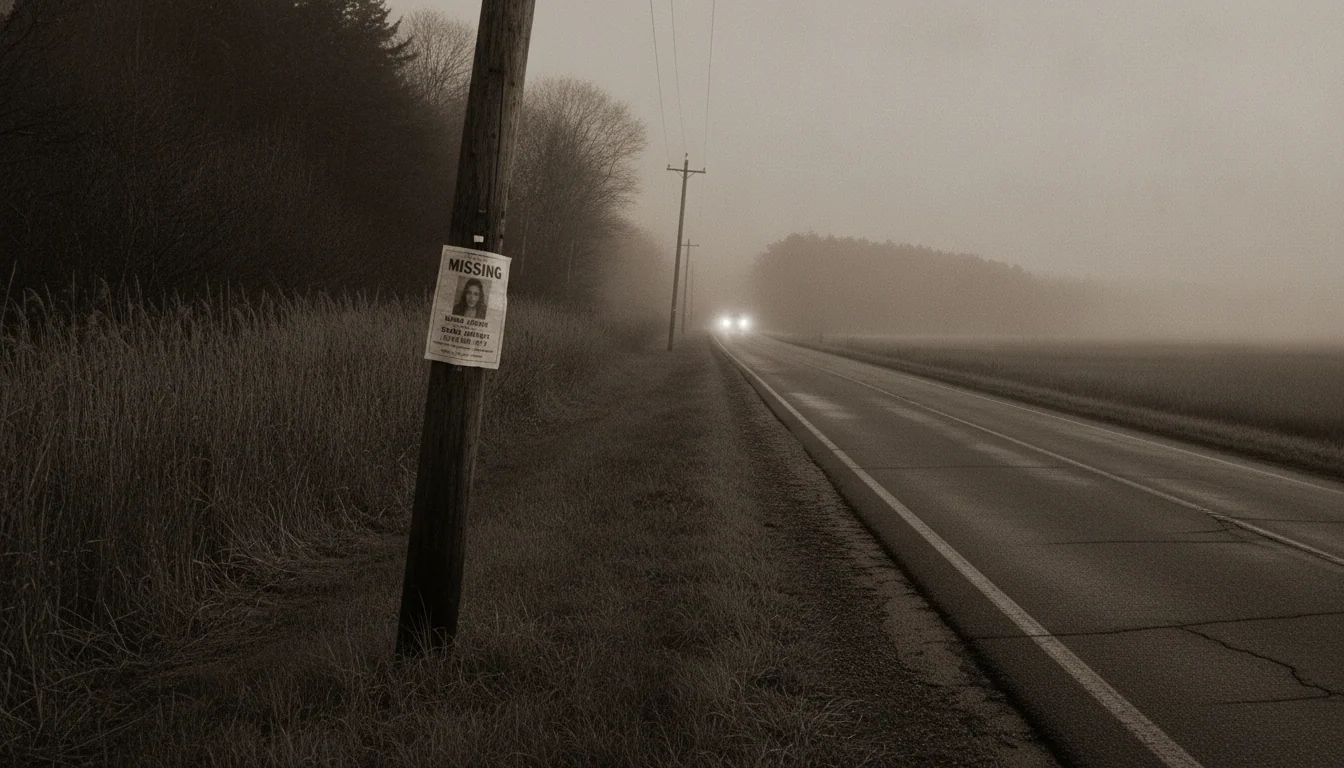
Between July 1979 and May 1981, at least 29 Black children, teenagers, and young men were murdered or went missing in Atlanta, Georgia, in what became one of the most disturbing serial cases in modern American history. Most of the victims were boys aged between 7 and 17. Their bodies were found in vacant lots, wooded areas, and the Chattahoochee River. The killings terrified a city that was, in those years, branding itself as the proud capital of the New South.
A man named Wayne Williams was eventually arrested and convicted in February 1982 of two of the killings. Atlanta authorities then closed most of the remaining cases by attributing them to him, without trying any of them in court. Forty years later, families of the victims, journalists, and a sitting mayor have all said publicly that they do not believe the official story is complete.
The summer it began
The first widely recognized victim of the wave was Edward Smith, a 14-year-old boy who disappeared on July 21, 1979. His body was found a week later in a wooded area east of Atlanta. Within days, another teenager, Alfred Evans, also 14, was found dead nearby. Both had been killed by gunshot, and both were Black.
Through the rest of 1979, the killings continued at a steady pace. Children went missing while running errands, walking home from school, or visiting friends. Bodies turned up in fields, dumpsters, and shallow graves. The city's Black neighborhoods, where almost all the victims lived and disappeared, organized neighborhood patrols, prayer vigils, and search parties.
In late July 1980, Mayor Maynard Jackson and Public Safety Commissioner Lee Brown formally established a Missing and Murdered Children task force. By that point the official victim count had reached 14. It would more than double over the next year.
A city under siege
The case attracted national and eventually international attention. Vice President George H.W. Bush visited Atlanta in March 1981 to pledge federal assistance. The FBI joined the investigation. Singer Frank Sinatra and boxer Muhammad Ali appeared at Atlanta benefits to raise funds for the families.
The killings shaped the racial politics of the city in painful ways. Atlanta in 1979 had a Black mayor, a Black public safety commissioner, and an emerging Black professional class. The case put extraordinary pressure on this generation of leaders, who were caught between demands for action, claims that the killings were the work of the Ku Klux Klan or a white supremacist group, and warnings from the FBI that a Black serial offender was statistically possible despite being historically rare.
The mood in the Black community was one of fear and exhausted vigilance. Children stopped walking to school alone. Public events were canceled. Atlanta neighborhoods that had felt safe became uncertain.
The bridge stakeout
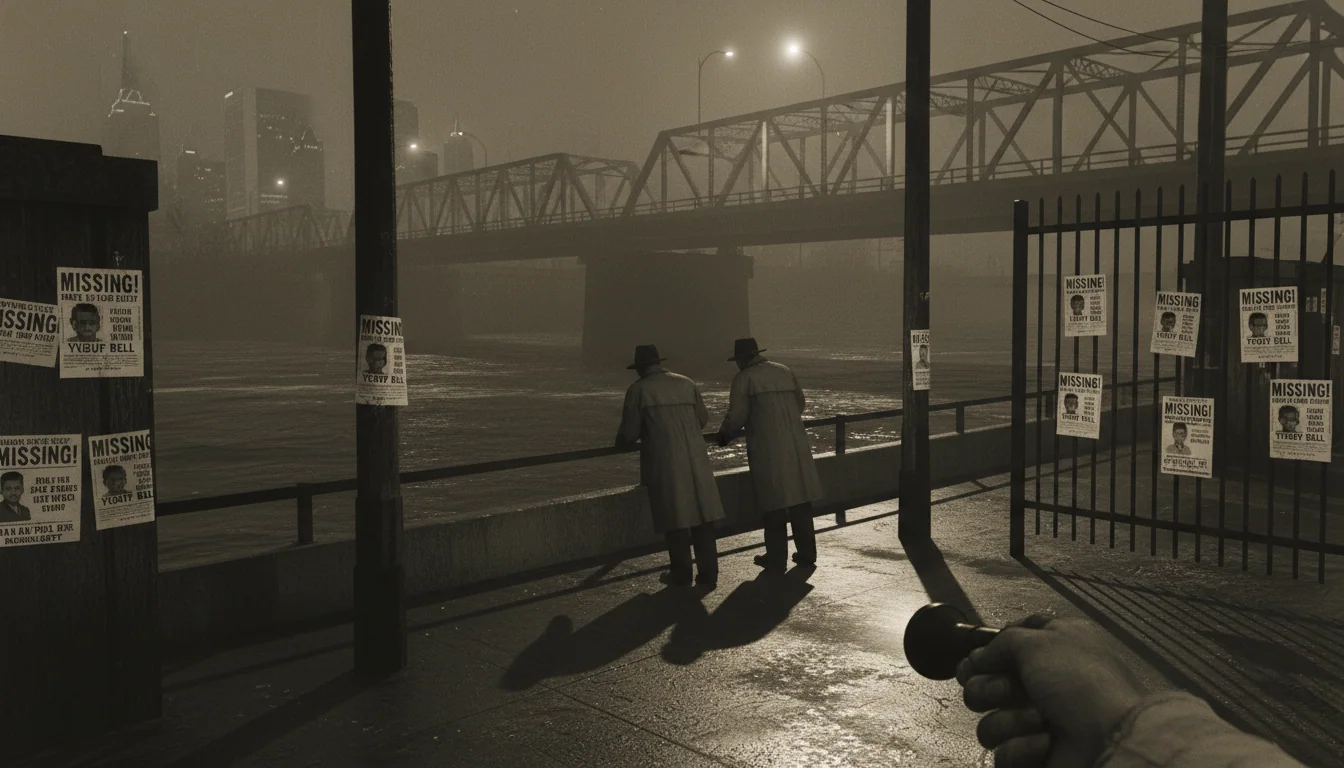
In May 1981, after a body was recovered from the Chattahoochee River, the task force decided to stake out the bridges along the river overnight. Several victims had been recovered from the water, and investigators believed the killer was disposing of bodies that way.
In the predawn hours of May 22, 1981, officers stationed under the James Jackson Parkway Bridge heard a loud splash from above. They radioed the police above the bridge, who stopped a 1970 Chevrolet station wagon driven by 23-year-old Wayne Bertram Williams, a Black freelance music promoter and small-time photographer who lived with his parents in northwest Atlanta.
Two days later, the body of Nathaniel Cater, a 27-year-old man, was recovered from the river downstream of the bridge. Williams was now the prime suspect in a federal-state investigation that had consumed nearly two years.
The trial
Wayne Williams was charged in July 1981 with the murders of Cater and Jimmy Ray Payne, another adult man whose body had been found in the river earlier that year. He was not charged with any of the child murders.
The trial began in December 1981. Prosecutors presented two main pillars of evidence.
The first was forensic. Microscopic fibers found on multiple victims, including Cater and Payne, were said to match a distinctive yellow-green carpet that had been installed in Williams's parents' home, fibers from his Chevrolet station wagon, and dog hairs from his German shepherd. Prosecutors used these fibers to argue that Williams's environment had touched many of the victims.
The second was a pattern of admission. Prosecutors were allowed to introduce evidence connecting Williams to ten additional victims through fiber and witness evidence, even though he was not formally charged with their deaths. This unusual decision allowed the jury to consider Williams as a serial offender even though only two cases were on the indictment.
The defense challenged the fiber evidence, arguing that the carpet in question had been mass-produced and could be found in many homes, and that the statistical probabilities the prosecution used to argue uniqueness had been overstated. Williams himself testified, calling himself a fool for being out at night near the bridge, but maintaining his innocence.
He was convicted on February 27, 1982. He was sentenced to two consecutive life sentences. He has been incarcerated in Georgia state prison ever since.
The administrative closures
Within weeks of the verdict, Atlanta and Fulton County officials announced that 22 of the 29 cases on the Missing and Murdered Children list were being closed administratively, attributed to Wayne Williams. None of these cases were tried. No new evidence was presented. No one was given the opportunity to dispute the attribution in court.
The decision was controversial at the time and has remained so. Several factors have fed the doubt.
The fiber evidence has aged poorly
Modern forensic science is much more skeptical of the kind of microscopic fiber comparisons that anchored the prosecution's case. The yellow-green carpet was indeed unusual, but not unique, and the statistical claims used at trial would not be admitted in the same form today.
The youngest victims do not fit Williams's pattern
The two men Williams was actually convicted of killing were adults. Some of the child victims, particularly those killed earlier in the wave, do not match the disposal patterns or victim profile prosecutors used to link Williams to the later cases.
The Klan angle
In the early 1980s, the FBI received intelligence suggesting that members of the Ku Klux Klan and related groups in the Atlanta area were active during the murder wave, and that at least some of the victims may have been killed by white supremacists. These leads were never publicly resolved. In 2019, Atlanta Mayor Keisha Lance Bottoms cited the Klan angle as one reason she supported reopening the cases.
Some families never accepted the closure
The families of multiple victims, including Yusef Bell, Curtis Walker, and Patrick Baltazar, have long maintained that the man convicted of two adult murders was not the killer of their children. Catherine Leach, mother of Curtis Walker, became one of the most prominent voices arguing that the city had moved on too quickly.
The 2019 reopening and DNA review
In March 2019, Atlanta Mayor Keisha Lance Bottoms, Police Chief Erika Shields, and Fulton County District Attorney Paul Howard announced that they were reopening the cases for modern DNA testing. The goal was to take preserved evidence and run it through the technologies that did not exist in 1982, including STR DNA profiling and genetic genealogy.
The review remains ongoing as of 2026. No new charges have been brought. Some preliminary results have suggested that DNA from at least one victim does not match Wayne Williams, although Atlanta authorities have been cautious about how to interpret partial matches given the age of the samples.
In 2020, HBO aired a five-part documentary series, Atlanta's Missing and Murdered: The Lost Children, which followed the reopening. Williams himself appeared on camera and continued to insist he is innocent of all the killings.
What the case has come to mean
The Atlanta Child Murders are one of the most historically loaded American serial cases. They unfolded during a moment when Atlanta was trying to reframe itself as the city too busy to hate, and when the New South narrative of Black political power was being tested. The pressure to find a perpetrator was enormous, and the political costs of an unresolved case threatened the leadership of a generation.
What was actually proven, in the legal sense, was that Wayne Williams killed two adult men. What was administratively decided was that he killed at least 22 more children and young adults. The gap between those two statements is what has kept the case alive.
For the families, the Atlanta Child Murders are not history. They are a set of unresolved questions about the deaths of specific children whose names, because of the scale of the case, have often been folded into a collective tragedy rather than treated as individual losses. The reopening of the case is, among other things, an attempt to undo that.
Whether the DNA review eventually produces new arrests, exonerates Wayne Williams in any of the cases, or simply confirms what the city has long believed, the lesson of the Atlanta Child Murders is one of the most uncomfortable in American criminal history: a case can be administratively closed without ever actually being solved. For a direct parallel in institutional failure, see our investigations into the Long Island Serial Killer and the Gilgo Beach murders.
Quick Answers
Common questions about this topic
How many victims were there in the Atlanta Child Murders?
The official Missing and Murdered Children task force list grew to at least 29 victims, mostly Black boys and young men, killed between July 1979 and May 1981 in the Atlanta metropolitan area. Some researchers and family members argue the true count is higher, with several additional cases never formally added to the list.
Was Wayne Williams convicted of all the murders?
No. Wayne Williams was convicted in 1982 only of the murders of two adult men, Nathaniel Cater and Jimmy Ray Payne. After his conviction, Atlanta authorities closed 22 of the 29 task force cases by attributing them to him without separate trials, citing similar fiber and dog-hair evidence. He has never been tried for any of the child victims.
What was the fiber evidence in the Wayne Williams case?
Forensic analysts identified microscopic fibers on victims' bodies that matched a distinctive yellow-green carpet from Williams's home, as well as fibers from his Chevrolet station wagon and dog hair from his German shepherd. Defense experts disputed the statistical strength of these matches, but they were the central physical evidence at trial.
Are the Atlanta Child Murders considered unsolved?
Officially, most task force cases were administratively closed after Williams's 1982 conviction. In 2019, Mayor Keisha Lance Bottoms and Atlanta Police announced a reopening of the cases for modern DNA review, citing ongoing community doubt about whether Williams was responsible for all of them or whether multiple offenders were involved.

Want to Interrogate the Suspects?
Chat with historical figures and uncover the truth behind history's greatest mysteries.
Start Your InvestigationJoin the HistorIQly Club
Get smarter about the past.
Weekly stories, deep dives, and exclusive content straight to your inbox.