The Wanda Beach Murders: Two Girls, One Suspect Who Was Never Charged
In 1965, two teenage girls were murdered on Wanda Beach in Sydney. The prime suspect walked free. The case remains unsolved sixty years later.
Read Wikipedia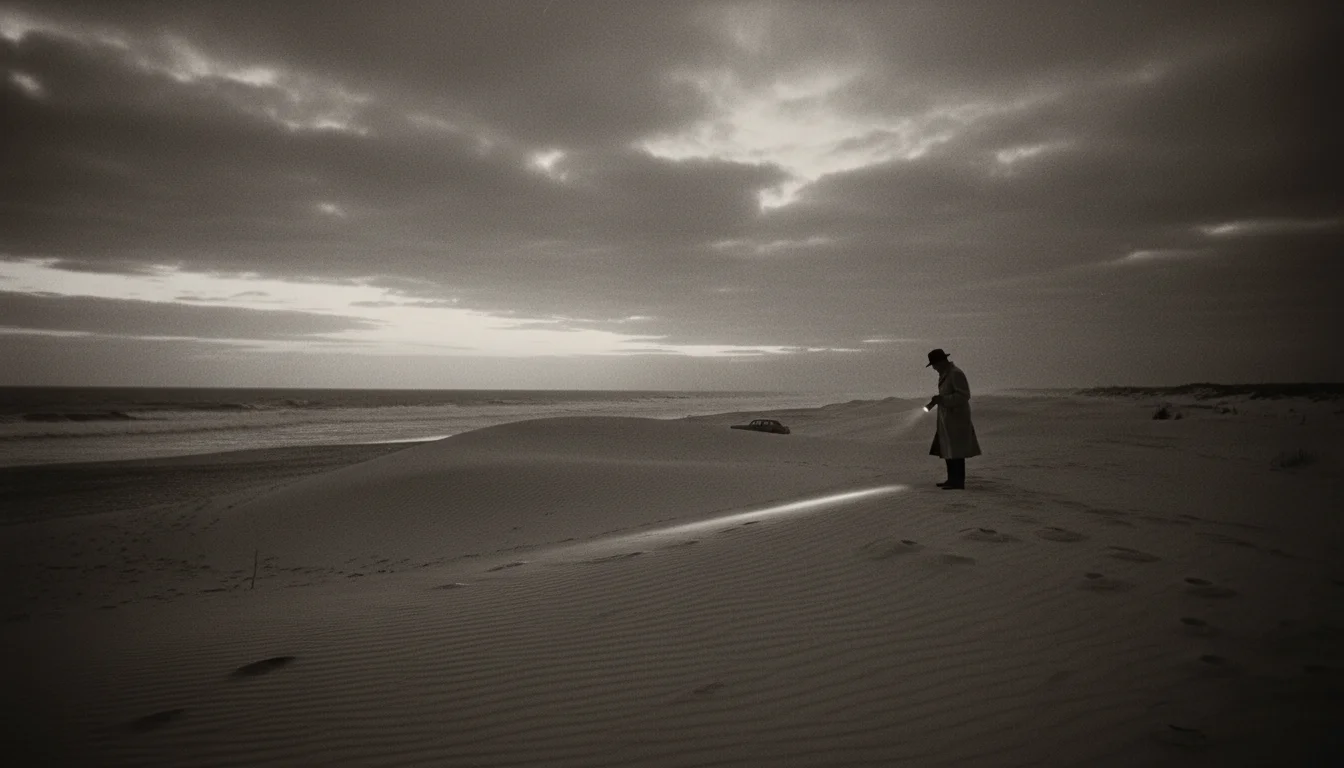
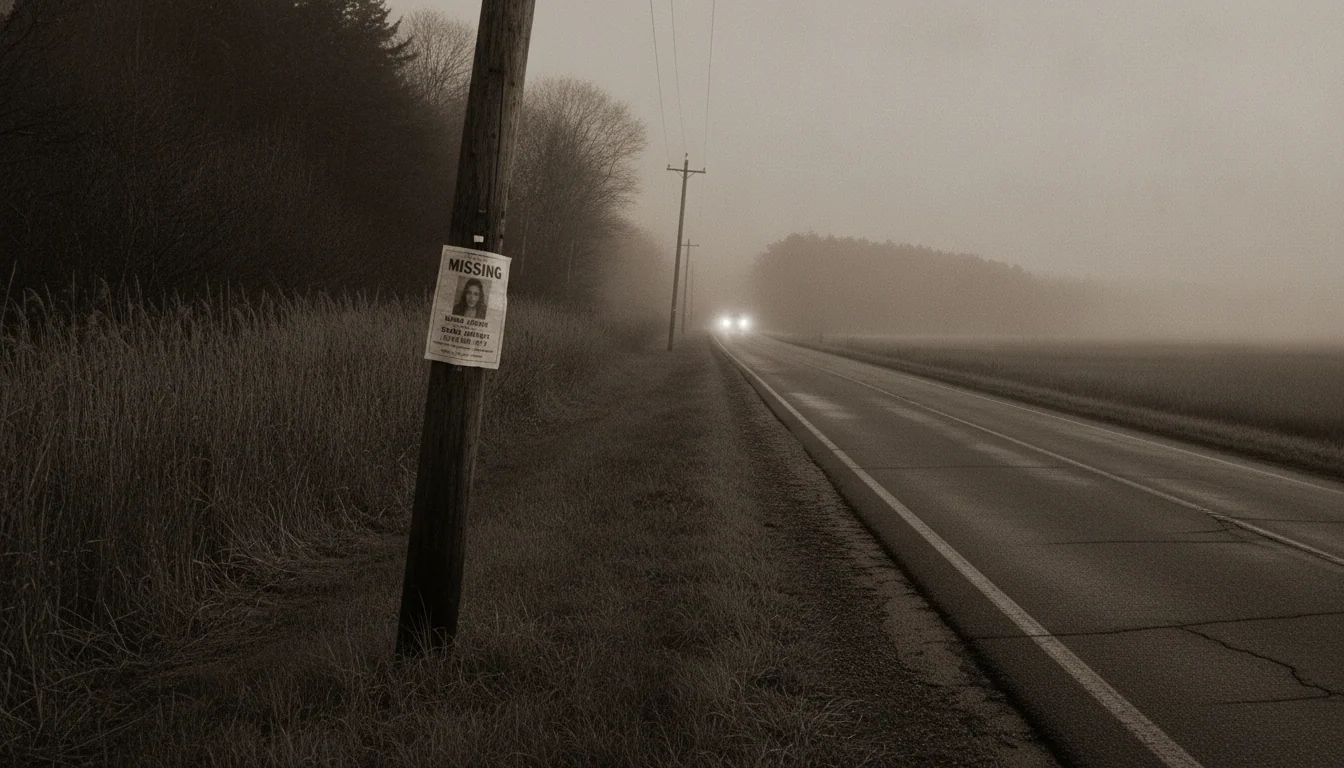
On January 11, 1965, two girls walked onto Wanda Beach in Sydney, Australia, and never walked off alive. Christine Sharrock, 15, and Marianne Schmidt, 15, were found murdered in the sand dunes. The killer was never caught. But for decades, detectives believed they knew exactly who did it.
They just couldn't prove it.
The Last Morning
Christine and Marianne were friends, neighbors, and typical teenagers. On that scorching Australian summer morning, they told their families they were going to Cronulla Beach. Instead, they caught a train to the more secluded Wanda Beach, about a mile south.
By mid-afternoon, when the girls hadn't returned, their families grew concerned. A search began. At 6:00 PM, a local resident discovered their bodies in the sand dunes, partially buried and covered with grass and brush.
Both had been sexually assaulted and stabbed multiple times. The brutality of the attack shocked the nation. This wasn't a robbery gone wrong or a crime of passion between lovers. This was a predator who hunted two children on a public beach in broad daylight.
The Crime Scene
The bodies lay about 50 meters from the beach, hidden in the dunes. Their belongings were scattered - towels, bags, a transistor radio. There was evidence of a violent struggle. Blood soaked the sand.
What disturbed investigators most was the methodical nature of the attack. The killer had taken time. He'd attempted to conceal the bodies. He'd worked in an area where beachgoers could have stumbled upon him at any moment.
This suggested either extreme boldness or complete detachment from reality. Or both.
Enter Derek Percy
Derek Ernest Percy was 16 years old in January 1965. A thin, awkward teenager with thick glasses and a troubled mind. He lived near Wanda Beach. He fit the age range of witness descriptions. And he had a disturbing habit that would later prove relevant.
Percy collected newspaper clippings about murders. Especially child murders.
In the days after the Wanda Beach killings, police interviewed hundreds of potential suspects and witnesses. Percy was questioned briefly and let go. Nothing seemed particularly suspicious about the shy teenager.
But seven years later, Percy would commit a crime that would change everything.
The Tuohy Murder
On July 20, 1969, Derek Percy abducted 12-year-old Yvonne Tuohy from a beach in Victoria. He sexually assaulted her, strangled her, and dumped her body in bushland. This time, there was a witness. Percy was arrested, tried, and found not guilty by reason of insanity.
He would spend the rest of his life in psychiatric detention. He died in 2013, having never been released.
When detectives searched Percy's belongings after his arrest in 1969, they found his collection of murder clippings. Among them: extensive coverage of the Wanda Beach murders. He'd kept every article. Underlined certain passages. Made marginal notes.
He'd been obsessed with the case for four years.
The Evidence Mounts
Over the following decades, as Percy remained locked away, investigators revisited the Wanda Beach case repeatedly. Each time, the circumstantial evidence pointing to Percy grew stronger.
Geographic proximity: Percy lived within walking distance of Wanda Beach in 1965. His family had a holiday house nearby.
The timeline: Percy couldn't provide a solid alibi for January 11, 1965. His explanations were vague and contradictory.
The pattern: The Wanda Beach murders shared striking similarities with the Tuohy killing - beach location, young female victims, sexual assault, extreme violence.
The obsession: Why would a teenager collect and annotate news coverage of random murders? Unless they weren't random.
Other crimes: Percy became a suspect in at least eight other child murders and disappearances across Australia between 1965 and 1969. In each case, Percy had been in the area when the child vanished.
The Interview That Led Nowhere
In 2005, detectives confronted Percy in his psychiatric prison. They laid out the evidence. The timeline. The clippings. The pattern.
Percy's response? "I can't remember."
It wasn't a denial. It wasn't a confession. It was the same answer Percy gave to almost every question about his movements and actions during those years. He claimed his mental illness had erased chunks of his memory.
Convenient amnesia? Or genuine psychiatric damage?
Investigators believed it was an act. But belief isn't evidence. And without a confession or physical evidence linking Percy to the scene, the case remained cold.
The Forensic Dead End
The biggest frustration for modern investigators was the lack of preserved evidence. In 1965, DNA analysis didn't exist. Police collected physical evidence - sand samples, clothing fibers, biological material - but much of it was poorly stored or eventually discarded.
By the time DNA technology could have potentially solved the case, the critical samples were gone. Lost to time, bureaucratic neglect, or simple ignorance of what would one day be possible.
It's the tragedy of cold cases: the killer might have left his genetic signature all over the crime scene, but the crime scene no longer exists.
Other Suspects
Despite the strong circumstantial case against Percy, he was never the only suspect. Over the years, police investigated:
Local sex offenders: Several known predators lived in the area and had no solid alibis. But none fit the witness descriptions or had connections to the other child murders.
Transients and drifters: Wanda Beach wasn't isolated. Hitchhikers and seasonal workers passed through regularly. Any of them could have been responsible.
A killer who struck once: Some investigators believe the Wanda Beach murders might have been an isolated incident by someone who either died, moved overseas, or was imprisoned for other crimes shortly afterward.
But these alternatives always felt like grasping at straws. The Percy connection was simply too strong to ignore.
Percy's Death and the End of Hope
When Derek Percy died in 2013 at age 64, he took his secrets with him. If he killed Christine Sharrock and Marianne Schmidt - and if he killed the other children he was linked to - he never admitted it.
In his final years, Percy continued to claim memory loss. He maintained he wasn't a killer, just a sick man who'd committed one terrible crime (Yvonne Tuohy) in a moment of madness.
Some detectives who interviewed him believe he enjoyed the game. That he knew exactly what he'd done, and withholding the truth was his final act of control.
Others think he genuinely couldn't remember, that his fractured mind had compartmentalized or erased the worst of his actions as a psychological defense mechanism.
We'll never know which version is true.
The Families' Long Wait
For the Sharrock and Schmidt families, Percy's death without confession meant eternal uncertainty. They believed he was guilty. Police believed he was guilty. But belief isn't closure.
Christine's sister has spoken publicly about the frustration of knowing who probably killed her sibling, but never getting justice. It's a unique torture - knowing the suspect, seeing him locked away for life anyway, but never hearing the words "I did it."
The families wanted a trial. They wanted evidence presented. They wanted a jury to say "guilty" and a judge to pass sentence. Even if Percy was already imprisoned for life, the formal acknowledgment would have mattered.
They never got it.
Why It Still Matters
The Wanda Beach murders represent something darker than a single unsolved crime. They're potentially the first link in a chain of child murders spanning years and multiple states. If Percy was responsible for even half the crimes he's been linked to, he was one of Australia's most prolific serial killers.
But "linked to" isn't "convicted of." And in the eyes of the law, Derek Percy was guilty of exactly one murder: Yvonne Tuohy.
The rest? Unsolved mysteries. Cold cases. Families with questions that will never be answered.
The Unanswered Questions
Nearly 60 years later, we're left with haunting unknowns:
Did Derek Percy kill Christine Sharrock and Marianne Schmidt? Almost certainly, but not provably.
Was there physical evidence that could have convicted him? Maybe, but it's gone now.
Did he kill other children? The geographic and temporal links suggest yes, but again, no proof.
Could the cases have been solved if modern forensic techniques had existed in 1965? Quite possibly.
Will we ever know the full truth? No. Percy took it to his grave.
The Legacy
The Wanda Beach murders changed how Australia thought about child safety. Before January 11, 1965, parents in Sydney's southern suburbs thought nothing of letting teenagers spend a summer day at the beach unsupervised.
After? The calculation changed. The world got a little darker. A little more dangerous.
Two girls went to the beach and never came home. A killer walked free for four years before striking again. And when he was finally caught and locked away for life, he stayed silent about the crime that may have started it all.
Christine Sharrock and Marianne Schmidt deserved better. They deserved justice. They deserved a killer who confessed, a trial, a conviction, a resolution.
Instead, they got a question mark that will never become a period.
And somewhere in the sand dunes of Wanda Beach, on summer mornings when the sun rises over the Pacific, two ghosts still wait for the truth to finally surface from the waves.
For other cold cases where prime suspects escaped a formal conviction, see our coverage of the Hinterkaifeck murders and the Lake Bodom murders.

Want to Interrogate the Suspects?
Chat with historical figures and uncover the truth behind history's greatest mysteries.
Create your free account →No card required. Some figures and features require a paid plan.
Join the HistorIQly Club
Get smarter about the past.
Weekly stories, deep dives, and exclusive content straight to your inbox.