JonBenét Ramsey: Thirty Years of Theories, No Conviction
Six-year-old JonBenét Ramsey was found murdered in her Boulder home on December 26, 1996. Thirty years and no conviction later, the case remains unsolved.
The case of JonBenét Ramsey is one of the most thoroughly investigated, publicly debated, and poorly resolved unsolved homicides in American history. On the morning after Christmas 1996, in a wealthy neighborhood of Boulder, Colorado, the body of a six-year-old beauty pageant contestant was found in the basement of her family's home. She had been struck on the head and strangled with a ligature made from a paintbrush handle and a length of cord.
Almost thirty years later, no one has been convicted. The leading theories cycle endlessly. The DNA recovered from her clothing matches no one. The case has reshaped how Americans think about media coverage of crime, the procedures of small-city police departments, and the stresses placed on grieving families who become public suspects.
The night
The Ramsey family, John and Patsy, their nine-year-old son Burke, and JonBenét, returned from a Christmas Day dinner with friends at around 9:30 p.m. on December 25, 1996. JonBenét was carried inside, asleep, by her father. Within an hour, the household was quiet.
What happened over the next several hours has never been fully reconstructed. According to the parents' statements, they slept upstairs and were awakened around 5:30 a.m. when Patsy Ramsey came downstairs to make coffee and noticed pages of a handwritten note laid out on the back staircase.
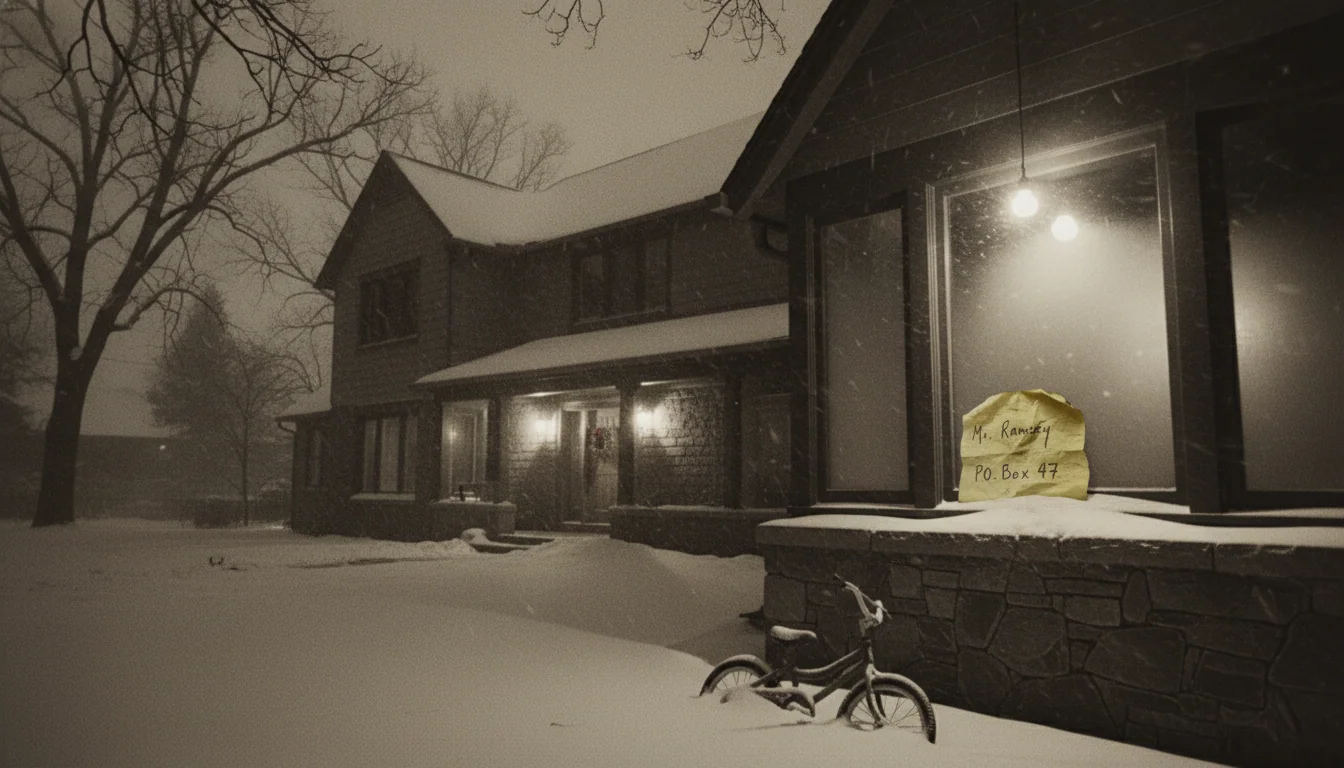
The note was extraordinary. It was two and a half pages long, written in Sharpie marker on paper from a pad belonging to Patsy. It demanded a ransom of $118,000, addressed John as "Mr. Ramsey," referred to him as a "small foreign faction," and warned that JonBenét would be killed if police were contacted. It closed with "Victory! S.B.T.C." - a phrase that has never been definitively explained.
Patsy ran upstairs, found JonBenét's bed empty, and dialed 911 at 5:52 a.m.
The crime scene
What followed was, according to nearly every subsequent investigator, a comprehensively contaminated crime scene. Boulder Police arrived at 5:55 a.m. but did not adequately seal the home. Family friends and a victim advocate were allowed inside. Patsy Ramsey changed clothes and applied makeup. The home was a sprawling, multi-level structure with extensive basement rooms, but no full search of the basement was conducted in the morning.
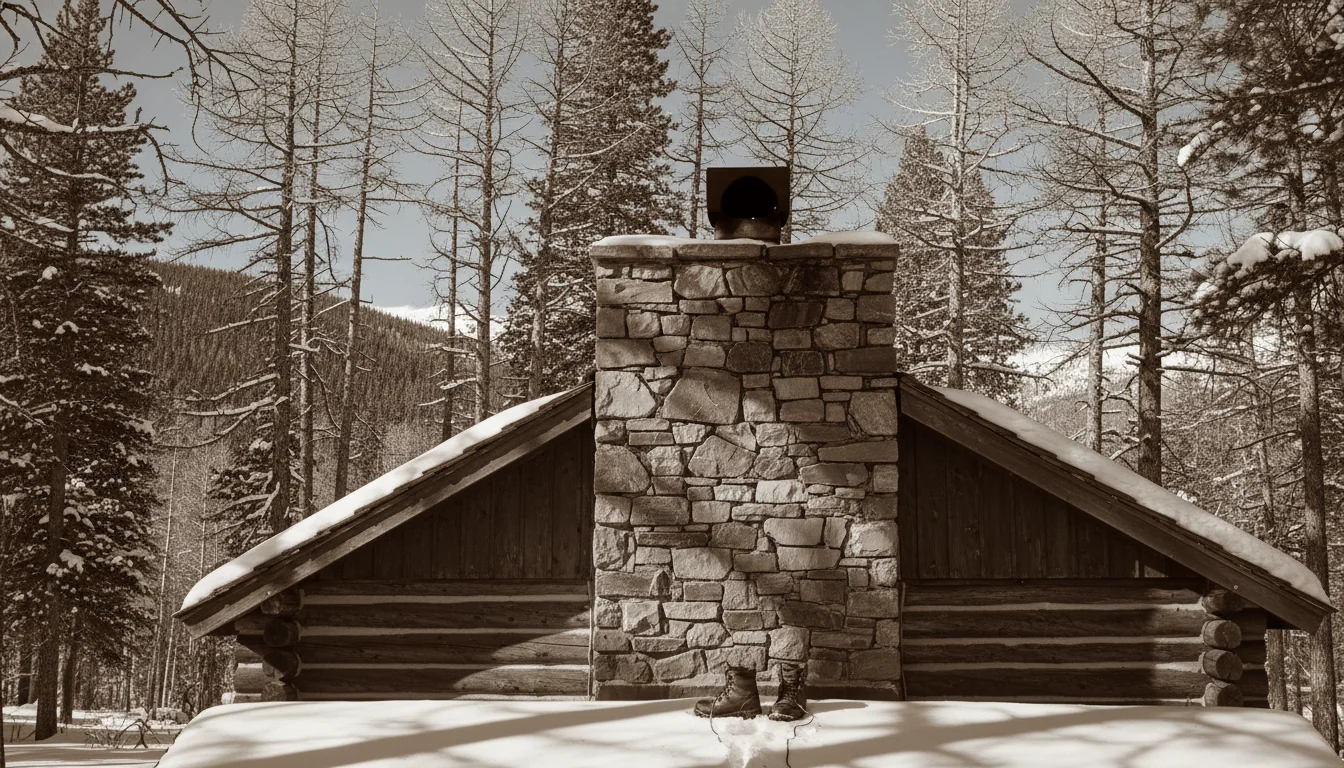
At approximately 1:00 p.m., Detective Linda Arndt asked John Ramsey and a family friend to search the house "from top to bottom" to look for anything unusual. John Ramsey went directly to a small basement room called the wine cellar, opened the door, and emerged carrying his daughter's body. He had moved the body, removed the duct tape from her mouth, and partially untied the cord around her neck before any police officer had seen the scene.
The crime scene at that point was not preserved. The implications would dog the investigation forever.
The cause of death
JonBenét had been struck on the head with significant force. The blow caused a fractured skull and brain damage, and would likely have rendered her unconscious immediately. She was also strangled with a garrote made from white nylon cord and the broken handle of a paintbrush, used as a tightening tool. Her wrists had been tied above her head with cord. A roll of duct tape had been placed across her mouth.
The autopsy could not establish the precise sequence of injuries. Both the head injury and the strangulation could have been fatal. Forensic pathologists have argued for nearly three decades over whether the strangulation was the killing act or a postmortem staging.
There were also signs of possible prior abuse, although these findings have been disputed. Some pathologists who reviewed the autopsy concluded there was evidence of chronic injury. Others have rejected this interpretation. The dispute over abuse has been one of the most politically charged elements of the case.
The Ramseys as suspects
From the early hours of the investigation, Boulder Police Chief Tom Koby and the lead detectives focused intensely on the Ramseys themselves, particularly Patsy. Several factors fueled this focus.
The ransom note was written on paper from inside the home. The amount demanded, $118,000, almost exactly matched the after-tax bonus John Ramsey had recently received from his company, Access Graphics. The note was unusually long and personal for a stranger ransom note. Handwriting analysis was inconclusive, but several experts could not exclude Patsy Ramsey as a possible author.
There were no clear signs of forced entry, although a basement window was found unlocked and slightly ajar. The Ramseys' behavior in the hours after the discovery, particularly their decision to retain a lawyer the same day and to limit cooperation with police, was viewed by some investigators as inconsistent with grieving parents.
The family was never formally charged. In 1999, a Boulder grand jury voted to indict John and Patsy Ramsey on charges of child abuse resulting in death and accessory to murder. District Attorney Alex Hunter declined to sign the indictment, citing insufficient evidence.
The shift to an outside intruder
In 1997 and 1998, the family's defense team, led by attorney Lin Wood, began aggressively promoting the intruder theory. Several pieces of evidence supported it.
A pair of palm prints in the basement and a partial boot print in the wine cellar did not match any known family member. The basement window had a suitcase positioned beneath it that some investigators believed could have been used as a step. A small piece of plywood near the window suggested possible entry. And the strangulation method, with the paintbrush garrote, was an unusual approach not associated with parental violence.
Most decisively, in the years that followed, advances in DNA testing produced touch-DNA profiles from JonBenét's clothing that did not match any family member. The DNA belonged to an unidentified male. Boulder DA Mary Lacy used these DNA results to formally exonerate the family in 2008, in a public letter to John Ramsey.
The exoneration was controversial. Some investigators argued that touch-DNA can be transferred from manufacturing or handling and is not necessarily probative of the killer's identity. Others believed it was sufficient to clear the family.
The Burke Ramsey theory
A persistent alternative theory holds that nine-year-old Burke Ramsey accidentally killed his sister and that the parents staged the scene to protect him. This theory was advanced most prominently in a 2016 CBS docuseries, The Case Of: JonBenét Ramsey, which used a panel of forensic experts including former FBI investigator Jim Clemente to argue for Burke's involvement.
Burke sued CBS for defamation, and the network settled out of court in 2019. He has consistently denied any involvement in his sister's death, has not been formally suspected by Boulder Police, and has been publicly cleared by the family's attorneys.
The intruder theory's strongest candidates
Multiple intruder candidates have been investigated over the years. Some, like John Mark Karr, who falsely confessed in 2006, were quickly excluded by DNA. Others, including known sexual offenders living in the Boulder area in 1996, have been investigated repeatedly without producing matches.
The most thoroughly examined remains an unknown male whose DNA is preserved in the case file. Boulder Police have submitted this profile to CODIS and to genealogical databases without producing a match. In 2023, the case was referred to a private forensic genealogy firm for additional analysis. As of 2026, no public identification has been announced.
What the case has come to represent
The JonBenét Ramsey case has shaped American crime media in ways no other unsolved case has. It contributed to the rise of cable news as the dominant frame for missing-child stories, the production of true-crime entertainment as a commercial industry, and the public's growing skepticism about police competence in high-profile cases.
It also shaped the experience of the Ramsey family, who lived under public suspicion for over a decade despite never being charged. Patsy Ramsey died of ovarian cancer in 2006, before her formal exoneration. John Ramsey has continued to advocate for the case to be reopened with modern DNA technology. Burke Ramsey, the surviving child, has lived a private life largely outside public view.
The case represents one of the most expensive failures of small-city policing in American history. Boulder Police, a department unaccustomed to homicide investigations on this scale, made multiple errors in the first 24 hours that probably eliminated the possibility of a clean conviction. By the time the FBI and Colorado Bureau of Investigation became more active, the crime scene was contaminated and the family was lawyered up.
The DNA, the genealogy, and what might come
The most likely path to resolution remains forensic. Touch-DNA on JonBenét's clothing, recovered and reanalyzed using progressively more sensitive techniques, may eventually produce a match through a genealogical database hit. Several famous cold cases, including the Golden State Killer, have been solved through this approach in the last decade.
If the DNA profile matches an identifiable individual, the case may finally close. If it never does, it will remain one of the most haunting unresolved homicides in American history: a six-year-old child, killed in her own basement, in a city that was supposed to be one of the safest in the country, whose killer remains an evidentiary fragment in a crime lab.
The Ramsey case has outlived almost everyone associated with its early investigation. It will probably outlive most of the rest of them. Whether it ever produces a name, the world will eventually have to decide whether justice has been done by exoneration, or whether the absence of a conviction is itself the lasting injustice.
For other cold cases where forensic genealogy may yet provide answers, see the Elisa Lam Cecil Hotel Mystery and the D.B. Cooper Hijacking Mystery.
Quick Answers
Common questions about this topic
When was JonBenét Ramsey killed?
JonBenét Ramsey was killed in the early hours of December 26, 1996, in the basement of her family's home at 755 15th Street in Boulder, Colorado. She was six years old. Her body was discovered by her father John Ramsey at approximately 1:00 p.m. that afternoon, more than seven hours after the family had reported her missing.
Were the Ramseys ever charged?
No. John and Patsy Ramsey were considered suspects for years and lived under what Boulder police initially called an 'umbrella of suspicion.' In 2008, then-Boulder District Attorney Mary Lacy formally exonerated the family based on touch-DNA evidence found on JonBenét's clothing, which did not match any family member. Patsy Ramsey died of ovarian cancer in 2006.
What was the ransom note?
Patsy Ramsey discovered a two-and-a-half-page handwritten ransom note on a back staircase of the home at around 5:52 a.m. on December 26, 1996. It demanded $118,000, oddly close to John Ramsey's recent bonus, and contained unusual phrasing including the closing line 'Victory! S.B.T.C.' Handwriting analysts have disagreed for nearly 30 years about whether Patsy Ramsey could have written it.
Has DNA evidence pointed to anyone?
Touch-DNA recovered from JonBenét's underwear and long johns belongs to an unidentified male. As of 2026, this DNA profile has not matched anyone in CODIS or genealogical databases. In 2023 and 2024, Boulder Police partnered with private genealogy labs to attempt to identify the source through familial DNA, but no public match has been announced.

Want to Interrogate the Suspects?
Chat with historical figures and uncover the truth behind history's greatest mysteries.
Start Your InvestigationJoin the HistorIQly Club
Get smarter about the past.
Weekly stories, deep dives, and exclusive content straight to your inbox.